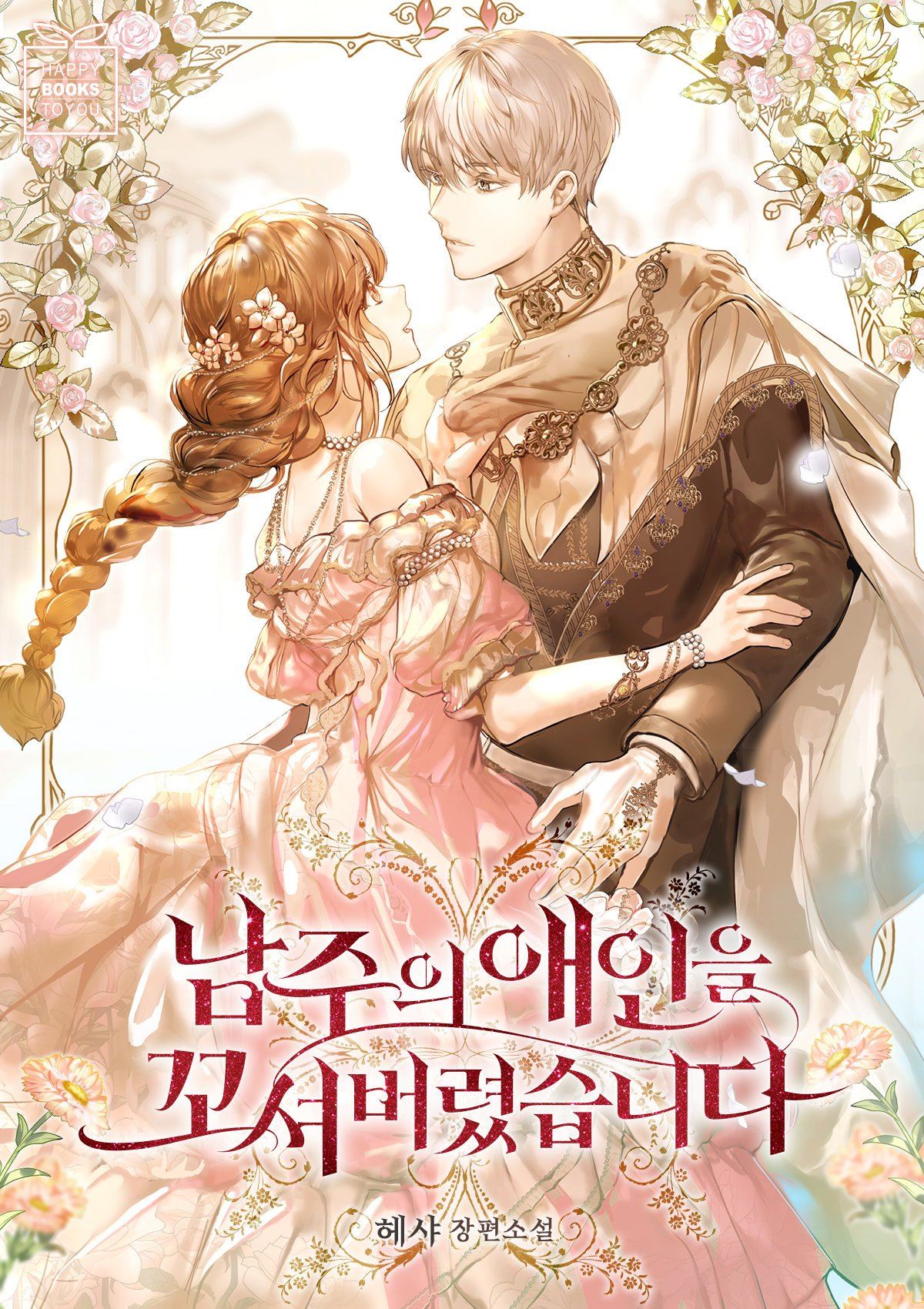
I Seduced the Male Lead’s Lover
+Add to Custom List
Genres:
Novel Info
  • Author:
  • Status:Ongoing

Summary

... Read More

Maria Certi, a woman from modern Earth, transmigrates into the body of a minor villainess in an explicit Boys Love novel titled Where the Dukes Obsession Leads. The story is set in the Kingdom of Asamoa, where Luca Clodence is the innocent and breathtakingly beautiful male lead, and Claude Sernui Aemon is the obsessive, powerful Duke who becomes his partner. Maria quickly realizes she has inhabited the role of Maria Certi, a baron’s daughter who had previously poisoned Luca out of jealousy five years prior, an act that led to her family’s social exile and her own near-death experience. Upon awakening in this new life, she learns that her current fiancé, driven by societal prejudice against homosexuality, abruptly breaks off their engagement, claiming he loves Luca instead. Rather than despair, Maria reacts with sharp wit and indifference, publicly flipping off her former fiancé and decisively cutting ties with her past.

Four years have passed since her transmigration, yet Maria remains an outcast due to the original owner’s actions. Determined to reclaim her life, she decides to attend the annual debutante ball, a social event she had avoided for years. She prepares meticulously, utilizing cosmetics she developed herself, such as foundation and mascara, which were unknown in this world. Her appearance draws attention, but her primary goal is to observe the male leads from a distance and ensure she does not interfere with their developing romance. However, her plans are disrupted when Ted Lis, a nobleman who tormented her in childhood, confronts her and attempts to humiliate her in front of other attendees. During the altercation, Luca Clodence intervenes, saving Maria from Ted’s aggression. Although Maria initially fears Luca’s hostility given their history, his demeanor is surprisingly calm, though his underlying tension is palpable. After Ted departs, Luca invites Maria to meet him privately on a terrace, where he questions her about her well-being with a chilling mix of politeness and hidden animosity.

The situation escalates when Maria visits Noah Sackelpine, a friend of Luca, seeking to improve her image. Instead of meeting Noah, she encounters his sister Emily, who coldly rejects any romantic possibilities, revealing that Noah is already engaged. Maria leaves with a gift of premium tea, establishing a tentative connection with the Sackelpine family. Meanwhile, Luca summons Maria to meet him at the Aemon mansion, the residence of Duke Claude. Terrified that she is walking into a trap for revenge, Maria nevertheless proceeds, hoping to apologize for her past sins. Upon arrival, she is directed to a research room where she overhears distressing sounds. Peering inside, she discovers Luca suffering from a magical backlash, his mana running rampant. Contrary to the original plot where Claude saves Luca, the Duke is absent, leaving Maria as the only person present.

Recognizing the life-threatening danger, Maria rushes to Luca’s side and attempts to administer aid. As she touches him, Luca’s wild mana flows into her body instead of dissipating. The magical surge alters their dynamic, inducing a state of heightened sensitivity and intoxication in both of them. Stripped of his rationality by the mana’s effects, Luca loses control and initiates a passionate encounter with Maria. The interaction blurs the lines between victim and perpetrator, as Maria finds herself entrapped in a moment of forbidden desire that diverges completely from the novel’s predetermined narrative. This critical turning point shatters the original storyline, placing Maria at the center of a dangerous magnetic pull between the two protagonists and setting the stage for a reimagined fate far removed from her role as a disposable villain.

Latest Release
DateGroupRelease
2026-10-03dusk blossoms c113
2026-10-03dusk blossoms c112
2026-10-03dusk blossoms c111
2026-10-03dusk blossoms c110
2026-10-03dusk blossoms c109
2026-10-03dusk blossoms c108
2026-10-03dusk blossoms c107
2026-10-03dusk blossoms c106
2026-10-03dusk blossoms c105
2026-10-03dusk blossoms c104
2026-10-03dusk blossoms c103
2026-10-03dusk blossoms c102

Community Reviews

Rating(0 / 5.0, 26votes)
5 stars
0(0%)
4 stars
0(0%)
3 stars
0(0%)
2 stars
0(0%)
1 stars
0(0%)

Popular reviews

... Read More
I keep coming back to the word 'curse' because it's the lens everything is viewed through, and I think it's doing a lot more heavy lifting than just describing the supernatural mechanic. The mana system in this story is presented as something primal, something that bypasses reason and goes straight to the body. Luca frames it as a curse, Maria frames it as her fault, but underneath all of that is this question: what part of this experience was actually magic and what part was just them? There's a recurring symbol throughout the chapter—the red ceiling Maria sees when she wakes up. Her own ceiling is completely different. She's in someone else's space, in someone else's bed, wearing someone else's scent. The ceiling becomes this marker of how far she's drifted from her own life, how quickly everything shifted when she crossed that threshold into the Aemon mansion. And then there's the marks. The physical evidence she has to hide. Every bite, every bruise is a symbol of something she can't explain—to her family, to her friends, to herself. The marks bloom across her body like a map of where desire and violence blurred together. When she whispers 'he bit me quite a lot' to nobody, she's almost trying to rename the experience, to make it sound softer than it was, but it doesn't work. The magic tower itself is another loaded setting—it's where power lives, where Luca holds authority, where Maria comes to face whatever comes next like a condemned person walking to execution. The author keeps folding these locations into the emotional landscape without ever saying it outright. It's all there if you're paying attention.
... Read More
Can we just talk about how GOOD the dialogue is in this section because I need to scream into a pillow about it. Luca's voice is a masterclass in controlled menace. Listen to this exchange: 'I did help.' / 'Then may I leave first?' / 'No.' Three words. 'No.' That's it. Flat. Final. No explanation needed. The power dynamic is immediately crystal clear without a single narration tag telling us who holds the cards. That's not lazy writing—that's confidence. Most authors would pile on internal monologue here but the writer trusts the dialogue to carry it. And Ted? Oh my god Ted. 'I merely wished to exchange greetings' while apparently doing the exact opposite. His dialogue is basically a masterclass in passive-aggressive nobility. He never actually says anything crude outright—every insult is dressed up as advice or concern. 'House Certi's eldest daughter is still rude' ... sir, YOU picked the fight. YOU showed up at her table. Your dialogue writes its own indictment. Maria's voice is everything though. 'Go ahead and hit me, I'll sue and charge you. Crazy bastard.' She's terrified but her mouth operates independently of her survival instincts. That's such a real human response—saying the thing you shouldn't say because your anger outruns your fear. Even Noah's introduction feels distinct. 'did I intrude without reading the room again?' — immediately establishes him as socially chaotic and charming, completely different register from Luca's precision.
... Read More
The stakes here are suffocating, and I mean that in the best way. On the surface, it's just a 'sorry I tried to kill you five years ago' meeting. But the text makes it crystal clear that this isn't a simple apology tour. Maria is walking into a trap, or at least she thinks she is. Her internal monologue is a war zone: 'Could he be trying to curse me using that genius magic?!' She's convinced that if she shows up looking good, Luca will be enraged, but if she looks pitiful, maybe she'll survive. It's a lose-lose scenario designed to maximize tension. What's fascinating is the external stake of House Aemon. Luca is staying with Duke Claude Sernui Aemon—the man whose son she humiliated. The butler's stiff expression, the whispered backstory that commoners know about her crime, the isolation of the room—it all screams 'you are not welcome here, and you might not leave alive.' The author raises the stakes by removing all safety nets. There's no grand hall, no witnesses, just a door she can't see through. When she hears the crash from inside, the suspense peaks. Is Luca hurting someone? Is he preparing a spell? Is he just angry? And yet, the emotional conflict is what really hooks me. Maria hates herself. She wants to have 'courage and guts like other protagonists,' but she's paralyzed by the enormity of her past sin. She's not fighting a dragon; she's fighting her own reflection. The line 'I hoped her existence would remain insignificant to Luca' breaks my heart a little. She'd rather be forgotten than remembered as a villain. That's the core conflict: her desire for redemption versus her instinct for self-preservation. And the author forces her to choose by having Luca specifically request her presence. She can't hide anymore.
... Read More
Okay so let me just get this out of the way first—this is a transmigration novel where the protagonist READ THE SMUT AND MISSED THE ACTUAL PLOT. Like, the author literally wrote seven volumes of worldbuilding and character development and our girl skimmed straight to the explicit scenes and then BOOM she's inside the book. That's not just lazy reading, that's a survival strategy disaster. The fact that she only remembers the steamy encounters and knows next to nothing about the actual story, the political dynamics, the powers at play—it's such a brilliantly precarious position to put a protagonist in. She's walking around in a dangerous fantasy world with a wiki mind full of nothing but... uh... duke business. And yet. And yet the story doesn't punish her for it so much as weaponize it. Her ignorance forces her to actually PAY ATTENTION now, to observe and adapt, and that's where the real plot engine kicks in. The inciting incident hits you fast—chapter one she's getting dumped via some homophobic-ass excuse by a guy she barely knows, and by chapter three she's mentally recalibrating her entire existence. That's some tight narrative compression. I love that the author doesn't waste time with a slow-burn introduction. We're in the drama immediately, we're in her head immediately, and we're along for the ride as she pieces together what world she's actually landed in. There's also this gorgeous dramatic irony happening throughout. We, the readers, know she only read the explicit parts. She knows she only read the explicit parts. And then she starts seeing these characters—the Luca situation, the Claude obsession—and we're all sitting there thinking 'oh honey you have NO IDEA what these people are capable of.' The poison foreshadowing? The mention that she poisoned Luca because she was jealous of Claude's feelings? That's not just backstory—that's a ticking bomb. The narrative is laying groundwork for her to either redeem herself or walk right into her villain fate, and I can't look away. And that ending? The debutante ball preparation with her homemade mascara? She's not just surviving anymore, she's preparing to ENTER THE ARENA. This isn't a passive transmigrator. This is a protagonist who's about to start playing the game on her own terms.
... Read More
I need to process what's happening here because the stakes keep escalating and I can't catch my breath. On the surface: Maria gets harassed at a ball, Luca saves her, tension erupts on a terrace. Simple. But read underneath and EVERYTHING is weaponized. House Certi's social survival. Ted's opening moves are clearly coordinated—he's not just being a jerk, he's testing whether House Certi will back down or fight back. When he says 'She's climbing up while forgetting the grace House Clodence and its vassals have shown,' that's not personal. That's political. He's drawing lines in the sand for every noble house in attendance. Maria's personal survival. She knows something the other characters don't—she knows the original Maria ruined Luca's life. She's occupying someone else's body carrying someone else's sins, and Luca's body language tells her he suspects something is WRONG even if he can't pinpoint what. Every gentle question is an interrogation. Every smile is a threat assessment. The Claude factor. Maria's internal panic about 'if Claude had seen Maria in Luca's arms for even one second, it would be terrible. Not just herself but House Certi would be destroyed.' This isn't paranoia—it's geopolitical. Two great houses, one misinterpreted gesture, and entire bloodlines could burn. And then the terrace. Luca strips away pretense and the stakes become mortal. 'Will you come see me, Maria? I'll be waiting.' He's issuing a summons. She has to walk into this confrontation knowing it could end her, but she also can't refuse because refusal confirms guilt. There is no safe move. That's what makes this so unbearable to read—and so impossible to put down.
... Read More
I keep coming back to that moment—Maria turning around after the breakup, raising her middle finger to a man who just told her he loves another man, in front of a room full of judgmental nobles—and I realize this gesture is doing SO MUCH thematic work. It's rebellion, sure. But it's also acceptance. Maria has spent four years in this world trying to be good, trying to avoid trouble, trying to follow the rules of a society that was already cold toward her family. 'Thanks to the major incident caused by the original Maria, her family still received cold looks in high society.' She's been walking on eggshells in a world she doesn't fully understand, and the middle finger is the moment she stops caring about the eggs. It's the death of her old strategy—passivity, politeness, endurance—and the birth of something sharper. There's also the symbolism of COLDNESS throughout these chapters that I think is deliberate. The milk tea is cold. Her heart is cold. She's disappointed that it wasn't hot. But then, later, she's the one generating warmth—for Sylvie, for herself, for her future. She creates heat through her own actions (the cosmetics, the dress, the defiant preparation for the ball). The cold-to-warm arc mirrors her emotional journey from numb resignation to active engagement with her own life. And the cosmetics themselves—let's talk about that. She's a transmigrator in a fantasy world, and her primary act of agency is INVENTING MAKEUP. This isn't trivial. It's about self-definition, about claiming the right to be beautiful on her own terms, about transforming something as basic as crushed powder and toner into a tool of power. When she looks in the mirror and sees 'the prettiest doll in the world,' she's not just seeing a reflection—she's seeing the result of her own labor, her own creativity, her own refusal to be defined by anyone else's narrative. The novelist gave her the name Maria Certi and the backstory of a poisoner, but she's rewriting herself with every brushstroke. The debutante ball—a traditional rite of passage where young women are displayed and evaluated for marriage—becomes, for Maria, something entirely different. It's not a marketplace. It's a STAGE. 'Today she'd finally take the stage with that result.' She's not going to be evaluated. She's going to perform. And that shift—from object to subject, from evaluated to evaluator—is the core theme of everything we've seen so far.
See all reviews

Custom lists

See all custom Lists