I Really Am Just A Substitute[E-Sports] - Reviews

I Really Am Just A Substitute[E-Sports]
+Add to Custom List
Sort
Add review
... Read More
I need to talk about Xiao Shengjing because honestly my heart can't handle him right now. So this guy finds a way to breach parallel worlds—after trying various methods that didn't work, no less—and what does he do when he finally gets here? He hugs Lin Lan. Right at the door. No preamble, no "hey buddy," just immediately grabs him and holds on like he's been starving for this. "You've suffered here, don't worry. I will thoroughly research parallel worlds there. You'll definitely come back. You must come back..." I'm not okay. He says this with those nostalgic eyes, and then he collapses from exhaustion half an hour later. This man is literally burning through his own limited time just to be here, and Lin Lan—who initially pushes his hand away and tells him to stop being handsy—is the one who ends up supporting him onto the bed. Their dynamic has shifted so much from the beginning. Remember when Lin Lan used to compare Xiao Shengjing unfavorably to the Silly Dog? Now look at them. The Silly Dog was toxic and controlling; Xiao Shengjing shows up in the middle of the night, gives him mosquito repellent, warns him to lock his door, and then risks everything to see him again. And Lin Lan notices all of it. He literally thinks "the captain is indeed much more thoughtful than the Silly Dog" while accepting that gift. But the question that's been haunting me: does this world's Xiao Shengjing also have feelings for "Lin Lan"? Because saving someone, playing the savior role repeatedly—that's not just casual friendship behavior. Our Xiao Shengjing clearly does, but what about the one who stayed behind?
... Read More
So this book keeps giving me imagery that I can't stop thinking about, and I think the biggest one is the mask. The clown mask. The voice changer. The whole theme of pretending—it's everywhere. Lin Lan is pretending he doesn't remember. Xiao Shengjing is pretending he didn't abandon him. And those people in the alley? They're wearing actual masks, but they're also revealing something true about who they are beneath the performance. "Lin Lan, can you pretend so well?" The clown man asks this like it's an insult, but really it's the opposite. Lin Lan's ability to pretend is what's keeping him alive. The original Lin Lan couldn't pretend at all—that's why he was broken. Trembling. Begging like a dog. The new Lin Lan survives because he can wear a mask and play a role. And that ring! The square white diamond on the index finger. It's described as rebellious and wanton in the dark night. A luxury brand necklace. These details aren't random— they're establishing wealth, power, a specific kind of cruel elegance. This person doesn't just hurt Lin Lan; he does it with accessories that cost more than most people earn in a year. The material details are worldbuilding AND character development rolled into one. There's also this recurring motif of touching—Xiao Shengjing's hand on the seventh vertebra, the cold fingers pinching the chin, the slap, the electric shock. Every touch in this book carries meaning. Some are threatening, some are almost intimate, but none of them are neutral. Every physical contact is a power move.
... Read More
This chapter does something really impressive with its pacing that I want to unpack. It opens with what feels like a single lane matchup — level 3 Vayne trading with an opponent, small exchanges, building up the reader's understanding of Lin Lan's mechanics. The author takes their time here, letting us sit in the moment-by-moment details: the Silver Bolts stacking, the Condemn pushing, the basic attack cancellations. Then at level 6, everything shifts. The Night Hunter ability transforms the entire scene — Lin Lan goes invisible, starts tumbling, and suddenly the chapter accelerates. The kill happens almost too fast to follow, and I love that. It mirrors exactly what it feels like to watch this player: by the time your brain processes what's happening, the damage is already done. But the real structural masterstroke is what happens after the kill. Instead of resolving the tension, the author immediately introduces a new problem — four enemies surrounding the bottom lane. The reader goes from "Wow, Lin Lan is amazing" to "Wait, he's in danger now" in a single paragraph transition. No reset, no breathing room. Just relentless escalation. And then the dragon pit sequence — this is where the pacing becomes almost cinematic. Lin Lan notices the missing control ward, pieces together the deception, activates his ultimate to sneak in... and the author holds the tension deliberately. We see Xiao Shengjing ordering him back, Lin Lan ignoring the order, the buff going unfinished again, and then — the triple kill. All of this compressed into a sequence that reads like a thriller movie's third act climax. The live chat interjections are also doing crucial structural work. They punctuate the high moments like crowd noise in a stadium, giving the reader brief emotional release valves between the tension spikes. Without them, the chapter might feel suffocating. What I appreciated most is that the author never lets the reader comfortably settle. Just when you think the scene is about to wrap up with the triple kill, there's this cutoff ending — "Lin Lan didn't..." — and you're left hanging. Brutal. Perfect.
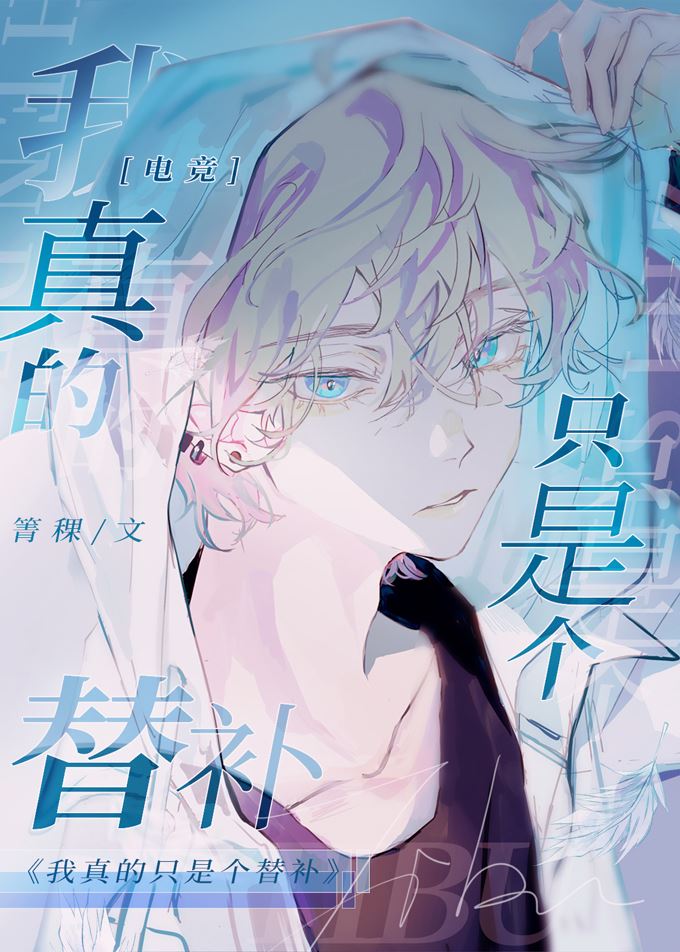
... Read More
Wait so Wu Tianqi literally walked back in after storming out? The stakes just SHIFTED. I thought we were deep in romantic comedy territory with the whole Xiao Shengjing water-choking incident, and then BAM—enter the profit-sharing plotline. Brother Mu is apparently handing out team shares to two starting players now that DT has an LPL slot, and Wu Tianqi couldn't stay away despite his pride. An LPL slot is worth MILLIONS, possibly over a billion with relegation systems. That's not just money, that's survival. That's career-defining. So now we've got internal team politics colliding with whatever mess is happening between Lin Lan and his captain, and honestly the competing tensions are making my brain buzz. Lin Lan spent five years in the original timeline and got zero shares. Now he's watching people get rewarded for being present, for not quitting. Where does that leave him? The suspense isn't just 'will they won't they' romantically—it's 'what will this do to team dynamics when old grudges resurface over money?' Every conflict layer is stacking and I am HERE for it.
... Read More
The visual descriptions in this are so vivid I can literally see the scenes playing out like a drama. Xiao Shengjing washing his hands in that tailored uniform with dragon-patterned lines - every frame is quietly picturesque. And Lin Lan seeing him through the bathroom mirror, realizing how handsome he is. The contrast between the noisy training room and Xiao Shengjing's calm aura is Chef's Kiss. I love how the worldbuilding comes through in small details - the equipment room, the storage closet, the way everyone reacts to Wu Tianqi's bullying. The mirror world concept is interesting because it seems like a twisted reflection of the original world where Lin Lan's status is reversed. Those spiritual forms are such a cool addition to the worldbuilding - each kin has their own beast or object manifestation and they react to people's true nature. The shy cleanliness-obsessed guy revealing a pearl, the taciturn aloof one with the dragon - these aren't just aesthetic choices they tell us about the characters. And the esports team setting with uniforms, training schedules, point deductions, basic salaries of 3000... it grounds this fantasy element in something relatable. I want to know more about the infinite flow dungeons though because that usage guide mention is haunting me.
... Read More
I need to talk about something that hit me way harder than I expected: Lin Lan walking back into the lane after his level three solo kill. The text literally says he walked back “arrogantly” because he knew the jungler wasn't around. And I know this sounds absolutely ridiculous, but that moment of pure, unfiltered confidence—that was the emotional peak of this entire chapter for me. Because remember where he was just minutes before? Stunned into silence. Watching his teammate attack him verbally while he was half-conscious from memory absorption. The contrast between that weakened, vulnerable Lin Lan and this version who casually backs off under enemy turret and still survives? It's incredible. The author doesn't even dwell on it melodramatically. Just: "With confident and stylish strides... fans exclaimed: Lin Lan's form has returned!" That's it. That's all. But I was sitting here absolutely wrecked. The way he proves himself not with words but with pure gameplay—destroying that first turret in ten minutes like it was nothing—it's the kind of moment that makes you love a character on a spiritual level.
... Read More
I need to talk about this one line for a moment because it completely changed how I see Jiang Jin as a character. Jiang Jin unexpectedly felt a kind of teary-eyed feeling. He thought he had made a great engagement, thinking that no one cared, but Lin Lan remembered. This is the single most important character beat in this entire section. Up until now, Jiang Jin has been operating under this quiet assumption that his efforts as a support go unnoticed. That is such a painfully relatable feeling for anyone who has ever played support in any team game. You set up the perfect engage, you throw the ultimate, you position flawlessly, and then the carry goes and does their own thing and nobody mentions your contribution. The loneliness and confusion that had once left him lost is the author telling us directly that Jiang Jin has carried this burden before and it haunted him. But Lin Lan flips the entire dynamic with this one line: If I didn't kill him, your excellent engagement would've been wasted, right? He does not just acknowledge Jiang Jin's work. He explicitly connects his own success to Jiang Jin's preparation. He treats Jiang Jin's engagement as essential rather than incidental. This is what makes their partnership feel genuine instead of manufactured. The detail about Jiang Jin never leaving Lin Lan's side throughout the whole game also reinforces this in a quiet way. Going out to ward and immediately returning because he is afraid Lin Lan would be in danger. That is not just gameplay discipline. That is devotion. It shows that Jiang Jin has found someone who makes his role feel meaningful instead of thankless. Meanwhile the commentary praising both of them creates this external validation that fans of Jiang Jin are crying tears of joy over. The character arc here is subtle but devastating in its simplicity. Jiang Jin spent so long feeling invisible and now finally his teammate sees him.
... Read More
Okay so let me just say — the Wu Tianqi arc in these chapters is ABSOLUTE CINEMA. I literally gasped when I read the part where he had to stand up and apologize to Xiao Shengjing. The narrative does this beautiful thing where it contrasts his old behavior ("he never expected Lin Lan, who had once been treated with contempt, to become the center of attention while he fell into the ignominious fate of being ignored") with his current state. This isn't just a plot twist; it's karmic payoff that makes you want to throw confetti. The structure here is so smart. We start with the team discussing who gets shares — which feels like a light, conversational setup — but it's actually building toward the main dramatic event. Wu Tianqi thought he was untouchable, that DT couldn't function without him. The author deliberately lets us feel that arrogance before yanking the rug out. And then there's Lin Lan, who was at the bottom of the food chain, now accidentally becoming a starter. The pivot from tournament tension to solo queue is a bit jarring but honestly it works because it shows us Lin Lan's range beyond just team dynamics. That pentakill moment? Perfect. It's not just impressive gameplay — it's the author rewarding us for caring about Lin Lan's underdog journey. And ending on Jiang Jin's suspicious realization creates this nice threaded tension. The plot doesn't tie everything up neatly; it leaves threads dangling in the best way.
... Read More
Can we just talk about Xiao Shengjing for a second because this boy is doing SO MUCH emotional labor and the text barely gives him credit. Here's someone who's been casually bantering with Lin Lan about sleeping in and being lazy, and then he drops the most devastating information possible and all we get is him 'frowning' and 'gently touching Lin Lan's head, as if burdened with something.' That gesture. That ONE detail tells me everything. He's been researching this. He's been worried. He knew about these medical records and chose the moment to reveal them carefully. And then his question—'if you retrieve all your memories, will you completely become another person?'—that's not just plot curiosity, that's genuine fear of losing his friend. Meanwhile Lin Lan's reaction is almost too casual, like 'Oh dear, how do I explain this to you?' He's deflecting, honestly. The dynamic between these two has shifted from banter buddies to something way heavier in like three paragraphs. Also Xie Zilu's threat about making Lin Lan 'die a very, very miserable death' over the forgery question—what is THAT energy? Who threatens someone over a signature discrepancy like it's personal betrayal? Something happened between these characters in the original timeline that we haven't seen yet, and I am OBSESSED with finding out.
... Read More
Xie Zilu's text messages are a masterclass in tonal whiplash. One minute he's being all sweet 'I'll buy it for you' and the next he's 'you're still so petty' like a different person hijacked the phone. The 'Heh' he drops in there though—that's the tell. It's condescending even when he's trying to sound casual. And Lin Lan's voice, especially in his internal monologue, is so dry and tired. 'Can he turn the tables from behind the screen?' 'Looks like a piece of chewing gum.' He's not even mad anymore, he's just done. Meanwhile Xiao Shengjing barely speaks and when he does it's these perfect three-word sentences. 'It's okay, have a good sleep.' After catching Lin Lan lying about being awake. That guy communicates in subtext and I respect it so much. Feifei's teasing provides the only real levity—'In your dreams, go to sleep' is the kind of line that made me actually laugh out loud.
... Read More
There is something really profound happening beneath the surface of this batch, and I think it is worth exploring. The central symbol here is fragility itself. Lin Lan is treated as fragile by everyone — fragile heart, fragile emotions, fragile reputation. But that fragility is a mask, and the author is doing something really interesting with it. Is Lin Lan actually fragile, or is he using people's assumptions about fragility as armor? The text leaves this beautifully ambiguous. Then there is the mirror motif. Lin Lan looks at himself in the mirror, sees his reflection, and the author keeps coming back to the idea that the person in the mirror is not the real person. His eyes hide something. His smile carries something dangerous. The reflection becomes a symbol of identity itself — who are we when nobody is watching versus who we perform to be? The hooks themselves feel symbolic too. Thresh's Death Sentence is about capture, about pulling someone toward you against their will. Lin Lan hooks the enemy ADC into a trap they did not see coming. There is something almost predatory about it, and it fits with that final image of the wild beast awakening. The fragile support player is actually the hunter. And Xiao Hai's role here is fascinating. He is the one who keeps trying to protect Lin Lan from the world, but slowly the protection reverses. By the end, Xiao Hai is the one trembling at Lin Lan's smile, realizing that maybe he has been protecting something that never needed protection. The suicide incident mentioned briefly in the text adds this dark undercurrent too. The fragility everyone fears in Lin Lan might not be metaphorical. It might be real trauma wearing a mask. And that makes every interaction between him and Xiao Hai loaded with meaning I am still processing.
... Read More
Can we talk about the atmosphere in this batch because the author did something really subtle and I need to unpack it. The opening scene in the dorm is such a specific vibe. You have Lin Lan waking up, mouthwash, towel, bread — it feels like a lazy morning in a shared apartment except everyone is secretly terrified of this one person. The contrast between mundane daily routines and the high-stakes esports world underneath is really well done. It grounds the story in reality before it explodes into competitive gameplay. But the scene that really lives in my head is Lin Lan putting on those headphones. The text says his gaze sank with the interface, and his fingers elegantly danced on the keyboard. That transformation from messy sleepy guy to focused machine is one of those moments where the author makes you feel like you are watching something sacred happen. Then there is the gaming scene itself — level by level, the hook after hook, the enemy ADC getting pulled in like a fish on a line. The descriptions of each play are almost poetic in their precision. Flash E at the limit. Fake basic attack animation to bait repositioning. Hook and Flash released simultaneously. The author is making competitive gameplay feel like a dance, and I am obsessed. But the most atmospheric moment, the one I keep coming back to, is that final image. The victory screen popping slowly, Lin Lan smiling with those soft eyelashes hiding something unreadable in his eyes, and that smile reflected on the monitor sending a literal chill through Xiao Hai. The author turned a simple gaming win into something almost supernatural. A wild beast awakening behind human eyes. That image is going to haunt me for days. This is exactly the kind of atmospheric writing that makes me want to reread passages slowly and absorb every detail.

Leave a comment

You must be logged in to leave comments. or
