I Really Am Just A Substitute[E-Sports] - Reviews

I Really Am Just A Substitute[E-Sports]
+Add to Custom List
Sort
Add review
... Read More
I need to talk about Xiao Shengjing because this guy is my absolute favorite character in this entire chapter. Here we have a team captain who keeps having to abandon half-completed buffs to rescue his own teammate, and honestly the dynamic is so rich. On one hand, you've got Lin Lan — DT丶Lan, the guy who played Thresh support like he was cheating, and now shows up as an AD carry and does the exact same thing. But what's fascinating is how the other characters perceive him. Jiang Jin, who's supposed to be analyzing data coldly, actually knocks over a water cup and flips a table in shock. That tells you everything. This isn't just impressive gameplay — it's terrifying, in a way that makes people stop and recalibrate their understanding of who Lin Lan actually is. And then there's Xiao Shengjing's relationship with Lin Lan. The captain screams at him to wait, and Lin Lan goes anyway. But here's the thing — Xiao Shengjing never actually stops him. He always ends up coming to save him. There's this underlying current of trust, or maybe desperation. His line, "Come back! Wait for me," reads like frustration on the surface, but the fact that he never leaves Lin Lan behind says something deeper. He's not just carrying the team mechanically — he's carrying them emotionally too. "Hey, Captain, you came just in time. You saved me a Flash." Lin Lan saying this with zero remorse about leaving the buff unfinished — that's not arrogance, is it? That's a kind of intimate shorthand between teammates who know exactly how far they can push each other. The humor in their relationship is what makes it real. But I keep wondering about the others. What does it feel like to be Xiao Hai, who has to follow the captain's orders to help, watching Lin Lan solo carry an entire fight while his buff goes cold? And what does Lin Lan himself feel about being the unknown variable — the guy who switched roles and broke every expectation in the process?
... Read More
Okay, so this whole section about the ASF match is genuinely brilliant plotting. Let me break down why it works so well. First, the setup is classic underdog framing. You've got ASF — this "mid-tier" team that's basically the industry's measuring stick for mediocrity — versus DT, a hastily assembled roster of misfits. The whole esports community is lined up betting against DT. Even the audience members are calling it "common sense" that ASF wins. This creates this incredible dramatic irony because we KNOW Lin Lan is secretly overpowered, right? So watching everyone confidently bet wrong while Lin Lan sits there looking bewildered at strangers calling him "cute" is just *chef's kiss*. Then the masterstroke: losing Game 1 first. This is such a smart narrative choice because it accomplishes two things simultaneously. It makes the audience (both in-universe and us readers) sink even deeper into the "DT is terrible" narrative, and it forces Lin Lan to reveal his trump card. If DT had just won 2-0 flat, there'd be no tension, no dramatic reveal. The draft phase is where the plot really shines. ASF specifically banning Draven because they studied DT's pattern — and then Lin Lan picks LUCIAN, a champion nobody's seen him play — completely wrecks their entire preparation strategy. The line "How does he know how to play this champion?" said by ASF's support? That's the moment the power dynamic flips. The commentators going "Did he secretly practice on a smurf account?" while Jiang Jin knowing the answer is a gorgeous narrative layering — we get insider information that the characters don't have. And the climax lands perfectly: that level 2 gank where Jiang Jin's bubble sets up Lin Lan's full combo. The description of Lucian's five-shot burst making the enemy support panic is cinematic. DT goes from "hastily assembled theater troupe" to a team executing perfect coordination in one game. The plot doesn't just advance — it accelerates. I'm genuinely shook that the chapter cuts off right when Lin Lan is about to explain how he learned Lucian. What's he gonna say? Does he reveal his past-life knowledge? Or does he keep the mystery alive? This pacing is insane. The author really knows how to build tension across multiple layers — the public perception layer, the in-game tactical layer, and the secret-identity layer — all at once.
... Read More
Okay can we talk about Xiao Shengjing for a second because this guy is absolutely fascinating and I need answers. So on one hand, he's the supercold captain who barely speaks, blocks Lin Lan from Coach Zhang's enthusiastic slaps with literally zero emotion, and then sends him 200 yuan as 'repayment.' Like bro are you okay? That is the most Xiao Shengjing thing ever. But then the teammates drop this information bomb: his basic salary is barely ten thousand, he does things that aren't even his job, and he SCOLDS people into quitting. That trainee story gave me chills — the captain doesn't even use dirty words, he just uses KNIVES. Every sentence cuts to the heart. And the kid quit the next day and terminated his contract two days later. This is a man who carries his team on his back and gets absolutely nothing in return except maybe a dinner invite from his brother-in-law or whatever Brother Mu is to him. And here's what gets me — when he helped Lin Lan get that Pentakill, it wasn't just in-game strategy. He KNEW the enemy jungler's position, health, and that Flash was on cooldown. He had been fighting him earlier. He was already exhausted from skirmishes and STILL made sure his support got the kill. This is the kind of teammate who absorbs all the pressure so nobody else has to feel it. I just keep wondering what makes a person this devoted to a 'mediocre' team. Is it duty? Obligation? Something deeper that hasn't been revealed yet? The author is slowly peeling this onion and I am HERE for it.
... Read More
So think about this for a second — this entire passage takes place during an esports tournament, which is supposed to be about competition and glory, but the real emotional core is about family. Ayu's grandmother raised him alone because his parents each formed their own separate families and basically abandoned him. Lin Lan grew up in an orphanage with nobody close. Xiao Shengjing seems to have some unresolved history with Lin Lan from yesterday. Jiang Jin is secretly obsessed with studying Lin Lan's gameplay. Every single character is defined by their relationship — or lack thereof — to family. The grandmother not answering her phone isn't just a plot device, it's the terrifying possibility that the one person who actually loved Ayu might be gone. And Lin Lan, the orphan, is the one most capable of understanding what that fear feels like even though he 'had no say in such matters.' There's this beautiful irony that the two characters with the least family are the ones most attuned to Ayu's personal crisis. The text also mentions how Lin Lan used to visit Ayu's house as a kid because 'his grandmother cooks exceptionally well' and he'd help her around the house. That single detail — a young Lin Lan finding warmth in someone else's home — makes his compassion toward Ayu later feel completely earned. This story isn't about esports. It's about people who don't have families learning how to be there for each other anyway.
... Read More
I am not okay with how good the dialogue is in this section. Let's talk about the opening line: "Captain, come and get assists." That is a power move wrapped in three words. Feifei literally spraying water out of his mouth is the reader surrogate reaction I needed. Of course that's what would happen — nobody expects a support player to talk like they own the mid-lane, and Lin Lan delivers it with total calmness. And then the callback later — "Captain, are two assists enough?" After literally snatching two kills right in front of Xiao Shengjing's nose. The shamelessness is impeccable. What makes it land is that Xiao Shengjing's silence speaks volumes. He doesn't respond. He just... doesn't say anything. Which, as Ayu nervously points out, means the Captain doesn't like others joking with him. But Lin Lan doesn't care or doesn't notice or both. His response is just a question mark. He's genuinely confused why this is an issue. The fans' comments in the chat are also doing heavy lifting here. Lines like "Is this a joke? The support stealing jungle kills?" and "Can't you just support properly?" — these aren't just world-building flourishes. They establish the social pressure Lin Lan is operating against. He's being criticized publicly and his response is to get even better. Classic. Ayu's nervous reminders throughout — "Be more serious" — create this nice contrast. He's playing the straight man to Lin Lan's chaotic energy. The voice dynamic between these three is genuinely funny without being forced.
... Read More
Stakes aren't just about winning or losing; they're about what you're willing to lose. Lin Lan's conflict is beautifully cruel. He's found a way home. The mechanic is clear. He could leave this world, return to the man who loves him, to the life he always wanted. But there's a dead boy in a mirror, and Lin Lan can't unsee him. The external conflict is a mystery—who killed the original Lin Lan? But the internal conflict is heavier: can he abandon a version of himself to its injustice? The author raises the tension by adding a literal timer. Two hours of deep sleep. That's it. Every conversation is edged with the knowledge that the other person will vanish. Xiao Shengjing's desperation isn't dramatic; it's practical. He's bargaining with physics. "Do you promise?" And Lin Lan's hesitation isn't betrayal; it's the collision of two valid loves. The stakes escalate with each beat. If Lin Lan stays, he might solve the truth and never see home again. If he leaves, he abandons a corpse and maybe a ghost. The suspense isn't in whether he'll find the killer; it's in whether he'll find the courage to choose. The most gripping scene is the promise negotiation. Xiao Shengjing's voice is trembling, his grip is tight, his body is already fading. Lin Lan nods—a tacit agreement, not a vow. That ambiguity is where the reader's anxiety lives. I'm not worried about plot twists; I'm worried about the space between what's said and what's kept. The author masters the art of the unresolved cliffhanger. Every chapter ends with a question hanging in the air, a hand reaching, a door closing. I can't stop reading because I need to know if the clock will run out before the choice is made.
... Read More
The dialogue in this text is surprisingly sharp for an esports novel, and that one exchange between Lin Lan and his team has been running through my head ever since I finished reading. "How did you outplay Zou Hao?" "He was just too arrogant." Everyone waiting for more... "Then," Lin Lan Q-dashed in, "he just died." This is peak characterization through dialogue. Lin Lan's voice is instantly recognizable — deadpan, almost bored, treating a clutch outplay like it's Tuesday. And the narrator adding "Lin Lan Q-dashed in" right as he delivers the punchline? That's comedic timing that doesn't even need a laugh track. His teammates' reactions sell it too — Jiang Jin wanting to know "and then?" like Lin Lan is telling a suspenseful story instead of describing a kill. Feifei's "Lin Lan, how did you manage to do that?" carries this genuine bewilderment that makes Lin Lan feel larger than life. The commentator dialogue does its job well too — "Kiner secures a quadra kill, and wipes out the enemy team! Let's congratulate DT, congratulate Irelia, congratulate Kiner!" — it's that classic rapid-fire esports caster energy that builds hype. A bit generic, but effective in context. What I appreciate most is that nobody sounds the same. Lin Lan's dry one-liners contrast perfectly with Jiang Jin's genuine confusion and the commentators' over-the-top excitement. The author clearly understands that in a game full of shouting and strategy calls, different characters should have different verbal personalities. And that last line — "Wu Tianqi might have turned DT into a joke, but Lin Lan, with Irelia, rose against the odds" — that's the narrator stepping in with a thematic mic drop. Perfect ending note.
... Read More
Xiao Shengjing opening his coat and just... enveloping Lin Lan. That's the moment. I wasn't ready for it. Not at all. Everything about that scene works—the sunlight, the river breeze, the way Xiao Shengjing's coat completely covers him. But it's the quiet before it that hits hardest. They've been walking in silence, both thinking about how to comfort each other without saying it. That's not romance-novel padding, that's two people who actually know how to read each other. And then Lin Lan's internal monologue flips between worlds. The orphanage, the bullying, fighting back because no one was coming to save him. And here's this guy—this captain, this senior—who just gives him an open hand instead of a hand to grip. The contrast is brutal. 'Throughout his growth, there wasn't a senior extending a helping hand to rescue him.' Ouch. Just ouch. But the best part is Lin Lan's resistance. He literally can't cry. Tries to, genuinely tries, and says 'You might have misunderstood.' He's so used to surviving alone that vulnerability feels like a language he's forgotten how to speak. And Xiao Shengjing? He doesn't push. He just holds on and says 'It's okay.' No performance, no demands. Just presence. I caught myself re-reading that passage three times. There's something devastating about the fact that Lin Lan is ENvious of the original host—of that stranger's life—because someone protected him once. Someone in this new world is already offering what Lin Lan never had. That's not romantic tension, that's trauma recognition.
... Read More
There are two scenes here that hit me like physical blows. First, the staircase. You have Xiao Shengjing, who has been vigil-watching over Lin Lan for God-knows-how-long, exhausted, pale, fragile. He's just obeying the doctor, going downstairs for medicine. One step, one dark patch of vision, one fall. The transference mechanic clicks into place with such cold, clean logic: simultaneous deep sleep. It's not magic; it's physics. And it makes the whole world feel governed by rules, not whims. That's what pulls me in. The world feels *lived-in*. The second scene is the tackle. Lin Lan, half-asleep in his own bed, gets crushed by a six-foot-three man who doesn't even remember walking through his door. The lamplight on Lin Lan's collarbone, the nightgown collar open, the grumbling that comes out soft and breathless instead of angry—it's so voyeuristic, so intimately framed. You're not watching a plot point; you're watching a mood. The author doesn't tell us these two are close; we *see* it in the way one collapses onto the other and the other doesn't shove him off immediately. The setting isn't just backdrop; it's the container for everything. That stairwell fall? That's fate tripping over its own feet. That bedroom collapse? That's longing made flesh. I keep coming back to how the light works in these moments. Hospital fluorescents versus bedside lamp. Clinical truth versus private delirium. The world feels like it has weather.
... Read More
There's something profoundly unsettling about the way this story frames consciousness after death. The idea that Lin Lan's resentment is so strong it literally warps magnetic fields and traps another version of himself across dimensions—this isn't just sci-fi mechanics, it's a metaphor for grief that refuses to let go. The original Lin Lan died under unclear circumstances, and his unresolved pain becomes a cage. Not a physical cage, but an existential one. Even death isn't enough to release him from whatever wronged him, and that wrongness spills over into the life of whoever inhabits his body now. Meanwhile, Xiao Shengjing represents something different—consciousness that persists not from resentment, but from love and dedication. He breaches parallel worlds not because he's trapped, but because he chooses to come. The contrast is stark: one consciousness anchors through negativity, the other through purposeful devotion. And then there's the fried chicken. Which sounds ridiculous until you think about it. The Silly Dog used food as a weapon of control, poisoning something as simple as a meal. Lin Lan reclaiming that joy—eating peacefully, sauce on his mouth, being watched over rather than policed—that's the story's smallest and most radical act of liberation. The body that died in this world may still be trapped by its resentment, but Lin Lan is already finding ways to live anyway.
... Read More
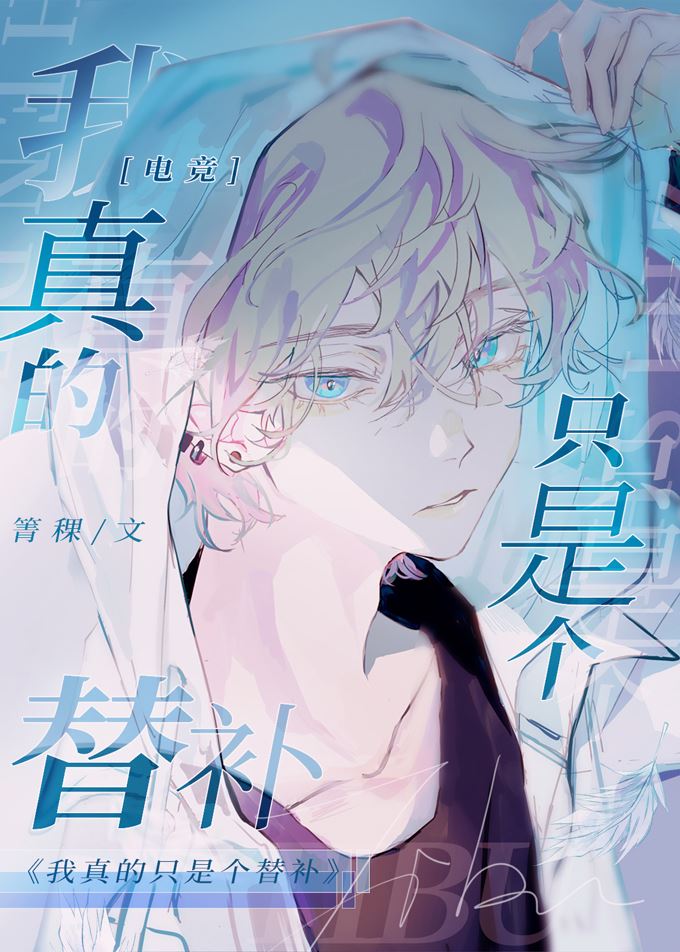
Okay. Let's talk about stakes. Not the abstract kind. The specific, gut-clenching, “I need to sit down” kind. Game three ends. DT has just annihilated an LPL team. Publicly. Brutally. The comments are vicious (“disgraceful!” “embarrassing and well-deserved”). The casters are muttering warnings to the entire league about underestimating opponents. And then—game four begins. The ban phase. Oh god, the ban phase. The opponents ban Draven. Not as a preference. Not as strategy. As punishment. As “we will not let you have your signature weapon again.” They pour their first three picks into top-tier champions—Weapon Master, Vampire, Titan. A composition designed to burst the backline. Designed specifically, explicitly, to target Lin Lan. “Clearly targeting you, Lin Lan, be careful,” Xiao Shengjing warns, and the weight of that “be careful” is everything because we've just watched him be untouchable, and now the text is saying: they know. They've studied. They're coming for you with everything they have. DT gets penalized with three bans. Three. They lose pick advantage. They lose flexibility. And the chat loses its mind—“Pick Ezreal, survive first.” “Maybe Jinx.” “Death is certain no matter what he picks.” And Lin Lan locks Vayne. The commentators hesitate. The chat floods with question marks. The enemy AD turns green. Because Vayne against that composition isn't just hard—it's psychologically violating. It's like bringing a knife to a gunfight and then revealing the knife is made of diamond. What makes this sequence so tense isn't the outcome—we know Lin Lan wins. It's the suffocation of the draft. Every ban, every pick, every whispered warning from Xiao Shengjing, every chaotic comment, every “death is certain”—it's a pressure cooker being tightened bolt by bolt. And then the lock-in. The silence after. The enemy's visible dread. That's not just good writing. That's engineered suspense, and it works because the stakes were already maximal (LPL vs LDL, reputation on the line, a team riding a psychological high) and then the text immediately raises the ante by making the opposition adapt intelligently. They're not stupid. They're responding. And Lin Lan's response to their response is the kind of escalation that makes you grip your phone and forget to breathe. I need to know what happens next. I need to know now. The cliffhanger isn't a question mark. It's a scream.
... Read More
I need to talk about Lee Sin's 'Can't fight, can't fight.' That's it. That's the tweet. Three words and I laughed out loud. In a passage full of tactical descriptions and damage numbers, this single line of dialogue is what humanizes the whole scene. Here's this guy who came in hot with a flank attempt, planned out the ultimate combo with his teammate, and the second he feels even a whiff of danger he's already retreating. The repetition is perfect — it's not confident, it's almost whiny. Meanwhile Zou Hao's dialogue is all short, frustrated bursts: 'Alright.' 'Taking advantage of the situation!' Compare that to Lin Lan who doesn't say a single word in the entire passage. Not one exclamation, not one internal monologue quote. Just pure action. That silence is so much louder than anything either of them could've said. And the narrator's voice with lines like 'What was this?' and 'No wonder he kept targeting Fiora' — that insider-outsider tone where the narrator is basically winking at us while explaining the mechanics, I'm here for it. It makes me feel smart for understanding.

Leave a comment

You must be logged in to leave comments. or
