I Picked Up An Ancient Transmigration Killer To Be A Wife - Reviews

I Picked Up An Ancient Transmigration Killer To Be A Wife
+Add to Custom List
Sort
Add review
... Read More
Let's talk about what's actually at stake here, because this story keeps raising the temperature and I'm here for it. Guo Ming dislocated a guy's arm and tore his ligament on the subway. That's not just self-defense — that's permanent damage to someone's livelihood. Pickpocketing is his job, and she just ended it. So naturally his cousin Qin Hu comes over at 4pm with a screwdriver and malicious intent. The stakes went from 'I might get arrested' to 'someone is trying to kill me in my sleep' in about two paragraphs, and honestly? It never let up. But here's what kept me hooked: Guo Ming isn't scared. She doesn't panic. She goes from sleeping to ceiling-hanging to needle-pointing in one motion. The reader is the one sweating. We're the ones holding our breath while Qin Hu judges the distance between that needle and his eyeball. That's masterful stake manipulation — she's fine, but WE aren't. And then the deeper question hangs in the air: who sent Qin Long and Qin Hu in the first place? Tomorrow Group. A name dropped casually, a threat left half-finished ('next time...'). The story is building an entire underworld behind these two cousins, and Guo Ming just poked a hornet's nest without even knowing it existed. Every time I thought the conflict was resolved, another thread pulls tight. The ligament tear wasn't the end — it was the inciting incident for something much bigger.
... Read More
The restaurant scene was surprisingly vivid for what should've been boring setup. You could practically smell the lobster and abalone through the screen. The author did a nice job showing class dynamics through food ordering—Mama Wu's classmate ordering all the expensive dishes while insisting on removing some was such a specific kind of wealth flex. Not showy, just confident. The VIP room atmosphere felt real too. Two groups of elders chatting enthusiastically while the young people sat in awkward silence. That contrast between the loud adults and the trapped teenagers is such a universal Chinese dating experience. I've been there. The tea-pouring ritual before the menu even arrived added nice cultural texture. What worked well was the sensory details—the painted makeup, the flattened lips selfie, the nervous energy radiating from Wu Yuanyuan. Even the waiter's timing felt natural. You could feel the weight of expectation in that room. The cheese tart scene at the end was a great tonal shift too. Going from stifling formal dinner to casual office afternoon tea with her colleagues made the transition feel earned. The medical center location gave it that specific Beijing neighborhood feel. Small details like that make the world breathe.
... Read More
The pacing in these chapters is a masterclass in breath control. The author starts slow — morning routine, patient consultations, the lazy rhythm of a quiet clinic day. We settle in. We get comfortable. Then: 'Is anyone here? Is there a doctor?' And just like that, the tempo shifts. The narrative moves from lingering description to clipped action. Shoulders tighten. Pulses are checked. Diagnosis delivered. What I really appreciate is how the author uses downtime as a breathing mechanism. The free pulse-checking sessions with neighborhood elders, the tea, the minor ailments — these aren't filler, they're the inhale before the exhale. Without those quiet moments, the confrontation with the short-haired woman wouldn't hit as hard. The story earns its intensity by giving us space to exhale first. The chapter transitions are also worth noting. There's no jarring jump cuts — the pregnant woman returns naturally, the doctor-patient rapport reestablishes, and then the friend bursts in like a storm. It's almost cinematic in how the scenes breathe. Some readers might find the middle section slow, but I think it's necessary groundwork. You need to believe the clinic is a peaceful place before it gets disrupted. One thing I'd question: the time jump between the first visit and Qian Xiaoling's return feels a bit vague — 'a few days later' — but I guess that's the genre. In a slice-of-life medical story, precise chronology takes a backseat to emotional truth.
... Read More
Can we talk about how distinct every voice sounds here? I know that's a basic writing skill, but it's often overlooked, and this author nails it. Wu Yuanyuan's dialogue is warm and teasing — 'You are always full of nonsense!' — she sounds like someone who has known Guo Ming forever and has built up a catalogue of affectionate exasperation. Their banter doesn't need exposition; it lives entirely in what they say to each other. Then there's the short-haired woman, and holy — her voice is immediate red flag. 'What a shitty clinic!' 'Are you sick!' She doesn't speak like anyone else in this scene. Her sentences are sharper, louder, more aggressive. Even her physical actions (pushing Xiao Zhang, shoving back at Xiao Liu) extend her verbal aggression. She doesn't just argue; she assaults. That consistency between how she speaks and how she moves makes her terrifyingly real. Guo Ming's voice is the most interesting because it's almost never loud. When she's confronted, she doesn't raise her voice — she raises her HAND. 'Drag her to the back.' Three words. No explanation, no escalation, just authority. And the internal aside about 'and bury her' — that's not dialogue, that's the narrative voice peeking through, and it's HILARIOUS. It gives us Guo Ming's真实 thoughts without her saying them out loud. Qian Xiaoling's dialogue is soft, grateful, deferential — 'Doctor Guo, although you are young...' She sounds like someone who's been treated with kindness for the first time in a while and doesn't quite know how to process it.
... Read More
Let's talk about how natural the dialogue sounds, because it really does. Wu Yuanyuan asking 'Do you want something sweet or something salty?' and then immediately listing snacks like she's running an inventory — that's such a specific, charming voice. She's enthusiastic, a little scattered, genuinely happy to please someone. And Guo Ming's responses are so different: short, warm, knowing. 'I didn't laugh at you for being timid, I was laughing at you being so cute.' That line perfectly captures their dynamic — Guo Ming sees something beautiful in Wu Yuanyuan that she might not see in herself. Then there's the medical scene with the older doctor. 'Xiao Guo, the kid just now...' — that hesitation, that awe. And Guo Ming's response is humble but matter-of-fact: 'That kid went to Hell and came back.' She doesn't boast. She just states it like it's normal. Which, for her, apparently it is. Father Wu's internal shift when he learns Guo Ming is a real doctor, not just an assistant — he doesn't say anything about it directly but the narration tells us he's 'pleasantly surprised.' That's showing, not telling, and it works. The ending scene dialogue is delicious too. 'Come here a little bit, I'll tell you.' Classic misdirection. Wu Yuanyuan walking over thinking she's being helpful and instead getting... well, you know. The banter before the heat, the playful tension — it flows so naturally.
... Read More
Okay so this chapter is a real turning point for Miaomiao's storyline. We start with her barely conscious, crying against the ceiling, completely broken down from being paralyzed. Then Guo Ming comes in, does this whole intense acupuncture + qi treatment sequence, and by the end promises she can recover and dance again. That promise makes the mother faint from emotional overwhelm, which is... dramatic but effective. The pacing here is pretty good actually—starts heavy and painful, then releases into this wave of hope. The only thing that felt slightly rushed was the transition from the serious medical stuff to the salon scene. One minute they're discussing meridians and half a year of torture, the next it's haircuts and flirtatious barbers. Not bad, just a whiplash shift. But I guess that's the point—the characters needed a breather after that emotional intensity. Overall the plot thread of Miaomiao's recovery is well-structured though, with clear stakes, pain, and now a promise of payoff.
... Read More
Honestly, I need a moment. Father Wu. Just—father Wu. This woman teacher starts spouting nonsense about Jiang Yunyun being perverted and mentally ill, and what does he do? He doesn't back down. Not even a little. He literally says, Did you mention that homosexuality is a perversion in your psychology course? Is it a mental illness? It's ridiculous! And then he throws in that absolutely devastating line: If the girls in the class change classes because Yunyun is lesbian, there are so many heterosexual boys in that class, and those girls are more likely to fall in love early, why don't they change classes? I nearly fell out of my chair. The contrast with Mother Wu is everything too. Mother Wu's reaction is more like—oh, she confessed to a girl? Could it be a joke? The concern isn't discrimination, the book explicitly tells us, but worry. That's so real. That's so how some parents actually are. And Jiang Yunyun, sitting there with red swollen eyes, just nodding, not saying anything—she must feel so exposed. But then Father Wu goes upstairs, knocks, and just says Please tell me. I think you may not know who to talk to. That line hit me in the chest. He doesn't pretend he understands everything. He just makes space for her.
... Read More
I have to talk about how this chapter basically slams you from one world into another, and I love it. The opening is so intimate — sweaty sheets, golden needles gleaming in someone's fingertips, knuckles white from gripping fabric. You can literally feel the heat in that room. The description of Zeng Miaomiao trembling on the bed, sweat oozing from pores at a speed visible to the naked eye — that's not just detail, that's cinema. Every frame is rendered. And then *whoosh*, suddenly we're in an office, fluorescent lighting, a police station, Captain Chen rolling up his sleeves like he's about to demonstrate something. The shift is jarring but it works because the world feels vast enough to hold both. This isn't a story confined to one setting — it's a world where private healers with golden needles exist alongside organized crime syndicates and provincial police departments. That contrast itself tells you something about this universe: magic and mundane law enforcement coexist, and the protagonist moves between them effortlessly. The hotel check-in detail for the Hongyun Food Factory representatives is another small worldbuilding gem. It grounds the whole conspiracy in something bureaucratic and boring — which makes it feel real. The merchandise exchange meeting, the annual tradition, the safe where samples are kept. These aren't flashy details but they make the world feel lived-in, like it existed before the characters walked into it and will keep existing after they leave. What strikes me most is how the healing scene establishes a physical geography of the body — Dazhui, Body Pillar, Lingtai, Zhiyang, the spine, the waist — as if the novel has its own anatomy. The meridian system isn't mentioned in exposition; it's shown through action. That's how you build a world: by making the impossible feel like common knowledge.
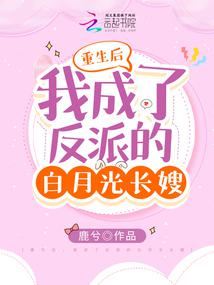
... Read More
re-reading this and the symbolism is layered. the blood—constant references to it, Guo Ming's blood on the intern, Wu Yuanyuan's blood loss, the transfusion—all of it represents sacrifice. both women are giving pieces of themselves physically. but the deeper symbol is the GOLD NEEDLES. in traditional context, gold needles are for healing and precision; here they're used by someone who also kills with her hands. that duality IS the theme: love as both creation and destruction. Guo Ming's medicine (the red pill in black porcelain bottle) feels almost alchemical—it transforms near-death into recovery. and Wu Yuanyuan's refusal to call her parents? that's about the theme of protective silence, of loving someone so much you absorb their consequences alone. the line "as long as you live, I can't die" is inverted by the end—now it's "as long as YOU live, I must accept punishment." the moral economy of this relationship is terrifying and beautiful.
... Read More
There's this recurring motif in this batch that I can't shake: surveillance, sight, and the inability to truly see what matters. Cameras are EVERYWHERE. The community has them. The police station has them. Guo Ming spends the entire afternoon mapping their positions like a military operation. And yet—none of those cameras have captured what she's actually looking for. The martial arts master appeared on video, yes, but his identity and whereabouts require a community forum to decode. The system is designed to watch, but the watching isn't producing the answers. And then there's Guo Ming herself. She can't operate the surveillance computers despite physically infiltrating the building. She relies on instinct—'her keen senses and instinct since she was a child'—which is fundamentally different from technological observation. Her body tells her something is wrong before her mind can process why. Instinct over data. Human perception over mechanical recording. Even Zhang Qiang's comment about 'the masters among the folks' fits here. The real expertise isn't in the official systems—it's in the crowds, in the forums, in the people who pay attention. The story seems to be asking: who really sees clearly, and what does it cost to pay attention?
... Read More
the hospital scene is genuinely cinematic. Guo Ming standing outside the operating room while Wu Yuanyuan gets organ surgery and transfusion—the image of her "quietly watching from the side, as if she wanted to engrave this person deeply in her heart" is one of the most haunting lines I've read. it's not dramatic yelling or sobbing, it's SILENT horror at how close she came to losing someone. and then the gold needles detail—Guo Ming assisting doctors beside her while also being a combatant who "cut people alive" last night—that contrast between healer and killer in the same person is visually and thematically rich. the medicine box arrival via intern who sees blood on Guo Ming and goes pale but doesn't ask questions? worldbuilding through implication. we know this isn't an ordinary hospital, we know Guo Ming has resources and connections, we know there's a underworld context without a single exposition dump. the chicken soup moment is such a small, domestic beat in the middle of all this intensity—Wu Yuanyuan tasting something normal while her body rebuilds. it grounds the entire scene.
... Read More
This chapter gave me the most wholesome, ache-inducing confession of affection I have read in a long time. Pang Deyou's conversation with Guo Ming about Miss Zhang is basically a masterclass in showing how deep, unexamined love works. When Guo Ming asks him what he likes about her, his answer is just: I can't find anything I don't like. Then he doubles down — after thinking about it, I like everything about her. What makes this so powerful is how Pang Deyou then pivots to her backstory instead of her qualities. He doesn't say she's pretty or kind. He tells Guo Ming about the earthquake fear, the empty beer bottles she stood up to test whether the house would stay level, the moment her mother cried and Pang Deyou realized how small and terrified that little girl must have felt. This is the psychology of someone who fell in love not with an ideal but with a person's entire history — the fragility and the courage braided together. His final line is devastating: She may look careless and clueless, but she is actually fragile and strong at the same time. That single sentence captures everything. Miss Zhang screams and looks for a fight, yes — but underneath that armor is a woman who spent her childhood standing empty bottles upright in the dark, hoping they would fall if danger came, so her parents would know something was wrong. And now she wants to catch the bad guys so her father will finally have time to come home. I also appreciated how Zeng Youfu and his wife react during the treatment scene. Youfu arched his body unconsciously as if he could take his daughter's pain himself. His whole frame shaking, face white, lips bitten bloodless. And Mrs. Zeng scratching her own finger into her husband's arm. These are not dramatic gestures — they are the involuntary, animal responses of parents watching their child suffer. The author doesn't need dialogue here; the bodies tell the story.

Leave a comment

You must be logged in to leave comments. or
