I heard that after I died, I became the villain’s white moonlight. - Reviews

I heard that after I died, I became the villain’s white moonlight.
+Add to Custom List
Sort
Add review
... Read More
There's this one moment where Sang Qiyan goes down into the spiritual mine to inspect that cursed artifact, and the atmosphere shift is incredible. He tells Sang Nian: "It's dark and cold underground. Be a good girl and wait for me here." The casual way he says it — like he's sending her to do chores instead of descending into a potentially lethal environment — really grounds the world in its cultivation setting. This isn't just a fancy mansion with gardens; underneath it all there are dark tunnels, spiritual stone veins, and artifacts that can level entire cities. And the artifact itself is such a chilling concept. A semi-finished product capable of detecting and excavating spiritual stone veins, producing more in a single day than a thousand miners over three days. The greed it creates is almost tangible — Qingzhou has numerous spiritual mines, and there are people in the shadows coveting them. The fact that this thing could trigger an underground explosion and bury the entire region is the kind of worldbuilding detail that makes you realize how fragile everything in this setting actually is. Wealth, power, safety — it's all sitting on top of something that could crack open and swallow everyone. Meanwhile Sang Nian sitting in the study, twisting her fingers, waiting two hours for him to come back — that domestic anxiety against the backdrop of a world where spiritual artifacts can cause mass casualties? That contrast is what makes the atmosphere so tense. The personal and the catastrophic are constantly overlapping.
... Read More
Let me just say—this author knows how to build tension like nobody's business. The structure here is genuinely brilliant. We start with what seems like a comedic scene (the shadow guy making weird comments, Sang Nian yelling 'you grabbed the wrong person'), then BAM—she passes out and we're in her nightmare about thesis defense and deferred graduation. That's such a clever way to establish her character before dropping us into the real emotional payload. Then the story layers another dream on top of that—the dreamscape of Xie Chenzhou's past. And the pacing within THAT is where it really shines. The author doesn't rush through his trauma. We get the rainstorm scene, then the market alley, then the cage—and each one escalates. The five-year-old begging his mother not to leave him. The six-year-old getting called a monster. Then the cage sequences that span years. It's methodical, almost cruel in how it unfolds. But the real pacing masterstroke is how the barrier between Sang Nian and Xie Chenzhou physically shrinks as the dreamscape progresses. She's getting closer without her even fully realizing it. And the barrier only shatters at the moment of maximum stakes—when the blade sinks into his chest. That's not accidental pacing, that's calculated to make you feel like your heart is being stabbed too. The cliffhanger ending mid-sentence? Perfect. Just perfect.
... Read More
The City Lord is honestly the most tragic figure in these chapters and I didn't expect to feel sorry for him at all. His entire existence revolves around this sister who resents him, who never gave him a kind look, who he kept alive against her will with rare treasures and miraculous elixirs. He owes her everything because he brought her into a world she never wanted to be in, and his guilt has shaped him into this deeply submissive, almost pathetic version of a brother. The scene where he pulls out that book—this obvious intimate manual—and can barely meet her eyes while telling her to study it for her health? That's not just comedy gold, that's a portrait of a man who has lost all sense of how to relate to his sister as a person. He can give her anything except genuine connection, and he knows it. But the deeper theme here is about the original host's cruelty and how it echoes through Xie Chenzhou's treatment. She was kept alive against her will by a brother who couldn't let her go, and she took that same inability to let go and twisted it into something destructive toward someone who had nothing else. The cycle of people who cannot accept boundaries—whether through overprotection or through cruelty—seems to be the real villain here, not any monster that might appear later.
... Read More
The pacing in these chapters is absolutely ruthless and I love it. You open with a system notification that drops the single most devastating piece of information—favorability at -123060—and then immediately cuts to the visual of Xie Chenzhou being whipped. There's no warm-up, no gentle transition. It's just: here's your problem, here's how bad it is, good luck. What's clever is how the author uses the interaction with the City Lord to briefly slow things down. The sweet soup scene, the awkward book-giving moment, the way he can't quite bring himself to pat her head but settles for her shoulder instead—these small beats give you room to breathe before the next wave of tension hits. And then just as you think things might settle, Commander Lin appears with a grim expression and the monster plot is dropped on you. Half a month. That's the deadline for the protagonist team arriving, which means that's also when Sang Nian and Xie Chenzhou are supposed to leave. So you have the seven-month favorability mission running in the background, a monster appearing in two weeks, and a brother who is simultaneously overprotective and completely oblivious to what's actually happening. The layers of ticking clocks keep you turning pages.
... Read More
I need to talk about this one scene because the imagery was absolutely cinematic. Spring at its peak, pear blossoms in full bloom—every single one a rare variety that the City Lord planted because his sister adores them. And then blood. Just droplets of crimson splashing against pure white petals, tracing cinnabar-like tear tracks across the flowers. The visual of Xie Chenzhou hanging from a willow tree, draped entirely in red while everything else is washed in cold, gloomy light under a cloud-obscured sun—it's gorgeous and horrifying at the same time. I could literally see this as a film scene. The contrast between the delicate spring setting and the brutal punishment happening within it is so deliberate, so carefully composed. And then there's the firewood shed later on—four windows, three shattered, two massive holes in the roof. A masterpiece of a room with dead... (the text cuts off but you get it). The original host didn't just punish him, she put him in a place that was actively falling apart, mirroring how broken he was inside. The worldbuilding here isn't about grand descriptions of cities or magic systems—it's about using the environment to reflect the emotional state of the characters. Every detail serves the mood.
... Read More
Can we just talk about Xie Chenzhou for a second because THIS MAN has completely transformed from the original novel's weakling into someone who crushes demonic beast skulls with his bare hands and then deliberately drops people into water for fun? The contrast is wild. In the original book, he was apparently someone any man or dog could walk all over. Now he's literally pressing his hand around Sang Nian's throat in a stream while she's treading water, and then he LAUGHS. Like a proper villain laugh. And she's just sitting there like "stop messing around, you can't kill me" because she has magical treasures protecting her. The power dynamic between these two is so deliciously twisted. But here's the thing that got me—the scene where she's washing his hands after he killed that demon. She's scrubbing her own face like she's trying to peel off a layer of skin from the blood and brains, and then she grabs HIS hand and meticulously wipes it clean. His reflection in the water, her trembling eyelashes, the warm droplets falling into his palm. He gets this wave of unprovoked irritation and asks if she's crying, and she's like "the smell of blood is stinging my eyes." I felt that. The intimacy of that moment is so understated but so loaded. He's a killer, she's traumatized, and they're sharing this quiet moment by a stream while absolute nonsense is about to unfold. Also, her calling him an "absolute psycho" out loud while he's literally threatening her life? That's the kind of character dynamic I live for.
... Read More
Let me just say this: the chapter transitions in this batch are incredibly well-handled. You go from a full-on action sequence with the octopus demon escaping into a stream, City Lord Sang's dramatic rescue, the carriage hoisting, the private conversation in the second carriage, the orange scene, the crows appearing as a cliffhanger—and then Chapter 12 starts with her sleeping in and Chun'er scaring the living daylights out of her. It never feels rushed or dragged out. The author knows exactly when to compress time (three hours of bathing, apparently) and when to slow down to a crawl (the entire orange negotiation takes up what feels like ten minutes of real-time but is actually a massive relationship turning point). The banquet setup at the end of Chapter 13 is a perfect bridge—it gives us a reason for the group to interact together while also reminding us that the original plot is still lurking in the background, waiting to hijack things if Sang Nian slips up. And that ending with the crows? "They found me after all." Short. Chilling. Perfect. I immediately flipped to the next chapter.
... Read More
I have to talk about how the dialogue in this section works because it's actually really clever. On the surface, there's not a ton of dialogue—especially in the dreamscape sequences. But what's there is devastating in its simplicity. The five-year-old Xie Chenzhou saying 'Mother, don't leave me behind' three times, each time more desperate, each time more broken—that's not over-written dialogue, that's the kind of repetition that mirrors how a traumatized child would actually behave. And his mother never says anything meaningful. 'If you dare follow me again, I'll kill you.' That's it. Cold, clinical, and absolutely chilling. Then there's the young man in the cage who speaks in this eerily gentle tone: 'Undying, your flesh and blood can save countless lives. So please, just endure it a little longer.' The contrast between his soft words and his horrific actions is genuinely unsettling. He's not cackling or anything—he's polite about it. That's so much worse. And Sang Nian's dialogue is mostly screams and fragmented words because she's behind a barrier, but when she finally breaks through and shouts 'Xie Chenzhou!'—that single line carries so much weight. It's the first time anyone has called him by his real name in seven years. The dialogue here doesn't need to be fancy. It just needs to be true, and it is.
... Read More
I keep getting thrown off by the favorability system notifications. Like, on one hand it's a fun gamified element, but on the other hand it makes every sweet moment feel slightly manufactured, you know? When Sang Nian says "you are the absolute most formidable person I've ever met" and the system immediately goes DING +100, it's almost too on-the-nose. But then the scene keeps going and becomes genuinely tender anyway, which I guess is the author's way of saying the system doesn't capture everything. The real emotional gut-punch for me was this exchange: "Even if you don't say it out loud, I know you hate my guts. Don't worry, I won't cling to you the way I used to." She's acknowledging their entire history, her past self's behavior, and offering him an out. That's not nothing. And his response—"You'd better mean what you say"—is basically him saying I'm ready to believe you but I'm terrified you'll break this too. Then the blood oath offer. She's willing to swear something that would kill her if she breaks it, and he just... doesn't answer. The silence between them in that carriage, the wind outside, the way the author stretches out that quiet moment—chef's kiss. He's weighing whether she's sincere or playing another game, and honestly I can't blame him after everything.
... Read More
The stakes in this section are absolutely brutal and I need to process this. On the surface, Sang Nian's mission is to save Xie Chenzhou from demonic poison—but the real stakes are so much deeper. The conflict isn't just physical; it's existential. Xie Chenzhou has been tortured for seven years, his body destroyed and rebuilt repeatedly, and the most heartbreaking part is that he's still PRAYING for someone to come save him. Even after everything. Even when he's lost his tongue, his eyes, his fingers—his last words, pieced together from muffled sounds, are 'Save me.' And Sang Nian's conflict is equally agonizing because she's powerless. She can watch, she can feel every ounce of his pain, but she literally cannot reach him until the barrier breaks. The author makes you feel that helplessness viscerally—you're screaming at the page right along with her. The external conflict (the young man torturing Xie Chenzhou for his healing flesh) is horrifying, but the internal conflict is what really gets you. Xie Chenzhou went from a child who believed his mother would come back, to a teenager who stares blankly at cold stone walls with no emotion left. That loss of hope is a different kind of death, and it's infinitely more devastating than any physical torture. The moment the barrier shatters and Sang Nian finally reaches him—that's the release the entire section has been building toward. But it cuts off before we get closure, which means the stakes are still ON THE LINE. He's saved but we don't know from what, and that uncertainty is torture in itself.
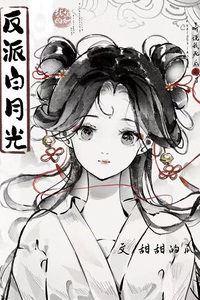
... Read More
Okay I need to talk about this ending because MY HEART IS ACTUALLY SHATTERED. The way Sang Nian breaks through that barrier—crash—like the whole dreamscape shatters when she finally reaches him—and she doesn't call him 'Undying' or anything, she calls him XIE CHENZHOU. His real name. The one he hasn't heard anyone use in seven years of hell. And that final line 'I'm' just cuts off mid-sentence and I am NOT OKAY. What was she going to say?? I need the next chapter immediately. But honestly the most devastating part isn't even the climax—it's the quiet moments. Like when little Xie Chenzhou is just whispering 'I'm not a monster' after the kids throw rocks at him and his wound heals in front of their terrified eyes. He's six years old and he's already learned to just... dust himself off and keep walking. That's not a child, that's a ghost wearing a child's skin. And Sang Nian watching all of this from behind the barrier, dry-heaving, unable to touch him, unable to do anything except scream his name—that's the kind of helplessness that makes you want to shake the author. She's literally the only person who sees him as a person, not a monster, not a commodity, not 'Undying,' and she can't even reach him until he's being stabbed in the chest for the dozenth time. The emotional weight of that is just... god. I'm still not over it.
... Read More
The dialogue in these chapters is genuinely funny, which I wasn't fully expecting. Sang Nian's voice is so distinct—she's equal parts manipulative schemer and chaotic gremlin, and the writing captures that perfectly. Her line about City Lord Sang: "She's been married a few days and she's already throwing her brother away" is such a natural sibling jab. And his response of just flicking his sleeve and grumbling? That's the kind of detail that makes a relationship feel lived-in. But the orange argument is where the dialogue truly shines: "Most people don't know this, but the segment right after a sour orange piece is usually sweet—in fact, it's the absolute sweetest piece on the entire tree, because the tree funnels all its sugar straight into it." This is such a specific, ridiculous piece of false knowledge delivered with complete deadpan seriousness. And Xie Chenzhou, this guy who could probably assassinate her with a glance, just... accepts it. "It's sweet." He's committed to the bit. The fact that he then hands her the rest of the orange and asks "Well?" with that lazy tone is the kind of character moment that only works because the dialogue has earned it. And then her middle finger. Perfect.

Leave a comment

You must be logged in to leave comments. or
