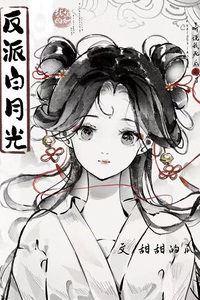
I heard that after I died, I became the villain’s white moonlight.
Novel Info

Summary

... Read More

Sang Nian, a graduate student who failed her thesis plagiarism check, accidentally transmigrates into a cultivation novel after collapsing in despair. She inhabits the body of Sang Yunling, the vicious female supporting character destined to die at the hands of Xie Chenzhou, the tragic male supporting character and the female lead's first love. In the original story, Sang Yunling abducted Xie Chenzhou, subjected him to abuse, and drove him to madness, only to be killed by him in revenge. Sang Nian finds herself bound to Xie Chenzhou on their wedding night, facing his murderous intent. A system named Sixty-six appears, assigning her a mission to conquer Xie Chenzhou's heart within seven months or face death. However, the system is unreliable and often offline, leaving Sang Nian to navigate her precarious situation alone.

Sang Nian attempts to change her fate by treating Xie Chenzhou with kindness, untying his bindings and offering him medicine. She learns that her brother, the City Lord, had forced Xie Chenzhou to swallow aphrodisiac pills and later beat him severely for his defiance. Despite Sang Nian's efforts to protect him, Xie Chenzhou remains deeply distrustful, viewing her actions as manipulative games. His favorability rating toward her is catastrophically low, starting at negative one hundred and twenty thousand. Sang Nian's attempts to build rapport are consistently met with hostility or indifference, as Xie Chenzhou believes she only seeks to use his unique dual-cultivation physique for her own benefit.

A critical turning point occurs when a demon attacks Qingzhou City and kidnaps Xie Chenzhou, mistaking him for a beauty due to his appearance. Sang Nian pursues them into an underground cavern, where Xie Chenzhou is poisoned and near death. To save him, Sang Nian uses all her defensive artifacts and enters his dream, witnessing his traumatic past. She sees his mother abandon him, his years of torture by a man who harvested his body parts for their regenerative properties, and his profound loneliness. In the dream, Sang Nian breaks through the barrier to rescue him, screaming his true name and promising to save him. This act causes his favorability to skyrocket, though it later drops again upon waking.

After escaping the cavern with Xie Chenzhou's help, Sang Nian continues her struggle to gain his trust. She faces the original plot's events, including the arrival of the Xiaoyao Sect disciples who are meant to rescue her. However, the timeline has shifted, and Sang Nian must adapt to the changing circumstances. She realizes that her brother's interference and the original host's cruel actions have created a web of misunderstandings that are difficult to unravel. Sang Nian decides to treat Xie Chenzhou as an equal, offering him genuine care and protection without expecting immediate gratitude. She moves him into her residence, providing him with comfort and safety, hoping to slowly chip away at his defenses.

As the story progresses, Sang Nian uncovers more about the cultivation world and her own role within it. She learns that her congenital heart condition is linked to her transmigration and that her survival depends on stabilizing her relationship with Xie Chenzhou. The narrative explores themes of trauma, redemption, and the complexity of human connections. Sang Nian's determination to change her fate drives her to make difficult choices, often putting herself at risk to protect Xie Chenzhou. Their relationship evolves from one of fear and hatred to a tentative alliance, as they navigate the dangers of the cultivation world together. The story sets the stage for a longer journey of healing and discovery, with Sang Nian striving to rewrite the tragic ending destined for both of them.

Novel Items

More
Artifact
Custom-made binding rope with protective barriers placed upon it. It is impossible to cut or untie without a specific incantation. The original owner Sang Yunling never bothered to remember the incantation.
Pill
Three pills forcefully made Xie Chenzhou swallow by the Lord of Qingzhou City before dragging him into the bridal chamber. Their potency wears off by dawn.
Weapon
A whip with terrifying destructive power even without being driven by spiritual energy. It can split tables and chairs, shatter teacups and porcelain vases, and would have leveled the entire room if not for the defensive array protecting it.
Formation
A protective formation surrounding the room that prevented the heavenly-grade artifact's destructive power from leveling the entire space.
Pill
Pills with a brand-new formula sent by Medicine King Valley, working wonderfully for external wounds. Sang Nian stores the remaining pills in her storage pouch and instructs Chun'er to prepare more for future use.
Physique
Xie Chenzhou's unique physique. As long as Sang Nian (afflicted with a strange illness) engages in dual cultivation with him, her condition will stabilize. Doing it enough times may improve her constitution and skyrocket her cultivation.
Latest Release
DateGroupRelease
2026-08-11shanghai fantasy c30
2026-08-11shanghai fantasy c29
2026-08-11shanghai fantasy c28
2026-08-11shanghai fantasy c27
2026-08-11shanghai fantasy c26
2026-08-11shanghai fantasy c25
2026-08-11shanghai fantasy c24
2026-08-11shanghai fantasy c23
2026-08-11shanghai fantasy c22
2026-08-11shanghai fantasy c21
2026-08-11shanghai fantasy c20
2026-08-11shanghai fantasy c19

Community Reviews

Rating(3.8 / 5.0, 24votes)
5 stars
6(25%)
4 stars
7(29%)
3 stars
11(46%)
2 stars
0(0%)
1 stars
0(0%)

Popular reviews

... Read More
I need to sit with this for a moment because the symbolism here is just... layered. The name 'Undying' is the central metaphor of this entire section, and it's devastating. This boy who begged his mother not to leave him, who crawled through mud and blood and rain, who was dissected and regenerated and dissected again for seven years—his torturer names him 'Undying' as if his suffering is a gift. 'From this day onward, your name is Undying. Every single inch of your flesh and blood will become a priceless treasure.' The irony is brutal. He doesn't want to be undying. He wants to die. He wants someone to save him. His healing ability—the very thing his captor celebrates—is what traps him in an endless cycle of torture. He cannot escape through death because his body won't let him. That's not a superpower; that's a curse wrapped in the language of a blessing. And then there's the name 'Xie Chenzhou' itself. When Sang Nian finally breaks through the barrier and screams his real name, she's essentially saying: I see you. I know who you are beneath all the torture and the false name. You're not 'Undying'—you're Xie Chenzhou, and you matter. The rain is another symbol I can't stop thinking about. It starts the whole sequence—the mother abandoning him in the torrential rain, the blood diluting in the downpour. Rain as both destruction and erasure. But then at the end, starlight tears through the darkness. Light breaking through the endless storm. It's a small detail but it matters.
... Read More
There's this one image that won't leave me—the bright red blooming in the clear stream water, washing away and repeating over and over. Xie Chenzhou's hands are covered in blood from killing that demonic beast, and he's just staring at his own reflection while the red keeps dispersing. It's such a simple moment but it feels loaded with meaning. Blood as guilt, as violence, as something that stains and yet keeps flowing away. And then Sang Nian is doing the same thing to herself, frantically scrubbing her face like she needs to peel off the layer of skin that touched the gore. The water motif continues throughout—she falls into the stream, he pulls her out only to drop her back in, and then the octopus demon literally emerges FROM the water. Water as purification, water as danger, water as the space where these two characters are forced to confront each other. There's something almost biblical about the washing imagery, except it's completely undercut by the fact that the octopus demon appears right after and starts talking about joining them in the water. I also can't ignore the blood-red cheeks when Sang Nian is scrubbing her face. She's literally marking herself with the same color as the violence they've just witnessed. And then she wipes HIS hands clean with her brocade handkerchief. The transfer of contamination, the intimacy of care between two people who should probably be enemies—there's so much happening beneath the surface of these seemingly simple actions. The novel keeps layering these symbolic moments into what could easily be just a comedic adventure story.
... Read More
Okay so let me just say this book is a whole mess and I love it. The original novel apparently had a very tidy plot structure, but Sang Nian has single-handedly wrecked every storyline just by existing in it. The fact that Su Xueyin — who in the original book was supposed to be hopelessly in love with Xie Chenzhou as her white moonlight — is now completely unfazed by him? That alone tells you how far off the rails everything has gone. And honestly, isn't that the most satisfying thing? The original wicked female supporting character is now the only one holding the entire narrative together while everyone else has gone completely off-script. But the real plot bomb dropped at the end, and I am SHOOK. Sang Qiyan accidentally blurts out that Sang Nian's mother was a cultivator and died in mysterious circumstances, and then we get the revelation that they're not even blood-related? His parents were stone-cutters who died in an accident, and the previous City Lord brought him home and told him to call him Father. This is a whole different layer of backstory that was completely hidden. The original novel never wrote any of this, which means Sang Nian is uncovering plot threads that don't even exist in the source material anymore. She's basically writing her own story now, and I cannot wait to see where it goes.
... Read More
"You make a fair point, but to prevent your wandering eye from causing any catastrophic trouble in the future, I think it's best today if I simply remove this root of all your troubles. Don't worry, it won't hurt much. My axe is very sharp." I need to sit down. Wen Buyu—the gentle, weak, scholarly male lead from the original novel—says this with a GENTLE SMILE while CHASING SOMEONE DOWN WITH AN AXE. The dialogue writing in this book is absolutely phenomenal because it completely subverts expectations at every turn. Every character says things that are wildly inappropriate for their supposed archetype, and it's hilarious. The octopus demon's voice is a masterpiece of comedic writing. His entire personality is contained in lines like "Beauty ~ What kind of game are you two playing? Can big brother join in?" and "I'll sleep right in the middle!" and then his dramatic confession about being an innocent octopus prince who just wanted to find true love on land. The man is absolutely deranged and he KNOWS it. And Sang Nian's internal monologue is perfectly deadpan—"She wanted to slap him, but she was also a bit afraid he might lick her hand." That's not just funny, that's a perfectly compressed summary of the entire tonal vibe of this book. The author's narrative voice has this wonderful rhythm where it goes from genuinely tense to completely absurd in a single paragraph. One moment you're worried about Sang Nian's life, the next you're reading about a man in a powder-pink robe with a catfish in his mouth. The dialogue never feels forced—it's all character-specific and wildly entertaining.
... Read More
I need to talk about the stakes here because they're layered in the best way. On the surface, you've got the octopus demon attack—which is resolved pretty quickly, honestly a bit too neatly. The real tension comes from what's building underneath. The blood oath scene is the emotional stakes peak. A blood oath in this world means bleeding to death if broken. Sang Nian is offering Xie Chenzhou the nuclear option of trust, and he's refusing to even consider it. That's not cowardice—that's someone who has been betrayed too many times to throw caution to the wind. The fact that she's willing to put her life on the line for his trust says everything about how much she's changed from the original Sang Yunling. But then—the crows. Two crows with glowing green eyes, perched on the highest branch, nodding at Xie Chenzhou before flying off. And his reaction: the warmth draining from his eyes, staring at his own bony knuckles, muttering "They found me after all." Who are THEY? What is he running from? And why does it feel like this threat is going to collide with the banquet scene that's about to happen? The original plot is also a ticking clock. Sang Nian knows what's supposed to happen—Xie Chenzhou escaping, her past self torturing him, everyone turning against her. She's trying to rewrite fate while new threats close in from all sides. The stakes aren't just personal anymore.
... Read More
The stakes in this book are layered in a way that keeps getting worse every time you think you've understood the problem. On the surface, it's a seven-month mission to win over a man who hates you with a number so large it should be illegal. But then you realize the original host made things infinitely worse by throwing him in a literal death trap of a shed, and now Sang Nian has to undo all of that while her brother is actively making things worse by whipping him. And the monster subplot? Half a month until the protagonist team arrives, which means half a month until everything changes. Sang Nian is trapped in a situation where she needs to build trust with someone who has every reason to distrust her, while the people around her are actively sabotaging that trust at every turn. Her brother thinks he's helping. The system thinks this is easy. Liuli the bird is getting threatened with coal-digging reassignment. The most terrifying part is that Xie Chenzhou's line—"no one in this world can kill me"—is probably meant to sound like a threat, but in context it reads as something far more desperate. What happens when the person you're supposed to save doesn't want to be saved, and the people closest to you are the ones hurting him the most? The stakes aren't just about completing a mission anymore. They're about whether anyone in this story actually understands what the other person needs.
See all reviews

Characters

See all characters

Custom lists

Oops…There is nothing here.