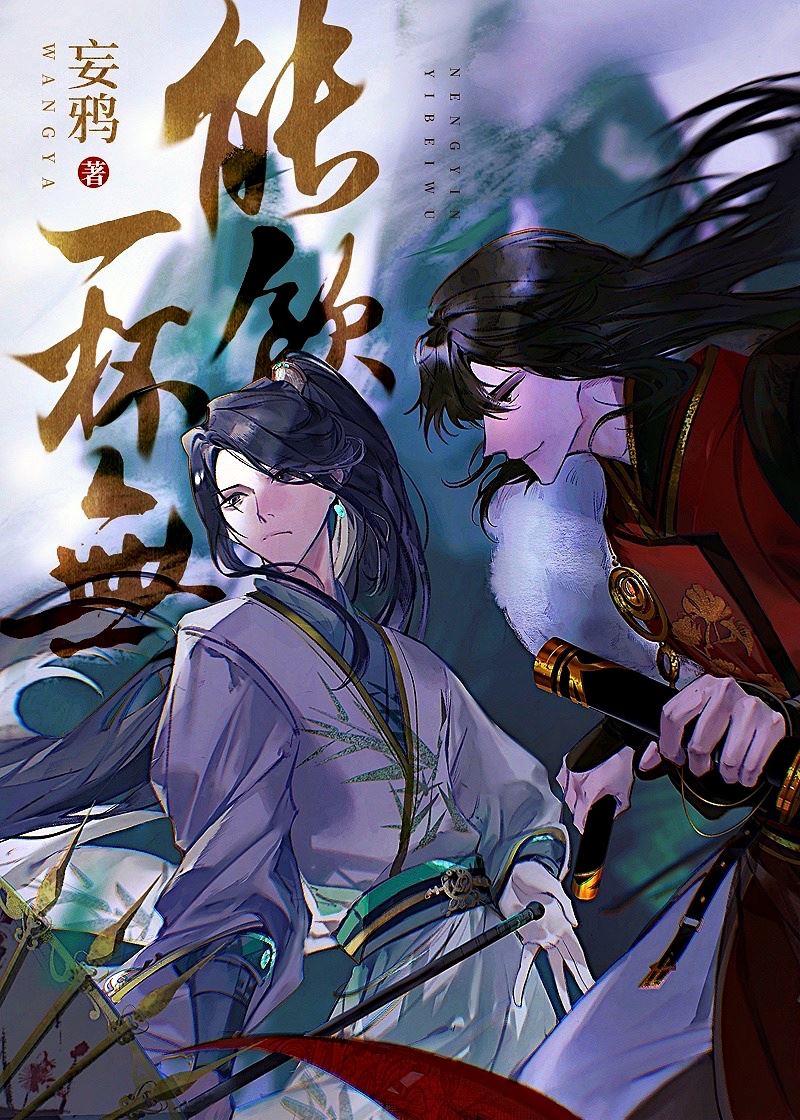
I Grant You Permission for Revenge
+Add to Custom List
Genres:
Novel Info
  • Author:
  • Status:Ongoing

Summary

... Read More

Clive, a Grand Duke known as the Empire's Rogue and formerly the Crown Prince, has spent his life uncovering secrets. His investigation into the Phineas family reveals a household of inexplicable wealth with no visible source of income or business. Despite their reclusive nature, they have invited Clive to their main mansion to celebrate his engagement to their daughter, Aishe. Upon arrival, Clive discovers the mansion in a state of eerie silence, covered in undisturbed snow, with dark clouds and crows hovering overhead. Inside, he finds twenty corpses scattered throughout the house, blood spilling from their mouths, suggesting poisoning. Sitting amidst the carnage is a disheveled woman with white hair, later identified as Eirene, who confesses to the massacre and prepares to die.

Eirene is not the Aishe Clive knew. In his past life, Eirene had killed her family and maidens in revenge after discovering the truth of her existence. She was born with a divine power that could heal, but her parents, the Count and Countess Phineas, brought her to the world solely to save their sickly second daughter, Aishe. For years, Eirene was kept in a basement room, her life force slowly drained to sustain Aishe. When her power faded, she was abandoned to rot, treated worse than a servant. After learning from the mage Siaran and her parents that she was to be quietly killed because she was no longer useful, Eirene snapped. She unleashed her remaining divine power to kill everyone in the mansion before attempting suicide, only to be stabbed in the heart by Aishe, who revealed she had been feeding on Eirene’s power all along.

God offers Eirene a chance at reincarnation, taking her harmful divine power in exchange for a second life. However, Eirene deceives God, promising to seek only her own happiness while secretly planning further revenge. She awakens in her body just before her parents and Siaran plan her execution. Using the distraction of Clive’s impending visit, Eirene escapes the basement. She writes letters impersonating Aishe for years, having fallen for the image of Clive through their correspondence. When Clive arrives, he mistakes Eirene for Aishe due to a portrait switch orchestrated by the family. Eirene decides to play the role of Aishe to manipulate Clive and destroy her family from the inside.

Clive, however, is not fooled. His engagement to Aishe was a ruse to investigate the Phineas family’s hidden wealth and connections to threats against the Imperial throne. He notices discrepancies in behavior, voice, and scent immediately. During a visit to a dress shop, he publicly addresses Eirene as Miss Baix, exposing that the real Aishe lives under a different name. When Aishe tries to claim the ring, Clive places it back on Eirene’s finger and takes her away. He confronts her in a cafe, demanding to know her true identity. Eirene admits she is Eirene Phineas, the hidden daughter, and explains her tragic past. She proposes a partnership: she will help him dismantle the Phineas family, and he will help her exact revenge.

Clive accepts the deal but adds a condition that complicates their arrangement. He demands that Eirene pretend to love him, creating a facade of a romantic couple to maintain their cover and test her resolve. Despite his cold and dangerous reputation, Clive shows unexpected moments of care, such as treating her blistered feet and gifting her soft shoes. Their interaction is charged with tension; Clive is intrigued by Eirene’s indifference and resilience, unlike other women who fear or flatter him. Eirene, meanwhile, is using this proximity to gather information and plot her vengeance, though she finds herself increasingly unsettled by Clive’s unpredictable nature. As they return to the mansion, the power dynamic shifts, with both parties hiding their true intentions behind masks of affection and duty.

The story moves forward with Eirene navigating her new role as the Grand Duke’s fiancée while secretly plotting against the family that imprisoned her. Clive continues his investigation into the Phineas family’s illicit activities, using Eirene as both an ally and a subject of curiosity. The real Aishe, stripped of her status and forced into obscurity, becomes a pawn in their game. Eirene’s revenge is no longer just about killing her abusers; it involves unraveling the secrets of the Phineas wealth and exposing their treachery to the Empire. Clive’s growing attraction to Eirene’s complexity threatens to blur the lines between their transactional partnership and genuine emotion, setting the stage for a volatile relationship built on lies, blood, and mutual dependency.

As the weeks pass, Eirene’s physical and mental state improves under Clive’s protection, though she remains wary. The Phineas family, now aware of the deception, is in disarray. Count and Countess Phineas are terrified of Clive’s scrutiny, while Aishe struggles with her diminished position. Eirene begins to uncover more layers to her past, including the involvement of the imperial court in the Phineas family’s schemes. Clive reveals that the Phineas fortune is tied to a forbidden magic trade that endangers the empire. Eirene realizes her divine power, though weakened, might still be relevant to this larger conspiracy. The partnership deepens as they face external threats from rival factions who wish to eliminate both the Grand Duke and the escaped prisoner. Eirene must decide whether her revenge is worth the cost of her soul, especially as she finds herself caring for Clive despite his manipulative nature. The narrative builds toward a confrontation where Eirene will either reclaim her identity or lose herself completely in the web of lies she has woven.

Latest Release
DateGroupRelease
2026-10-03dusk blossoms c103
2026-10-03dusk blossoms c102
2026-10-03dusk blossoms c101
2026-10-03dusk blossoms c100
2026-10-03dusk blossoms c99
2026-10-03dusk blossoms c98
2026-10-03dusk blossoms c97
2026-10-03dusk blossoms c96
2026-10-03dusk blossoms c95
2026-10-03dusk blossoms c94
2026-10-03dusk blossoms c93
2026-10-03dusk blossoms c92

Community Reviews

Rating(0 / 5.0, 43votes)
5 stars
0(0%)
4 stars
0(0%)
3 stars
0(0%)
2 stars
0(0%)
1 stars
0(0%)

Popular reviews

... Read More
The structure of this section is absolutely delicious in how it weaponizes pacing. You start with Eirene alone in the guest room, actually experiencing warmth and comfort for the first time since arriving here. There's a moment of peace—fireplace, soft bed, fresh air—and then WHAM, Aishe bursts in like a tornado and slaps her. That contrast is brutal. One second Eirene is thinking maybe this wasn't so bad, the next she's being shaken by the collar of her dress while the "sweet" sister reveals her true colors. The author didn't ease us into that transition at all. It's jarring on purpose, and it mirrors exactly how Eirene must feel—constantly off-balance in this house. Then the Countess walks in right after Aishe leaves, and the power dynamic shifts again. Aishe gets sent away like a naughty child, and suddenly Eirene is the one being cornered by the matriarch. The hand-holding moment—"Our survival depends on you"—is a masterclass in escalating pressure without raising the volume. No one is yelling. The Countess's voice is gentle. That's worse. And then the banquet scene itself: Clive appears, and the pacing slows down noticeably. The conversation stretches, the silences between lines carry weight, every gesture is measured. It's like the author hit the brakes right when we needed to breathe, forcing us to sit with each awkward exchange. The walk cancellation, the tea room invitation, the Countess's surveillance—each beat lands sequentially, compounding the tension rather than rushing through it. By the time Clive asks about the ring, my heart was actually racing.
... Read More
I can't stop thinking about the name. The Countess tells Eirene that she's told everyone including the Grand Duke that 'Eirene' is Aishe's childhood name. So in public settings she's Aishe, but in private she might be called Eirene. The name has been split in two — literally divided between two people. And Eirene's reaction is quiet devastation. "She couldn't shake the feeling that her name had been stolen." The name Eirene now seems subordinate to Aishe. Aishe doesn't even protest being called by Eirene's name instead of her own. She's apparently fine with it. This ties into everything else about identity and authenticity in the story. Siaran's smile was never real. Eirene's Divine Power was supposedly taken away but it wasn't. Aishe's personality is being performed by Eirene. The whole arrangement is built on borrowed identities. And yet — the snake seal on Clive's letter. Eirene always associated snakes with Clive without understanding why, and now she realizes it's his family seal. Snake as symbol of deception, of something lurking beneath the surface. The Purification ability itself — the foundation of healing, the most basic stage — feels symbolic too. Eirene is being cleansed of the lies she's been living, purified of the false identity she was forced into. And that line from Siaran about purification stages, delivered in the same gentle explanatory tone he always used when they were close — the irony is almost unbearable. He's teaching her about cleansing while being one of the dirty ones.
... Read More
'You're more dangerous than documents.' This line. THIS LINE. It's such a perfect introduction to what their whole dynamic is going to be. Clive literally cannot trust her on paper — he has her sign a confidentiality agreement because verbal promises are too risky — and then immediately undercuts himself by saying SHE'S the danger, not the paperwork. That's both a threat and a compliment wrapped into one sentence and I am HERE for it. And then the cigar scene?? So she asks him nicely not to smoke around her, polite little request, and his entire face HARDENS. He takes the case from her hand like... okay wow. Then he stalks off, asks Ulik 'do I smell?' like a confused man child, and sends Madam Hannon to get him the finest perfume. This man is completely unhinged over a woman who asked him to not smoke near her and he's already trying to change his scent profile. Meanwhile Eirene is over there calculating revenge and probably didn't even register that her one little request threw him into a spiral. The power dynamics here are so wobbly and I love it.
... Read More
Oh my god. OH MY GOD. The kiss scene. I literally gasped out loud. Eirene is trying SO HARD to follow Clive's instructions—she's standing on her tiptoes, straining to reach his cheek, looking so earnest and slightly ridiculous in the most endearing way. And Clive? He's watching her, and I think we all know what happens next. 'Just as she quickly brought her lips to his cheek, intending a brief touch, Clive turned his face, and her lips met not his cheek but his lips.' The heat rising to her face, her immediate step back—this is the moment everything changes. Because here's the thing: Clive later admits to Ulik that he absolutely did NOT intend to kiss her. 'No matter how much he thought about it, he couldn't understand why he had turned his head at that moment.' That's not manipulation. That's not scheming. That's something far more dangerous—he's falling for her without meaning to. And Eirene? When she pulls her face back and says 'No. Save the kiss for next time,' she's protecting herself. She's got trauma, she's been used, she's not stupid. But watch what happens after: 'How cold of her. After telling the coachman they could leave, Clive turned around as Ulik approached...' He's unsettled. She's unsettled. The reader is definitely unsettled. The author writes: 'An inexplicable emotion stirred in his chest, giving him a strange feeling. Was it because she was different from other women?' NO CLIVE, YOU'RE FALLING FOR HER AND YOU JUST KISSED HER BY ACCIDENT. Also—can we talk about how she's grateful for his kindness but feels burdened? 'Eirene was grateful but felt more burdened. She couldn't understand why he had prepared this in advance, knowing she wasn't the real Aishe.' That tension between gratitude and fear? That's so real. That's so complicated. That's the stuff that makes romance hurt in the best way.
... Read More
Can we just appreciate how Eirene speaks? Because her dialogue voice is SO distinct and I love it. Clive tries to be polite: "I was about to leave. I didn't want to disturb you." And Eirene's response is essentially: "You were leaving because you thought you'd disturb me, but you've already disturbed me. So if you hadn't come in from the beginning, there would have been no disturbance..." She doesn't understand why this offends him. Not at all. Her narration tells us: "Not because she felt sorry for Clive or thought she had misspoken. Her expression suggested she couldn't believe she needed to explain something so obvious." Then later, walking in the garden, Clive holds her hand to warm it and she literally says: "Your hand isn't warm either." To the man who's been investing heavily in winning her over. And his response? He CHUCKLES. Says "You're not good at saying pleasant things" and then turns it around: "My hand is cold too, but when we hold them together, they become warm. Can you feel it?" This exchange is everything. She states facts. He makes it romantic. Neither of them is being fake — and that's why it works. Her dialogue has zero pretense, which makes every genuine moment land harder. When she says "Of course" repeated back at him about being curious why they didn't eat together, it's awkward but endearing. She's not manipulating him with sweet words because she genuinely doesn't know how. And Clive seems to prefer it that way — "Stating facts, I like that." The author's narrative voice also has this dry, observant quality that matches Eirene's internal world perfectly.
... Read More
Let me just sit with this for a second: Eirene agreed to pretend to love Clive. A contract. A deal. That's the foundation of their entire relationship and it's already cracking under the weight of actual feelings. The external stakes are clear—this is a political marriage arrangement between powerful houses. If it fails, both families lose face, possibly alliances crumble. But the INTERNAL stakes are what keep me up at night. Because Clive is the one who proposed this arrangement, who wanted her close, and now HE'S the one who's confused. 'Eirene was a woman who complicated Clive's thoughts.' He wrote that about HER, but who complicated whom? The scene where he corners her against the bookshelf is pure tension—physical, emotional, romantic. Less than a step away. She backs up but has nowhere to go. He touches her hair and then stops himself. What was he going to do? What WAS he going to do? And then he just... sighs and says 'You can do whatever you want at Dervel' like he's giving her a gift when really he's surrendering control. But what is Eirene risking? She left somewhere dark. Somewhere she read every book available because it was the only world she had. Now she's in a palace with a man who suspects she's lying about her past, who watches her like a hawk, who calls her 'a woman who complicates things.' If this arrangement fails, does she go back? The text never says, and that silence is terrifying. 'More comfortable than the Phineas Mansion.' 'Yes. It's more comfortable here.' And yet she admits it's 'comfortable yet uncomfortable at the same time.' That's the entire thesis of this relationship in one sentence.
See all reviews

Custom lists

See all custom Lists