I Exclusively Favor You Alone, Are You Moved? - Reviews

I Exclusively Favor You Alone, Are You Moved?
+Add to Custom List
Sort
Add review
... Read More
Okay so I need to talk about this scene because my hands are literally shaking. Ming Zhang and Han Zhen's relationship has always been this slow burn of power imbalance, right? Like, Han Zhen has been pining for him for years, quietly serving, silently cleaning up after his messes. But this chapter? This is the moment the mask completely comes off. What struck me most is how Ming Zhang strips away every layer of his usual controlled, calculating self here. "This was the real Ming Zhang, the Ming Zhang no one else knew." The fact that he only shows this side to Han Zhen—cruel, desperate, unguarded—that's actually kind of terrifying and beautiful at the same time. And Han Zhen? He sees it all and says "Even if this is just a dream, I'll still be willing." That line destroyed me. He's not naive; he KNOWS what he's signing up for, and he chooses it anyway. But then—the aftermath. Ming Zhang goes to the Qin residence like nothing happened, but the narrator tells us he felt "torn open, with nowhere to hide." Meanwhile Han Zhen walks out unsteady, trying to straighten his body like nothing shattered between them. Neither of them walks away intact.
... Read More
"Han Zhen, don't you like me? Why won't you clean up after me this time?" I am sitting here absolutely wrecked. Let me explain why this hit me like a freight train. First, understand what Ming Zhang is doing. This man — who has spent his entire life wearing masks, who orchestrated revenge as a child, who can't let anyone see him bleed — just lays himself completely bare. Not with trembling or tears, but with that devastating casualness that means he's either extremely brave or extremely tired. And Han Zhen's response?? "The one I serve is only His Majesty" — saying loyalty when he means love, saying duty when his heart is doing backflips. Classic. Absolutely classic. But then Ming Zhang presses: "So I'm not one of those he values, is that it?" And watch what Han Zhen does. He raises his hand. He hesitates. The text literally says it's "suspended in midai" — midair, frozen, caught between reaching out and pulling back. That suspended hand says more than any confession could. He wants to touch Ming Zhang's face. He wants to say something else. He wants to clean up after him AND be the one Ming Zhang cleans up for. But he can't. Not now. Not when the emperor is dying and the court is circling like vultures. "Or have you also been bewitched by Yan Yihuan and will now be loyal to him?" — Ming Zhang asking this reveals everything. He's not just jealous, he's terrified of being replaced. Of being less important than some reincarnated palace attendant. And honestly? Same. I'm terrified for all of us.
... Read More
I keep coming back to this line: "I know your feelings for the emperor, but some things truly cannot be forced." Han Zhen says this while being used by Ming Zhang, and it's the most heartbreaking thing I've ever read. This man has spent YEARS watching Ming Zhang love someone else, and now he's offering himself up as if his own desires don't matter, as if submission is the only currency he has. And Ming Zhang—he's supposed to be the one in control, but who's really vulnerable here? He demands Han Zhen prove his devotion, challenges him: "I want to see just how far you can go to not waste all these years you've liked me." That's not just manipulation, that's desperation masked as dominance. Ming Zhang is terrified that Han Zhen might actually leave, so he pulls him closer by any means necessary. The kiss itself—"from cautious testing to reckless surrender"—that progression feels so honest. Two people who have been circling each other forever finally colliding. But the pain, the blood, the darkness… none of this feels like love. It feels like two drowning people grasping at each other. And that's why it hits so hard. Neither of them walks away satisfied.
... Read More
The author does something really clever with structure here by cutting between three completely different locations and moods. You start with Li Xuanming and Yan Yihuan in the bedchamber—slow, intimate, almost lazy pacing. Then suddenly you're thrown into Changyun Prefecture with Du Cheng'en, and the tempo accelerates hard. Day after day of waiting, memorials ignored, letters intercepted, the Northern Di camped at the gates like a threat that isn't really a threat. This section moves fast because Du Cheng'en's anxiety is escalating with each paragraph. And then BAM—you cut back to the capital with the rumor mill spinning about the emperor's illness, twenty days of nothing, and the succession crisis hanging over everyone like a guillotine. The chapter ends by dropping us right back into the bedchamber but now everything feels different because we've seen what's happening outside. Du Cheng'en just received his father's coded letter and is about to make a choice. Yan Zheng appears at his door. The pacing here is like a heartbeat—slow, fast, slow, fast—and each shift changes how you understand the previous scene. The bedchamber wasn't just domestic fluff, it was the calm center of a storm.
... Read More
Okay so this sequence is honestly one of the tightest tension-building passages I've read in ages. Let me walk through how the author layers this. First, the scene opens with atmosphere — the Academy being dead silent, every rustle of wind amplified. That's the author telling us something重大的 is about to happen without saying it outright. Then we cut to Yan Yihuan already hiding behind a pillar, which immediately raises the stakes: why is a government official cowering like a guilty criminal? The emperor arrives, asks casually about the Grand Historian he personally appointed, and the trap snaps shut. Liu Qianyi's response is painfully diplomatic — he can't say the guy's terrible at his job, but he also can't lie flat out. This is classic political maneuvering where everyone's performing competence they don't have. Then the reveal happens in two waves: first the VOICE ("Why have you kept your head lowered all this time, Minister Yan?"), and then the face. The author deliberately withholds the emperor's identity from Yan Yihuan's perspective until the very last possible moment, making us experience his dawning horror in real time. By the time he realizes Zhao Chufeng IS Li Xuanming, we've already been through every stage of his breakdown. The structure here is almost surgical — setup, escalating dread, false calm (everyone thinks the emperor is just doing a routine inspection), then the emotional detonation. And the chapter ends not with resolution but with the emperor casually walking away, leaving Yan Yihuan devastated and everyone else confused. That's a cliffhanger that doesn't rely on action but on pure emotional devastation. Chef's kiss.
... Read More
Let me just say—this author knows EXACTLY how to string a reader along. The pacing from chapter 144 through 147 is masterclass stuff. It starts with an almost comedic beat: Yan Yihuan mumbled explanation about the archery incident, Li Xuanming silently seething, and then the emperor suddenly ordering "Give it to him" about a writing board. You're laughing, you're relaxed, and then—BAM—Li Xuanming stands up, grabs Yan Yihuan's wrist, and drags him behind a closed door. The transition from court comedy to something much darker happens in literal seconds. Then the author does something brilliant: they PULL BACK. Instead of staying in the intimate scene, the narrative cuts to Yan Zheng arriving with a boar, then Li Xuanjing returning and chatting casually with his brother. The hunt continues, the world continues, and we're left waiting. The tension doesn't resolve—it just stretches. Li Xuanyu's entrance is the perfect structural pivot. He arrives like a plot device dropped from the heavens, delivers exactly one line of loaded information, and leaves Li Xuanjing (and the reader) sitting in worst-case scenario territory. "And they've been in there for quite a while." Four words and the entire emotional temperature of the scene shifts again. Then we cut back inside, and the scene ends mid-tension with Li Xuanming whispering "Do you want it?" and Yan Yihuan nearly responding but not quite. The author doesn't give us resolution—they give us the MOST painful possible moment and then cuts to black. I need the next chapter immediately. I need it now.
... Read More
Can we just take a moment for the author's note?? "Li Xuanming: You wanted to do what to me? Little Yihuan: N-nothing… I– just this and then that…" This is the kind of comedic relief that could only come from someone who truly understands these characters. It's like the author leaned over the manuscript and said 'you know what this needs? Direct address.' But seriously, the dialogue throughout these chapters is remarkably distinct. Li Xuanming speaks in commands and near-commands. 'Just record whatever's said. Did you study this at Hanlin Academy?' He doesn't ask questions to have conversations—he asks to test, to probe, to control. Even his casual observations about court feel like instruments of power. Yan Yihuan's dialogue, when he does speak, is almost always hesitant. 'Your Majesty, what is this humble official supposed to do later?' That's not just nervousness—that's someone who has spent his entire life knowing his place and suddenly finding himself in a position where the place has disappeared. The honorifics ('Your Majesty,' 'humble official') become armor. And the narrative voice! The third-person limited perspective stays so firmly anchored in Yan Yihuan's head that we experience his humiliation in real time. 'His face began to burn.' 'Cold sweat running down his back.' The author doesn't narrate these reactions—they just happen, and we're trapped inside them with him. The prose itself becomes Yan Yihuan's experience rather than a description of it.
... Read More
I need to talk about Zhao Chufeng and Yan Yihuan because this chapter is doing something really dangerous with their dynamic. The scene where Zhao Chufeng wipes food from Yan Yihuan's mouth — this should be soft. It IS soft on the surface. An outsider would see "a serene and gentle scene." But Yan Yihuan's entire internal monologue around it is terror masked by confusion. He's remembering THE NIGHT. He's recalling breath and heat and pursuit. And yet this man is before him now, looking gentle, looking careful, looking like he belongs in this moment. The author writes it like this: "If this had been before that night, having such a beautiful person treat him this way would have made him unbearably smug." BUT NOW it makes his scalp tingle and his hair stand on end. That one sentence does so much emotional work. It tells us that before, this intimacy would have been a high point. After, it's a reminder of violation. The same gesture carries opposite meanings depending on what happened between them. And Zhao Chufeng — does he know? Does he realize that wiping that corner of Yan Yihuan's mouth is triggering flashbacks to whatever happened that night? The text never confirms this. Maybe he does. Maybe he doesn't. Maybe he does and enjoys it. That ambiguity is what makes this relationship simultaneously terrifying and magnetic. The A-Ying reunion hits differently because it's genuine. "The separation of just a few days felt like years." Two people who actually love each other, clinging to each other, crying — and then Shen Zhaoquan's voice breaks it apart with bureaucratic politeness. "Your attendant is permitted to accompany you." Permitted. Like Yan Yihuan is property being reassigned. I kept re-reading Yan Yihuan's face. "Wide-eyed." Sweating. Terrified. Trying to calculate an escape route while sitting in a sedan chair being carried toward an unknown retreat. And I couldn't look away.
... Read More
The ancient trees are doing SO much symbolic heavy lifting and I am here for it. Two separate trunks, centuries of growth bringing them closer, branches so intertwined you literally cannot distinguish where one ends and the other begins. And people come here to pray for 'lasting love and harmonious relationships.' Meanwhile, the two male leads are physically together at the tree but separated by politics, betrayal, disguise, and years of damage. The brocade pouches are another layer—each one contains names of lovers, hung high hoping for blessing. But who gets to write their names together? Yan Yihuan asks about them almost dreamily, and Li Xuanming answers while Yan Yihuan leans close enough to speak into his ear. The intimacy is accidental but the symbolism is undeniable. They're two people who want the same thing these trees represent, standing right in front of them, and they can't even acknowledge it. Even the disguised Zhao Chufeng is symbolic—he's literally wearing someone else's face while being the person Yan Yihuan trusts most. Identity, concealment, the gap between appearance and truth. The wet spot on Li Xuanming's hem from chapter earlier? That detail never goes away, it just becomes part of the fabric of their history like those merged tree canopies.
... Read More
The contrast between settings in these chapters is *chef's kiss*. We open on this custom-made imperial berth—exterior looks like a wealthy private ship, no markings, secretive and claustrophobic. Yan Yihuan's trapped in the cabin, Huai De subtly blocking him from leaning out the window, people hiding in inner rooms. It's suffocating. The boat feels like a gilded cage dressed up as freedom. Then BAM—we're at the riverside marketplace and suddenly the world opens up. Vendors shouting, juggling stalls, continuous flow of people, that 'genuine warmth of life' that the narrator specifically calls out. The shift from controlled isolation to chaotic vibrancy made me feel like I'd been let out of a room I didn't know I was stuck in. And then the ancient trees. Two thousand years old, branches intertwined so densely you can't tell where one ends and the other begins. The author describes them as 'a pair of lovers unwilling to part' and honestly the imagery is so vivid I could see it—the massive canopy overhead, thousands of brocade pouches swaying in the night breeze, imperial guards maintaining order around something this ancient and sacred. The visual of those pouches must be breathtaking. It transforms from just a location into something almost spiritual. Every setting here does emotional work. The cramped boat = their trapped dynamic. The marketplace = Yan Yihuan finding moments of joy anyway. The intertwined trees = everything unsaid between them hanging in the air.
... Read More
I want to talk about how this chapter is paced because honestly it's a masterclass in gradual escalation. It starts with a quick exchange between Yan Yihuan and A-Ying — short, punchy dialogue, establishing the conflict (he wants to go out, his servant is worried) in like three lines. Then the transition into Jinliu Alley is where things start to slow down. The author drops us into this new world with all these descriptive details, and suddenly we're experiencing it alongside Yan Yihuan. We're getting wider-eyed with him. Then they enter the tower and it EXPANDS — the garden, the koi, the main hall with the golden fish leaping. This is the peak sensory moment of the chapter, and it's deliberately lingering. After that high point, there's a subtle shift: Yan Yihuan pulls back, chooses the private room, and the pacing tightens again. The scene becomes more intimate, more focused. The servant disappears, A-Ying gets sent away, and it's just Yan Yihuan alone in the room, waiting. Liu Qiao's entrance is the final beat — the door opens and the chapter essentially pivots from exploration to confrontation. The pacing at this point becomes almost breathless, every action and glance charged. By the time Yan Yihuan pulls Liu Qiao into his arms, you've been on this slow, deliberate journey with him and you feel every step of it. The chapter doesn't rush anything, but it also never lets you breathe. It's exactly the right amount of controlled indulgence for this kind of scene.
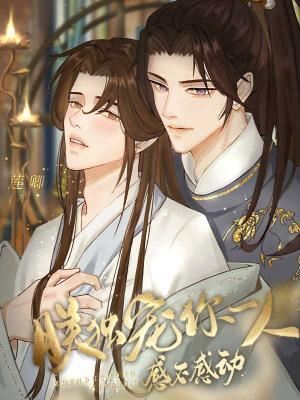
... Read More
"Yet even in such a noisy environment, Yan Yihuan still felt that he could clearly sense the rise and fall of the breathing of the person beside him." That sentence right there. That ONE sentence. I had to put the book down and just sit with it for a full minute. The author does this thing where they build these incredibly specific, sensory scenes that just... transport you. Jinliu Alley outside the carriage window—cries of vendors, clatter of carriages, horses, endless conversations—this is the liveliest time of day and yet somehow the noise falls away completely for Yan Yihuan because ALL he can focus on is the person sitting beside him breathing. The contrast is everything. Outside is chaos and color and life; inside that narrow carriage it's quiet, dim, just two people pressed close. And Li Xuanming leaning against the wall with his eyes closed, pretending not to care, while Yan Yihuan is over there internally FUMATING because he doesn't even know who he's been spending time with this whole time. I also have to mention the detail about the carriage being deliberately modest—"far less spacious than the ones they usually rode in"—because of course it is, the emperor has to keep his identity secret so he's riding in a humble carriage that's basically designed to force proximity. The author is a monster for this. And the footstep on the hem of Li Xuanming's long robe! Yan Yihuan was kicking his leg under the table without even realizing it and LEFT A PRINT on the emperor's clothes. Yan Rong noticed immediately. I wheezed. The fact that this stupid, anxious boy is so worked up he's literally leaving shoe marks on the emperor's robe while the emperor just sits there Stone Face—that is comedic gold wrapped in romantic tension. The world feels SO alive here. Not just the political intrigue and the noble residences, but the actual streets, the sounds, the texture of bluestone roads uneven enough to make a carriage wheel sink. You can smell the alley, hear the vendors, feel the bump that nearly causes a romance breakthrough. Chef's kiss.

Leave a comment

You must be logged in to leave comments. or
