I Escaped from the Tyrant’s Harem - Reviews

I Escaped from the Tyrant’s Harem
+Add to Custom List
Sort
Add review
... Read More
The pacing in these chapters is legitimately masterful and I need to talk about how the author controls the rhythm. We start in a restaurant, slow and contemplative. Ellen's eating, thinking about Leonid, worrying about the debutante. The prose is measured, almost lazy. Sunlight, cutlery, idle conversation with Hess. It's a calm before the storm and the author knows it—this is the breathing room before the spike. Then three noble men appear and everything detonates. 'Three well-built noble men had instantly surrounded Ellen and Hess.' One sentence. No warning. The shift from peaceful meal to life-threatening danger happens so fast your stomach drops. And Leonid's entrance? Even more sudden. 'A man who had appeared in an instant had wrenched the man's arm backward.' The violence is brutal but brief—the author doesn't linger on gore, just the raw efficiency of it. 'Leonid brought his heel down on the man's shin before the question was even finished.' Chop. Done. This is a man who doesn't waste motion. Then the emotional aftermath drags things back to a crawl. Ellen sinking to the ground, her legs giving out. The carriage ride back. All that internal ache. The pacing slows deliberately here to let the emotional weight land. What's brilliant is the chapter structure too. The encounter with Leonid spans two chapters, and the second one ends on a note of forced composure—'I'm fine. We'll stick to the schedule.' She's falling apart but refuses to miss her appointment. That's character definition through pacing choice. The author trusts us to feel the tension between her external calm and internal collapse without spelling it out.
... Read More
Okay so let me just... start. I stayed up until 2 AM reading these first seven chapters because I could NOT stop. The pacing is INSANE. It opens with Ellen hiding behind a tree watching Leonid slaughter people in the snow - right there, boom, you're hooked. You don't know anything except that this man is terrifying and she's terrified of him. Then he says her name and suddenly she's running for her life. The entire middle section is one breathless chase sequence across frozen mountains, and I was literally holding my breath. But here's what really got me - the plot doesn't just rely on action. It gives us these tiny windows into their backstory. When Leonid catches her and says "Do you have any idea what kind of hell I lived in" during the year she was gone? That's when I knew this wasn't a simple captor/captive story. He's obsessed, yes, but there's something broken underneath it. And that cliff ending?? I'm still processing. She lets go. She actually lets go. After everything - after all that running, all that fear - she chooses to fall instead of going back. But then she reaches for his hand... and I think that's the real plot twist. Not that she jumps, but that for one second she HESITATES. She almost came back. And that hesitation destroys me. What I love most is how the author builds toward that moment without giving us any relief. Every time I thought "maybe she'll escape," something happens - the dogs get closer, her foot slips, the branch starts to crack. It's relentless. And the final image of Leonid throwing himself after her, unable to reach her... chef's kiss. Perfect tragic ending to an incredible opening arc.
... Read More
Okay, so let me just say—this section from the garden confession to Eliza's whipping session is absolute perfection in terms of plot engineering. The author drops us into this tender, almost dreamlike moment between Ellen and Leonid where he admits he saw her before, at his brother's birthday party, and that she looked different enough now to trigger something visceral in him. Like, he literally says he felt like he'd missed someone for a very long time. And Ellen, who remembers EVERYTHING from her past life, is losing her goddamn mind trying not to reveal that yes, I remember, because we lived an entire lifetime of loving and dying together. Then she bolts. She RUNS away from him, which is such a character-consistent move but also so tragically thematically loaded. She can't handle being this close when she's the only one carrying the weight of their shared past. But here's where the plot really snarls—I love it: Leonid follows, catches her, and she stumbles into Deriel. The Spirit King shows up right at the peak of her panic. Did the author plan this? Because it feels so intentional. Deriel then asks pointed questions about whether she's worried about Leonid, and her deflection is painfully transparent. And then—CUT TO—Eliza whipping Leonid in the inner palace. One minute we're in this aching romantic tension, the next we're watching him bleed. The contrast is brutal. She accuses him of bringing humiliation to her and Kayul. Kayul, who she probably thinks is her ally, who was also at that birthday party. This is the kind of structural whiplash that makes you put the book down and just breathe. The stakes shift from personal to political in one chapter, and I was hooked.
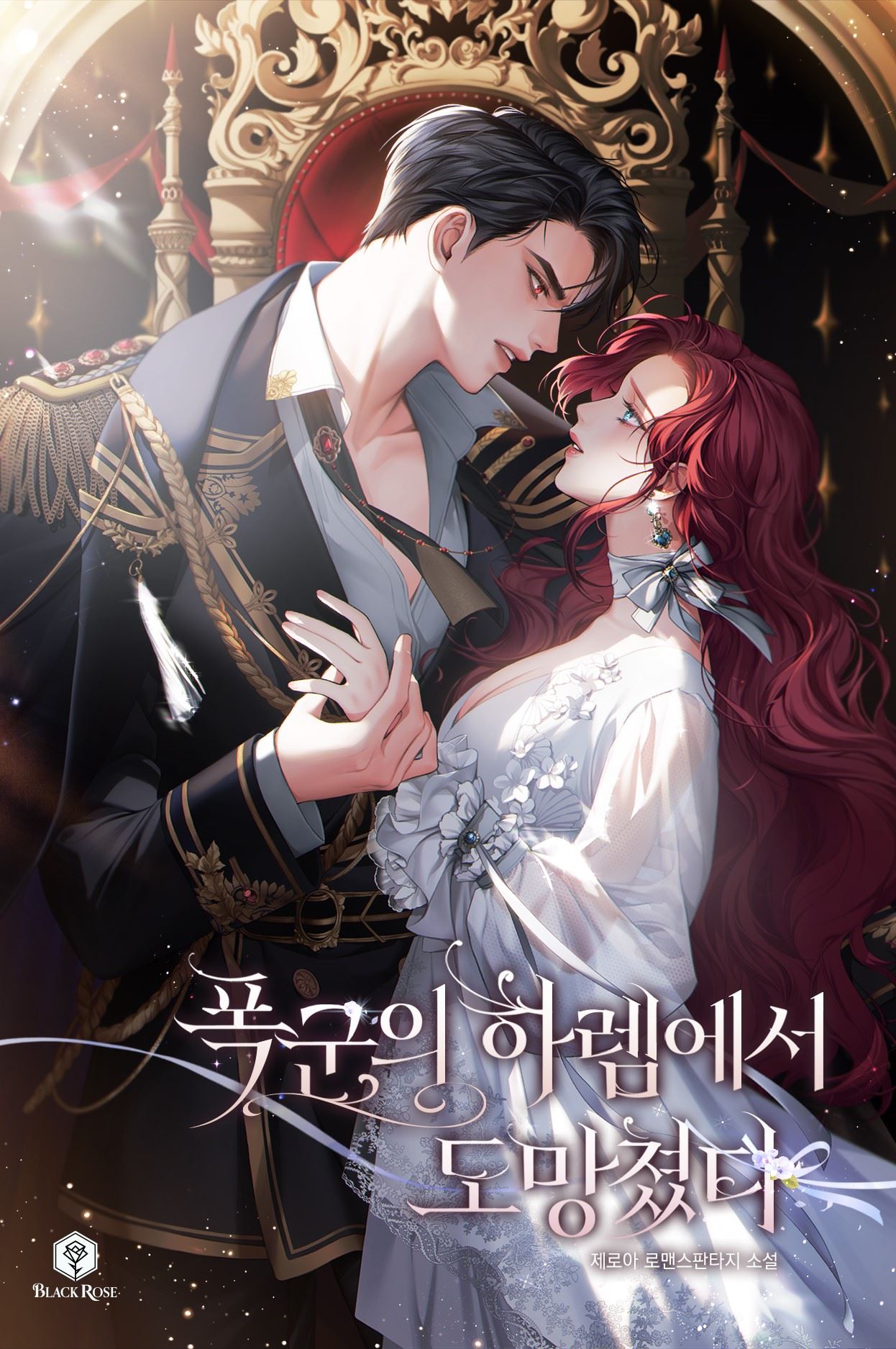
... Read More
Can we just talk about Deriel for a second because the way this author handles his feelings is *subtle* and I am not okay. The opening scene with Deriel is one of those moments where nothing is said directly and yet everything is said. Ellen asks him if he's worried about her, and he turns toward the window. That's it. But the image of a man who 'wasn't worried about anything' turning away silently is so devastatingly expressive. And then his line: 'Worrying. That's not like me.' — this is basically a love confession dressed in self-deprecation. And Ellen's response? 'Then I'm glad.' Not flustered, not romantic, just genuinely happy that someone cares. Their dynamic feels so grounded compared to the Leonid chaos later. But then Leonid shows up and—bro, the contrast. This man who saved a stranger on the street and then looked back at her walking away? The knight literally can't process it: 'The prince he knew did not help others, did not exchange words with strangers.' And Leonid's small smile when he says 'No, there's no need' to find out her family? That's intrigue. That's interest. That's the beginning of something dangerous. Meanwhile Ellen is falling apart inside. 'The Leonid she had known was gone now' and then immediately her chest feels like it's been speared. She's trying so hard to let go but her body betrays her every time—reaching toward him instinctively, calling his name without thinking. The tragedy here is that both of them are operating from completely different information. She remembers seven years of shared pain and devotion; he has zero memory of their history. And yet he's the one who looks back.
... Read More
Okay. Let me just sit with this for a second because the pacing in these chapters is doing some extremely calculated work and I need to unpack it. The sequence goes: romantic tension (garden confession) → flight and panic (Ellen running) → comic relief / emotional anchor (Deriel showing up) → brutal tonal shift (Eliza whipping Leonid). That is FOUR distinct emotional registers in roughly the span of two chapters. Most authors would choke on that. This author slides between them like it's nothing. What I love most is how the Deriel interlude works structurally. Right after Ellen flees the garden, heart pounding, she needs a moment to decompress. She sits on a step and catches her breath—"I, I made it." And then Deriel appears. "Aaah!" You cannot make this up. The Spirit King scaring the protagonist is genuinely funny, but it also serves a purpose: it gives Ellen (and the reader) a breathing room before the chapter slams us with Eliza's brutality. The transition from the garden to the whipping scene is probably the sharpest cut in the entire volume. One moment we're in moonlight and soft spoken confessions, the next we're hearing a leather whip bite into skin. There's no buffer, no gentle landing. It's like the author is saying: this is what his life actually looks like beneath the romance. The banquet hall scenes where Leonid is publicly shunned already set this up, but the whipping is the full reveal. Chapter 14 ends with Ellen's panic and self-delusion (telling herself the debutante was successful, that she doesn't need to go back) and Chapter 15 opens with... Eliza's whip. That's not an accident. That's deliberate structural violence.
... Read More
I'm not okay. I'm genuinely not okay after reading this. The emotional manipulation in this story is *brutal*. Like, the author knows exactly what they're doing and they're not sorry about it. Here's Ellen - a woman who escaped an abusive relationship, built a new life, thought she was free - and then Leonid shows up and her BODY betrays her. "Even in that rough kiss with no trace of tenderness, her body remembered him and burned hot." THAT LINE. I had to pause and stare at the wall for five minutes. It's not romantic. It's not okay. It's trauma bonding and the story KNOWS it. Ellen hates herself for responding to him. She presses a hand to her chest, hating her heart for betraying her. And Leonid? He's so broken he doesn't even realize he's destroying her. Or maybe he does and he doesn't care. The line between love and obsession is razor-thin here, and the story walks it perfectly. But the most devastating part isn't the chase or the violence. It's that moment on the cliff when Ellen finally says his name. "Leonid." Not "Your Majesty." Not "Emperor." Just... Leonid. And the text says it wasn't bad. It felt quite right. Because maybe there was always a part of her that wanted to call his name as a woman who loved him, not as his possession. She loved him. She still loves him. And that's what makes her choice to let go so tragic. She's not just escaping him - she's escaping the part of herself that still wants him. That's the real cliff she's falling from. I keep imagining what happens next. Does she survive? Does he survive? Can they ever heal from this? Or is this story destined to end in blood and snow? I need the next chapters. Please.
... Read More
Okay so this whole section hits different because every major beat is building toward something bigger, and I keep going back to the Leonid rescue scene. On the surface it reads like a classic 'hero saves the girl' moment, but it's way more layered than that. The plot here is doing a lot of heavy lifting with irony. Ellen has just arrived in the capital resolved to live this time, no longer entangled with Leonid, and then she runs straight into him on a busy boulevard. Classic narrative coincidence or deliberate design? Given how the text frames it—with her calling his name before she even realizes she's doing it—the author is clearly playing with fate versus agency. What really caught my attention was the political subplot simmering underneath. The text drops this info about the Empire's decline, the Emperor's incompetence, Leonid being blamed for everything. Ellen thinks: 'The wrongly fastened buttons have to be set right. And to do that, the first button had to be placed correctly.' This isn't just backstory—it's the thesis statement for the entire novel's political arc. The debutante ball she's preparing for isn't a social event, it's a strategic move in a much larger game. And then there's Deriel. The time-travel repayment mechanic is genuinely clever. He went back two days, just enough to return the favor, but it also means the butterfly effect is already small-scale. The author is teasing that bigger changes are coming. I love that Ellen has no idea her very presence in the capital has already altered the future. That dramatic irony is Chef's kiss. The plot is definitely clicking into gear here. Every scene feeds the next, and the tension between personal stakes (Ellen's feelings) and political stakes (the empire's corruption) is starting to weave together.
... Read More
"Because that bastard ruined my fun last time." Curson Yan Shurn walks onto the page for three paragraphs and instantly becomes the most memorable character. He's predatory, unhinged, and he says it OUT LOUD like it's nothing. The casualness of his villainy is what makes it so effective—he's not monologuing about evil plans, he's just stating facts as he sees them. His father dies tomorrow, so why not have some fun tonight? The dialogue between Leonid and Martin is also incredible in its own way. Leonid calling Philos "not a man of good character" while simultaneously wanting to use him? That's such a Leonid thing to say. He's self-aware enough to know his teacher is shady but pragmatically useful. And Martin barely managing to say Ellen's name like it's poison? The subtext in that exchange is massive. Ellen's dialogue throughout this section is surprisingly sharp for someone in her position. She tells Hess "You can say the rest of what you were going to say" instead of shushing her. She confronts Curson with "Say that after you let go of this." Even when terrified, she maintains her dignity through her words. The author clearly intends for Ellen's voice to be distinct from Leonid's—hers is controlled and purposeful even in crisis, while his is raw and emotional. One line that stayed with me: "We have come to escort you, Lady Ellen." Said by Duke Shurn's chief aide with such formal politeness while they're essentially kidnapping her. The contrast between polite dialogue and brutal reality is the author's signature move.
... Read More
I keep coming back to the hands in this section. So many hands. Leonid gripping Ellen's hand and refusing to let go. Ellen's white hand clasped against his. The way he pulls her wrist toward him. The hand touching her cheek, sliding down to grip the back of her neck. And then later—Eliza's ring-adorned hand striking Leonid's cheek until blood trickles to his lips. These aren't random details. Hands are how characters claim, protect, hurt, and connect in this text. The eyes are equally loaded. Leonid's gaze is described as "deeper than blood"—that image stays with me. Blood as a metaphor for lineage, for curse, for the inherited sin that defines him. His eyes see her differently now. Ellen's eyes tremble constantly. Not from fear exactly, but from the overwhelming weight of knowing something no one else knows. And the public eyes at the banquet—"not a single gaze with genuine goodwill"—these are the eyes that have defined Leonid's entire existence. He is perpetually seen but never truly known, the opposite of Ellen, who knows him completely but must pretend ignorance. Then there's the garden itself as symbol. It hasn't changed since her past life. It witnesses their first real encounter in this new timeline, the same way it would have witnessed their first encounter in the old one. But now it carries the weight of her memories layered on top of the present moment. The fountain with moonlight—that's water reflecting light, distorted and shimmering, just like her memories of him. Fluid, beautiful, impossible to hold onto. "I am a cursed bond that led each other to death." That's the central symbol of the entire narrative: the idea that love and destruction are the same force for these two.
... Read More
I have to appreciate how the author grounds this story in a lived-in world. The description of Kadin isn't just set dressing—it's functional worldbuilding that tells us everything we need to know about power, danger, and social hierarchy. The opening image of the carriage arriving at the imperial palace is gorgeous: 'Ellen looked at the imperial palace rising magnificently in the distance with a faraway gaze.' You can feel the scale of the city from that shot alone. Then we cut to the main boulevard at midday, bustling, sunlit, alive—completely normal on the surface, which makes the attack hit so much harder. The restaurant scene is another gem. 'The sounds of carriages rushing past and people walking the boulevard drifted up to the table' paired with 'Bright sunlight fell across the white tablecloth between her thoughts.' This is cinematic writing at its finest. We're not just told it's a nice day—we feel the warmth and hear the city humming, which makes Ellen's inner turmoil stand out in sharper relief. But what really impressed me is how much world is built through casual dialogue. Hess mentioning the Knight Order, the ill-effects of leaving the capital, the imperial army's presence—these are organic details that accumulate into a full picture of an Empire that's crumbling from the edges inward. The security detail is practically a character itself. And Leonid's crimson eyes being described as 'deeper than blood' and 'the symbol of a curse' — this visual motif ties directly into the world's mythos. The Emperor using Leonid's appearance as a shackle is such a cruel detail. A whole world of political oppression distilled into eye color.
... Read More
I need to talk about the garden scene because the author absolutely cooked. The way the setting mirrors the emotional state of the characters is not accidental—it's craftsmanship. "The fountain with moonlight breaking softly across it, the shrubs that wrapped around it with cool freshness, the flowers blooming in full abundance." This is the same garden Ellen visited with Leonid in her past life. Time has turned back, but the garden remains unchanged. The only things that changed are you and I. That line hits different when you understand the garden is a physical anchor to her memories—it's the one constant in a world that's been rewritten. The moonlight on the fountain, the cool shrubs, the overflowing flowers... it's lush and slightly melancholic, like a memory that's been preserved too perfectly. Then the contrast of the banquet hall earlier—that section where they're dancing and the whispers grow thicker, where the public gaze presses in on them like a physical weight. The grand banquet hall full of hostile eyes, women longing for Leonid's appearance and everyone else radiing pure venom. "There was not a single gaze with genuine goodwill to be found anywhere." That line crystallizes Leonid's entire existence in this world. He moves through spaces where he is either feared or despised, and Ellen sees it clearly for the first time. No wonder he climbed to the throne with blood on his hands. And then the sudden cut to Eliza's inner chamber—the leather whip, the red face, the sound of skin splitting. The violent domestic space contrasted with the beautiful garden is jarring in the best way. The author uses setting as emotional punctuation.
... Read More
The dialogue writing in this passage is next level and I want to dissect why it works so well. Leonid's voice is razor-sharp. Look at how he speaks to the attacker: 'Wrong about what.' Two words. No drama, no theatrics. Just cold, clinical interrogation while he's actively breaking the guy's leg. And when the man begs forgiveness, Leonid's response is literally just 'What exactly were you wrong about?' He's not interested in the apology. He wants compliance. But then with Ellen it shifts completely. His tone softens imperceptibly but noticeably: 'Was that you who just called my name?' The question mark matters here. He's actually curious. And the follow-up—'Why are you backing away?'—carries this barely contained frustration that makes you want to shake him and comfort him simultaneously. Ellen's dialogue is mostly internal monologue, which is fair since she's a woman in this society who can't openly react to a prince. But when she does speak, her lines reveal everything: 'I was told it was rude to look directly at a prince.' Polite, proper, deflecting. She's hiding behind etiquette because the truth—that she missed him, that she called his name, that she reached toward him—is too dangerous to admit out loud. The knight's dialogue is pure comic relief and exposition disguised as casual observation. 'Or perhaps she is a lady you have taken an interest in. Her looks are certainly striking enough to fall for at first sight.' And Leonid's response—'Mind your place'—is such a perfect shut-down. You can hear the edge in his voice. He's bothered that his own feelings are being named by someone else. The narrative voice itself is close third person, dipping deep into Ellen's head. The author's prose has this quiet elegance—never overwrought, always precise. Lines like 'A blizzard swept through her blurring vision. It couldn't be, on a clear spring day like this' do so much emotional work in a single sentence.

Leave a comment

You must be logged in to leave comments. or
