I Escaped from the Tyrant’s Harem
+Add to Custom List
Novel Info
  • Author:
  • Status:Ongoing

Summary

... Read More

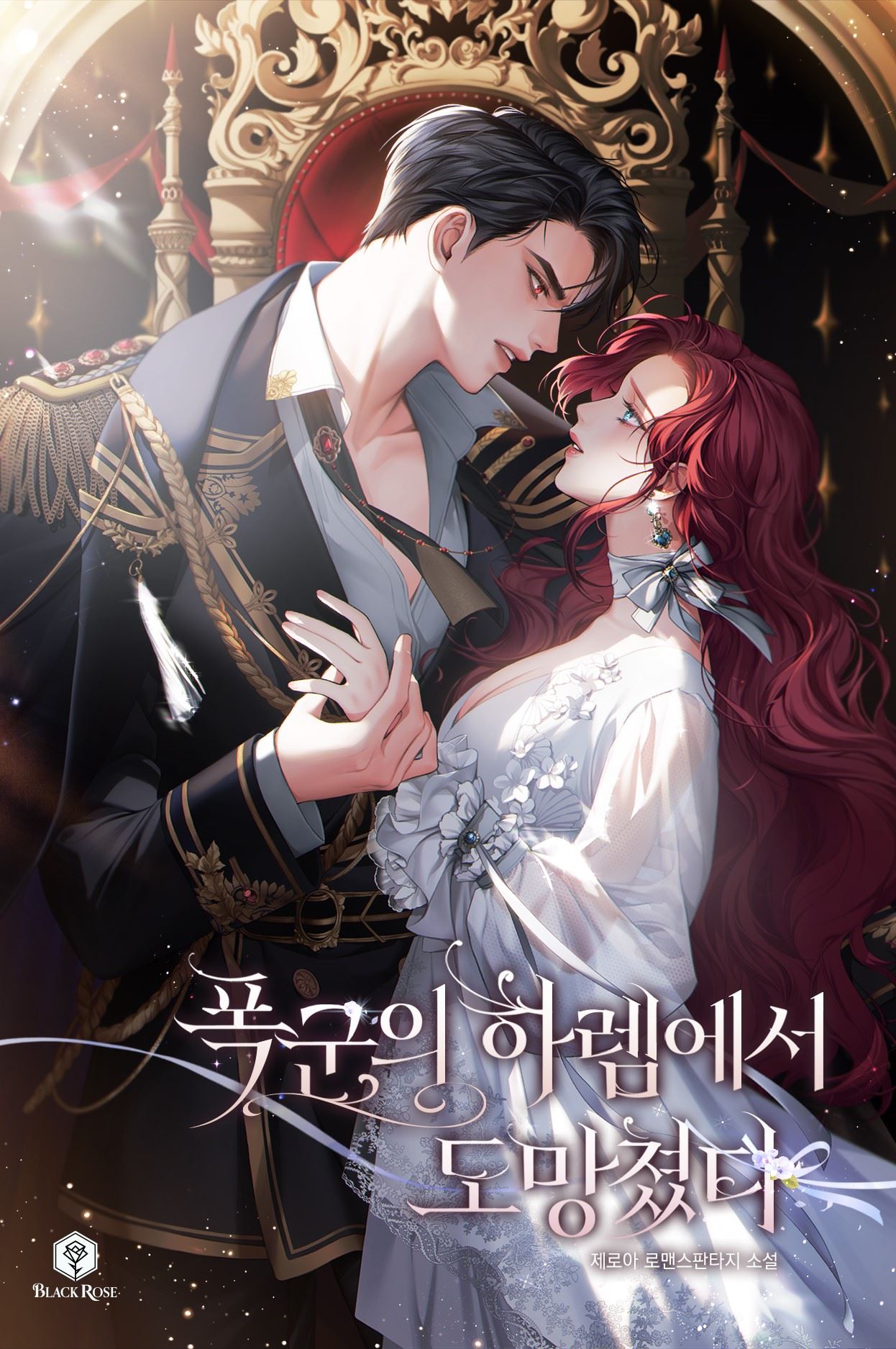
Ellen Nockton lived a wretched existence as a half-blood daughter of Count Nockton, subjected to abuse and neglect by her father and stepmother. Her life took a devastating turn when she was sold into the imperial harem of Emperor Leonid Del Raphae, a tyrant who seized the throne through brutal purges. Although Leonid brought only Ellen to his bed, his obsession was possessive and violent, reducing her to a mere object of desire. After seven years of suffering, Ellen fled the palace a year prior, hiring the Illiard Guild to hide her in a remote northern village. However, Leonid’s wrath was relentless; he hunted her down with imperial guards and knights, slaughtering everyone in the village where she had sought refuge.

Cornered on a snowy cliff, Ellen chose to jump to her death rather than return to captivity. As she fell, her final thoughts were of Leonid, revealing that despite her pain, she still loved him. Leonid screamed in anguish, but she disappeared into the void. Instead of dying, Ellen awoke in her childhood attic room, having been sent back in time by Deriel, the Spirit King. Deriel had been saved by Ellen years earlier when she gave him her life energy to heal his fatal wounds from a succession struggle. To repay this debt, Deriel rewound time to two days before Ellen’s original escape, giving her a second chance. He provided her with a book detailing Leonid’s hidden history: he was branded cursed by a fabricated oracle, abused by his birth mother, and betrayed by those he trusted. This trauma made him fear love, leading to his tyrannical and obsessive nature.

Reading the book, Ellen discovered that Leonid had loved her deeply, though he lacked the capacity to express it healthily. His descent into madness after her death caused the Cavern Empire to collapse into civil war and eventual ruin. Resolving to change this tragic fate, Ellen decided she would not enter Leonid’s harem this time but would go to the imperial capital to prevent the catastrophe without falling in love with him. She confronted her father, Count Nockton, and negotiated a deal: she would agree to marry Duke Shurn, a corrupt man she knew would bring ruin upon himself, in exchange for funds and a formal debutante introduction to high society. Deriel assisted her, posing as her knight guardian, and accompanied her to the capital, Kadin.

Upon arriving in the capital, Ellen’s plans were disrupted when she was accosted by noble thugs on the street. In a shocking turn, Prince Leonid, who was alive and present in the city, intervened to save her. He displayed unexpected compassion, a trait Ellen had never seen in the emperor she knew. The two shared a brief, intense moment of eye contact before Leonid departed. Ellen realized her presence had already altered the timeline. She resolved to navigate the social landscape of the imperial ball, aiming to change Leonid’s destiny and save the empire from destruction, all while guarding her own heart against the man she had once loved and fled.

The story sets the stage for Ellen’s new mission within the imperial court. She must balance her desire for a peaceful life with the growing inevitability of her connection to Leonid. As she prepares for the debutante ball, Ellen is aware that every interaction with the prince risks rekindling the dangerous bond they shared. Meanwhile, Leonid finds himself inexplicably drawn to Ellen, haunted by a sense of familiarity and loss he cannot explain. The narrative explores themes of trauma, redemption, and the complex nature of love, as Ellen attempts to rewrite history without succumbing to the past.

Deriel’s role remains pivotal, as his intervention in Ellen’s life has created ripples that extend beyond their personal debts. His observations of Ellen’s determination suggest a deepening concern for her well-being, hinting at complications in his support. Ellen’s strategic mind is tested as she navigates the treacherous politics of the nobility, knowing that failure could lead to the same apocalyptic future she witnessed. The tension between her resolve to stay detached and the undeniable pull of her feelings for Leonid drives the central conflict.

As the debutante season approaches, Ellen prepares to use her beauty and wits to elevate her status, not for marriage, but as a tool to influence events that will spare Leonid from his dark fate. The encounter on the street has marked a significant deviation from her previous life, suggesting that her actions now have direct consequences on the prince’s emotional state. The story culminates in the anticipation of the imperial ball, where Ellen and Leonid are destined to meet again under different circumstances, setting the course for a new chapter in their intertwined fates.

Latest Release
DateGroupRelease
2026-10-03dusk blossoms c40
2026-10-03dusk blossoms c39
2026-10-03dusk blossoms c38
2026-10-03dusk blossoms c37
2026-10-03dusk blossoms c36
2026-10-03dusk blossoms c35
2026-10-03dusk blossoms c34
2026-10-03dusk blossoms c33
2026-10-03dusk blossoms c32
2026-10-03dusk blossoms c31
2026-10-03dusk blossoms c30
2026-10-03dusk blossoms c29

Community Reviews

Rating(0 / 5.0, 33votes)
5 stars
0(0%)
4 stars
0(0%)
3 stars
0(0%)
2 stars
0(0%)
1 stars
0(0%)

Popular reviews

... Read More
Ellen telling herself 'whatever the reason, I won't think about Leonid anymore' is literally the opposite of what she means. The more she tries to suppress it, the more it claws back. That's such a painfully real portrayal of someone who's just barely lifted one foot out of the mud and is terrified of falling back in. Her mind wanders to Leonid at the WORST possible moments—like when she's supposed to be enjoying a dress shopping spree with Hess, which would be normal for any debutante. But for Ellen, normal was the harem or the Count's manor. She literally says to herself: 'Perhaps that was only natural. She had no memories of happiness.' AND THEN—right after that gut punch—her mind drifts to the most dangerous person in the room. 'Me. And Leonid too. That felt far more real to her than the grand reason of preventing the Empire's ruin.' CHOMP. Right in the feels. The contrast between her calculated political maneuvering (negotiating with Madam Bori, planning her introduction to Countess Huan) and this moment where she just lets herself feel something wistful while watching the sunset—it's devastating. She's a girl playing chess with her entire future, and in one rare quiet second, she just wants to be happy with one person. That's the whole book condensed into that single image. And then she QUICKLY wipes the emotion from her face when Hess looks at her worriedly. Of course she does. She can't afford to fall apart.
... Read More
Okay let's talk about Leonid because this guy is out here having full-blown romantic delusions over a woman he barely knows and honestly? Respect. Like, the man dreams about Ellen every single night—soaked bed sheets, can't function, can't sleep—and he's fully aware she's probably some kind of curse on his life but he doesn't care. He said it himself: "I want to see her." Not "I need information" or "I'm investigating"—he just wants to SEE HER. That's not a prince, that's a lovesick idiot and I'm here for it. But here's what really got me—the dynamic between Leonid and Martin. Martin is basically the only person who sees Leonid as a human being. Everyone else calls him the mad prince, but Martin knows the truth: Leonid takes beatings from Eliza and just keeps getting up. "He was the one who smiled and rose again even with his entire body torn apart." That line hit me like a truck. This man has been broken down physically and emotionally and yet he still finds the strength to fight. And now this new desire for Ellen is cracking something open in him that even he doesn't understand. Meanwhile Ellen is over here trying to survive her own plot, completely unaware that the mad prince is sniffing around the Shurn estate looking for her. The dramatic irony is killing me.
... Read More
Can we just talk about Leonid for a second?? Like, I HATE him. I genuinely want to throw something at the page. And also... I can't stop thinking about him. What is WRONG with me. He's introduced slaughtering people in the snow, smiling that beautiful smile that has absolutely no business being on someone who just murdered dozens of human beings. And he says things like "I am the only one who may touch Ellen" like she's a damn treasure chest instead of a person. A PERSON. Who clearly doesn't want to be touched by him. But then - and this is what keeps me up at night - he CRIES. When she's hanging off that cliff, his face twists with despair and tears fall down his cheeks. And she thinks, just for a moment, that maybe she could call his name. Not as his possession, but as a woman who loved him. That's the trap, isn't it? That's why she's still struggling even after running away for a year. Because somewhere in that harem, in all those nights of brutal intimacy that were never about love, something real grew anyway. Or maybe it was always real and she just refused to see it. Either way, she's trapped - by his obsession, by her own heart, by the fact that even as she runs, her body remembers him and burns hot. Ellen is so much more complex than I expected. She's not just a victim running from a villain. She made choices - she sold his jewels, hired the Illiard Guild, fled to the northernmost edge of the Empire. She's resourceful, desperate, and completely exhausted. And that moment when she stops struggling and lets the tension drain from her body? That's not surrender. That's her realizing she'd rather die than go back. But then she reaches for his hand anyway. God, she's human. They both are. This relationship is a disaster waiting to happen and I am HERE for it.
... Read More
Okay, so I've been thinking about this story since I finished it, and the symbolism is SO rich I could write an essay. First: the snow. It's everywhere. Pure white snow turning red with blood. Snow that hides footprints and creates pitfalls. Snow that freezes everything - bodies, breath, hope. But also snow that Leonid catches in his palm, that bitter smile on his face. The cold mirrors the emotional landscape - beautiful on the surface, deadly underneath, and utterly isolating. Blood on snow is such a striking image. That first scene - Ellen watching the white field slowly turn red as Leonid kills. It's violence as art, destruction as performance. And later, when her blood would mix with that snow if she fell? The purity corrupted, the cold stained. Then there's the cliff itself. It's not just a physical danger - it's the ultimate metaphor for her situation. She's been dangling between two worlds her entire relationship with Leonid. Back in the harem = death of self. Running away = death of body. The cliff forces her to choose, and her choice to let go is both defeat and liberation. I also noticed the repeated imagery of grasping and holding. Leonid wrapping his cloak around her, trying to hold her close. Ellen gripping that branch with everything she has. Their hands circling each other in the air, almost touching. The tragedy is that they're both reaching - just in different directions. He wants to pull her back. She wants to fall free. And in the end, neither can reach what they want. The harem as a swamp where she "withers away endlessly reaching for his heart" - that's the core theme, isn't it? Love as consumption. Possession as destruction. And Ellen's final act of letting go is the only way she can reclaim herself, even if it costs her everything. This story is about the violence of obsession and the cost of freedom. And it's asking whether some bonds are meant to be broken, even if breaking them means falling.
... Read More
I keep coming back to the dress. The one Tera's maid Rosie tossed at Ellen like charity. The one that was too large because it wasn't meant for her body, her status, or her place in this family. Ellen wore it to a debutante ball she wasn't supposed to attend, stood in the far corner like a forgotten sack of grain, held her breath the entire time, and still managed to captivate someone enough to make a nobleman fall into a fever over a single glance. There's something devastating about that image — a girl who was given someone else's clothes and told she should be grateful for scraps, and who nevertheless became unforgettable. The debutante itself is another symbol I can't stop thinking about. In this world, a proper debut isn't just a social event — it's a market display. You put the goods on view and negotiate from there. The Count sees Ellen this way. But Ellen is weaponizing the very system that was designed to commodify her. She's using the debutante not to find love or status but to extract maximum profit from the man who would buy her. It's revenge through participation. She's playing the game on her own terms. And then there's Hess, the herbs, the bread — tiny acts of care in a world that rewards cruelty. They're almost invisible symbols of what family could look like if it weren't built on transactions. The fact that Ellen calls Hess her only ally and immediately frames it in terms of utility rather than affection tells you everything about how broken this world is at its core.
... Read More
The dialogue in these chapters has this razor-wire quality where nobody says what they actually mean. Take the very first exchange: "And why should I?" "Duke Shurn." The hand on the bell pull stopped. Of course it did. That's it. That's the whole scene setup in four lines. No exposition needed. You immediately understand the power dynamics, the transactional nature of this family, and the weight of that single name. Ellen's voice is my favorite though. She speaks like someone who has spent her whole life staying quiet and has just discovered that her voice is actually a weapon. When she says "Nothing like that. What if I agreed to the marriage willingly?" — the pause before it, the deliberate understatement — you can feel her testing the boundaries of what she's allowed to say. And Count Nockton? His voice is pure transaction. Even when he's angry, it's about numbers and profit. "What kind of thing is that to say" about her agreeing willingly — he's not concerned about her feelings, he's concerned about the price. The secondary characters have distinct flavors too. The Countess is all heat and no strategy, grinding her teeth and plotting revenge with the patience of someone who's been burned before. Tera's dialogue is sharp and petty in a way that feels very real — she's not evil on a grand scale, she's just small and vicious, which is somehow more annoying. And Deriel? He barely speaks and when he does it's concise to the point of poetry. "You know better than I do how to conduct yourself there, so I won't bother telling you." That's respect wrapped in brevity. The narrative voice also deserves credit — it's close third person that slips into Ellen's interiority without ever becoming purple. Just clean, sharp prose that carries weight without decorating itself.
See all reviews

Custom lists

See all custom Lists