I Didn’t Know I Was the Prince’s First Love - Reviews

I Didn’t Know I Was the Prince’s First Love
+Add to Custom List
Sort
Add review
... Read More
The dialogue in this section is absolutely razor-sharp, and I need to talk about how distinct every character sounds. Cedric's lines are cold and surgical — "No. I have no intention of giving you lodging, so get lost." That's not just rude, that's calculated. You can hear the smirk in every syllable. Karsion barely speaks but when he does it cuts deep: "Do I look like a sucker to you?" Two lines and you feel his entire worldview. But Lina? She's the most interesting voice here because she shifts between bubbly and observant so naturally. Her internal commentary like "It was truly unfair" while simultaneously being the one who barged into a room where a half-naked prince was bathing — she's self-aware enough to laugh at herself even in the moment. And the innkeeper's rambling is chef's kiss. "His Highness the Prince from Shutzen has opened his purse generously" — the man is clearly buttering Karsion up for the 1,000 rant bill. The humor writes itself because the author trusts the characters to be themselves.
... Read More
Okay can we just talk about this exchange for a moment because my heart cannot handle it: "You said you'd repay me over 30 years, right?" "...A creditor and debtor can be considered to have a very deep relationship." "...That seems a bit petty." "Yes. I'm originally petty." HE ADMITS IT. He just completely drops his royal prince mask and says "yeah I'm petty" like it's the most normal thing in the world. And Lina's reaction? She laughs. A helpless laugh. She thinks he's "a bit cute, like a stubborn little boy." BRO. THE WAY HE'S TRYING SO HARD TO FIND AN EXCUSE TO STAY CLOSE TO HER AND HIS ONLY ARGUMENT IS DEBT. But then it hits me — he showed up at the lunch scene specifically. Cedric told him there's no room, and he came anyway. He wandered off during the march and then appeared right when a knight was bothering Lina about her face. Did he time that? I think he timed that. And Lina worries about him after Cedric rejects him — "Is he somewhere pathetically gnawing on jerky alone?" That's not neutral concern, bestie. That's the kind of worry that means something. The whole creditor-debtor thing is their little bubble, their private joke that nobody else gets. Meanwhile Cedric is sitting there with his manufactured popularity and hidden daggers, and Karsion is just... being annoyingly honest about wanting to be near her.
... Read More
I need to talk about the blueberries. Because they're not just a cute detail—they're the entire emotional architecture of this chapter. Blue circles. Purple circles. Mixed colors to express blueberries. Someone drew these obsessively on a door because this fruit mattered to them. Karsion says 'I like blueberries' almost offhandedly, and later buys Lina blueberry compote. The doodles became a test—would anyone notice? Would anyone understand? Lina notices immediately and calls them shabby, but her heart breaks for whoever drew them. Then there's the face issue. Lina keeps reminding us she looks like Renée. 'Don't you feel that way because of my face?' Karsion can't refute it because… well, he can't. The whole thing with Cedric threatening him about Elizabeth treating Lina the same way Elizabeth treated Renée—this is the ghost of the past haunting the present. Seven years of history compressed into one corridor confrontation. And the table manners conversation! 'Grace isn't something easily imitated. It has to be ingrained from childhood.' Class, identity, belonging—all of it sitting around a dinner table with blueberry compote on bread. Lina doesn't know where she fits, Karsion doesn't know how to approach her, and the blueberries are just… there. Sweet. Small. Consistent. The one thing that survives destruction and reconstruction.
... Read More
The pacing in these chapters is genuinely masterful, I have to say. Chapter 12 opens with this heavy, almost melancholic beat — Karsion revealing why he followed them, the portrait-distributing confession, the "only he remained stagnant" line. It sinks in slow and lets you feel the weight. Then Chapter 13 does this complete tonal pivot into something almost comedic with Cedric's petty tricks and Karsion getting played like a fiddle. The contrast is deliberate — you're still hanging onto that sadness from the previous chapter, and then BOOM, Karsion is overpaying for a shack because his pride won't let him beg. It's funny but also kind of tragic, which is the sweet spot. Chapter 14 brings us back to intensity with Karsion's internal spiral — the counting to ten, the fixation on clues, the need to prove something. And then the bathroom scene drops like a bomb at the very end. The structure practically dances between tragedy, comedy, and tension without ever letting you settle. No dragging, no rushing. Each section earns its moment.
... Read More
Okay. Okay. THE BLUEBERRY DOODLES. I literally stopped breathing when Lina found those. She's wandering through this enormous mansion, feeling all melancholy, and then—bam—blue circles and purple circles at the bottom of a door. Someone drew blueberries. Karsion, clearly, because he later admits it with this deflated little laugh. But picture this: a lonely kid or a lonely man, sitting in this empty corridor, drawing fruit over and over because it's something he loved. And Lina just… she starts crying. Not dramatic tears, but the kind that come when you realize someone's been suffering quietly. And then the door opens and he's right there. His face goes from displeasure to fluster to genuinely embarrassed when she says 'Oh my, poor thing.' That line! 'Grace isn't something easily imitated. It has to be ingrained from childhood.' He's trying to compliment her manners but it comes out so formal and she immediately deflects with 'don't you feel that way because of my face?' and his silence is SO LOUD. Then the whole dinner thing unfolds—him feeding her blueberry compote, getting flustered about why he disappeared, admitting he was watching her from nearby the entire time. 'I was always watching you from nearby…' BRO. That's the most romantic thing I've ever read and I'm not even being dramatic about it. He didn't avoid her because he didn't care—he avoided her because he cared TOO MUCH and his face was making everything complicated. The fact that he carried a sleeping woman back at dawn and got caught by his brother, and now he's trapped between 'I like Cedric because he feeds me' and actual jealousy… give me a break. My heart cannot handle this.
... Read More
Okay so let me break down why this chapter hit different for me. The pacing here is a masterclass in controlled escalation. It starts with Lina's internal reflection — missing Lionel, thinking about five years ago — and the reader goes: oh, quiet character moment, let me settle in. Then Christina appears with deadpan efficiency and the pace picks up just a notch. The potion room introduction gives us exposition without feeling like homework. Isola breaks a beaker — comedic relief, breathes. We're cruising. Then. The whisper. "Oh my! Such an honored visit..." And the text does something brilliant: it deliberately DENIES us the reveal. Lina sees shoes first, then a man of high status, and our narrator is SO BADLY wanting us to know who it is. The delay is agonizing and perfect. By the time we get "Your Highness" and Lina's mind explodes into "The Third Prince?! Karsion?!" the energy has built to maximum. After that peak, the chapter does a beautiful thing — it follows Karsion to a private moment where the pacing drops again but the emotional intensity actually INCREASES. The blueberry scene, the quiet conversation with Evan, the mounting jealousy about Lionel. This structure of loud-quiet-loud-quiet is what keeps chapters from flatlining. The chapter ends on Evan's observation about Karsion being a love-incompetent, which is both funny and devastating. It leaves us with this perfect cliffhanger energy — not of physical danger but of emotional uncertainty. Will Lina remember? Who is Lionel really? And what happens when Karsion decides he needs answers? The author clearly understands that suspense isn't about what happens next — it's about making us NEED to know.
... Read More
The description of that cabin in Hildein Forest is so deceptively simple but it paints the entire picture. Brilliant sunlight through summer leaves, deep shadows looming just beyond, a wooden deck with a round table and two chairs, a dirt-covered shovel and axe against the wall. Two chairs. Not three. Just two people living deliberately in a place where ordinary people wouldn't dare. And there's no sense of magical beasts despite the danger. That tells you everything about who Lina and Lionel are — they chose this place because they could handle it. They weren't hiding; they were prepared. The author doesn't explain any of this, just shows us the details and lets us connect the dots. Then we cut to the imperial palace — Belder Palace, magnificent and spacious, hundreds of Phoenix Knights moving in perfect unison, carriages being loaded, and Karsion arriving on a "magnificent brown warhorse" with morning sun making his golden hair dazzling. The contrast between that quiet forest cabin and this military-grade operation is staggering. One is intimate, chosen, hidden. The other is power on display. And then the lunch scene — tents of impossible quality, knights who are apparently master cooks, stew that makes everyone's eyes light up. The weather is sunny, the food is perfect, and for one moment all the political tension just... dissolves into people happily eating together. It's such a warm, cinematic moment that makes you forget what's coming.
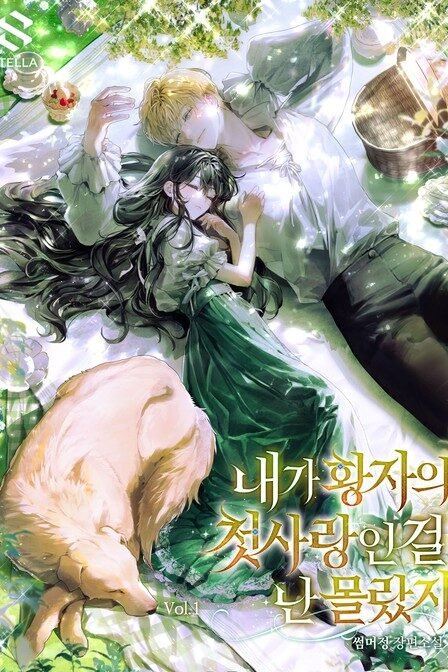
... Read More
Let me just say this upfront: Cedric is a menace and I love him for it. The opening scene with him and Karsion is pure gold. Cedric drops this casual threat—'Even if you are my brother, I won't let it slide'—and Karsion's killing intent is so thick you could cut it with a knife. Cedric actually feels the gap between them as knights and retreats. A step. Humiliatingly. But he still wins because he got what he came for: confirmation that Lina matters to Karsion. The dynamic between these two brothers is fascinating. Cedric clearly has history—remembering how Elizabeth humiliated Renée seven years ago, the memory of Karsion grabbing Renée's wrist and leaving. He's protective but also manipulative, playing both sides. When Lina jokes about liking Cedric because he provides food, Karsion's internal monologue is PRICELESS: 'If this woman were Renée, it wouldn't be this easy. I could take care of her food needs too. I even bought her a house.' He's comparison-shopping himself against his own brother. That's not jealousy, that's a full existential crisis dressed up as silence. And the fact that CEDRIC carried Lina half the way home and Karsion only got the other half? That's the kind of detail that makes you reorder your entire understanding of these relationships. Cedric knows things. Cedric helps people. Cedric is absolutely going to cause problems and I cannot wait.
... Read More
The way this chapter handled Lina's emotional reaction to arriving at Iblaine territory hit me like a truck. She's looking at this gorgeous rebuilt mansion and instead of feeling wonder she feels 'suffocated and nauseous, as if water had risen to the top of her throat.' AND THEN immediately afterwards we cut to Karsion's POV and it's the SAME FEELING. His 'chest ached dully' when he saw her carriage. These two are walking around with identical emotional damage and they have ZERO awareness of it. What killed me was the tomb scene — Karsion standing there saying 'Have you been well?' to gravestones like they're actual people he's catching up with. And then转向 Renée's grave and saying the exact same thing. THAT parallel. THE GUILT AND HOPE mixed together. And Lina wiping tears and lying that dust got in her eye while her nose tingles? She's GRIEVING FOR SOMETHING THAT HASN'T EVEN HAPPENED YET. She's mourning a friendship that might already be dead. 'Were we friends or not?' — said the girl who thinks she might be able to become his spring right before realizing she was never anything of the sort. I can't breathe.
... Read More
Let's talk about how the Iblaine mansion operates as a CHARACTER in itself because it absolutely is. The description is so vivid — ivory-colored bricks that seem to have received 'plenty of the sun's kisses,' rose-red roof, intricate sculptures everywhere. It sounds almost TOO perfect, and that's the point. Karsion poured his grief into every corner of this place. When Lina walks through it and notes that despite all the beauty, 'it felt strangely empty,' that's the author telling us this mansion was built for someone who will never come back. The contrast between the devastated territory five years ago and what Lina sees now — farmers in fields, women laughing, merchants with carts, warm sunlight — is deliberately almost magical. 'To think this land had been rebuilt only two years ago.' Two years! The Phoenix Knights and this entire expedition are living inside Karsion's private memorial and they have NO IDEA. Even the servants know him and greet him by title when he enters. The family tomb scene with the names engraved — Pascal Iblaine, Marienne Iblaine — reads like a quiet funeral that never ends. This is worldbuilding that aches.
... Read More
Okay so this part with Karsion just wrecked me. Like, he's out here literally handing out portraits of Renée to random people, hoping someone recognizes her, and it's so painfully desperate. And the narration says it best — "Though he was clearly smiling, it looked like he was crying." That line hit me like a truck. He's been stuck in this loop while everyone else has moved on. And then there's Lina, who looks exactly like the woman he's mourning, and he can't stop following them, trailing behind like a ghost attached to her shadow. The tension between what he feels for Renée and what's happening with Lina right now is so achingly complicated. That scene where he pays 1,000 rants for a dump of a room just to stay close to the collection team — that's not pride, that's obsession disguised as dignity. And then Lina walks in on him half-naked and the air just... freezes? The wet hair, the scars, the dripping water — the author paints this moment so vividly you can feel the heat rising in your cheeks. He's looking at her and I swear you can see the conflict in his eyes, like he's fighting with himself in real time. What is he even feeling right now?
... Read More
There's something haunting about the symbolism woven through these chapters that I can't shake. The portraits — literally copies of Renée's face being distributed like seeds, hoping one will take root in someone's memory. It's such a visceral image of grief made tangible. Karsion isn't just remembering Renée; he's physically spreading her image across the world, desperate for proof she existed beyond his own mind. Then there's the inn itself — crumbling, overpriced, a ghost of hospitality. Karsion choosing it over camping on the road mirrors his whole situation: he'd rather degrade himself than let go of proximity to what he wants. And Lina, caught between being herself and being a reflection of someone else's memory — she asks "Is it magic? Surely not that difficult transformation magic?" which is almost too on-the-nose but also painfully accurate to the theme. The name Renée itself means "reborn" in French, and isn't that exactly what Karsion is trying to do — resurrect her from the dragon's breath? Every chapter doubles down on this idea of ghosts and echoes.

Leave a comment

You must be logged in to leave comments. or
