I Became the Emperor’s Prisoner - Reviews

I Became the Emperor’s Prisoner
+Add to Custom List
Sort
Add review
... Read More
Okay so here's the thing that got me — the entire chapter is basically one long breathless situation. Elze is supposed to assassinate this Emperor guy but she can't bring herself to do it because of how physically close he keeps making her. And then BAM, she gets knocked off a horse, stumbles, and the poison bottle flies out of her sleeve. Right next to her. Like, come on. I love how the author structures the tension here. You've got the assassination plot (which could've been resolved with a single stab in the dark), but instead it becomes this whole elaborate dance where the closer they get physically, the harder it becomes for her to actually go through with it. And now with the bottle exposed? The stakes just went from "maybe I'll do it" to "oh god I need that back before anyone sees." The battle scene at the end is pure chaos — fallen trees blocking their path, soldiers clashing everywhere, and she's just trying to survive while hiding this critical piece of evidence. That ending where Kelta reaches for her with blood on his hands and she instinctively steps back?chef's kiss. The plot is feeding her every excuse not to kill him AND making the murder weapon impossible to retrieve. What a setup.
... Read More
'The bed creaked at the slightest movement, and the small room smelled of old wood. It was infinitely shabby compared to the bedroom she had seen in Lemos Castle, but that made it comfortable.' This sentence right here. This is the author showing me exactly who Elze is without saying a single word about her character directly. She's a commoner from Talis who's never needed someone to help her untie dress strings before, and now here she is in this shabby inn room that somehow feels more like home than any castle ever did. I'm obsessed with how the author uses sensory details to ground these intimate scenes. The warm cup of herbal tea with honey that Kelta brings her. The dim orange light from the fireplace casting a reddish hue on the bed. The way Elze grips the sheet anxiously while he covers the fire with embers. These aren't just set dressing—each detail pulls us deeper into their physical closeness while emotionally they're miles apart. The fireplace scene particularly got me. He's bent over, covering the blazing fire, and she watches him from the bed and feels this 'painful urge to warmly embrace him' but she can't articulate why. She just tosses and rubs her eyes restlessly. The image of him sitting there looking 'precarious and lonely' in that thin orange light—that's a painting. I could see it perfectly. And then the arrival at the imperial city! The contrast is stunning. They're traveling through fortress cities with 'uniquely shaped walls' and Elze marvels at them each time, but by the time they reach the capital, she's partially hidden behind the carriage window, making herself small. 'Feeling the energy of the imperial people on her skin made her keenly aware of her position as a war captive from defeated Talis.' The worldbuilding here is doing so much heavy lifting. We're not just in a fantasy kingdom—we're in a place where Talis lost a war, where Elze is technically a prisoner, where Kelta is victorious but carrying his own invisible wounds. The cheering crowds lining the streets, the food smells, the bustling atmosphere—it's all vibrant and alive, but Elze is watching it all from behind glass, separate and isolated. The palace itself is described with this cold grandeur—'Large halls had colonnades densely arranged on both sides' with 'detailed carvings on each pillar.' Elze gazes at them entranced while Kelta hustles her up marble stairs, nervous. The contrast between her wonder and his anxiety tells us everything about their positions. She's seeing beauty; he's seeing political danger. That final image of them entering where servants bow densely and a bespectacled man emerges abruptly—the world feels vast and lived-in, and we're right there in the threshold between their private journey and the public stage waiting to swallow them whole.
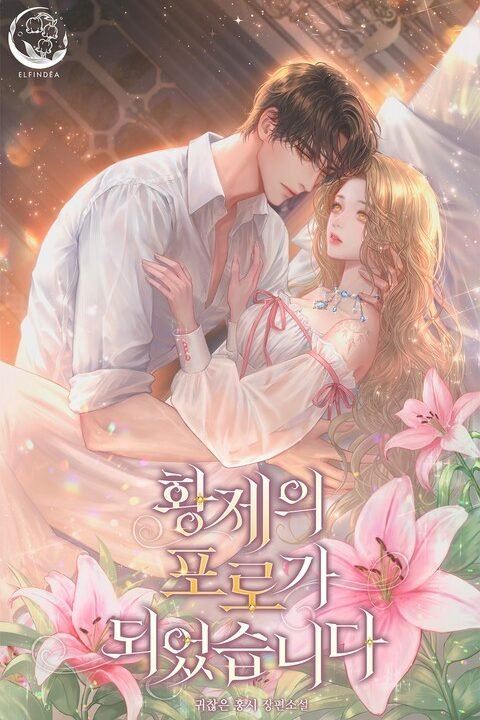
... Read More
I've been sitting with this chapter for hours and the symbolism keeps revealing new layers. The throat. The voice. These aren't just physical details — they're the central metaphor for everything. Elze sacrificed her voice, presumably for him or for something tied to him, and now her body is literally trying to return what was taken. The scratching, the blood, the rat-like sounds — this is bodily rebellion against spiritual sacrifice. She gave something precious and now her body won't let her pretend it didn't happen. The author is asking: what does the body remember when the mind tries to bury it? Blood is another recurring motif. Not just hers — the blood on his tunic when he's wiping her hands. He physically takes her pain onto himself, staining himself without hesitation. Later, she notices the bandage on his own neck wound from earlier, and he's already healing while she's still deteriorating. The asymmetry is intentional. The puppy is fascinating symbolism too. A creature that needs training and guidance, offered to someone who can't speak, carried by someone whose hands are stained with someone else's blood. The lord says 'just looking at it heals my heart' — but nothing heals Elze's heart. She holds the puppy and almost cries because for once something is caring for her unconditionally, without needing her to explain anything. And the griffin — a mythical beast they're hunting — feels like an externalization of everything internal. Something monstrous to slay so others can live peacefully, while the real monster has been living inside Elze's throat all along. The white horse, the moving carriage, the constant motion — everything is transient. Nothing stays still. Not their relationship, not her body, not the ground beneath them.
... Read More
Okay so this whole section hits DIFFERENT after the revelation about Elze's voice. Let me just say it — the author completely subverts what looks like a minor health crisis into something that recontextualizes their entire dynamic. We think this is just a fever or exhaustion thing, right? Classic setup for concern and caretaking. But then Kelta walks in and sees her SCRATCHING HER THROAT until it bleeds, and suddenly nothing is normal anymore. And the worst part? She doesn't even TRY to explain it to him properly. She just sits there paralyzed, and then when he finally snaps at her — 'If it's not because of me, why couldn't you answer my question?' — that's when you realize the plot has moved so far beyond a simple misunderstanding. The pacing here is masterful. The author stretches out every uncomfortable second. Elze's panic, Kelta's confusion escalating to anger, the physician's clinical interruption like a relief valve — it all builds this unbearable tension that the carriage ride doesn't fully release. Actually it does the opposite, doesn't it? Because now every quiet moment between them feels charged with things left unsaid. The subplot with the knights being demoted to infantry is a gorgeous detail — we learn she was warned by them about the consequences of her silence. And the griffin quest gives the whole journey a ticking clock underneath. What's brilliant is that the 'returning Foundation Festival' mention at the end sets up an inevitable confrontation. She can't run from this forever, and neither can he. I just feel like everything shifted on its axis in these chapters and I haven't stopped vibrating.
... Read More
I keep coming back to that one line, over and over: “It's a name permitted only to you.” Let me just… sit with that for a second. Kelta, the Emperor himself, this cold, controlled man who barely shows any emotion, says these words to Elze in a dark corridor while she's half-drunk and leaning against him like some needy kitten. And he says it so casually, so matter-of-factly, like it's the most obvious thing in the world. Like of course he'd give her this. Like she's already his. Which she is, apparently, because right before that he literally tells her he's certain she's “already my woman” and that no amount of pushing him away changes that fact. I was screaming internally. The absolute audacity. The confidence. The way he just—pins her against a window and lays it all out like he's been waiting forever to say it. But here's what wrecked me: Elze's reaction. She doesn't gush or swoon. She just thinks, “The feeling of becoming someone special to someone was ecstatically joyful.” After everything she's been through—being treated as disposable, being thrown around, being mute in a world that demands obedience—the first time someone genuinely claims her, it hits like a freight train. And then she falls asleep and dreams about losing her voice. OF COURSE. The universe really said, “here's a beautiful moment, now let's ruin it.” I was not ready for the Queen arc to hit so hard right after that sweetness. My heart cannot handle this author.
... Read More
This chapter is absolutely packed with tension. Let me just say - the poison reveal gave me chills. Roah casually asking "who were you planning to use that poison on?" while she's hanging over the ship railing vomiting... what a scene. The fact that he already knew and chose to keep quiet instead of reporting to the Emperor immediately creates this whole layer of mystery around him. Is he trustworthy? Does he have his own agenda? "I saw a vial slip out of your sleeve. Were you planning to use it on His Majesty?" - that line hit hard because we don't know if she was going to drink it herself or actually poison the Emperor. Both possibilities are terrifying in different ways. Then the arrival at Lemos and the lord's reaction when he realizes the "spoils" is a person, not gold - that shift in atmosphere was masterful. One moment he's grinning about shiny things, the next his face goes pale. And Roah basically saying "well, it does shine" before revealing it's a person... that was either incredibly dark humor or genuinely menacing. Elze's spiral into thinking she's being gifted away as some kind of concubine to the lord is both heartbreaking and shows how little she understands about Kelta's actual intentions. The structure here keeps doubling back on itself - we get moments of tenderness (Kelta helping her with seasickness) followed immediately by betrayal fears (the gift-giving misunderstanding). It's exhausting to read in the best way.
... Read More
Let me be blunt about what makes this chapter so gripping: the stakes are simultaneously intimate and geopolitical, and the author never lets us forget either layer. On the surface, Elze is injured, feverish, and trapped in hostile territory. Her body is failing her. She can barely walk down a slope without stumbling. The physical stakes are immediate and visceral. But underneath that—oh, underneath that—is the real conflict. Elze came to the Empire to assassinate its ruler. She is staying because she hopes he can cure her mother. Every moment of warmth he shows her is also a moment of danger, because the closer she gets to understanding him, the harder it becomes to maintain her mission. “If the emperor found out, the king would likely not escape death.” This line haunts every interaction. The sleeping draught scene is where this conflict reaches its zenith. Kelta is drugging her to carry her while she sleeps. Is this protection? Is this captivity? The answer is both, and that ambiguity is what makes the tension so delicious. He says: “If I had intended to handle you as I pleased, I wouldn't have made such efforts.” But what IS he pleased by? And what efforts is he referring to? The external conflict—the war, the soldiers, the journey ahead—is always present in the background. But it is the INTERNAL conflict, the war between duty and desire, that keeps me turning pages. Every time Elze feels a moment of closeness with him, the narrative immediately reminds us: she cannot trust him. And yet—we watch her fail to maintain that distance anyway.
... Read More
“As he brought his face close, his hot breath touched the bridge of her nose. She hurriedly turned her head away.” I NEED A MINUTE. This scene. RIGHT HERE. The way the author constructs this moment—face-to-face, breath mingling, her heart racing—and Elze's immediate instinct is to look away, not because she doesn't want him close, but because she's TERRIFIED of what closeness means. She keeps telling herself: “You should be vigilant to prevent me from doing anything improper. Not avoiding my eyes.” As if looking into his eyes is more dangerous than any physical advance. And Kelta's response? “Whenever you show an opening, I'll push in like this.” That line. That is not a threat. That is a PROMISE wrapped in velvet. He is saying: I see your vulnerability, and I am going to honor it, not exploit it. The fact that she interprets it as both intimidating and strangely comforting simultaneously is chef's kiss. The milk scene afterwards is where I completely fell apart. He is watching the fire, breaking wood, and when he notices her shivering, he says nothing—he just extends his hand from inside his cloak and offers her warm milk. No fanfare. No demands. Just: “Drink it before it gets cold.” The domesticity of it after everything that happened yesterday is so disarming. And then she falls asleep against his touch, her breathing syncing with his movements. The intimacy of two people who barely know each other finding comfort in physical proximity—it's devastating and beautiful.
... Read More
Okay so I need to talk about Kelta and Elze because this chapter basically rewrote the entire script for me. Earlier I thought he was just another grumpy tsundere type, but no—this bath scene? Chilling. When he pulls her into the bathtub and his first reaction isn't anger, it's... checking if she's hurt? That line — "If I had seen you just a little later, you could have been seriously injured. Do you know how startled I was?" — and he says it while complaining. Classic Kelta. But what got me is the physicality of their dynamic. He's always been the one initiating contact—grabbing her wrist, pulling her close—but here she starts doing it. Touching his scar without thinking. Running her fingers near it like she wants to understand what it means. And his reaction? He flinches, then glares, but it's not real anger. It's something else entirely. And then there's the mask. The text literally describes his face as "expressionless" when he's actually hiding something huge. His cheeks flushed, hair damp, looking "as innocent as a boy who had been playing in the fields." The gray man from the duel is still there, but now there are colors underneath. And Elze notices it. She pieces it together and thinks maybe SHE'S the reason he's changed. That moment where she runs away tousling her own hair because she doesn't know what to do with the feeling? Pure. That's the most vulnerable I've seen either of them all book.
... Read More
I need to just sit with this for a moment. The way Kelta looks at Elze when she's hanging over the railing like seaweed and immediately wraps his arm around her waist - that's not duty, that's not strategy, that's someone who is genuinely worried about this person. And then he rubs her stomach to help with the nausea? With calloused hands? That's intimate in a way that has nothing to do with romance and everything to do with human care. But Elze can't receive it. That's the tragedy. "With just one warm, caressing gaze, her fingertips tingled and a single leaf sprouted." A single leaf! After all this time of being neglected and abused, someone is gentle with her and her body literally reacts like it's foreign. She's so starved for affection that even basic kindness overwhelms her. The scene where he puts the orange blossom circlet in her hair and she immediately thinks she's being given as a concubine to the lord... my heart. She literally cannot imagine a world where a powerful man would give her something beautiful without an ulterior motive. When she shakes her head and tries to refuse, he just sighs and says "I must put something in your hands today." Not because he wants her to be indebted to him - but because he wants her to have something. Something that is hers. "No matter how I think about it, there's no reason for me to receive such kindness" - this premonition of doom that sits heavy in her chest. She expects betrayal because that's all she's ever known. And honestly? After everything she's been through, her instinct makes sense. It just makes my heart ache.
... Read More
The dialogue in these chapters is absolutely razor-edged and I need to talk about how the author uses silence as a weapon. Kelta's lines hit like physical blows: 'So, what's the reason?' is deceptively simple but layered with exhaustion, fear, and betrayal. Then 'I thought you were gradually opening your heart to me' — this isn't just a character speaking, this is someone whose entire understanding of their relationship just cracked. And then the wrist threat, which is perhaps the most chilling and tender line in the entire passage. The author makes Kelta's voice do three completely different things: investigator, lover, protector. Sometimes all at once. But the real masterpiece here is Elze's silence. Her lack of verbal response IS her dialogue. Every time Kelta asks a question and she 'merely lowered her eyes' or stays 'languidly immersed in drowsiness,' it's not passivity — it's panic. The narrative voice makes sure we feel her desperate internal monologue ('I want to express it too. I want to speak too...') right alongside her external inability to produce sound. This gap between thought and speech is where the author builds genuine emotional depth. The physician scene is also worth noting — clinical, detached, almost comically informative about the herb's uses ('you can use it when bathing, consume it during meals, or brew tea with it before sleeping'). It's deliberate tonal whiplash that heightens the emotional intensity around it. And Kelta's sheep explanation?! 'Sheep are more vicious than you might think... if you get distracted even a little, they'll charge right at you' — this is dialogue as misdirection, as deflection, as a man trying to say something important without actually saying it. The subtext is SO thick you could cut it with a knife.
... Read More
'Your dislike of me won't change anything. The moment you became entangled with me, your fate was already decided.' This line has been haunting me. The Emperor grabs Elze's chin, studies her face like he's trying to solve a puzzle, notices her eyes match his own, gets visibly irritated when his subordinate bruises her wrist—and then picks her up and carries her to the horse himself. This isn't the behavior of a man who randomly selected a hostage. Something about her triggers something in him, and honestly? It's equal parts terrifying and fascinating. Then there's the king—pale, desperate, kneeling in mud to beg for his son's life—only to immediately weaponize Elze the second he's safe. He offers her gold, promises to cure her mother, tells her to seduce and murder the Emperor. One moment he's a grieving father, the next he's calculating. And Elze herself—she can't speak, can't write, has no power in any conventional sense, yet both the most powerful man in the room and the king who supposedly protects his people are making decisions about her future without asking. Who is she really? What makes her eyes golden like the Emperor's? These questions are eating me alive.

Leave a comment

You must be logged in to leave comments. or
