I Became a Maid to the Exiled Young Lord - Reviews

I Became a Maid to the Exiled Young Lord
+Add to Custom List
Sort
Add review
... Read More
There's this one moment that absolutely ruined me — or made me, you know, feel something I wasn't expecting. Caspian, who never leaves his room, who lives in this hermit existence, starts going out. Just to eat in the dining room. Just to walk in the garden. And the narrative explicitly tells us these are ordinary moments for other people but extraordinary for him. But here's what struck me: he doesn't leave for any dramatic reason. He leaves BECAUSE Cordelia is there. That's it. That's the whole catalyst. Catherine notices it and comments on it, and Caspian internally bristles at her suggestion that Cordelia is some kind of emotional crutch or spiritual companion. He calls it a lie. But then — and this is the devastating part — he supports Cordelia's head when she dozes off at the desk. He doesn't wake her harshly. He doesn't tell her to focus. He just... catches her. And afterward he asks if she wants a break and shows her the canary. Every single action reveals more about him than any direct statement ever could. Cordelia, on the other hand, is this complete opposite in her approach to him. She's obsessed with becoming useful, with getting everything right, with measuring her worth against his silent standards. When she lies about searching the house and says she was cleaning, she flinches — not because she's caught, but because the idea of disappointing him physically pains her. "One part of her heart felt like it was being pricked by needles." That line. That's not servant loyalty. That's something else entirely forming underneath.
... Read More
The imagery in these chapters is genuinely stunning and I need to talk about how the author uses setting as a mirror for the characters' inner lives. Let's start with that opening scene — white flowers taking on a "strange reddish hue, as if dyed by the twilight." From the very first line, we're in this dreamy, liminal space. The garden is beautiful but it's evening, the light is dying, everything is slightly off-kilter. This is Cordelia's world: beautiful, foreign, tinged with something she can't quite name. Jack's garden is described with such vivid specificity. The perfectly rounded trees, the roses he treats like babies, the flowers that couldn't grow in the cold northern land. Jack himself is almost a cartoon — the mustache, the rapid-fire monologue, the careless scissors. But he's also the only person in this mansion who treats Cordelia like a human being. He doesn't care that she's mute. He doesn't care that she's from Therion. He asks her opinion on his trees and waits for an answer she can't verbally give. When she claps, he reads it as genuine appreciation. Their interaction is one of the most touching scenes in the whole book and it happens entirely without words. Then there's Caspian's room — the closed windows, the tightly covered curtains, no light visible. He hasn't left this villa since he was seven. The garden is beautiful but he can only watch it from behind glass. Cordelia notices this. She looks up at his window and wonders if he loves the garden the way Jack does. The contrast between the two spaces — the sun-drenched garden where Jack flourishes, the darkened room where Caspian withers — is basically the thesis statement of the novel. The scene where Cordelia enters Caspian's room is shot like a film. The quiet corridor, the knock, his voice telling her to leave without even looking at her. She holds out the rose and he doesn't take it — his gaze goes PAST the flower, past her, to whatever wall he's been using as armor. Then the violence of it all: the rose falling, petals scattering across the floor like something dead. The silence after. Her running. The image of her collapsed face-down on her bed, sobbing into a pillow. And later, the broken rose on the side table. Caspian deliberately looks away from it. He can't even bear to see what he destroyed. The scattered white petals against whatever surface they're on — it's such a simple image but it carries the weight of every failed connection in this story. The world itself feels alive in a way that serves the story. The south is warm, full of flowers that can't survive in the north. The north is cold, harsh, where Therion people face discrimination. Asteris is this gilded cage — beautiful gardens, grand mansion, but everyone inside is trapped by circumstances they can't control. Caspian by his health and birthright. Cordelia by her status and silence. Jack by his obsession. Even the Duke, never seen but pulling all the strings from somewhere far away.
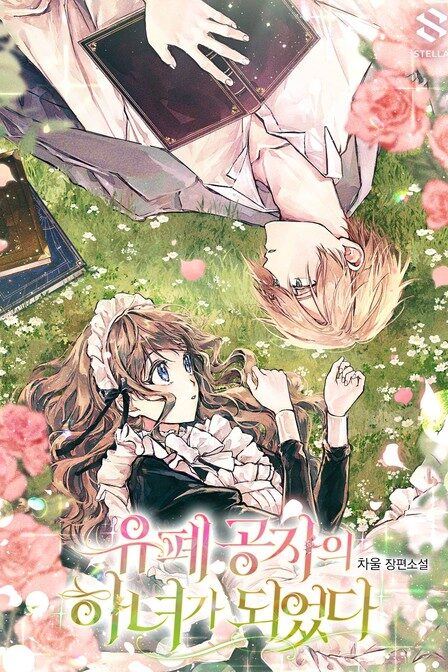
... Read More
The stakes here are so quietly devastating. Caspian's birthday. The entire mansion is preparing some elaborate meal. The chefs, the maids—all working, all treating this like something worth celebrating—and he ate almost nothing because he had a nightmare and is already in a bad mood. The conflict isn't some grand battle or betrayal. It's a boy lying back on his bed covering his eyes while food goes cold around him. Meanwhile Cordelia ran out into the freezing cold to find a gift for him. That's the real tension: she keeps trying to reach him and he keeps building walls, and neither will admit the other matters. The nightmare itself—running through darkness, voice blocked, a child with blue eyes running away from him screaming 'Don't go. You too should be in this hell with me'—is the internal conflict laid bare. He knows she'll leave. He knows he's broken. And he's right.
... Read More
There's a question in these chapters that I can't stop thinking about: WHY does Caspian not name his canary? 'What's the point of giving a name to something that could die at any moment?' On the surface, this is practicality. The bird is sickly, fragile, mortal—why attach identity to something temporary? But read in context, this line is SO much larger than a pet. Caspian has spent fourteen years in that villa. Fourteen years of being called 'the sickly young lord' by people who will never look at him as a person. Fourteen years of building a reputation as either angel or monster because those are the only labels safe enough to survive in Asteris. He doesn't name the canary because naming is an act of claiming, and Caspian von Obenhart has spent his entire life being claimed BY OTHERS—for his bloodline, for his title, for his body, for his silence. The canary leaving and returning is the first time something chooses HIM. Not because he commanded it, not because it was trained to obey, but because somewhere in those three weeks, the bird decided this place—and by extension, Cordelia, who was there—was safer than freedom. And Cordelia herself is almost nameless in this world. She's 'the mute child,' 'the new personal maid,' 'that person.' She communicates through a notebook because her voice was taken from her. And yet she's the one who NAME'S the canary in her own head—she gives it meaning, she gives it purpose, she calls it friend. The recurring imagery of birds—caged, escaped, returned—is the thesis statement of this entire arc. Freedom and captivity are not opposites here. Sometimes the cage is the safest place. Sometimes the bird flies away because it's terrified, and comes back because it recognizes where it belongs. And sometimes the person who seems most trapped is the one holding the key, whether they know it or not.
... Read More
'Use me.' That's it. That's the line that broke me. Not a grand declaration, not some poetic vow—just two words, flat and direct, and somehow that's the most vulnerable thing Caspian von Obenhart has ever said. Think about who he is. A boy who hides in a southern villa because the world would eat him alive. A young lord people gossip about like he's a myth. He doesn't do tender. He doesn't do soft. And yet here he is, looking at this child who's been trembling in the garden and basically saying: I am yours to command if it helps you survive. And Cordelia—oh, Cordelia. The fact that she received this offering and just... internalized it. Didn't push him away, didn't make it awkward. She filed it away in her heart and carried it with her like a secret weapon. Later when she's replaying '' in her head, wondering WHY he would offer something like that, and the answer she lands on is 'Perhaps in his eyes, the young child being insulted had looked pitiful.' But I don't think it was pity. Not really. I think he saw himself in her. Both of them are trapped in this body and this role and this house, and neither of them knows how to escape. The dynamic between them is becoming something extraordinary. He watches her while she reads. He notices when she's learning the language from someone else. He says 'Return before sunset' and it sounds so casual but it ISN'T casual—it's protectiveness disguised as routine. And then 'Sleep well' after three weeks of silence? That man doesn't know how to be human and he's TRYING, right in front of her. Meanwhile, I need to talk about Dr. Hugo. The man literally looks Cordelia up and down like she's livestock and asks 'Did you notice anything suspicious about the young master?' Suspicious. As in—what, does he look sick? Or does he look like a MONSTER? That gaze made my skin crawl and I have every expectation he's going to be a problem.
... Read More
Okay so I need to talk about the white rose because this imagery is doing SO MUCH heavy lifting in these chapters. Caspian finds this pitiful, drooping rose that Cordelia brought him and he literally heals it with a wave of his hand—petals reattaching, vitality returning. But here's the thing that got me: the text says 'How long had it been since he'd seen a flower up close?' This isn't just a decorative flower, friends. This is a symbol of the one character in this entire mansion who actually KNOWS what it means to be preserved but not alive. The rose was brought by Cordelia, given back by Caspian, and somehow each of them sees something different in it. For him, it's beauty he can restore but doesn't understand. For her, it becomes proof—tangible, physical proof—that she has a place here. The moment she walks out of his room clutching that white rose is basically the most important scene in the whole book so far. And then there's the whole silence thing. Cordelia can't speak, and yet the narrative keeps emphasizing that her silence carries MORE weight than words. Every note she writes is described as having 'crooked letters' that somehow convey 'desperation.' There's this beautiful irony where the person who can't speak is the one communicating the most honestly, while everyone around her is full of rumors and unspoken judgments about Caspian. The imperial language itself is another symbol I can't stop thinking about—Cordelia deciding to LEARN it isn't just practical, it's an act of defiance against the world that told her her voice didn't matter. She's essentially saying 'I will find a way to be heard even if I have to write every word.' That hit me really hard.
... Read More
I need to talk about Cordelia first because this girl is quietly devastating. Twelve years old, moving countries, working at her mom's fruit stand just to stay busy so she doesn't have to think. The line about her submerging her face in water and holding her breath—"She thought it would be nice if her breath just stopped now"—I actually had to put the book down for a second. This kid is carrying something enormous and she's handling it with this quiet, eerie calm that's more frightening than any meltdown. And then Caspian. Oh god, Caspian. The way the narration describes him—"dazzling golden hair" and those eyes that Cordelia recognizes from her own mirror every morning. Two broken kids who see themselves in each other and the story is barely two chapters in and I'm already invested in whatever complicated thing is going to happen between them. The moment they actually meet though? Chef's kiss. Cordelia is staring at him, transfixed, and Caspian stares BACK. He tilts his head slightly like he's trying to read something. For a second I genuinely thought he might say something kind, anything, and then he just goes completely cold—"Send her away as soon as the day breaks tomorrow." Ouch. But here's what I can't stop thinking about: WHY does he do that? Is he pushing her away to protect her? Does he genuinely hate what she represents? Is he scared of himself? I need answers. Also—Amelia seems sweet but I have questions about why Cordelia's life looks so lonely for someone with a mother who clearly cares. The Obenhart family dynamic is going to be SO interesting to unpack.
... Read More
Okay so can we just talk about the atmosphere in these chapters because WOW. The scene where Cordelia shows up at Caspian's door—her disheveled hair, red nose, wet hem of her skirt—is so vividly rendered I could literally see it like a film frame. The contrast between the cold outside and that fireplace in his room… it's not just set dressing, it's doing emotional work. You can feel the chill in the air and then the warmth spreading through as she sits by the fire. And then there's Hugo's visit, which shifts the whole mood instantly. The way the narrative moves from that soft, intimate moment to the clinical coldness of Hugo examining Caspian—unbuttoning his shirt, talking about tangled magical power—it's like the temperature in the room drops ten degrees. The author is really good at using physical space to mirror internal states. Caspian's locked room, the window he stares out of while hiding… the villa itself feels like a character, a gilded cage. I also love how the worldbuilding is woven in naturally during Hugo's backstory—the imperial family overthrowing the old emperor, the temple's influence, the hatred of magical power as ideology rather than just random world detail. It all clicks together. The two-week round trip between the capital and Asteris, the midsummer heat, the whole sense of place feels lived-in.
... Read More
"Things I like..." Caspian's entire identity crisis compressed into four words. How do you answer that question when you've spent so long being someone's responsibility, someone's patient, someone's heir that you've never actually had the chance to discover what you enjoy? Cordelia offers him her crude drawings of things she loves, and he has nothing to match it. That moment is devastating in its simplicity. And the canary. The canary that never leaves its cage but is offered freedom inside the room. Cordelia telling it "you must know the young master well" and then whispering "I want to stay by the young master's side for a long time, like you"—is that devotion or is that captivity? Is she grateful for the shelter, or has she become another creature in another cage? The question hangs there without judgment. Even the winter functions symbolically. Asteris's cold mirrors Caspian's internal state—preserved, frozen, surviving but not living. And yet, the strawberry cake, the small lamp, Cordelia's drawings—these are tiny embers of warmth in that cold. The novel seems deeply interested in what cages exist and who decides they're necessary. The blonde man with red eyes in Caspian's nightmare? I swear to you he represents something more than a dream. But what exactly—that's the question keeping me turning pages.
... Read More
I need to talk about how the author handles pacing because it's genuinely impressive and honestly kind of rare. The chapter starts in media res with Caspian waking from a nightmare—that's your hook, immediate, visceral. Then instead of rushing to explain anything, the author just... lets Cordelia sit there. Writes. Waits. The silence between them speaks volumes. And then, bam, you get the drawings. The rose. The tree. The cat. Each one a tiny beat of character development compressed into almost nothing. Cordelia trying to help him sleep by showing him things she likes? That's three paragraphs doing the emotional work of an entire chapter in lesser books. Then the narrative pivots hard into the servant conversations, which could have felt like filler but doesn't, because Cordelia's question about where the young master is sick creates this spike of tension. The maids' reaction—looking at each other, avoiding the answer, calling her "admirable" to deflect—is such efficient storytelling. And then the canary scene, which seems like a quiet interlude but actually raises the stakes about her isolation and determination. The return to Caspian with the cake and the line "Would you like to tell me something? Anything"—that's the chapter's emotional anchor, and it lands because everything before it has been building toward that moment of vulnerability. The pacing never drags, never rushes. It breathes.
... Read More
The author's use of light and shadow in this section is absolutely cinematic and I need everyone to understand how good this scene is. Cordelia sneaking to the second floor at night, tiptoeing in raised heels — wait, raised heels as a CHILD maid? The worldbuilding implication alone is fascinating, because it tells you something about the hierarchy and performance of this household. But the real magic happens when she enters the canary room. "The only light in the dark room was a single beam of moonlight." Just that. One beam. And the bird is "glowing yellow" in it. This is such a tender, almost sacred image — a small child confessing friendship to a silent creature in the dark, hoping against hope that this thing might hear her. It mirrors her own situation so perfectly that it aches. She speaks haltingly in imperial language sentences, each word separated by commas like she's placing them carefully: "I, want, to be, your friend." And the bird doesn't respond. No telepathy, no magical connection, just silence. But here's what makes this world-building so layered: we KNOW there ARE magical creatures in this world who can be communed with. Cordelia mentions the forest of Ernel, the different languages, the ability to read minds. So the canary's silence isn't just a lack of magic — it's an intentional choice by the author to create a creature that CANNOT be understood through supernatural means. A relationship that must be built the hard way. Through patience. Through showing up every night. Through presence alone. The contrast between the warm, living world of Therion and the cold, rigid, performative world of the Empire is encoded in every sensory detail.
... Read More
Okay so the very first paragraph basically grabbed me by the throat and refused to let go. Cordelia standing in a plaza watching some guy get publicly executed for making a pact with a demon—I was immediately thrown into the deep end with zero context and honestly I loved it. The author doesn't waste any time establishing stakes. People are throwing stones. There's political tension between the Rihardt Empire and the Therion Kingdom. Someone is about to die and Cordelia desperately wants to scream that it's NOT HIM. And then—BLAM—he gets beheaded right in front of her. Just like that. But here's the thing that wrecked me: she WAKES UP. It was a dream. Or was it? Because the way the scene transitions—her eyes flying open, cold sweat, her mother banging on the door—it reads exactly like a trauma flashback, not a dream. The execution felt too detailed, too specific, too emotionally precise to be just some random nightmare. My gut says this memory will resurface as an actual plot point later and when it does, I am going to lose it. Then the story pivots almost casually into her getting a job as a maid at this huge mansion. The shift from a bloody public execution to "oh hey, let's go to work" is jarring in a way that made me immediately suspicious. Nothing in this story feels accidental. Every detail seems planted. And then—Caspian. The sickly young lord everyone whispers about. The rumors say he's a monster. He's beautiful. He and Cordelia lock eyes and something unspoken passes between them, and then he cruelly tells Catherine to send her away the next day. What. Is. Happening. I need to know what happened to Cordelia before this story starts and why that boy looks at her the way he does. Send help.

Leave a comment

You must be logged in to leave comments. or
