Summary

... Read More

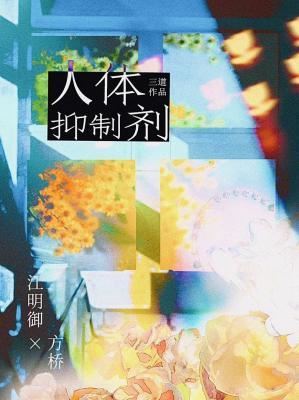
Fang Qiao is a twenty-four-year-old Omega working as an attending physician in Pediatric Craniomaxillofacial Surgery at a municipal dental hospital. Known for his gentle demeanor and patience, he endures professional hostility with stoicism, including a public assault by a patient's family that leaves a scar which heals within weeks. His life is governed by a clandestine three-year contract with the powerful Jiang family, who sought his pheromones to treat their heir, Jiang Mingyu. Fang Qiao accepted this arrangement thirteen years ago, following the wrongful conviction and imprisonment of his father, a Beta teacher accused of assaulting a student. Desperate to overturn the verdict after his father's suicide in prison, Fang Qiao agreed to serve as a human inhibitor for Jiang Mingyu, an S-class Alpha suffering from a congenital Pheromone Disorder Syndrome that causes agonizing withdrawal and violent episodes.

Jiang Mingyu, now twenty-two, is a brilliant but volatile young man managing the Jiang Group empire. His condition has stabilized significantly under Fang Qiao's care, reducing his need for chemical inhibitors. However, their relationship remains fraught with tension. Fang Qiao is acutely aware of his status as a temporary medical solution, while Jiang Mingyu oscillates between dependence on Fang Qiao's pheromones and verbal cruelty regarding the transactional nature of their bond. The arrival of a soaking wet teenager in the rain triggers a chain of events that exposes the fragility of their equilibrium. Fang Qiao intervenes to stop school bullies, an act that inadvertently introduces foreign pheromones onto his person, sparking immediate jealousy and aggression from Jiang Mingyu.

The conflict escalates when Jiang Mingyu confronts Fang Qiao at their luxury residence, misinterpreting the stranger's scent as evidence of infidelity. This suspicion catalyzes a violent encounter in their home, where Jiang Mingyu's latent disorder resurfaces, overriding his rationality. During this episode, Jiang Mingyu reveals that his grandfather intends to force Fang Qiao to resign from his medical career and become his full-time personal assistant. This demand strikes at the core of Fang Qiao's autonomy and professional identity, representing a further erosion of the boundaries he has struggled to maintain within the contract.

As the narrative unfolds, the power dynamics between the two men are scrutinized. Fang Qiao attempts to negotiate a delay, appealing to his commitment to his job and the stability Jiang Mingyu currently enjoys. Jiang Mingyu, however, dismisses these pleas, viewing Fang Qiao's independence as a threat to their enforced proximity. The Alpha's possessiveness is compounded by his fear of abandonment and his lingering resentment toward the Omega's initial motivation for joining him, which was rooted in financial necessity rather than compassion. Fang Qiao is left to navigate a precarious existence where his only leverage is his unique biological compatibility, a trait that grants him status within the household but strips him of legal or social protections.

The incident with the bullied teenager serves as a thematic mirror to Fang Qiao's own past victimization and his current subjugation. Just as the teenager was powerless against his attackers, Fang Qiao remains trapped by the weight of his father's unredressed wrongs. The introduction of the Jiang family's extended dynamics further complicates the situation, revealing a web of familial strife and political maneuvering that surrounds Jiang Mingyu. With the contract nearing its expiration and his grandfather's pressure mounting, Fang Qiao faces an impending crisis. He must decide whether to submit to the role of a captive assistant or fight for his freedom, all while the mystery of his father's case remains unresolved and the volatile bond with Jiang Mingyu threatens to consume him entirely.

Latest Release
DateGroupRelease
2026-09-25knoxt c2
2026-09-25knoxt c1

Community Reviews

Rating(3.8 / 5.0, 13votes)
5 stars
2(15%)
4 stars
6(46%)
3 stars
5(38%)
2 stars
0(0%)
1 stars
0(0%)

Popular reviews

... Read More
So this chapter completely recontextualized everything for me. Up until now I thought Jiang Mingyu and Fang Qiao just... existed together, right? Like it was always natural. But NO. They signed a THREE-YEAR contract. Three years. Fang Qiao basically became medicine. And not just any medicine - the Jiang family had literally two options and picked the one that didn't have legal baggage. Which is wild when you think about it. They could've extracted his pheromones, permanently damaged his glands, and if that failed they'd be back to square one looking for another one-in-a-million Omega. So they chose the ethical loophole instead. Cold. Calculated. And Fang Qiao just... agreed to it.
... Read More
This passage does something I really appreciate—starts broad and narrows like a camera lens snapping into focus. We open with a dynasty. The Jiang Group, a century of wealth, an S-class Alpha heir, sibling intrigue, power struggles over inheritance. It reads almost like a historical epic, and then—bam—we drop into a bedroom scene where an Omega is being manhandled by his patient, and the whole opulence of the opening suddenly feels hollow. The chapter structure here is doing clever work with tension. First, the exposition dump on the Jiang family (necessary, I get it, but honestly my brain was doing gymnastics to keep all the names straight). Then the present-day confrontation between Fang Qiao and Jiang Mingyu—short, sharp, brutal dialogue that escalates FAST. Then the contract scene, which slows everything down, gives us the backstory, the WHY, the emotional anchor. And it ends on that haunting memory—"an almost horrific memory, tinged with blood." Cliffhanger? Not explicitly, but effectively. What I loved especially: the transition from Fang Qiao's physical submission in the present to his childhood memory at the end. The author doesn't explain the connection between the two—he just lets them sit beside each other, and the reader makes the gut punch themselves. That stormy day. The prison visit. The suicide. All of it compressed into a single devastating paragraph while Jiang Mingyu's mint pheromones fill the room in the present. Two timelines, one emotional truth: Fang Qiao has been trapped since he was a child, and now he's trapped all over again. The pacing doesn't rush this. It lets the weight accumulate.
... Read More
I need to just say it out loud—Jiang Mingyu is infuriating and I cannot stop thinking about him. Like, what IS that kid? S-class Alpha, sick with Pheromone Disorder Syndrome, raised by parents who viewed him as a bargaining chip in a family civil war, surrounded by people who only love him conditionally. And now he's got Fang Qiao—some Omega who agreed to sell himself for money, who Jiang Mingyu despises precisely because Fang Qiao chose this path willingly. "What's the difference between you and someone who sells themselves?" Oh, he didn't even need to say that out loud, I could FEEL it. That line cut through the prose like a knife. But here's the thing that keeps tugging at me—when Fang Qiao says he wants to negotiate with the hospital, Jiang Mingyu's reaction isn't satisfaction. It's irritation. "You really are obedient." And then he flips him over, pins him down, and literally says: "You being my personal assistant, if you don't find it annoying, I find it annoying. Who wants to see you every day?" Read that again. That's not rejection. That's... something else. He doesn't want Fang Qiao as a personal assistant, but he also can't stand the idea of Fang Qiao just leaving. The man is a walking contradiction and I am HERE for it. And Fang Qiao—god, Fang Qiao. He clings to Jiang Mingyu's shoulders almost pleadingly. He ENDURES. After their first encounter was described as "almost horrific, tinged with blood," he still shows up. Still complies. Still takes the abuse and calls it a job. He's not weak; he's trapped in a system that gave him no choices. There's a whole history between them—years of adjustment, of physical union, of pheromone entanglement—and yet Jiang Mingyu treats him like dirt. I'm genuinely scared for Fang Qiao.
... Read More
Okay, can we just talk about how much this contract guts Fang Qiao, piece by piece? The whole setup is so brilliantly cruel that I literally sat there fuming for twenty minutes straight. He signs away three years of his body, his autonomy, his dignity—all because Lin Shaohong dangles the one thing he's been chasing since he was eleven: his father's name cleared. And that's the genius of it. Fang Zheng didn't just die in prison; he died screaming that he was innocent, and every day since, Fang Qiao has been running in circles trying to prove it. Thirteen years. Thirteen years of nothing. Then BAM—a luxury car, a woman who clearly holds all the power, and a single sentence: "Are you interested in overturning a wrongful conviction from thirteen years ago?" That hit Fang Qiao like a freight train, and I could see it in his eyes. He had no other cards to play. The plot structure here is doing some heavy lifting though. We get all this family dynasty exposition upfront—Jiang Shun's legacy, the sibling rivalry between Jiang Ru and Jiang Shu, the cold calculus behind Jiang Mingyu's existence as a pawn in asset warfare. It all funnels down to one question: why does Old Mister Jiang want Fang Qiao specifically as Jiang Mingyu's personal assistant? Because Fang Qiao's already proven himself indispensable under brutal conditions. The contract has kept Jiang Mingyu stable. That's leverage. But I also can't shake the feeling that something bigger is cooking here. A twelve-year-old boy walking into a maximum-security prison to see his father, hearing those words: "Your dad is innocent; you must believe me!"—that image is going to matter. I swear it.
... Read More
The bathroom scene hit different. Like, actual different. Let me paint this for you: steam filling the air, water running, Fang Qiao just got his clothes off and is wet and vulnerable - and then Jiang Mingyu bursts in with pheromones like a blade. A BLADE. And Fang Qiao's legs literally go weak. Can you imagine being pressed against cold tiles while someone's chest is burning hot against you? The contrast is insane. The author described it as 'double chill' making him tremble. I was shivering reading that. And the scents! Jiang Mingyu's mint is aggressive, dominant, everywhere. But Fang Qiao's jasmine is so faint you'd miss it - except by the time you notice, it's already taken over everything. That's such a perfect metaphor for their dynamic, isn't it? The loud one dominates the room, but the quiet one surrounds you completely without you even realizing it. Also, the detail about Jiang Mingyu's hair looking like a BJD doll when wet? I'm not even kidding. Porcelain-white skin, slightly curled hair, refined features - he looked like a doll come to life. And then he kisses you like he's starving. The contrast between that visual and that intensity? Chef's kiss.
... Read More
Let me just say this upfront: Jiang Mingyu's dialogue is genuinely excellent writing. The author didn't waste a single word on making him sound mean for the sake of being mean—every line reveals something. "So what? You have to tell that to Grandpa." Cold. Dismissive. Correct. He's reminding Fang Qiao that his protest is meaningless because the real power structure makes his opinion irrelevant. Then: "Didn't you yourself say you'd do things for money? Now you regret it?" Oof. That's not just cruelty—that's intellectual precision. Jiang Mingyu remembers everything Fang Qiao said, and he's weaponizing it. And then the line that haunts me: "You really are obedient." Said with a frown, not a smirk. There's disappointment in it. Like he expected resistance, and Fang Qiao's compliance disappoints him more than fighting back would have. What does THAT mean for their dynamic? I've been turning it over for hours. Fang Qiao's voice is quieter but no less distinctive. His dialogue is sparse—"Help me..." "Can you give me a few days to negotiate with the hospital?"—but each word carries weight because he's been reduced to asking, never demanding. He's negotiated his own erasure. Even his silence is a kind of dialogue: "Fang Qiao pressed his lips together, not daring to say anything wrong." The narrative voice itself is restrained, almost clinical when describing the family politics, but it softens almost imperceptibly when we enter Fang Qiao's memories. The prose doesn't announce emotion; it lets the images do the work. That stormy day. The desperate voice. These aren't described—they're just placed in front of us, and we feel them. The author trusts the reader. I respect that deeply.
See all reviews

Custom lists

See all custom Lists