How to Tame That Gentle Hero - Reviews

How to Tame That Gentle Hero
+Add to Custom List
Sort
Add review
... Read More
Okay so I need to talk about this vault sequence because it's basically the entire plot engine for this section. Resena goes from being a prisoner to this self-imposed prison in the Arnasus mansion vault, and the irony is not lost on me. The author clearly understands that tension doesn't need action scenes — it needs confinement. She's surrounded by gold and treasures, ancient weapons, everything a person would want, and she can't use any of it because the one person who could actually fight Eldis isn't there yet. The telescope scene is the standout plot moment. She watches a red-haired Sword Master challenge Eldis one-on-one, and then the man gets absolutely dismantled. The author doesn't even let us see the aftermath — Resena just closes her eyes and looks away. That's such a sharp storytelling choice. We don't need to see the body; her reaction tells us everything. And then the cliffhanger with the wounded man at her door. He's not a monster, he's a person who survived a monster encounter, and he's asking for help in the most rational way possible. But Resena can't open the door. Not because she doesn't want to, but because she literally doesn't know what she's dealing with. The author has built this entire section around information asymmetry — we know less than Resena, which makes every creak and thud feel devastating. Best plot structure I've read in a while.
... Read More
I need to talk about Renard because honestly he stole every scene he was in. This kid went from 'nervous brother tagging along' to genuinely competent in the span of a few pages. When they're at the inn, he's visibly tense around the Guild Master but Resena silences him with a look and he STOPS. He doesn't push. He trusts her. That's huge for a character who could easily be the overprotective sibling trope. Then later, in the wine cellar, he volunteers to taste-test because he's a Sword Master and most poisons won't affect him. He's literally putting himself between his sister and danger without making it a big deal. But what wrecked me was the ending. They're drinking wine, having a quiet moment, and Resena starts crying—not dramatic sobbing, just those involuntary tears that come when old memories surface. And Renard's response? He doesn't pry. He doesn't ask what's wrong. He just makes a joke about how drunk people under his command go feral compared to her 'cat being affectionate' energy. He deflects her sadness with humor instead of forcing her to talk about it. That's the kind of brother who actually gets it. Meanwhile, Resena's internal monologue about her family being 'a world apart from the family she had in her previous life' and how she wants to 'not get married and just keep living like this'—it's rare to see a protagonist who genuinely finds peace rather than just chasing revenge. Her bond with Renard feels earned, not manufactured.
... Read More
I NEED to talk about what we just learned about Crown Prince Eldis because WOW. Alken casually drops that you'd need at least four Sword Masters to fight him stably and I literally screamed. FOUR. This guy beat Alken — someone who handled monster hordes and escaped them — in a one-on-one duel and apparently cleaved through his chest with precision. And then Alken mentions the monsters following him are nothing compared to him. NOTHING. Like, the background NPCs are more dangerous than most people in this genre. But here's what really got me — the stakes just keep climbing and the author isn't even trying hard. First it's monsters outside, then looters might come, then Alken is sleeping upstairs without barrier magic and could get ambushed, then Resena herself is this transmigrated person trapped in a villain's body and she admits "if the male lead uses his instant death skill, I'll die." She KNOWS she's in a novel and she's still not safe. The Crown Prince isn't even the main threat here — he's this walking natural disaster with a personal vendetta against the city. And the worst part? He might actually be justified. Lorona Weiz is dead and there's no bringing her back, and the author makes you feel that sadness even while you're terrified of what he'll do next.
... Read More
The pacing in this batch is deceptively chill, and I mean that as a compliment. You've got this massive tension-building scene at the assassination guild—Resena confronting someone from her past, a villain who could actually kill her—and then it just... dissolves. She cancels the request, they leave, and suddenly we're in a wine cellar having a brother-sister bonding moment. At first I was like 'wait, where's the rest of the scene?' but then I realized the author is doing something clever. The cancellation itself was the climax of that subplot. What follows is decompression. And that decompression is where the real story lives. The wine cellar sequence is basically three acts in miniature: the discovery of poisoned wine (tension), the relief that they caught it (release), and then the slow drift into intoxication and nostalgia (character depth). The sunset ripening on the horizon as they drink is such a deliberate pacing choice—it's the author literally using the environment to signal that time is passing, that this moment of peace is temporary, and that the birthday ball tomorrow is going to shatter it. The structure here is: threat → resolution → false comfort → emotional crack in the armor. And that crack at the end, with Resena's tears, is the narrative equivalent of a breath held too long. The next chapter is probably going to explode, and this batch knew exactly what it was doing.
... Read More
I have to give major credit to the author for how they built this birthday ball scene. It's not just 'fancy party happens here.' From the moment Resena wakes up and we get that ceiling painting of Sernaus, the God of Light, defeating monsters, you're already getting a sense of this world's religious and mythological underpinnings. Then the hall itself—fresh flowers, sweet fragrance spreading through the air, the two-story layout with the Duke and Duchess positioned upstairs like a royal box. The author never stops giving you sensory anchors: the chocolate aroma of the 20-year Dessant Platy wine, the ruby necklace matching Resena's purple eyes, the orchestra pausing when she starts her speech. What I love most is how the ball functions on two levels simultaneously. On the surface, it's a gorgeous social event. But underneath, it's a battlefield where Resena is performing. She's memorizing the guest list, tracking who gives what gift, watching Lorona hand out homemade jam like it's some kind of quiet power move. The garden becomes this perfect pressure valve—a sudden shift from the suffocating heat of the crowd to rose-scented shade, where she stumbles upon that scene between Eldis and Lady Brelrud. The setting literally mirrors her emotional state: moving from the bright, crowded表演的 space into the shadowed, intimate corners where the truth hides.
... Read More
There's this recurring image that's been bothering me since I finished — the vault. It's filled with ancient gold coins, hero swords, treasures from an era when the empire was powerful, and yet NONE of it matters. Resena could sleep in comfort, eat well, even bathe, but the wealth doesn't change her fundamental vulnerability. She's still a girl with no combat ability hiding from a madman who controls monsters. The treasure is decoration. It's the aesthetic of a dead civilization. The first emperor's statue in the vault is another symbol that won't leave me alone. Resena looks at it and thinks about how Eldis, the future wise ruler, became the catalyst for destruction. The empire that built this vault and filled it with glory is now falling apart. Gold and stone can't protect against ideological rot. And the locked door at the end? That's the central metaphor of the whole section. Resena is choosing between two kinds of death — opening the door and risking betrayal, or staying locked in and slowly running out of hope. Every door she closes is both protection and imprisonment. The vault keeps monsters out but it also keeps her from the world outside. Is that survival or just slower dying? The author is building something deeper here than just a survival thriller. This is about what we keep, what we lock away, and what we're willing to risk to stay connected to other humans.
... Read More
Okay so this whole assassination guild scene hit different than I expected. I went in thinking it was going to be some tense showdown, and sure, the atmosphere is thick enough to cut with a knife—literally, because the Guild Master is fiddling with one. But the real plot twist here isn't action-based, it's informational. Resena reveals that this was the ONLY request from her past lives that she couldn't cancel. That line landed like a brick. It reframes everything about her previous attempts at changing fate—she couldn't stop this one. And now, in this life, she's finally circling back to correct it. The detail about her original request being to assassinate both the Crown Prince AND Saint Lorona, with the clause 'bring her into my embrace if the Crown Prince couldn't be entirely hers,' is wild. It paints a picture of a version of herself that was so consumed by obsession she was willing to orchestrate murder as a bargaining chip for love. The fact that she's casually cancelling it now says so much about how far she's come. And then there's the secondary plot thread—the poisoned wine that somehow survived the cancellation. The guild master botched it, or maybe just didn't retrieve everything. That loose end creates this nice ongoing tension: we know Resena is cleaning up her past mistakes, but the story is reminding us she's not perfect at it yet.
... Read More
Okay so can we talk about how this novel turns an abandoned aristocratic mansion into the most comforting apocalypse setting ever? Like, when Resena uses her keys to open up the medical room on the second floor and finds bandages and disinfectant left behind — those priest-blessed wound-closing supplies are such a specific detail that made me immediately believe this world. And the food storage with its cooling magic that prevents mold? That's the kind of practical worldbuilding that makes you go "oh yeah, people would definitely hoard food like this." The mansion itself feels alive in its emptiness. Broken windows, locked rooms, the servant's lounge on the 5th floor that everyone avoided — every space tells you something about how these people lived before everything fell apart. The vault scene though, that was my favorite visual moment. Resena knocking on the door, it opening only for Arnasus blood, her telling Alken to come find her after 10 AM because monsters at night — that image of her alone in that secure room while a Sword Master guards the rest of the building was pure cinematic. Also the laundry room detail? On the first floor with enough detergent to last a year? The author just drops these little gems and I'm eating it up. The whole thing has this weird domestic cozy energy that somehow contrasts beautifully with the horror outside.
... Read More
"Countless people around me have died because of that bastard! And yet, even at this moment when I know where he's hiding, you're stopping me from destroying it?" That's it. That's the line. I had to put the book down for a second. Not because it's dramatically overwrought—though it is—but because it's so brutally honest. Eldis isn't a villain here. He's a person who has lost everyone he's ever cared about and the one tool he has to fight back is also the one thing that could destroy everything else. The fact that he's crying while he says it, that his voice is literally shaking, makes it so much worse than any monologue could. And Resena's response—her quiet 'for the sake of those who were unjustly sacrificed'—that's not manipulation. That's genuine empathy. She's seen what happens when he snaps. She's lived through the ending. And yet she's still trying to reach the person underneath the pain. That's the kind of emotional restraint that hits harder than any dramatic declaration. I keep thinking about that moment where he lowers the sword and everyone just stays silent. No celebration, no relief, just this heavy knowing that the next explosion is only a matter of time. The book doesn't give you comfort, does it?
... Read More
The blue roses. Those blue fucking roses. I keep coming back to them because they're the perfect symbol for everything that's happening with Resena's heart. She receives them from Eldis and the text says 'she slowly bowed her head and deeply inhaled the fragrance emanating from the blue roses. The scent, revealing the gentle nature of the giver, softly filled her lungs.' And then what does she do? She approaches him 'with a kinder demeanor than before.' The FLOWERS changed her. Not his words, not his gestures — the stupid flowers. That's how vulnerable she is, that's how starved she is for genuine affection, that even a bouquet of blue roses can crack her resolve. But here's what wrecked me. She thinks about Vernas while holding those roses. 'But at the same time, she felt sorry for Vernas. Where does her heart truly lie? Is it with Vernas? Or is it with Eldis? Or could it be both?' TWO HEARTS. Both. She can't choose because part of her genuinely loves Vernas from whatever history they share across the regressions, but another part of her — the part that's tired and lonely and being courted by a literal prince who looks at her like she hung the moon — is starting to soften toward Eldis. The scene where he puts a flower in her hair? I NEED A MINUTE. 'The soft-touch seemed to give her courage.' That's it. That's the moment. A simple touch of flowers in her hair and suddenly she's recalling all those past lives, all those regressions, and finding the words to speak. This man makes her feel brave without even knowing what she's carrying. And isn't that the most painful kind of love? The kind where you're being genuinely cared for by someone who has no idea you're measuring every moment against someone else. The greenhouse date itself is so domestically romantic — picking flowers together, tea on a three-tiered tray, him adjusting his pace to her small steps. It's the kind of scene that should make you gush, but underneath it all is Resena's internal monologue: 'As much as I enjoy being with Eldis unless he changes completely, I can't prevent the world's destruction.' She's having the time of her life while mentally planning how to sabotage him. THAT is emotional chaos.
... Read More
'Instead of being kind to everyone, become someone who can protect just one person. Otherwise, you will surely regret it someday.' That line. That single line of advice that Resena gave Eldis is the most important sentence in the entire text, and I think it's also the funniest because it's delivered in this deadpan, almost clinical way by a transmigrator who's basically messing with a fictional character's destiny. But Eldis receives it like it's gospel. The text says 'Those words left a deep impression on Eldis's heart. Like a drop of water creating a huge ripple on the surface, it began to change the essence of Eldis.' A DROP OF WATER. Heejin said basically 'bro focus on one girl' and the male lead of the novel became a devoted romantic protagonist because of it. And then look at how Eldis talks afterward. 'I'd like you to read it when I'm not around. It's filled with embarrassing words and my heartfelt feelings, so it would be awkward to read it right in front of me.' Who talks like that?! This man is SO effortlessly charming and self-aware that it's almost comical. He knows he's being romantic and he's UNAPOLOGETIC about it. He laughs when she's flustered. He says 'Look at me directly, Resena' and the description that follows — 'His eyes shimmered like a blue tidal wave' — is peak romance novel dialogue right there. But what I love most is how the dialogue reveals the power dynamic. Resena has all the information. She knows he's a fictional character, she knows the plot, she knows he's going to destroy the world unless she guides him. But Eldis? He has no idea. He's genuinely, completely invested. Every line he speaks is sincere. 'Anytime you want me to serve you, just let me know, Resena. No matter where I am or what situation I'm in, I'll come running to you.' This is a man who means every word, and the tragedy is that she's using his sincerity as a tool while her own heart keeps betraying her loyalty to Vernas. The contrast between Heejin's inner monologue — 'Long live possession! Hurray!' — and the actual dialogue spoken in-world is also a masterclass in voice. Her voice is modern, casual, internet-fluent. Everyone else speaks in this elevated, formal romance-novel register. The gap between them IS the joke.
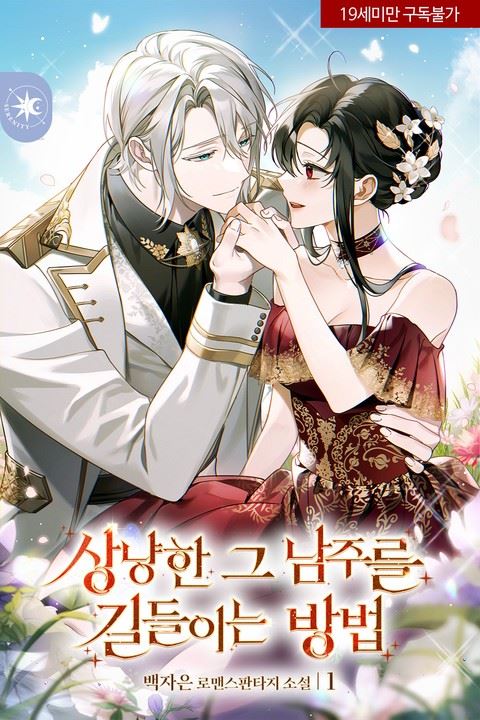
... Read More
Can we talk about how natural Resena's internal voice is? So many novels write their protagonists with this stiff, formal internal monologue and I zone out immediately. But Resena thinks like an actual human being. Her thoughts are fragmented, repetitive, sometimes contradictory. She tells herself she's fine, then she's not fine. She plans meticulously, then collapses from exhaustion. The internal dialogue feels like real thought — not polished, not literary, just raw mental noise. And the stranger at the door? His dialogue is perfectly calibrated. He doesn't beg dramatically or threaten her. He says: "I know it's hard to trust a stranger easily. Moreover, with the Imperial City in this state, you can't help carelessly. But please, I beg you." He acknowledges the合理性 of her hesitation AND makes his case. That's not the dialogue of a generic hero — that's someone who's actually experienced hardship and knows how to communicate under pressure. The author's narrative voice also deserves mention. It's close third-person, staying tightly anchored in Resena's perceptions without ever slipping into omniscient narrator territory. When she sees the red-haired man die, we only know what she knows through the telescope. No cutting away to dramatic descriptions of the wound or his final thoughts. Just her reaction. restrained, clinical, devastating.

Leave a comment

You must be logged in to leave comments. or
