How to Escape from the Yandere’s Crazy Obsession - Reviews

How to Escape from the Yandere’s Crazy Obsession
+Add to Custom List
Sort
Add review
... Read More
I'm not even going to lie — I need to talk about ONE specific detail that completely sold me on this book's sensory writing. During the infirmary scene, when Leticia is applying ointment to Vallon's wound, the author writes: he smells clean. Like, actually clean. A faint luxurious scent of soap. Despite being covered in shoe prints and blood. Despite looking like a mannequin in oversized clothes. This is the most devastating detail in the entire first batch. Think about it — he's been OUTSIDE getting beaten up by a whole gang, rolling around on the ground, covered in filth... but underneath it ALL he still smells like soap. Like someone who takes care of himself despite having no one to take care of him. This one detail tells you EVERYTHING about Vallon that the narration never explicitly says. He's proud. He maintains himself even when nobody's watching. Even when he's being treated like garbage by everyone at this academy. And yet — his clothes don't fit him right, they're too big. Is that because he's malnourished? Or because nobody cares enough to get him properly dressed? The infirmary itself is also interesting — it's empty, just the two of them. No teachers around, no other students. The author deliberately isolates them in this clinical white space where she's touching his wounds, getting close to his body, and he's staring at her hand like it's the only thing in the world. The contrast between the clinical setting (disinfectant, ointment, bandages) and the overwhelming sexual tension in the prologue — both scenes involve physical contact between them but the power dynamics are COMPLETELY different. In the infirmary, SHE has control. She's the one touching him, helping him, leading him. In the prologue, it's reversed. I keep going back to that scent detail because it's the kind of thing most authors would skip but the author here includes and it changes how you see the ENTIRE character.
... Read More
The pacing in these chapters is absolutely Ruthless and I am here for it. Chapter 54 starts INSIDE the worst moment of Leticia's life — no buildup, no warm-up, just straight into the violation. That's a bold choice. Most authors would spend two chapters establishing the threat first, but this one drops you into the deep end and makes you swim. The assault scene is long and uncomfortable by design — you're supposed to feel trapped, supposed to want to look away. And then the vase. CRASH. Immediate release of tension. She escapes. She limps home. She plans to report him. We think, okay, the worst is over, right? WRONG. The next chapter pivots to the administrative response and the author makes a brilliant structural choice — instead of giving us catharsis, they give us institutional failure. Professor Lhivut's dismissal is almost funny in how casually cruel it is. "There's no good to come from getting on his bad side." That single conversation shuts down any hope of justice and raises the stakes tremendously. Now the threat isn't just physical — it's systemic. Then the dream sequences. Each one escalating. The shadow gets bolder, more intimate, more violating. The hickeys appearing in reality — that's the point where the story pivots from psychological thriller to something almost supernatural. And the ending? She's finally at the cafeteria, eating her pumpkin soup, feeling a moment of normalcy, and then — "Leticia spotted the unmistakable black hair." Cut to black (literally). Perfect cliffhanger. No resolution, no relief, just the constant reminder that he is ALWAYS watching. The author also does something clever with time jumps. A week passes. She's on crutches now. We see the physical aftermath without dwelling on it. Then Richelle and Kyle appear, restoring a sense of warmth before the final gut-punch. It's emotionally exhausting in the best possible way.
... Read More
There's this one recurring visual throughout the opening chapters that I cannot get out of my head — Vallon's RED EYES. First time Leticia actually sees them clearly is in the infirmary when she calls his name and he looks up, and the text says his eyes are bloodshot, almost brimming with tears, glowing eerily behind those thick glasses. But earlier, during the prologue, they're described differently — glittering like stars, almost innocent. Same eyes, completely different readings depending on the moment. I think this is the author's way of showing you that Vallon's interiority is unreadable to everyone around him. Leticia sees pity. The bullies see weakness. Richelle sees danger. But nobody actually SEES him. His eyes are this window that everyone looks through but nobody truly peers into. And then there's the glasses. Thick glasses that hide his eyes, hair that covers half his face. He literally constructs barriers between himself and the world — clothing too big, hair in his eyes, glasses obscuring his gaze. But the eyes keep BROUGHT THEM through anyway. The red color is significant too — it's not natural, it's not described as a normal eye color, it signals something wrong, something OTHER. In romance fiction, the male lead often has an unusual eye color as a mark of his specialness. But here? It's not romantic — it's alarming. It's a visual cue that this person operates by different rules. And then the whole class/power inversion is basically the central theme. Leticia looks down on him (literally and figuratively — she's the queen, he's the outcast). But the prologue reveals that the dynamic is already subverting itself. She's the one trapped in that room. He's the one in control. The aristocracy she benefits from vs the dukedom he represents — the Kattravan family alone could destroy whoever bullies him. He CHOSES to endure it. That choice, that restraint, that's what makes him dangerous. Not his strength — his discipline. And the author wraps all of this in what seems like a simple academy romance setup. Brilliant.
... Read More
Can we just sit with the fact that this entire nightmare scenario in the present is a DIRECT echo of Leticia's recurring dreams? Because the text literally says 'this moment felt eerily similar to the one in her dream, where the red-eyed shadow monster had dragged her by the ankle' and she realizes 'it hadn't been born of guilt. It was a premonition, a warning.' That's such a heavy line. It means her subconscious KNEW this was coming. Her mind had been rehearsing this terror before it even existed in reality. What does that say about fate versus free will in this story? Is Leticia doomed to repeat her dreams, or is she finally living them? And then there's Vallon removing his glasses—that's symbolic too, right? The glasses are his social mask, the thing that makes him look 'normal' and approachable. Without them, you get 'a silhouette different, sharper' and 'glowing red eyes' and the text explicitly compares him to a demon. The glasses = pretense. Remove them = raw id. Also the candy—why a candy? Something sweet and childish introduced right in the middle of this predatory encounter. Like the book is saying even this twisted dynamic has elements of childhood imbalance, of someone bigger playing games with someone smaller and not realizing or not caring how much it hurts. The recurring imagery throughout these chapters keeps pointing back to one question: who is actually hunting whom?
... Read More
The pacing in these chapters is absolutely ruthless and I respect it. Let me break down what the author does structurally because it's genuinely clever. We open with the infirmary scene—slow, sensual, creeping, almost meditative in its darkness. Then BAM, nightmare sequence that's fragmented and breathless. Then a full chapter jump—"A week had passed"—and we get this warm, sunny, almost fluffy romance chapter with Kyle. You're thinking, okay, this is a romance, this is safe, this is— —and then the bird arrives. That bird is the pivot point of the entire section. Everything before it is setup. Everything after it is fallout. The screeching starts during a kiss, which is brutal—literally interrupting intimacy with horror. Then the bird thrashes and dies, and THEN Vallon appears. The delay is intentional. Let the horror settle. Let the blood stain the window. Let Leticia connect the dots between the bird's blood and Eric's blood. Then—still calmly—Vallon walks in. TheKyle confrontation is where the pacing really flexes. Short sentences. Fragments. "Ugh... gasp...!" "Guh...!" "KYAAAHHH!" The prose itself starts choking. You're reading it and your breath gets short. And then—"This is getting boring." Crash. Flatline. After that, the pace slows again. Conversational. Tense but quiet. Like the eye of a storm. Vallon releases her wrist. Comments on the bite mark. Drops the "bitten twice" line. And then the final image—Leticia fleeing, panicking at the sight of black hair. The pacing never recovers from that. There's no reset button. The chapter ends not with closure but with a nervous habit forming. This is how you write escalation. Not by adding more action, but by making the quiet moments heavier and the loud moments sharper.
... Read More
There are so many layers of symbolism in these chapters that I can barely contain myself. Let me try to unpack at least a few. The bird is the obvious one, but let me go deeper. The bird isn't just a parallel to Kyle—it's a parallel to Leticia too. It enters the room lost, disoriented, unable to find the exit. It thrashes against the only window it can see, believing it's an opening when it's actually a barrier. It dies trying to escape. This is the trajectory of everyone trapped in Vallon's orbit. And that blood on the window—blood smeared across glass, through which you can see a face emerging—that's the threshold moment. The boundary between the safe world and the dangerous one, stained and crossed. The hair. So much hair. Vallon wraps Leticia's hair around his hand like a lover's token. Her hair gets drenched in his fluids. Later, his unkempt black hair covers his eyes like a veil, like a curtain between him and the world. And Leticia—she pulls wet hair from her face after waking, trying to cleanse herself of what happened. Hair as connection, as contamination, as identity. When Kyle touches her hair or kisses her neck, it's tender. When Vallon touches it, it's possession. The bite mark. Kyle kisses her neck and leaves a mark. Vallon calls it a "bite" and warns she shouldn't get "bitten twice." The word bite transforms romance into predation. It reframes the entire relationship. A kiss becomes a wound. Affection becomes infection. And Leticia's panic at seeing black hair afterward—she's not just afraid of Vallon, she's afraid of being marked again, claimed again, consumed again. The infirmary itself is symbolic. A place of healing where violation occurs. A place of rest where nightmares breed. Leticia goes there vulnerable, wounded from the locker incident, and instead of finding safety, she finds the source of her terror waiting for her. The narrative is saying: there is no safe space for her in this world. Every door leads back to him. And that line—"Everything about Leticia belonged to him"—it echoes throughout these chapters like a curse. The dream boy screaming RUN. The bird dying. Kyle collapsing. All of it is the universe confirming what Vallon already believes: she is his, whether she consents or not.
... Read More
I need to talk about Vallon because this man is a walking red flag wrapped in a sympathy backstory. On the surface, he's the bullied kid—Ribolt and his gang beat him up, he's isolated, people whisper about him. Leticia herself used to think his weird behavior came from “lacking social awareness.” But the text systematically dismantles that interpretation, and it's chilling. Let's look at the necklace scene. Leticia reaches for her pendant, her hand brushes Vallon's, and—burning hot. He's radiating heat, cheeks flushed, breathing heavy. Is he sick? Excited? Both? He hands her the necklace with this sticky substance on it and smirks when she sniffs it. Why does he find her confusion amusing? Why is he enjoying her discomfort? Then the locker incident. She's on the floor, crying, terrified of that headless mouse, and Vallon appears like he materialized from the walls. He looks at the corpse with “no hesitation, as if he wasn't afraid at all.” Did he place it there? Probably. But even if he didn't, his calm in her panic tells you everything—he thrives in her distress. And then he hugs her. His hands are ice-cold, which implies he's been waiting outside for a long time. Waiting. For her. She buries her face in his arms seeking comfort, and the text says his lips curled into a smile—right when she couldn't see him. That detail wrecked me. He's not comforting her. He's indulging himself. The bread scene is worse in a different way. He offers her food she likes, and when she hesitates, his voice sharpens: “Do you think I put something weird in it?” Leticia breaks into a cold sweat. Not because she believes him—because his intensity reveals how much he's invested in controlling her reactions. And when she finally accepts, their hands touch, and afterward, alone, he licks his fingers. Like he's savoring the contact. Like she's edible. What's brutal is that Leticia keeps lowering her guard. She tells herself it's rude to doubt him after he “helped.” She convinces herself it's coincidence. She's so exhausted from trauma that she misreads grooming as kindness. That's realistic and painful. Their dynamic is fundamentally asymmetric. She's performing friendship; he's performing care. Both are acts. But his acts are prisons.
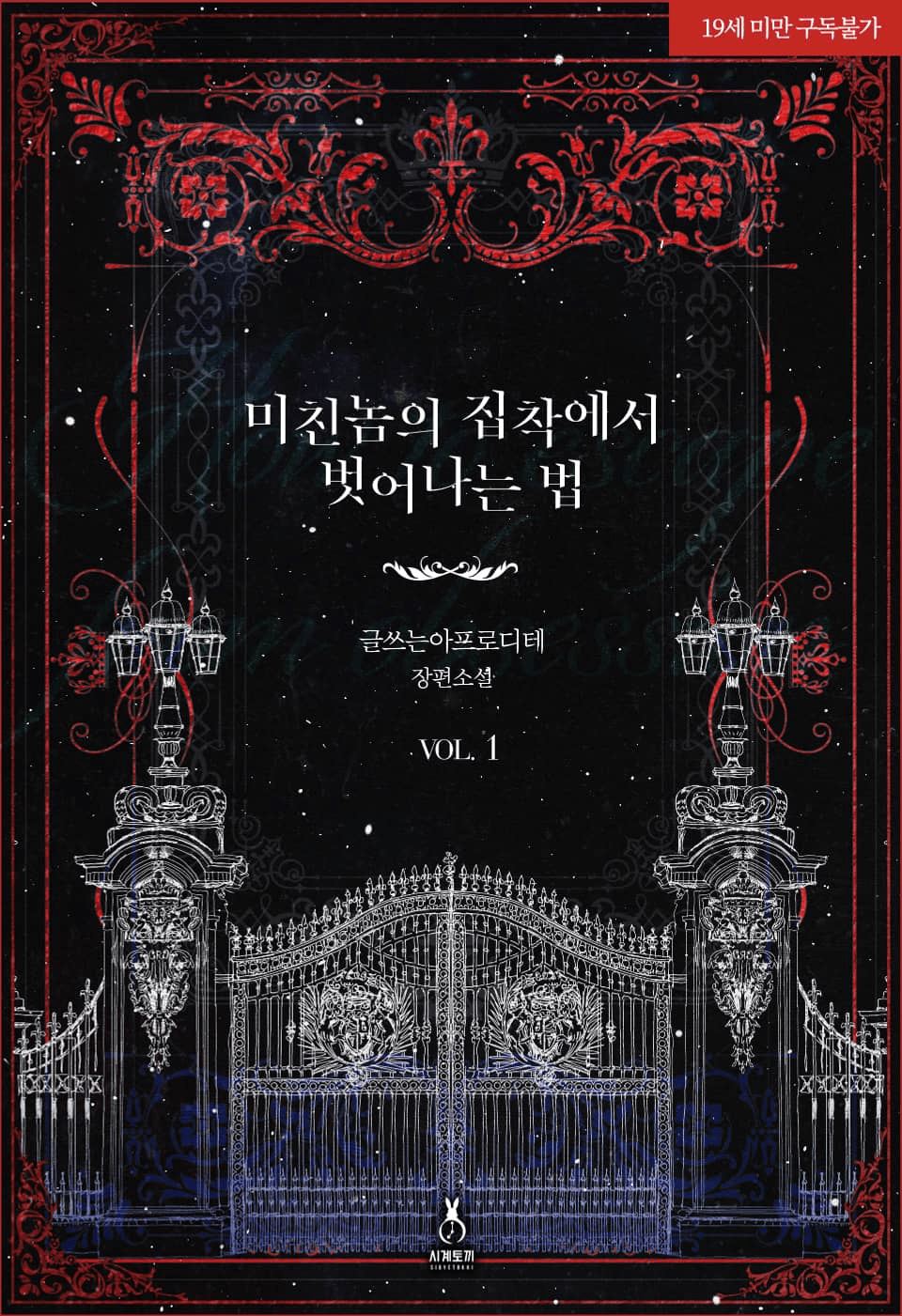
... Read More
On the surface, this is a school conflict—bullies, victims, a violent incident. But the stakes quickly escalate way beyond that. You've got Vibolt's shattered hand (permanent damage, possibly), Eric's severe head injury (he can't even speak now), and Vallon walking free because his father is a duke. The external conflict is clear: Vallon versus everyone who threatens his access to Leticia. But the internal conflict is where it gets rich. Leticia KNOWS Vallon didn't push Eric—she saw it. She saw him step on those fingers. She saw the smile. And yet the narrative constantly undermines her certainty. "Why do I feel this way? He didn't do anything. Am I just being influenced by everyone else's thoughts?" That's the real conflict—not what happened, but whether truth matters when power is involved. The most terrifying escalation is subtle. Ribolt bullied Vallon. Then Ribolt's hand was destroyed. Then Eric tried to get close to Leticia and ended up in critical condition. The pattern is unmistakable even if Leticia isn't ready to name it yet. Each act of violence is more severe than the last, and each time, the consequences fall on someone other than Vallon. What's at stake isn't just physical safety—it's the erosion of reality itself. When the people around you all say one thing but you saw another, and the authority figures choose the convenient story over the true one, what do you believe? Leticia's guilt at the end isn't just about Eric. It's about surviving something she can't explain to anyone.
... Read More
I need to process what I just read because Vallon is some kind of beautiful disaster of a character and I am HERE for it. Let me just say this: the scene where he asks Leticia to hold his hand is simultaneously one of the most tender and most unsettling things I've ever read in a novel. On the surface, it reads like a vulnerable moment — he says he's afraid the people who hurt him might come back, and she takes his hand. But then you notice details. His response is dry. His body language contradicts his words. And that line — "Your hand is so warm, Leticia" — delivered while he's completely unreadable? Chilling. "Pretending to be the victim of school violence was easy for Vallon. He lowered his eyes and made his voice tremble to appear more pitiful. Though he didn't really understand what it meant to be scared or hurt, he mimicked the emotions he had memorized in his mind." THIS. This is the reveal that recontextualizes EVERYTHING. He's not a victim. He's performing victimhood. He doesn't understand real emotions but he knows how to mimic them. And Leticia — sweet, guilty Leticia — walks right into it because she wants to believe he's hurt. Meanwhile Kyle is over there being genuinely worried and Vallon just... watches him. The way Kyle described feeling that invisible force wrapping around his torso, the murderous intent — and then Vallon's crimson eyes fixing on Leticia like she's the only thing that matters in the world. The love triangle here isn't cute, it's DANGEROUS. And I can't look away.
... Read More
Okay so I have to talk about this sequence because honestly my jaw dropped. The whole chapter builds this incredible tension where we keep getting tricked into thinking certain events are dreams, but then they're not. Leticia falls asleep in biology class, wakes up to find the classroom empty, thinks Vallon is gone — and then BAM, she's being grabbed by the ankle and there he is, covered in blood, saying things like "You should only be thinking about me, Leticia." And I was already on edge from the nightmare the night before, so when she screams and wakes up again... I genuinely didn't know if it was another dream or not. The author is playing with us so smoothly. "It wasn't a dream like last night. It was real, and it was dangerous." That line hit me like a truck. Because up until that point, I was literally wondering the same thing as Leticia. The structure here is brilliant — the author establishes a pattern (nightmares), then breaks it at the exact moment you expect it to repeat. It's a masterclass in misdirection. And then the aftermath! Leticia's guilt spiral is honestly both heartbreaking and kind of terrifying because Vallon's reaction to her apology is so... off. He pretends to be hurt, mimics emotions he doesn't actually understand. There's this subplot thread about his past — the Kattravan Duchy, the fact that no one's reaching out to help him — that's simmering underneath everything. I keep waiting for the author to pull that thread and I'm obsessed with what's coming.
... Read More
There's a line at the end of this chapter that I can't stop thinking about: "Her fluttering white dress looked like the wings of a butterfly dancing in front of Vallon's eyes. That butterfly flew freely, oblivious to the fire it was heading toward." A butterfly. A white dress. Fire. This imagery is SO loaded. The butterfly represents Leticia — beautiful, free, innocent, completely unaware of the destruction she's walking into. And Vallon? He's the fire. He's drawn to her light the way moths are drawn to flames, but unlike a moth, he IS the flame. He doesn't get consumed — he consumes. The recurring dream motif is also doing thematic heavy lifting here. Dreams versus reality, guilt versus manipulation — Leticia's nightmares seem to be her subconscious processing something she hasn't fully grasped yet. She feels guilty for abandoning Vallon, but is that guilt really hers, or is it being planted? The text says she wonders if the nightmares are a result of her guilt, but the reader gets the sense that something more sinister is at play. And then there's the hand-holding scene as a symbol of trust being exploited. She offers him connection out of pity and obligation, and he wraps his larger hand around hers like a trap. "Making her feel like a small animal caught in a trap" — the author doesn't even try to hide what's happening. Every gesture of kindness from Leticia is being weaponized against her, and the tragedy is that she thinks she's doing the right thing. How many times have we seen this dynamic before, but seeing it unfold so slowly and deliberately makes it hit different.
... Read More
I need a minute. I need to sit with what just happened in these chapters. The assault scene — I won't even pretend I can discuss it without my hands actually shaking. But I have to talk about Leticia's response because THAT is where the story earned every bit of respect I have for it. She doesn't freeze. She doesn't pass out dramatically. She thinks. She calculates. She feels the vase, she counts the seconds, she feigns struggling while inching toward her only weapon. When she brings that thing down on his head, the prose goes CRASH and then she's on him — pulling his hair up, spitting, slapping, screaming. The waterfall of abuse she unleashes? I wanted to hug her. "You're exactly as disgusting as you look! The real pathetic one is you!" YES. SHE SAID IT. But then — then the dreams start. And this is where the horror shifts from physical to something infinitely worse. She can escape his room. She can change her classes. She can avoid him in the halls. But she can't escape HIM in her own mind. The shadow creature in her dreams, biting and marking her while she screams and no one comes — that's psychological violation at its most brutal. And then waking up with ACTUALhickeys on her neck? That blurred line between nightmare and reality is TERRIFYING. The Kyle and Richelle scenes broke me too. They're trying to help — Kyle holding her arm, Richelle noticing everything — but she can't tell them the truth. The shame is a wall she can't climb over. When Richelle whispers about the hickeys and Leticia's mind floods with the dream imagery, the terror on her face is palpable. And then Vallon's name is said and her body betrays her — nipples aching from something that happened in a dream, as if her body doesn't even know what's real anymore. "Thank you, Richelle... But seriously, Vallon is completely insane." The gratitude mixed with pure terror in that moment. That's the emotional core of this entire arc and it wrecked me.

Leave a comment

You must be logged in to leave comments. or
