How to Escape from the Yandere’s Crazy Obsession - Reviews

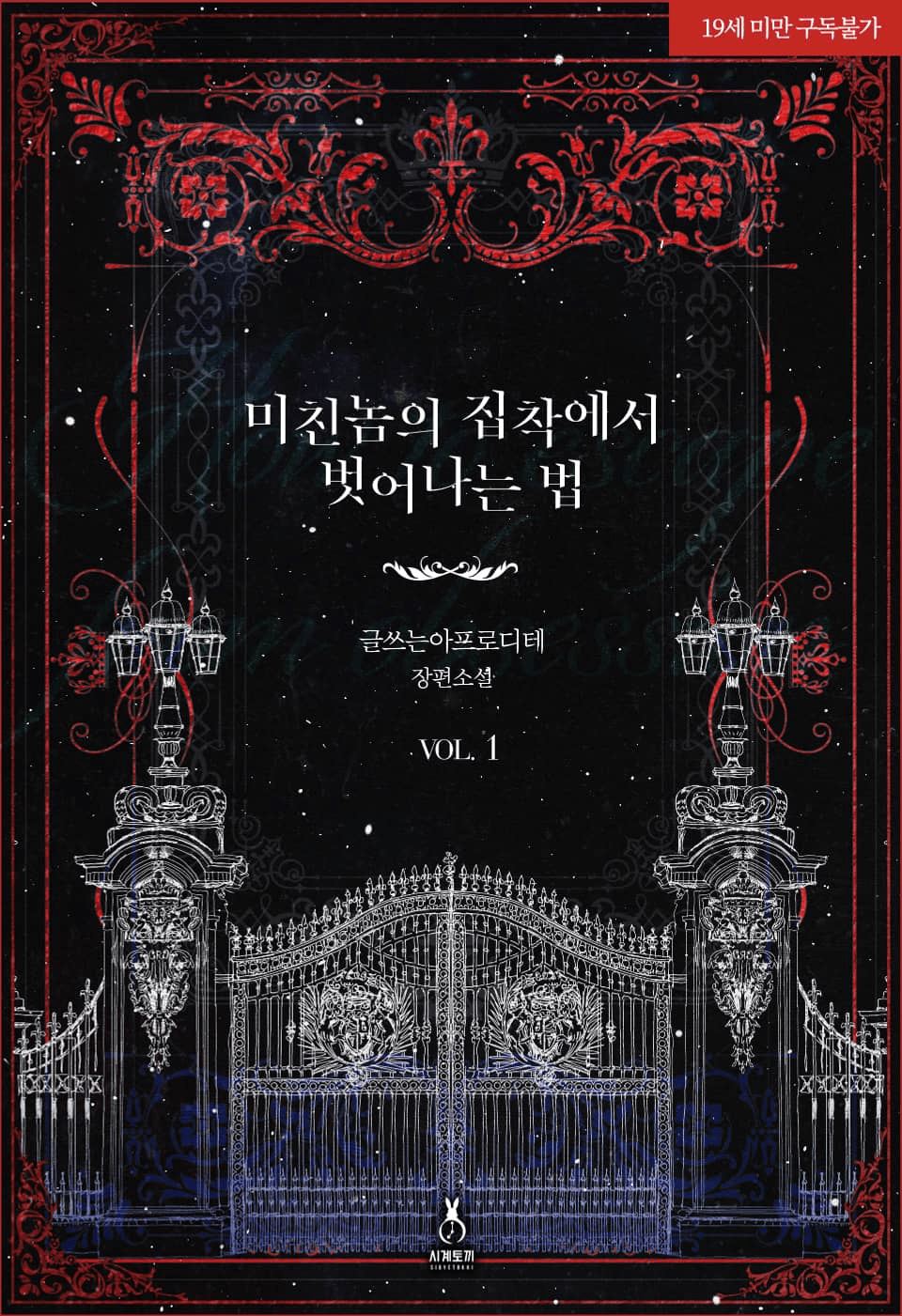
How to Escape from the Yandere’s Crazy Obsession
+Add to Custom List
Sort
Add review
... Read More
I cannot get over what the author just did with the infirmary scene. Let me just say it straight up—this is the kind of moment that changes the entire tone of the book and I was NOT prepared for it. Vallon watching Leticia sleep, touching her hair, whispering about wanting to become one with her—this isn't just obsession, this is something fundamentally unhinged. And the author doesn't flinch from it. No softening, no cutaway. Just raw, unfiltered possession. Then—the nightmare. The boy with the pierced eye screaming RUN. I genuinely jumped. Not because it was scary in a cheap way, but because it felt like the narrative itself was trying to warn Leticia (and us) about what's coming. And honestly? The parallels between the bird and what happens to Kyle later are too precise to be accidental. The bird thrashes, hits the window, bleeds, dies. Kyle gasps, hits the wall, bleeds, collapses. Same rhythm. Same pattern. The author is laying down a visual motif that says: this is what happens when you get too close to him. What also struck me is the structural brilliance of sandwiching the Kyle romance between these two dark sequences. First we get Vallon's violation, then the nightmare, THEN we get this tender, bright, almost painfully normal romance with Kyle. It makes you almost forget how dangerous this world is. And then—BOOM—the bird comes. The window shatters. The blood appears. Vallon walks in like a ghost carrying dead weight. The pacing of revelations here is masterful. We learn Vallon has powers we didn't know about (can he control people with his gaze? Is that what happened to Eric? To Kyle?), but the author never confirms it. "Who knows? What kind of answer are you hoping for?" What a line. He's toying with her. With us. And that ending—her avoiding him, panicking at black hair—that's not a resolution, that's a spiral starting.
... Read More
The pacing here is a masterclass in suffocating tension. We go from a tense afternoon encounter, to a night of violent dreams, to a dawn of hollow relief, to a classroom confrontation—all within what feels like a single, grinding narrative arc. The transition from the brutal dream sequence to Leticia waking up drenched in sweat is jarring, and then immediately undercut by the mundane reality of checking if he's still there. 'Only dried, withered leaves were scattered.' That's a devastatingly efficient detail. It gives her (and us) a moment of false relief before the sun rises and she decides to just... move on. 'I guess I've been too sensitive lately.' NO. Don't you dare minimize it. And then BAM—biology class, he's there. The author doesn't let the reader breathe. Every time Leticia tries to construct a normal day (the white dress, the laughter with friends), the world violently punctures it. The structure feels less like chapters and more like a series of traps snapping shut. There's no dragging, no filler. Just relentless, escalating pressure that leaves you flipping pages not because you want to know what happens, but because you need to see if she can survive the next five minutes.
... Read More
Let's be real—this guy is absolutely unhinged and the author knows exactly what they're doing. He gets beaten up, lets Leticia treat his wounds, then follows her scent like some kind of dark romance horror protagonist. The scene where he touches his lips where her fingers were and then... yeah, let's just say he's got zero boundaries and it's written with such matter-of-fact brutality that it hits different. But here's what messes with me: Leticia's relationship with him is so complicated. She calls him creepy. She wants to stay away. She acknowledges he's not a nice person. Yet when everyone accuses him of pushing Eric, she's the only one who actually saw the truth—and even she's wavering, questioning whether her own perception is reliable. That moment where she whispers "Er-Eric...?" while blood pools near her shoes? The fact that she FEELS guilty even though it's not her fault says everything about how Vallon's presence warps the emotional atmosphere around him. And then there's Eric, this guy who's clearly smitten with Leticia, offers her bread like some pathetic little courtship gesture, and gets absolutely destroyed for it. Vallon steps on his fingers. STEP ON THEM. With a smile. This isn't a rival in love—it's possession.
... Read More
The pacing in this section is absolutely relentless and I didn't see it coming until it was too late. It starts so gently—Leticia treating wounds, a bit of physical description, some awkward silence—and you're like 'oh this is a fluff scene, fine, whatever.' Then the whispers start. The breath. The smell comment. Each beat escalates just enough that by the time he pulls out the candy and you think 'ok ok he's just being a weirdo,' the tension has already rewired you into HIGH ALERT mode. And then the mask drops and it's FULL SPEED INTO DARK TERRITORY for the rest of the chapter. What's clever is that the author never lets up. There's no breather between the creepy whisper scene and the ankle grab. One horror beats into the next without pause. It's like the narrative itself won't let Leticia catch her breath, and honestly, neither can the reader. The chapter ends with 'Although undeniably attractive, hi' and just cuts off mid-sentence like that's supposed to make you breathe easier—I literally screamed. That cliffhanger structure, pairing his physical attractiveness description right at the moment everything falls apart, is either genius or cruel or both. My heart rate during these eight chapters was NOT okay.
... Read More
I stayed up way too late reading this chapter and I have opinions. The pacing starts slow — classroom, napping, mundane stuff — and then it just EXPLODES. One minute Leticia is dozing through biology, the next she's being pinned to the floor by a blood-covered boy who is definitely not okay. The transition from boring lecture hall to full-blown psychological horror happens so fast that I literally gasped out loud. That's good pacing. That's the author knowing exactly when to flip the switch. But what I really appreciate is how the tension never fully releases. Even after she wakes up from the nightmare (or does she?), the unease carries forward. When she apologizes to Vallon, when they walk together holding hands — every moment is charged with this underlying wrongness. The author doesn't let us breathe. And then at the end, watching Leticia and Kyle walk away together while Vallon is left standing there, feeling her warmth still on his hand? That's a perfect note to end on. It's bittersweet, unsettling, and makes you immediately want to read the next chapter. "Didn't she let go of my hand as if it were dirty?" This internal monologue at the end is the kind of line that sits in your head for hours. The pacing of revealing Vallon's true feelings through his own twisted lens instead of through dialogue ischef's kiss.
... Read More
Okay I need to talk about the candy. Because that was honestly the most disturbing moment in the entire chapter and everyone's gonna forget about it and I can't. So Vallon's being all weird and close and she's sweating and trembling and he's whispering in her ear and she's convinced something is wrong, her body's reacting, she's humiliated—and then he produces a CANDY and says 'found it.' A literal piece of candy he dropped yesterday. The WHOLE thing was just him messing with her. He smelled her scent, got close, made her think he was about to do something, and then… popped the candy like it was a magic trick. The relief AND irritation she felt is so specific and so real. You can practically see her brain going 'wait, is that it? oh thank god—but also WHY DID YOU DO THAT?' And then immediately AFTER that, when she tries to leave, he drops the mask completely. The candy was the calm before the storm, the false reset, the joke only one person was in on. I keep replaying it because on re-read it hits even harder. He wasn't just being weird—he was testing her, seeing how much he could do before she'd catch on, and she walked right into it. I feel so attacked as a reader.
... Read More
The stakes here aren't life or death in a conventional sense; they're sanity and autonomy. Leticia's internal conflict is a knife twist: she feels sympathy ('tugged at her heart') but chooses self-preservation ('no intention to get any closer'). That guilt is the real casualty. Externally, Vallon represents an inescapable threat. He's not just a stalker; he's a force of nature that has invaded her safe spaces—the path to her dorm, her bedroom window at 1 a.m., her classroom. The nightmare sequence raises the stakes to a psychological horror level. This shadow isn't just attacking her body; it's weaponizing her guilt. 'Every time you reject me, I want to break and destroy everything around you.' And then the ultimate manipulation: 'If anyone around you gets hurt, it's all because of you.' That's not just a dream threat; that's the core conflict. What does Leticia stand to lose? Her peace of mind, her friendships (Kyle, Richelle are mentioned), her sense of safety in her own home. The suspense isn't about whether she'll escape him physically—she clearly can't—but whether she'll be crushed mentally. Will she crack? Will she give in? Or will she find a way to fight back without becoming a monster herself? The tension is maintained because every escape route seems blocked, and every interaction only tightens the noose.
... Read More
So you've got Vallon getting absolutely wrecked by Ribolt's gang, and Leticia has to patch him up. Classic inciting incident setup, right? Except this isn't some tender moment where they bond over first aid—Leticia wants to bolt ASAP because apparently even his gloom is contagious. Then two weeks pass and suddenly he's everywhere she is. Every scene. Like a shadow with a pulse. The Ribolt injury reveal is where things get juicy. Richelle casually drops that Ribolt's right hand is destroyed—bones shattered, done with the academy—and Leticia's first instinct is to feel sorry for him. Meanwhile, the text has us sitting next to Vallon during that whole interrogation scene, and we KNOW he was the one smiling when he stepped on those fingers. That gap between what Leticia perceives and what we, the readers, witness—that's where the tension lives. And then Eric shows up with hisbreadoffering gesture, Vallon intercepts it, Eric crashes into a desk and is basically permanently damaged, and somehow Vallon walks away clean. The Duke of Kattravan envelopes, the "young master" treatment, the way the professor swallows his doubts—all of it tells you this world runs on power, not truth. The plot keeps pulling the rug out from under what you think you know.
... Read More
Can we just talk about how complicated Vallon is now? Because this chapter redefined him for me completely. He's not just the brooding, bullied guy anymore. He's something else entirely. And that scene in the infirmary—god, it made me so uncomfortable but I couldn't look away. The way he talks to her while she's unconscious is deeply disturbing. "You make me so anxious. That's why I keep having these bad thoughts." This is someone who is fully aware that what he's doing is wrong and he does it anyway. That's the difference between a romantic lead and a villain, and the author is deliberately blurring that line. There's no redemption arc coming—I can feel it. This is someone who has crossed a threshold. And then there's the necklace. He RETURNED it. Why? Was it a test? A gesture? Or was it the calm before this storm? I keep going back to that moment and I still don't know what it meant. Now contrast this with Kyle—sweet, normal, devoted Kyle who kisses her neck and leaves marks and calls her beautiful. Leticia genuinely seems happy with him. She's enjoying academy life, romance, freedom from her parents' plans. But here's the thing that kills me: Vallon saw the mark on her neck and his reaction was... not anger. Not possessiveness in the way you'd expect. It was something quieter. Darker. "You'd better be careful. Don't let yourself get bitten twice." Bitten. Not kissed. BITTEN. The word choice is deliberate. The subtext is drowning in the text and I love it. The triangle isn't even a triangle yet—it's a predator circling prey who doesn't know she's prey. And Kyle? Poor sweet Kyle is standing right next to her, completely unaware that the man he called a loser just made him slam his head against a wall like a bird hitting glass.
... Read More
I need to talk about Vallon's voice because the author gave him one of the most distinctive character voices I've read in a long time and it's chillingly effective. Let's start with his most memorable line in this section: "One bee is enough." He's standing over a sleeping girl, just whispered this about unwanted suitors being "pests" that need dealing with. In any other context this would be melodramatic. Here, coming from someone who just confessed to masturbating on her hair, it's terrifying because it's delivered with the calm of someone discussing weather. His dialogue pattern is fascinating. He speaks in low, measured sentences. Rarely raises his voice. When he does respond to Leticia in the classroom, his lines are almost politely casual: "What are you two doing here?" After Kyle is literally dying on the floor. The nonchalance IS the menace. It tells us everything about his moral framework—he doesn't see himself as a monster. He sees himself as... what? A gardener pruning weeds? Compare that to Kyle's voice—warm, natural, slightly breathless when he's excited. "Leticia, I missed you." "Let's get out of here. He's as creepy as people say." His dialogue is functional in the best way—it establishes him as normal, grounded, the counterweight to Vallon's madness. When he's gasping for air though, his dialogue disappears entirely. Replaced by sounds. "Ugh..." "Guh..." Even his voice gets taken from him. Leticia's dialogue is mostly reactive—questions, pleas, deflections. But watch how she shifts when she's with Kyle versus Vallon. With Kyle: flirty, playful, comfortable. With Vallon: defensive, evasive, sharply formal. "Don't worry about it." "If you're done here, just leave." The subtext in her brevity is incredible. And the narrative voice—the author switches between close third person on Leticia (terrified, confused, trying to rationalize) and almost omniscient access to Vallon's thoughts in the infirmary scene. That shift is deliberate. We're allowed inside the predator's head for one scene, then locked back out with Leticia. It makes us complicit.
... Read More
Okay so Vallon just FLIPS like a light switch and I am not over it. One second he's this terrifying, almost demonic figure dragging her ankle and whispering all this unhinged stuff, and then—bam—he goes back to normal like 'hey my hand hurts, can you treat it?' No apology, no acknowledgment that he just basically traumatized her, just back to the polite patient act like nothing happened. And Leticia?! She just… accepts it? Like she's so conditioned by fear that she plays along? That's not okay, guys. This is not healthy at all and I love how the book doesn't pretend it is. The power dynamic is SO off. He lured her here intentionally—I'm pretty sure he planned this—and he knows she's terrified of him but he keeps pushing boundaries. The line 'I told you to accept it… yet you're trying to leave me again' gave me actual chills. That's not romantic tension, that's someone keeping score. And the worst part is Leticia telling herself 'once I get out of here I'll tell the teachers' but she literally can't bring herself to say it out loud. She's trapped not by locks but by pure intimidation. This relationship—whatever you want to call it—is built on control and her compliance, and the book seems to know it. Or maybe it's just having fun making me suffer. We'll see.
... Read More
Let's talk about stakes because this chapter quietly raises them to life-or-death levels without announcing it. Externally, the conflict is clear: Leticia is being hunted. The rumors about a dark mage, the students disappearing, the body parts in lockers—all point to an active threat. But the genius is that the threat isn't external. It's the person she's been pitying. Vallon has been performing victimhood while orchestrating her isolation. That's a stake inversion that recontextualizes every prior interaction. Internally, Leticia is fighting exhaustion. Her body is failing—fever, chills, the kind of collapse that comes from chronic hypervigilance. She's trying to maintain normalcy while her nervous system screams danger. The conflict here is between her desire to trust and her instinct to flee, and right now, instinct is losing. What she stands to lose is enormous. Her autonomy. Her safety. Her health. But the deeper stake is her perception of reality. Every time she rationalizes Vallon away—“maybe it's coincidence,” “he helped me”—she's sacrificing her own judgment. The real horror isn't what he might do to her body; it's what he's already done to her mind. She's been gaslit into seeing a protector where there's only a predator. The stakes also escalate through proximity. In the hallway scene, Vallon is just standing in her path. By the infirmary, he's touching her while she's unconscious. The physical boundary violations are accelerating: spatial intrusion → verbal pressure → physical contact → sexual violation. Each scene narrows the distance between them until there's none left. And the reader's stakes? We're invested because we see what Leticia refuses to. Every time she lowers her guard, we're screaming internally. That dramatic irony creates unbearable tension—we know the trap is closing, and watching her walk into it is torture. The final line redefines everything: she's already within the palm of my hand. This isn't a threat about the future. It's a statement of present fact. The conflict isn't coming. It's already resolved. Leticia has lost, and she doesn't know she's playing.

Leave a comment

You must be logged in to leave comments. or
