Summary

... Read More

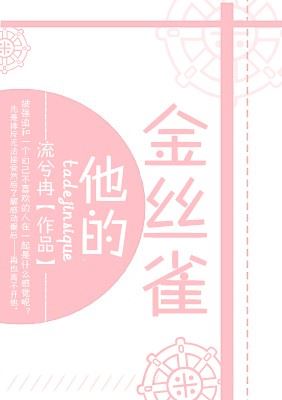
Dong Ci is a young costume designer with a delicate constitution and a history of trauma linked to Jing Rong, a powerful and possessive man who has controlled her life since she was a teenager. Their relationship is defined by coercion and emotional abuse; Jing Rong isolates her from friends and career opportunities, yet displays a complex mix of cruelty and genuine, albeit twisted, care. After a violent confrontation where Dong Ci breaks free from his physical grasp and declares she would rather die than return to him, Jing Rong releases her, leaving her with a sense of relief mixed with an unexplained sadness.

Seeking independence, Dong Ci pursues her career in fashion design. She joins a prestigious costume studio, where she is immediately recognized for her talent. Her designs draw inspiration from notes left by her deceased father. However, her success is short-lived when a senior designer, Zhao Qingqing, plagiarizes Dong Ci’s work. Zhao Qingqing manipulates the narrative, accusing Dong Ci of theft and leveraging her connections to ruin Dong Ci’s reputation in the industry. The studio director, Wang Shenghua, sides with Zhao Qingqing, creating an insurmountable obstacle for the newcomer.

The conflict escalates when Wang Shenghua attempts to sexually coerce Dong Ci into submission, promising to restore her career in exchange for her body. Dong Ci refuses and publicly humiliates him in the workplace. In retaliation, Wang Shenghua frames her for destroying property, further damaging her standing among colleagues who remain silent due to fear. Just as Dong Ci faces total professional destruction, the investors withdraw funding from Wang Shenghua’s projects, and scandalous photos exposing his affairs with Zhao Qingqing go viral.

The sudden downfall of her oppressors raises questions about the source of the intervention. Dong Ci discovers that the studio owner, Wang Ming, has been secretly supporting her and that the funds withdrawn were linked to Jing Rong. She realizes that Jing Rong orchestrated her entry into the studio and likely engineered the downfall of Wang Shenghua and Zhao Qingqing. When she confronts Jing Rong, he admits to providing resources but denies orchestrating the bullying incident, suggesting his methods are protective rather than purely malicious, though his control over her life remains absolute.

Despite his claims, Dong Ci remains distrustful. She attempts to resign to sever ties with Jing Rong’s influence, but sprains her ankle during the attempt. Jing Rong forcibly takes her to his residence, tending to her injury while asserting that she cannot escape his watch. He offers her a compromise: stay for one night without further physical demands, allowing her to eventually return home. Dong Ci refuses to express any affection, reaffirming her hatred, yet finds herself trapped in a dynamic where her professional survival and personal safety are inextricably linked to the man she despises.

The narrative explores the power imbalance between Dong Ci and Jing Rong. While Dong Ci strives for autonomy through her career, every step she takes is shadowed by Jing Rong’s presence. His actions, whether abusive or protective, stem from an obsessive need to keep her close. Dong Ci’s realization that Jing Rong manipulated her environment to shield her creates a new layer of psychological tension. She is no longer just fighting his physical restraint but also grappling with the ambiguity of his intentions.

As Dong Ci resumes her work at the studio, she observes Wang Ming’s deferential attitude toward her, a stark contrast to his previous behavior. This change confirms Jing Rong’s continued behind-the-scenes influence. The story moves toward a complex negotiation of freedom and control. Dong Ci must decide whether to accept Jing Rong’s help as a necessary evil for her career or reject it entirely, risking her professional future to maintain her independence.

The ending of this segment leaves Dong Ci in a precarious position. She has regained her professional footing but remains emotionally entangled with Jing Rong. His apology and refusal to force intimacy mark a shift in their dynamic, but the underlying coercion remains unchanged. Dong Ci is left to navigate a world where her talent is recognized, yet her safety is guaranteed only through submission to Jing Rong’s will. The tension between her desire for a normal life and the inescapable pull of Jing Rong sets the stage for continued conflict.

Latest Release
DateGroupRelease
2026-09-26knoxt c4
2026-09-26knoxt c3
2026-09-26knoxt c2
2026-09-26knoxt c1

Community Reviews

Rating(3.2 / 5.0, 16votes)
5 stars
2(13%)
4 stars
1(6%)
3 stars
11(69%)
2 stars
2(13%)
1 stars
0(0%)

Popular reviews

... Read More
OK so Jing Rong is absolutely unhinged and I need everyone to understand that this man is not redeemable at this point in the story. Like yes, the author writes him with these moments where he wipes away her tears and whispers sorry and you're like oh maybe he has a soft side? NO. He kisses her mouth until she tastes blood and then claims regret while simultaneously making it clear he's not actually done with her. The bite marks on his wrist? He literally KISSES them afterward. That's not love, that's pathology. What makes him truly terrifying though is how calmly he dismantles Dong ci's entire life. He doesn't just control her movements - he isolates her. No friends, no work, no autonomy. And then when she finally gets a foothold with the costume studio, the next chapter essentially sets up another betrayal through Zhao Qingqing. I keep wondering if Jing Rong had something to do with that. The timing feels too convenient. And Dong ci herself - she's trapped between hatred and pity, which makes her such a frustrating protagonist sometimes. She says 'even if I have to die I will never look back' and then later feels bad for him?? Girl please. Though I will admit her internal conflict about his loneliness being the root of his behavior shows depth in how the author writes her. She sees the wound behind the monster but that doesn't excuse the monster.
... Read More
"If it hurts, then it will." I keep coming back to this line and I can't stop thinking about it. Dong ci would rather endure severe pain just to remove something that was forced onto her body - a mark that Jing Rong placed on her, presumably when she was younger. She's already lived through whatever trauma that implant represents and now she's choosing more pain voluntarily just to be free. That is some next-level determination and also deeply heartbreaking. But what wrecked me more than anything was the moonlight scene. After he lets her go - or says he lets her go - she walks away and never looks back. Never sees the sorrow flash across his face. And then he's standing there alone under a waning moon, kissing teeth marks on his own wrist like some kind of twisted love token. The loneliness in that moment was so palpable I actually felt sad for the character even though I knew exactly what kind of person he was. The author knows how to weaponize sympathy against you. You want to root for Dong ci to escape and he really does seem to let her go... but that final laugh, "coquettish and evil" - ugh. I knew then that this wasn't over and it made me so anxious for what comes next. The emotional whiplash between "maybe he's sorry" and "he's a monster who won't stop" is relentless and I'm here for it even though my heart can't take it.
... Read More
There's something deeply symbolic about the car scene that I can't shake. Dong Ci tries to walk away—literally attempts to flee on foot—and ends up physically carried into Jing Rong's vehicle, his personal space, his territory. The car becomes this metaphor for their entire relationship: she's resistant, she's fighting, she's screaming 'let me down,' but she's already gone. She's already in his world. The high heels are interesting too. She's wearing something designed to make her look powerful and polished, but it's what makes her vulnerable—tripping, falling, scraping her palms. Her armor literally causes her fall. There's a theme here about how the tools we use to protect ourselves sometimes become our weaknesses. And then the ankle-kneading. He's tending to her wound while simultaneously imprisoning her. It's an act of care wrapped in control, kindness wrapped in force. This duality is the whole book really—Jing Rong's love is genuine but suffocating, protective but possessive. The story keeps asking whether these things can coexist or whether they destroy each other. The phrase 'without any privacy at all' about Dong Ci feeling transparent before him—that's the core symbol too. She's exposed, readable, known. Is that terrifying or comforting? The book won't decide for us, and honestly that ambiguity is what makes it compelling. We're all still figuring it out together.
... Read More
'In front of him, she was a transparent person, without any privacy at all.' THIS LINE. I keep coming back to it. This one sentence perfectly captures everything wrong and right about their dynamic. Jing Rong sees right through Dong Ci—her thoughts, her suspicions, her stubbornness—and instead of being creeped out by it, he seems to LOVE it. His whole mood shifts when she suspects him of recruiting her instead of orchestrating the bullying. His 'gloomy mood was suddenly nowhere to be seen.' BRO. He's literally relieved she doesn't think he's THAT calculated. It's almost cute in a deeply unhealthy way. And Dong Ci! She's so stubbornly independent. She literally trips trying to walk away from him, scrapes her palms, and still refuses his help until he just PICKS HER UP. I'm torn between finding it romantic and filing it under 'this is not consent-adjacent in the slightest.' But that's the thing about these characters—they're not here to teach us healthy relationship models, they're here to make us FEEL things. Their push-and-pull is addictive because neither will budge. She says 'I hate you very much!' and his response is basically a pouting face. The power dynamic is totally skewed but that's what makes their scenes crackle. Neither of them needs to win, and that's why we keep watching.
... Read More
I literally cannot. I re-read that exchange three times and I'm still not over it. Dong Ci: 'I hate you very much!' Jing Rong: '… Very difficult to coax!' NO. NO YOU CAN'T JUST DROP 'BUT I MISS YOU SO MUCH' LIKE IT'S A Casual Thing After She Just Called You Her Enemy. My heart actually stopped for a second. The way the text describes him—'long eyelashes drooped slightly, trying to act pitiful'—he's playing the victim card AND the sincere card at the same time, and it's SO manipulative and yet I'm weak for it. What gets me is the emotional whiplash. One minute she's furious, trying to flee, scraping her knees on the pavement. The next minute he's holding her ankle, voice soft, saying he misses her. The physical proximity—him kneading her injured ankle, her trapped in his car, his thigh under her foot—creates this intimacy that completely undermines her anger. How do you stay mad when someone is gently touching your wounded ankle? It's emotionally devastating in the best way. And then her reaction—'her brain stopped working for a few seconds'—that moment of vulnerability where her defenses literally short-circuit? Chef's kiss. She comes back with 'but I don't want to be with you at all!' and 'I hate you very much!' but the damage is done. We both know she's lying, and he knows it too.
... Read More
So the pacing in these chapters is wild and I need to unpack why it works even though it's kind of chaotic. You've got a big dramatic confrontation about the bullying scheme, then a calm explanation scene where Jing Rong lays out the truth about Wang Ming and the studio, and then BAM—she tries to walk away, trips, injures herself, and gets manhandled into a car. That's a LOT of tonal shifts in one continuous sequence. The author controls the tempo by using action beats as pressure valves. After the heavy emotional confession about his motives, we get physical comedy (the trip), then physical danger (the scraped palms), then forced proximity (the car ride). It's like the author knows we're drowning in exposition and emotional weight, so they throw in a stumble to reset our heart rate before going back in for the kill with 'but I miss you so much.' One thing I will say—the transition between the philosophical discussion about manipulation and the ankle-kneading scene is pretty jarring. One moment they're discussing the ethics of orchestrated bullying and the next she's screaming about going home. It's a lot to process. But I guess that's the point. These characters don't get to sit with their feelings, they just escalate until something breaks. Which honestly feels true to how people actually behave during emotional confrontations.
See all reviews

Custom lists

See all custom Lists