Happy match - Reviews

Happy match
+Add to Custom List
Sort
Add review
... Read More
The dynamic between these two is already so weirdly charged after just one (well, three) encounters. Let's talk about her first instinct when she meets him: not 'are you okay?' but 'I will heal you and you will fall in love with me.' That is either the most transactional approach to romance ever, or she's so sheltered in the divine realm that she genuinely thinks love is a contractual obligation. And then when he slashes at her with a dagger—which, fair, you're bleeding out on a rock and some crazy person approaches you—I mean, he's not wrong to be defensive. But here's the thing that got me: when she rewinds and ties the red thread around his wrist while he's still too weak to fight back, she says 'I love you' like it's a spell she's casting, not a confession. He just stares at her like she lost her mind both times. I want to know what he's thinking. Is he terrified? Confused? Intrigued? He's lying there, half-dead from battle wounds, and this woman appears out of nowhere, ties a red string to him, declares undying love, and then gets herself killed by falling onto his knife. That's a lot to process. Meanwhile she's treating him like an NPC in her quest to prove a point to the gods. But then she dies twice and actually feels the pain 'etched in her heart'—that's character growth. She went from 'this is a trivial affair' to genuinely scared. And he? He flipped her over in his arms when she bled out. That's a moment. That's not nothing. Who does that for someone who just confessed to them like a maniac? I need to know what's going on in his head.
... Read More
The central metaphor of this entire curse is devastatingly simple: in a world where expressing or receiving love kills you, the only way to survive is to remain emotionally dead. But here's the thing — neither protagonist is emotionally dead. She hates him with every fiber of her being. He manipulates her with calculated words. Both of them remember every loop. The curse doesn't punish love; it punishes AUTHENTIC emotional connection. And the irony is that Shen Yuan's confessions, however false, trigger the same mechanism as genuine feelings would. The system doesn't distinguish between real love and performed love — which raises the terrifying question: can you ever prove your feelings are real in a world that kills you for having them? The red thread on the ground is the perfect symbol for this. It's something she cast aside in anger, something physical that persists across resets while everything else reverts. It's the evidence that she existed, that she fought, that she felt — even if no one remembers. And the butterfly imagery throughout: Shen Yuan as a butterfly, wings fluttering, descent from the heavens — butterflies are symbols of transformation, of souls, of fleeting beauty. He's both beautiful and deadly, just like the curse itself.
... Read More
The atmosphere in these chapters is thick enough to cut with a knife—which, ironically, is how our heroine nearly dies. Let's start with the opening image: she's fallen into a mountain forest, earthly dust staining her face, divine bindings dissolving except for Shen Yuan's red thread. That detail alone tells us so much about the world. Magic exists, gods have grudges, and red threads connect destinies across thousands of miles. But then we get the forest path, the boulder by the roadside, the blood soaking through torn clothing. The visceral imagery is relentless. 'Sticky crimson dripped from his body, trailing along the smooth surface of the rock, pooling briefly before continuing its descent to the earth.' I could see that. I could hear the wet sound. And the boulder attack—'house-sized rock crashed into me. My bones shattered'—that's not romantic fantasy violence; that's brutal, sudden, final. The world feels dangerous here. It's not a pretty heavenly realm; it's dirt and blood and falling rocks and daggers. But what really sold the atmosphere for me was the thunder. First, it rumbles when she's cursing the immortals, like the heavens themselves are responding. Then later, 'the rumbling of a boulder tumbling down filled the air' right before it materializes. Is the mountain alive? Is the world conspiring against her? The sky speaks in thunder, the earth spits out boulders, and the warrior bleeds on smooth stone. Every scene is drenched in sensory detail. Even the rewind moment—'drifting down, swaying within the murky currents of silt and sand'—feels like falling through reality itself. This world has weight.
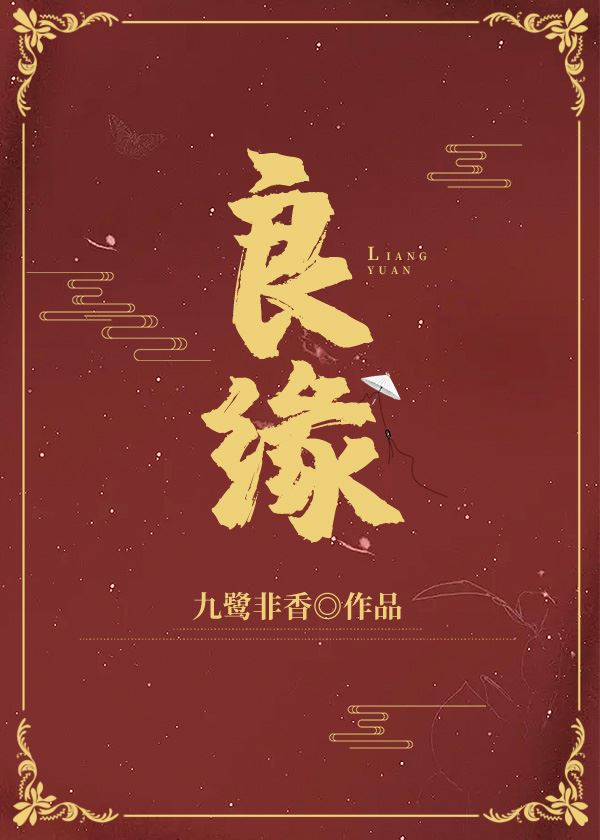
... Read More
The pacing here is absolutely merciless and I love it. We go from her landing in the forest, deciding to use the red thread as a tool, finding the warrior, getting slashed at, then immediately—crushed by a boulder. Death one. Rewind. She tries again, confesses, slips on his dagger. Death two. Rewind. And now she's hiding behind a rock, processing what just happened. That's three major beats in roughly two pages. Most stories would stretch this into an arc; here it's condensed into a survival montage. The chapter doesn't linger on her grief or her fear—it moves forward, action upon action upon action, until she's forced to confront the mechanics of her predicament. And that's where the structure really shines. Each death reveals information: first death shows her the boulder trap, second death reveals the time loop and the death penalty. The reader learns alongside her, which keeps tension high because we're not waiting for exposition—we're living through discovery. The scene transitions are seamless too. She dies, world goes dark, then *thud*—she's back at the starting point. No fanfare, no 'and then she woke up.' Just immediate return to the moment before the encounter. That economy of storytelling means every sentence earns its place. The only moment of stillness is the end, where she's pressed against the rock, watching him oblivious, and the chapter cuts. Perfect cliffhanger. Makes you immediately want to read the next part.
... Read More
This passage moves like a freight train and I need to appreciate the craft here. Let me walk through how it's structured. It opens in a quiet, almost tender moment—healing the warrior with fireflies. This is slow, deliberate, almost meditative. Then BAM: she bolts. The pacing snaps from stillness to explosive motion. She sprints back to the impact site and unleashes a full-blown tantrum at the red thread. This section is raw, visceral, fast. The short paragraphs and exclamation points mimic her breathing—panting, furious, barely contained. Then the laughter. "Heh..." A single syllable that stops her dead. The pacing shifts again—from chaos to suspended breath. She's frozen, waiting. The tree branch hits her forehead. We discover Shen Yuan. And suddenly the scene transforms from solo fury into a dialogue-driven confrontation. What I love most is how the author uses physical comedy to control tempo. The branch smack. The boulder. The sprinting. The sudden stillness when he appears. These beats give the reader room to breathe between the heavier emotional exchanges. And that ending? "I never planned on going our separate ways." Then her counter-punch about him being a tree not a vine. Then his pitch about mutual benefit. Then her rejection. Then his pivot to bargaining about true love. It builds like a tennis match where neither player will concede, and the scene ends mid-sentence—"Let's not pretend—m—"—cutting off exactly where the tension peaks. You want Chapter 18 NOW.
... Read More
Let me just lay out the stakes because this is genuinely exciting. Our protagonist was born a fruit. She got graded "good"—second class, basically. If she fails her mission, she can't come back. That's it. No earth, no roots, no territory of her own. The ancient god made that crystal clear: "If you can't save this world, don't bother coming back." She has everything to lose and nothing to fall back on. She's a celestial underdog with a golden bell and a vague directive. On the other side: Shang Xi, the God of Love, who apparently doesn't even know who the ancient god is. He's powerful, he's comfortable, he's been running the Hall of Longing however he sees fit. And now this random fairy walks in and tells him he's neglecting his duties? His reaction isn't fear—it's amusement. But amusement can turn to resistance really fast, and when an immortal god decides you're a problem, that's a threat our protagonist isn't equipped to handle yet. The external conflict is obvious: she needs to reform the celestial bureaucracy and make love bring fear. But the internal conflict is what's really getting me. She wants to belong—to have her own tree, her own place in this world. Every failure brings her closer to being permanently cast out. Meanwhile, Shang Xi's entire existence seems built on connection and love, and she's essentially his opposite right now: someone who judges, corrects, and intervenes. They're thematic mirrors and it makes every interaction crackle. Who's winning this? I genuinely don't know and that's why I'm invested.
... Read More
I need to process what just happened because the conflict dynamics shifted HARD in these chapters. On the surface, it's simple: protagonist enforces rules, immortals obey (for now), problem solved. Clean. But it's NOT clean. The initial conflict was external—immortals neglecting duties, romance disrupting cosmic order. Very straightforward. But then Shen Yuan gets struck and instead of breaking, he goes SILENT. That silence is where the real conflict lives. The narrator doesn't recognize it. They walk out thinking they won. Their legs were WOBBLING as they left, by the way—they're scared, but they don't admit it. Fast forward three months: everything looks perfect on paper. No romance. Order maintained. But the narrator keeps having these moments of doubt—"maybe striking him was overreaction," "using him to establish authority was impulsive." That guilt is the crack in the foundation. And the immortals' nighttime secret meetings? That's not compliance, that's RESISTANCE. The conflict hasn't been resolved—it's gone underground, which makes it way more dangerous. The stakes have escalated from "enforce rules" to "someone is plotting against me and I literally can't see it." And the protagonist's greatest weakness isn't Shen Yuan's power—it's their own blindness. They think exhaustion equals progress. They think silence equals submission. Meanwhile, the "blackened butterfly" is staring at them with cold calculation. The real question now isn't whether the laws will hold—it's whether the narrator will WAKE UP before it's too late.
... Read More
Let's talk about how this world actually feels. The opening image is so deceptively peaceful—hundredth day, perfect weather, gentle breeze, the MC leaning against her favorite celestial fruit tree reviewing a notebook whose list of names is shrinking. You can practically feel the orchard. Quiet. Sun-dappled. A space where divine beings tend to metaphorical agriculture. Then the immortals come crashing through. And suddenly the world expands. The Celestial Perish Platform—that name alone is brilliant. It sounds like an execution ground but it's actually a departure point, a place where celestial beings are cast down to the mortal realm. The visual of being carried like a primitive tribe's prisoner is such a vivid contrast to the elegance of the Nine Heavens. And then there's the description of magical artifacts lighting up in red blue green purple, converging on the MC. Those colors aren't random—they're the same colors mentioned earlier wrapping around her when she was bound. The author is building a consistent visual language. The golden bell as a symbol of authority that gets stolen and then rung mockingly behind the crowd. Shen Yuan's laugh described as 'crisp and resounding as if it could shatter jade bells' while he's literally holding her jade bell. Every detail serves double duty here. Even the reveal about the Longing Trees being mixed into the orchard changes how you re-read the entire hundred-day sequence in your head. Suddenly every peaceful moment she had under that fruit tree takes on new meaning.
... Read More
This passage is a masterclass in controlled escalation and I want to break down why it works so well structurally. It opens at a near-whisper—the MC leaning against a tree, noting her notebook is emptier, considering whether to report progress. That's a low point. A moment of quiet reflection. And then within three paragraphs the entire celestial order collapses around her. The transition from contemplation to surrounded-to-death is brutal and it mirrors exactly what happens to her character: she goes from calm authority to flailing panic. What I love most is the mid-section pivot. She's bound, being carried, and then she starts her big speech about being the God of Laws. This is where the pacing temporarily stabilizes, gives the reader a moment to catch their breath while she attempts to regain control through intimidation. And then—Bang. The golden bell rings. Not actual heavenly lightning, just Shen Yuan being theatrical. That false climax is hilarious and it completely dismantles her authority in one sound. After that, the structure accelerates toward the fall with zero braking. The immortals chant their demands, the magical lights converge, and she's plunging. The final lines trail off mid-thought with 'I never expected that' and we're left hanging. Classic cliffhanger. The whole passage takes roughly the same amount of narrative time as reading it—maybe ten minutes—and yet it covers betrayal, revelation, physical overthrow, and a permanent fate decree. That's dense storytelling.
... Read More
Okay so let me get this straight — our protagonist has died COUNTLESS times and it's been three whole days of pure suffering, yet outside nothing has changed. The sun is still shining, the breeze is still gentle, and Shen Yuan is still lounging in that tree like he's waiting for a bus. This time-loop mechanic is genuinely brilliant because it turns every death into narrative tension rather than just shock value. What's wild is that Shen Yuan REMEMBERS. Every single time. He's not trapped like she is — he's observing, calculating, probably enjoying the hell out of watching her squirm. That's a major plot twist hiding in plain sight. The first few deaths we see are chaotic and reactive: she tackles him, they both get crushed, time resets. But then something shifts. She starts noticing patterns — the warrior from earlier didn't remember, but Shen Yuan did. And by the third loop, he's already stated clearly that he understands the curse now. The recursion itself is the plot engine. Every 'lifetime' she experiences is a single continuous moment from the outside world's perspective, which means the entire emotional weight of three days of death and despair happens in less than a blink. That narrative compression is chef's kiss.
... Read More
The imagery in these chapters is NEXT LEVEL. Let me paint you the picture because author genuinely outdid themselves here. You've got this entire Hall of Longing—imagine a whole palace of romance, pink skies, ornate bridges, enchanting melodies, fairies whispering—and then *BOOM* one finger, one golden bell, and the sky TEARS OPEN. Lightning with the weight of a thousand mountains. Dragons and tigers roaring. The bridge SHATTERS. And it lands DIRECTLY on Shen Yuan's sandalwood couch, right on his face. The contrast between that gorgeous pink hued sky and the violent, destructive thunderbolt is almost visual art级别的. And then—the silence. The music STOPS. The whispers die. Everything goes still. Except for the burning pavilion. Charred black. And our poor butterfly, now a "blackened butterfly," ash smeared on jade skin, lips turned deep purple, only his eyes still clear. I literally gasped reading this. It's so cinematic. Like a movie frame you can't unsee. And then the author adds this tiny detail that broke me—our narrator accidentally shakes the bell AGAIN and strikes the Longing Tree, and the falling charred petals literally mirror the pale faces of the immortals below. That's not just description, that's SYMBiosis between setting and character emotion. The world itself is reacting to the power shift. And the later chapters with misty celestial pools, moonlit cloud tops, drifting stars—all these gorgeous romantic backdrops that become hunting grounds. The worldbuilding isn't just backdrop, it's actively working against the romance, which makes it even more powerful.
... Read More
The opening image of this passage is absolutely *cinematic* and I need everyone to appreciate it. The warrior on the ground, fireflies clustering around him, and the protagonist's hands shaking as she directs energy into his wounds. The soft glow of the insects against the dark is such a quiet, intimate moment before everything spirals. But what strikes me most is the contrast between that tenderness and what happens next. She heals him, he calls out "Miss...", and she bolts like her life depends on it. She doesn't stop. She doesn't look back. The tenderness was real but she can't afford to linger in it—she's still a god in exile with a mission, and emotions are liabilities. Then the scene shifts to her slamming the red thread into the dirt, cursing at heaven itself: "What kind of useless matchmaker?!" The raw fury in that moment is so visual—I can see her standing over that crimson thread like it's betrayed her personally. And the ground still bears the imprint of her initial fall. The earth remembers what she's trying to forget. And then—the tree branch. A celestial in pale pink robes perched above her, beautiful and dangerous. The description of him leaping down with sleeves fluttering like wings, the scorch marks on his neck mirroring the damage she once inflicted in the Hall of Longing. Two immortals who have literally shattered each other, now meeting again under fireflies in some unnamed mortal forest. The imagery of the Longing Tree fallen to dormancy while its fruit stands triumphant and furious underneath it? The author is weaving these visual metaphors everywhere and I am here for it.

Leave a comment

You must be logged in to leave comments. or
