Summary

... Read More

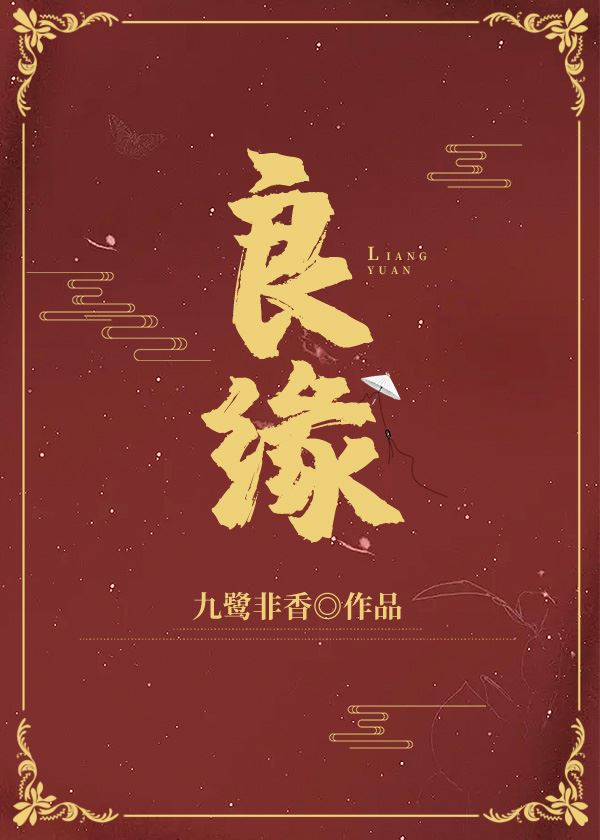
A celestial fruit graded "Good" rather than "Excellent" is sent from the Divine Hidden Tree into the world of humans and immortals with a singular mission: to cure the eight hundred immortals of their romantic indulgences so that they fear love. Armed with a golden bell that summons heavenly lightning, the fruit transforms into a young fairy and descends into the Nine Heavens. The first obstacle she encounters is Shen Yuan, the God of Love, whose Hall of Longing serves as the epicenter of immortal romance. Upon witnessing him trivializing affection by gifting an unripe fruit to a celestial maiden, she declares herself the God of Law and strikes him with a bolt of lightning, burning his Hall and suspending his duties.

For three months, the fruit enforces strict celibacy among the immortals, using the golden bell to punish any who attempt secret liaisons. She implements a rigid system of five-day reflective essays and exiles repeat offenders to the mortal realm. Her methods succeed in halting all public romance, creating an atmosphere of exhaustion and fear. However, her victory is short-lived. On the hundredth day, Shen Yuan reveals that he had stolen the golden bell while she was distracted. He uses the artifact to summon eighty-one bolts of heavenly lightning, crippling his own cultivation but also stripping the fruit of her primary weapon. Incited by the immortals she had punished, a mob captures her and casts her from the Celestial Perish Platform down to the human world.

The curse placed upon her is explicit: she must find her true love in the mortal realm, or she will perish. If she fails, death is not the end; instead, time rewinds to the moment she first arrived, forcing her to relive her failures repeatedly. In the human realm, she encounters a wounded warrior and attempts to use Shen Yuan’s red thread of fate to bind him as her true love. When she confesses her affection, a boulder crushes her, triggering the time loop. She realizes that speaking love to anyone other than her destined partner results in immediate death and reset.

Shen Yuan, also fallen to the mortal realm due to his injuries, retains his memories of the loops. He appears before her, revealing that he knows the rules of her curse. He proposes a partnership: he will help her find true love so she can ascend, allowing him to return to the heavens as well. The fruit refuses, suspecting his manipulative nature, but is forced into cooperation when he deliberately triggers her death by feigning confession. After countless deaths and resets, she learns that Shen Yuan’s words can kill her just as effectively as her own. She finally subdues him through physical force and forces him to lead her toward her destined partner.

Shen Yuan guides her to a small town and a Temple of Fertility, claiming he senses her match is nearby. The narrative ends with them entering the temple, leaving the identity of her true love unknown. The fruit remains focused on completing her mission and returning to the divine realm to mature, viewing love as a burdensome duty rather than an emotion. Shen Yuan accompanies her, a disgraced deity bound to her fate, orchestrating events from the shadows while maintaining a facade of amusement.

Latest Release
DateGroupRelease
2026-09-26knoxt c7
2026-09-26knoxt c6
2026-09-26knoxt c5
2026-09-26knoxt c4
2026-09-26knoxt c3
2026-09-26knoxt c2
2026-09-26knoxt c1

Community Reviews

Rating(3.7 / 5.0, 37votes)
5 stars
5(14%)
4 stars
17(46%)
3 stars
15(41%)
2 stars
0(0%)
1 stars
0(0%)

Popular reviews

... Read More
The stakes in this passage are layered like an onion and I love it. On the surface, the protagonist has one goal: find true love and ascend back to the Nine Heavens. Simple enough, right? Except every time she tries, something goes wrong. First layer: she tests the red thread and discovers it's apparently broken. Does she die? No. Does it work? Unknown. She's developing her own system of verification—confess love, don't die, therefore true love. The fact that this is a literal life-or-death test makes every interaction charged. What happens when she actually meets someone she has feelings for? One wrong word and she's dead. Second layer: Shen Yuan. He stole her golden bell. That bell called down 81 heavenly bolts. Those bolts didn't just wound him—they destroyed his cultivation and grounded him in the mortal realm. Now he can't return to the Nine Heavens without help. And she can't get her bell back because it drifted away during his fall. The bell is both their shared disaster and the key to their potential reconciliation. Third layer: the ancient god's mission. She was sent here for a reason. The immortals she wants to crush are the ones who care only about romance—ironic, given her current predicament. Who put her on this mission? Why does finding true love matter to cosmic order? These questions are stacking up and I am NOT ready for the answers. The tension between all three layers creates this incredible pressure cooker. Every conversation with Shen Yuan is simultaneously a personal confrontation, a negotiation for survival, and a move in a larger game none of them fully understand yet.
... Read More
The pacing in these chapters is absolutely ruthless and I respect it enormously. The author makes a brilliant structural choice: instead of showing each death in full detail, they compress the passage of subjective time with a single devastating line — 'I had died for three days and three nights—died countless times.' Three DAYS. Of continuous death and reset. And the reader only experienced maybe two paragraphs of it. That gap between narrative time and experienced time IS the horror of the curse. The chapter opens mid-crisis (she's already explaining her situation to him), then spirals into the first death, the first reset, the revelation that Shen Yuan remembers, and then — BAM — a time skip that tells us an entire lifetime of suffering occurred off-page. The final loop where she stops fighting and just stares at him calmly, watching him swing his legs like a child, is the most powerful quiet moment in the whole sequence. After relentless action and death, silence becomes the ultimate statement. The author also drops the TL;DR note about posting schedule mid-chapter which broke my immersion slightly but honestly that's just a translation team thing and doesn't affect the story.
... Read More
Let me just say it: "I came here to complete ancient god's mission. You were an obstacle, but I don't feel love or hatred toward the people of your world." That line hit me like a truck. Like, I understand why she's saying it. She's building walls. She's been betrayed, stripped of her power, dumped into the mortal realm with a ridiculous true love quest she didn't ask for, and this guy—this smiling butterfly immortal who orchestrated her downfall—is trying to get close to her. So she shuts the door. Completely. But here's the thing that wrecked me a little: she's not entirely lying. Or maybe she is. Maybe the walls are so thick she doesn't even know what's real anymore. The reader can see it—she runs away after healing someone. She curses at a string of red thread. She laughs maniacally when she hears her enemy suffered. These are all reactions of someone who feels TOO MUCH but refuses to admit it. And Shen Yuan? His response to her laughter is the most devastating line in the entire passage: "Though I endured quite a few heavenly bolts, lost all my cultivation, and fell to the mortal realm, if this misfortune has brought you such joy—then it is worth it." Is he sincere? Probably not entirely. But the fact that the protagonist remembers his tricks, that she soars past gloom into triumph when she learns he's been punished—that's not indifference. That's someone whose heart is still very much in the game, even if her mouth insists on playing stone cold.
... Read More
There's something deeply unsettling underneath all this heavenly discipline. Let's unpack the symbolism because this text is richer than it first appears. The golden bell—that's authority, obviously, but also control. It's a tool of suppression disguised as divine power. Then there's the Longing Tree, ten thousand years old, BURNING to ash in one strike. Ten thousand YEARS of cultivated romance, emotion, longing—all gone in a second. The narrator calls this progress. Calls the exhaustion under immortals' eyes "evidence of growth." LIGHT CREATES SHADOWS, they say—like oppression is literally just a natural phenomenon, like gravity, like weather. That's chilling. And the five-day essay cycle? That's not governance, that's surveillance disguised as self-reflection. The immortals aren't learning responsibility—they're performing it. Writing essays they don't mean while secretly meeting at night. The red thread of fate (I noticed the translator's note about 緣 meaning both fate and destiny) is being CUT, not redirected. The ultimate irony: the narrator claims to be imposing order, but the system they've built is hollow. Everyone's externally perfect and internally dead. And Shen Yuan—his hall is closed, his name is suppressed, but he's STILL there, watching, calculating. The butterfly doesn't die when burned. It molts. The theme here isn't justice—it's the danger of absolute control and the impossibility of extinguishing human (or immortal) nature. Light creates shadows. Try as they might, some things can't be struck down with lightning.
... Read More
I have never encountered a more delightfully toxic partnership in all my reading life. Let me just say it plainly: the way these two interact is absolutely unhinged and I am HERE for it. The narrator—this little fruit immortal, whatever that means—gets absolutely worked up, pounds Shen Yuan's chest eight times while holding his mouth shut, and then sits on his waist like a queen judging her subject. And what does Shen Yuan do? He laughs. He apologizes. He offers her a YELLOW WILDFLOWER as a token of affection after literally just causing her to die again. Eight punches and a apology flower—what kind of courtship is this?? The moment that really got me, though, was when he said, "I almost feel guilty." That line hit differently than anything else. It wasn't just playful banter or flirty nonsense—he actually acknowledged, briefly, that he was the one inflicting all this suffering on her. And her response? Still more violence. She didn't soften. She didn't cry. She just... kept going. That's when I knew this character wasn't going to be some fragile heroine who melts because someone says sorry. She's been through hell—countless deaths, countless cycles—and she's hardened herself into something sharp and practical. "I will not be angry. Impulsive emotions lead to ruin." This isn't someone who's forgotten how to feel; it's someone who's made a CONSCIOUS decision to suppress everything so she can survive. And Shen Yuan? He sees it. He literally tells her he finds it heartbreaking that she's forcibly composing herself. He knows what she's doing, and instead of calling her out, he plays along. That's not ignorance—that's a choice to let her keep her guard up while he circles around her anyway. The fact that he keeps offering her flowers even after she rejects them multiple times, that he follows behind her humming instead of confronting her anger, says something about him I can't quite pin down yet. Is he genuinely fond of her, or is this all part of some divine game? I need to keep reading to figure this out.
... Read More
Okay so let's talk about how this author plays with pacing because it is SERIOUSLY manipulative in the best possible way. The chapter starts with the protagonist's internal monologue—calm, collected, almost meditative. She's telling herself not to get angry, not to lose control, that emotions will be her downfall. It reads like a quiet storm building. And then—BAM. She grabs Shen Yuan by the collar and starts punching him. Eight times. Counted. The shift from internal stillness to external violence is so sudden and violent that it completely reorients the entire scene. One moment she's composing herself philosophically, the next she's sitting on someone's waist demanding results. Then just when you think the tension has peaked, it deflates again. Shen Yuan apologizes, offers a flower, she rejects it, and then—RUMBLE. Another death loop triggered. The author literally uses a sound cue ("RUMBLE—The familiar sound rolled in from the mountains!") to reset the emotional temperature mid-scene. It's almost comedic in how efficiently it happens, but underneath it's horrifying because we know she's about to die again. The pacing here is doing double duty: it keeps you turning pages while simultaneously making you feel the inevitability of her suffering. What I found most gripping was how the author controls information. We don't learn about the Temple of Fertility until the very end, and even then it's delivered with this casual "Immortals have their own calculations" from Shen Yuan that immediately raises more questions than it answers. The reader is constantly being pulled forward by mystery while also being yanked backward by emotional set pieces. The dead warrior on the stone sits as a recurring visual anchor—we see him, we know he's connected to her past attempts, but we're never quite given the full picture. This is pacing as psychological manipulation and I am thoroughly addicted to it.
See all reviews

Custom lists

See all custom Lists