Summary

... Read More

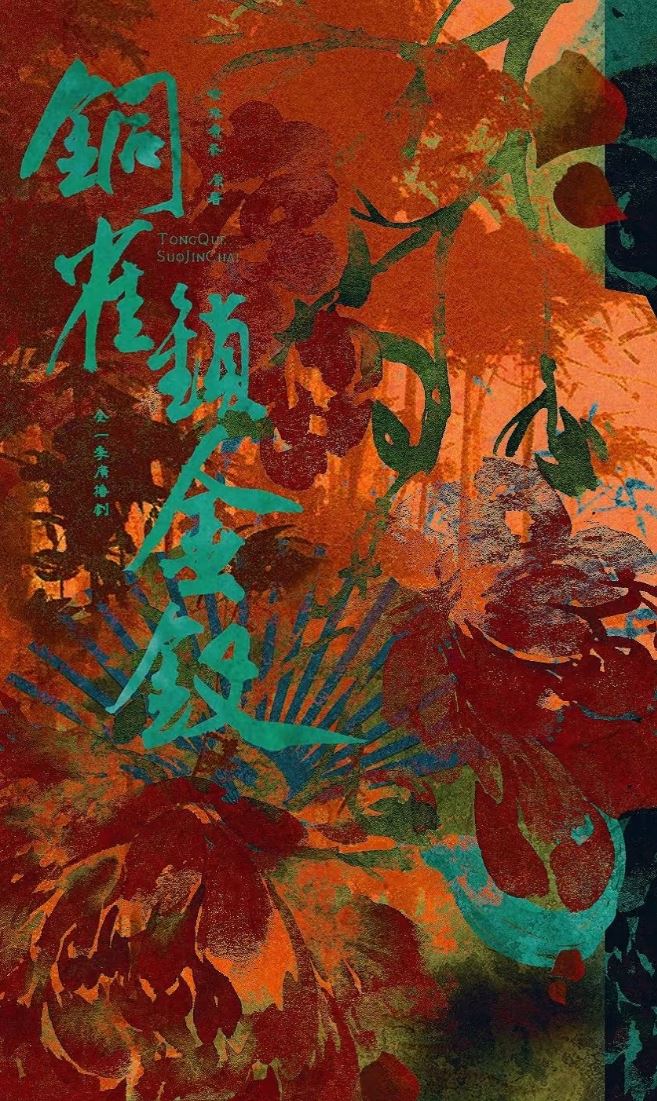
In Hezhou City during the Republic of China era, Duan Yelin serves as the formidable military commander stationed at Xiaotong Guan. Four years prior, he acquired Xu Hang, a young man from the fallen Xu family, under circumstances rooted in coercion and power imbalance. Xu Hang now operates Heming Medical Hall, a pharmacy he inherited and rebuilt after his family perished in the war. Despite his professional status as a physician, Xu Hang remains trapped in a relationship defined by Duan Yelin’s dominance. Their dynamic is characterized by physical intimacy mixed with emotional coldness; Xu Hang endures Duan Yelin’s possessive advances with silent resistance, never crying out despite the humiliation he feels. Duan Yelin, however, views this submission as fate, convinced that Xu Hang belongs to him body and soul.

The central conflict escalates when Duan Yelin confronts Director Hu of Dejiu Hospital over the use of expired medicine on wounded soldiers. After the confrontation turns violent, Duan Yelin has the director imprisoned rather than executed, signaling his unpredictable justice. Simultaneously, political tensions rise between Duan Yelin and foreign consuls regarding port inspections, showcasing his ruthless authority in maintaining local control. During this period, Yuan Ye, the son of the Military Control Commissioner, returns to Hezhou. He is introduced to Xu Hang when the young doctor saves a child from choking and later treats a green-robed opera actress who suffers a severe allergic reaction during a performance. This incident draws Xu Hang into the orbit of Gu Fangfei, the progressive daughter of a chamber of commerce president, who seeks Xu Hang’s help to secure a building for her cosmetics factory.

A critical turning point occurs when an assassination attempt is made on Duan Yelin at Xiaotong Guan. Yuan Ye assists in solving the case by using chemical principles to identify the rifle used, leading to the capture of the soldier responsible. The investigation reveals that the Governor is involved in treasonous activities. Duan Yelin responds with brutal efficiency, attending the Governor’s birthday banquet while carrying a severed head in a brocade box as a gift. At the banquet, Xu Hang encounters Peng Bo, a former associate of his abusive uncle Jin Hongchang. Peng Bo recognizes Xu Hang not as a physician, but as the opera actor Jin Hongchang forced him to perform for foreign officers, exposing Xu Hang’s traumatic past as a childhood sex slave trained to sing erotic songs for Japanese and Western officials.

Xu Hang’s history is revealed to be one of severe physical and psychological abuse. Jin Hongchang tortured him relentlessly to mold him into a performer, forcing him to kneel on ice carved with patterns until his knees were permanently scarred. Xu Hang escaped this nightmare when Duan Yelin, then a guest of Jin Hongchang, became fixated on him and effectively purchased his freedom, though he replaced one form of captivity with another. At the banquet, Xu Hang maintains his composure but is internally shattered by the exposure. He later learns that Duan Yelin has ordered the demolition of the cigarette factory opposite his home to make way for Gu Fangfei’s business, a subtle gesture of protection disguised as military decree. The story moves toward a complex resolution where Xu Hang navigates his past trauma, his complicated bond with Duan Yelin, and his emerging independence through Gu Fangfei’s influence, all while the political landscape of Hezhou City threatens to engulf them both.

Latest Release
DateGroupRelease
2026-09-26knoxt c146
2026-09-26knoxt c145
2026-09-26knoxt c144
2026-09-26knoxt c143
2026-09-26knoxt c142
2026-09-26knoxt c141
2026-09-26knoxt c140
2026-09-26knoxt c139
2026-09-26knoxt c138
2026-09-26knoxt c137
2026-09-26knoxt c136
2026-09-26knoxt c135

Community Reviews

Rating(4.1 / 5.0, 333votes)
5 stars
128(38%)
4 stars
106(32%)
3 stars
93(28%)
2 stars
6(2%)
1 stars
0(0%)

Popular reviews

... Read More
The imagery in this chapter is absolutely cinematic. Let me start with the opening scene—Chan Yi hanging spring clothes in the sun to get rid of the musty smell, then the noise outside, soldiers surrounding a vehicle, the commander on horseback. It establishes the setting so naturally. This isn't just backdrop; the world feels lived-in. You can feel the Hezhou winter giving way to spring, and the political tensions moving in like a storm. Then Duan Zhanzhou bursting into Jinyan Tang, throwing off his coat, complaining about the decorations like a spoiled aristocrat—that contrast between the beautiful garden and his crude presence is intentional. The setting itself seems to judge him. But the scene that lives in my head is the night one. 'The sound is oppressive, dull, sticky, and ambiguous.' Just four words and I'm IMMUNE. The kerosene lamp flickering, shadows dancing on the wall, the youth clutching the dark-patterned tablecloth. Xu Hang's pupils constricting. The door slightly open—a detail that makes this feel almost accidental, like the story itself couldn't let him avoid this truth. And then THAT look through the crack in the door. Every visual detail converges into one moment that will haunt me for days. The author knows exactly how to use light, shadow, and space to make scenes breathe.
... Read More
Let's talk about what this chapter is really about beneath the surface. Oranges. Why oranges? They're the key to the entire revelation. But they're also symbolic of something—sweetness that requires peeling, effort that leaves a lingering smell on your hands, something you can't enjoy without getting your fingers dirty. Shen Jingmo couldn't even eat them because of the peel smell. How fitting that the truth about his situation has a pungent, lingering quality that he can't wash off. Blood. Xiao Yan appeared once with blood on his shoulder and didn't frown. He absorbed pain silently. Now he's absorbed betrayal, obsession, and years of waiting. The boy who didn't feel physical pain learned to weaponize emotional patience. The teacher-student dynamic as a theme of power and surrender. "Once a teacher, a teacher for life"—this line carries so much weight. It's about the permanent nature of certain bonds. But Xiao Yan flips it: you taught me, so this is what I learned. The student becomes the predator through the very lessons the teacher imparted. That's deliciously cruel thematically. And the banquet—that's symbolism too. A celebration of Duan Yelin's birthday, held in a place called Jinyan Tang (Golden Swallow Hall), with invitations going to the Japanese Consulate. This isn't just a party. It's a diplomatic gesture, a power play, a moment where personal and political collide. The whole chapter is about boundaries being crossed—physical, moral, professional, national. And nobody seems interested in respecting them anymore.
... Read More
Okay so I need to talk about how complicated these two men are together. Duan Yelin is playing this whole game where he's deliberately making a show of being warm with Gu Fangfei just to get a reaction out of Xu Hang. Like—he's using this innocent businesswoman as a prop in his own personal drama, and honestly? It's kind of ruthless but also kind of brilliant. What kills me is that Xu Hang pretends NOT to care. He sits up there sipping tea, listening to the opera, looking completely calm. But the moment Duan Yelin storms upstairs and "breaks through the door," the whole facade cracks. That contrast between his outward composure and his dramatic money-throwing gesture—"I haven't heard enough, sing it again"—that was basically a middle finger wrapped in silk. And then Duan Yelin's response? He doesn't even yell. He just pulls Xu Hang behind a screen, puts his arm around his shoulders, and says "Xu Shao..." The fact that their dynamic has reached this point where jealousy operates through subtext and staged performances instead of straight confrontation is wild. These two have been dancing around each other for chapters and I am HERE for it.
... Read More
Let's talk stakes, because this chapter raises them in ways that go far beyond "who killed the Governor." On the surface, the conflict is straightforward: a powerful man is dead, a young woman with a pipa is the prime suspect, and the authorities are mobilizing to arrest her. But Duan Yelin's whisper to Qiao Song—"I won't let her pay for her life with that old ghost"—reconfigures the entire moral landscape. What does that mean? That the Governor was deserving of death? That the system will use this murder to settle a score with someone innocent? That Duan Yelin sees the case becoming a vehicle for something darker than justice? The stakes multiply when we learn about the mercury poisoning. This wasn't a crime of passion; it was a slow, calculated undermining of a man's health over time. The Governor was being poisoned while smoking opium, and everyone assumed his decline was self-inflicted. The real murder—those precise cuts severing meridians—was almost merciful compared to the慢性 torture that preceded it. So who has the right to kill a man who was already dying? Who has the right to let him die? And what about Ruan Xiaodie? The evidence against her is circumstantial but compelling: she wanted cinnabar (mercury source), she had access to food and drink, she fits the profile of someone who could move through the mansion unseen. But Duan Yelin notices the contradictions—the killer wiped graphite marks but left nail polish on a hairpin, picked a rusted lock but could've used a key if one existed, killed with expert precision but apparently couldn't bother to cover their tracks? That's not sloppy; that's theatrical. Someone wants Ruan Xiaodie to be caught. The external conflict is clear: catch the murderer before they strike again. But the internal conflict—the one chewing at Duan Yelin, the one that makes him hesitate— is about complicity. If he arrests Ruan Xiaodie, he becomes part of a mechanism that sacrifices the vulnerable for the convenience of closure. If he doesn't, he risks letting a killer walk free. And somewhere in the middle of that impossibility is where the real story lives.
... Read More
I need to talk about Gu Fangfei and Xu Hang because something is definitely brewing between them and I am HERE FOR IT. The moment she says 'I'll take Mr. Xu to have a look today' about the cave — that's not just hospitality, that's her choosing to spend time with him away from the crowd. And the way the narrator describes them 'walking along the corridor with fewer people, chatting happily'? That's the literary equivalent of everyone else fading into the background. But what got me was Xu Hang's response when she asks if he's been there before: 'The Governor's Mansion is such a noble place. It's not easy for a commoner like me to get in.' There's this self-awareness here, this awareness of the class gap between them. Is he being humble? Is he testing how she'll react? Or is he genuinely seeing himself as beneath this world while she's already wearing an embroidered skirt and moving through it like she belongs? And then she explains about the Governor — that he sits ten meters away from his own guests, surrounded by soldiers even at his own birthday. What a lonely picture. But I keep thinking about Xu Hang in that garden, walking beside Gu Fangfei, and how both of them seem to understand something about isolation that the Governor doesn't. He's physically surrounded by people and utterly alone. They're in a quieter corridor and there's this warmth between them that the banquet can't match. Also — and this might be the most important detail — Xu Hang knows about the cave system. The text says it's built at 'high price' with clean karst rocks, and he seems comfortable explaining it. He's not actually a commoner, is he? The more I think about it, the more I wonder what he's really doing at this banquet.
... Read More
Let's talk about Duan Yelin for a second because this man is a walking contradiction and I am here for it. He says to Xu Hang: "Haven't I ever told you that you have to be mine from body to soul?" And Xu Hang's response? "The Commander asked me to come, so I came. You asked me to listen to the opera, so I listened." He's listing every act of compliance like it's evidence in a trial, and it absolutely is — he's on trial for existing, and Duan Yelin is both the prosecutor and the one holding the gavel. But here's what got me: Xu Hang doesn't resist when Duan Yelin grabs his neck. He lets it happen. Not because he's okay with it, but because he's already dead inside at this point. He's performing obedience the way he performs opera — perfectly, mechanically, hollow. That's the most heartbreaking thing I've read all week. And Duan Yelin? He watches Xu Hang save the actress with this "deep and long" gaze. He's not watching a medical procedure — he's watching the person he claims to own reveal something about himself that even Duan Yelin can't control. Xu Hang's kindness, his skill, his calm competence in crisis — none of that is performative. It's the one place where Xu Hang is truly himself, and Duan Yelin is just... observing, powerless to intervene. The power dynamic here is so thoroughly destroyed and rebuilt in four paragraphs that I need a minute.
See all reviews

Custom lists

See all custom Lists