Gold Digger, But Forced to Marry the Big Boss - Reviews

Gold Digger, But Forced to Marry the Big Boss
+Add to Custom List
Sort
Add review
... Read More
The stakes in this story are layered and they keep escalating, which is exactly what keeps me turning pages. On the surface, Wang Zhi's stake is simple: secure the engagement, marry into wealth, survive. But the moment Gao Bochong appears, the stakes shift dramatically. This is no longer just a con artist trying to climb the social ladder—now there's someone in the room who can SEE him, who has that predatory gaze that makes Wang Zhi's professional composure crack for the first time. The internal conflict is equally sharp. Wang Zhi has built his entire identity on performance. He smiles when he wants to roll his eyes. He says 'thank you, brother' while internally calculating his earnings. He is so good at pretending that the question becomes: what happens when someone sees through the act? Not just sees it, but seems to WANT what's underneath it? And the external stakes—Gao Fengming is nervous about his brother's opinion, the servants are terrified, the study is a forbidden space. Everything about the Gao family screams 'dangerous wealthy household with secrets.' The power imbalance is extreme. Wang Zhi walked into a lion's den thinking the lions were all predictable, and now he's realized there's at least one he can't manipulate. That's when the real tension begins.
... Read More
I need to talk about Wang Zhi because this man is a VILLAIN protagonist and I am SO HERE FOR IT. Let me be clear—he is not a good person. He is a gold digger who deliberately hooked up with a wealthy guy to marry into money. He thinks about how much he's earning while holding Gao Fengming's hand like it's ants crawling on his skin. He puts peppercorns in his boyfriend's fish and watches him cough. He is actively plotting and performing at ALL TIMES. And yet. And YET. I find myself rooting for him anyway. Why? Because he's self-aware. He knows exactly what he is. When he thinks Gao Fengming might be impotent, it's not malicious—it's just his internal monologue running wild while his face stays perfectly sweet. The contrast between his inner voice and his outer performance is comedic gold but also genuinely unsettling. How much of Wang Zhi is real? How much is just the act he's been perfecting? Then there's Gao Bochong. The man walks into a room and everyone—servants, his own brother—shrinks. His gaze strips Wang Zhi bare. And Wang Zhi, the master manipulator, the guy who can smile through anything, actually feels fear. That moment when their eyes meet and Wang Zhi thinks he's been seen through completely? Chilling. These two are going to be catastrophic for each other and I cannot wait.
... Read More
I need to talk about Gao Bochong because oh my god. The man is a walking contradiction and I am HERE for it. He buys a Cartier bracelet worth over three hundred thousand for Wang Zhi but tells himself it's just a "return gift." He thinks about Wang Zhi's wrists—"so slender it seemed it would break with a touch, yet as white as jade"—and then immediately pulls his thoughts back like he's been caught doing something wrong. BRO. You're thinking about your fiancé's fiancé's wrists like that's normal?? And then the scandal hits and his reaction is so understated it's devastating. His knife scrapes across his porcelain plate. That's it. That's the entire emotional breakdown. No shouting, no dramatic exit (well, he does leave the restaurant, but calmly). Just a sharp sound and a darkening face. Ning Quanwu tries to play it off: "I think your sister-in-law is so pretty, there must be plenty of men eager to give her gifts and woo her, it's only natural…" and Gao Bochong's face goes COMPLETELY dark. I felt that in my soul. But what really got me is Wang Zhi's side. After the scandal blows up, he's not worried about his reputation or his career. He's worried about Feng Zheng. "He didn't have many friends in the entertainment industry, and Feng Zheng was one of the few who was willing to help him. He didn't want their friendship to end because of this scandal—though this friendship might just be his one-sided perception." THAT LINE. "Though this friendship might just be his one-sided perception." That's the kind of line that makes you put the book down and just stare at the ceiling. Wang Zhi is so used to being overlooked, so used to feeling like he's projecting warmth onto people who might not feel it back, that even in a crisis his first thought is whether he's burdening someone who actually cares. And then there's the bracelet. He gets scratches on a fifty-thousand bracelet and is genuinely upset about the quality. But when he takes it off in frustration, he "hesitated and gently placed it down. …Forget it. Don't go against money." That's not just about money. That's about everything in his life—he holds onto things even when they hurt him, because letting go feels like losing. The bracelet is a symbol, and I'm not even being dramatic about that.
... Read More
There's a lot going on beneath the surface of these chapters, and I want to talk about what the story is really about. On the surface, it's a romance with scandal and drama. But dig a little deeper and it's about power, value, and who gets to define worth in a world that constantly undervalues certain people. The jewelry is the most obvious symbol. Gao Bochong buys Wang Zhi a Cartier bracelet and a women's watch, thinking about how the men's watch strap would be too thick for Wang Zhi's slender wrists. These aren't just expensive gifts—they're acts of attention, of seeing someone closely enough to know what would suit them. But they're also transactions in a relationship where the power dynamic is already unclear. Is Gao Bochong buying affection? Is Wang Zhi performing gratitude? Or is something more genuine happening between them that neither has named yet? The scandal itself is another layer. A photo of two men having barbecue, taken from an angle that makes it look intimate, and suddenly Wang Zhi's entire career is questioned. The public doesn't even know who he is—"There weren't many mentions of Wang Zhi, as most people were only vaguely familiar with him, not even remembering his name." His worth in this system is entirely dependent on his association with someone more powerful. He's a "small actor" in a world that only respects "Film Emperors." Song Ran's betrayal is telling too. He leaked the photos because he was jealous—"Why steal my scenes… just because I forgot my lines?" He couldn't understand why Wang Zhi, someone he clearly considers beneath him, would receive more attention. The entertainment industry creates these hierarchies where people turn on each other, and the story doesn't shy away from that toxicity. But the most powerful symbol might be the bracelet itself. Wang Zhi gets scratches on it, gets annoyed, takes it off in frustration—and then gently places it down instead of tossing it. "Don't go against money." It's a small moment, but it captures his entire existence: he holds onto things because he can't afford to lose them. The bracelet is expensive, it's a gift from someone powerful, and even when it's imperfect, he keeps it. That's not just pragmatism—that's survival. The story keeps asking: what are we willing to tolerate for security? What parts of ourselves do we sand down to fit into someone else's world? And is there a difference between being cared for and being owned?
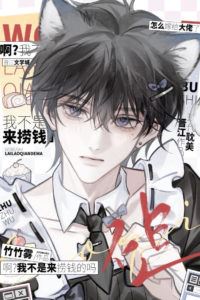
... Read More
Let me just stop and appreciate the VISUALS in this novel because the author has a genuinely cinematic eye. The opening dream sequence is dark, claustrophobic, all marble and sweat and trembling—very sensory, very overwhelming. But then we cut to Wang Zhi waking up, and the tone shifts completely. Domestic. Mundane. He changes his sheets. Takes a shower. Checks his phone. And then—THEN—we get the camellia scene and I literally stopped scrolling. The rain is described as a 'gray curtain woven with silver threads.' The camellias are 'white flowers the size of fists blooming recklessly' among 'leaves like dark jade.' Wang Zhi catches a falling flower in his palm and the whole image is almost too perfect—it's like a painting. But here's the thing: this beauty is also a weapon. Wang Zhi picks the flower deliberately. He knows it will impress Gao Fengming. The aesthetic is part of his con. And then Gao Bochong's entrance shatters the entire mood. One moment it's a rainy garden romance, the next it's 'top-of-the-food-chain ferocity' and gold-rimmed glasses and a ring with violet gemstones. The contrast between these two men's aesthetics—Gao Fengming's melancholy scholarly vibe versus Gao Bochong's predatory dominance—is so sharp it practically cuts. The world of this novel feels expensive, controlled, and deeply atmospheric.
... Read More
Okay so let me just say this opening is BRILLIANT and I am already obsessed. We start with what is clearly a sexual encounter—very explicit, very intense—and then BAM, it's revealed to be a dream. Wang Zhi wakes up and we realize he was drugged at a business dinner and slept with a stranger half a year ago. Classic setup, right? But here's where it gets interesting: the author doesn't just use this as backstory dump. They weave it into the present narrative so smoothly that by the time Gao Bochong appears with that ring, my brain went FULLY CONNECTING THE DOTS. The ring. Let me just say it again—THE RING. Wang Zhi notices it on Gao Bochong's pinky and thinks it looks familiar. And earlier, during the dream sequence, there's mention of the man's grip, the control, the dominance. Coincidence? I think not. This is a classic "fated encounter" plot device but executed with actual tension instead of just telling us they're destined lovers. The plot is building this slow burn of recognition and dread, and I am HERE FOR IT. Also, the engagement meeting itself is a mini-plot within a plot. Gao Fengming is getting scolded by his brother the entire time, Wang Zhi is performing this perfect little girlfriend act while internally roasting everyone, and the power dynamics are shifting in real time. Who's really in control here? That's the question the plot keeps asking.
... Read More
There's so much going on beneath the surface of this text and I want to dig into it. Let me start with the camellia because it's clearly doing heavy symbolic lifting. In many literary traditions, camellias represent perfection, but also fleeting beauty—they fall whole from the branch rather than petal by petal, which makes their fall sudden and complete. Wang Zhi catches one mid-fall. He catches something beautiful and temporary. Is he catching love? Is he catching opportunity? Or is he just grabbing at something that was already destined to hit the ground? Then there's the ring. Gao Bochong's ring has 'intricate patterns with several violet gemstones embedded, shimmering with an uncertain light.' The description alone tells us this object is dangerous and unknowable. And Wang Zhi thinks it looks familiar. A ring is a symbol of commitment, of binding, of ownership. The man from the dream—did he wear a ring too? Is the ring connecting the dream to reality, suggesting that this encounter Wang Zhi thought was random was actually fated? And the water. Gao Bochong drinking from the same glass as Gao Fengming. The rain. The sweat in the dream. Water as a recurring motif of both purification and drowning, of clarity and danger. Wang Zhi is constantly navigating between these states—trying to stay afloat in a world where everyone around him has more power than he does.
... Read More
The pacing of these first seven chapters is genuinely impressive. Let me break it down because the author knows exactly what they're doing. Chapter 1 opens IN MEDIO RES—with the dream already at full intensity. No warm-up, no context, just pure sensory overload. Then the wake-up is almost jarringly calm, which actually makes the dream feel MORE real because the contrast is so sharp. We get exposition about Wang Zhi's situation through his internal monologue while he's getting ready, which is efficient storytelling—no info-dumps, just character through action. Then the car ride to the Gao mansion, the garden scene, the flower hall—this is all deliberate slowing down. The author lets us breathe, lets us soak in the atmosphere, lets us watch Wang Zhi perform his little routine with Gao Fengming. It's almost peaceful. And then Gao Bochong walks in and the ENTIRE rhythm changes. Sentences get shorter. The prose gets sharper. Tension spikes. The chapter ends with Wang Zhi following Gao Fengming to the study, and that cliffhanger—what is the big brother going to do? What does he want?—is perfectly placed. The author knows exactly when to speed up and when to let scenes linger. This isn't rushed, it isn't dragging, it's just right.
... Read More
Okay so this whole scandal arc is honestly brilliant. Let me break down why it works so well. First, the setup: Gao Bochong is already suspicious. He sees Wang Zhi's WeChat response as a "tactic," wonders if he talks to Brother Feng the same way. That's the author planting seeds of jealousy early, which makes the payoff so much better. Then the scandal hits—bam! A paparazzi photo of Wang Zhi and Feng Zheng at a barbecue, and suddenly everyone's an expert on relationship dynamics. The headline alone is peak tabloid energy: "Film Emperor's Crew Raises New Love, Small Actor Two-Timing, Gao Young Master Cuckolded Before Engagement." I literally snorted. Who writes these things?? But the real plot twist isn't the scandal itself—it's how it unravels. Song Ran leaks the photos, then immediately goes on the defensive when things blow up. And then the crew drops a video that clears everyone, which is suspiciously fast. Wang Zhi himself notices: "the earliest would be in the evening, yet this time it was so fast, almost simultaneous with the video release, perfectly timed." That's the detail that got me. The author is telling us someone with real power is behind the cleanup. Not Gao Fengming (he's drunk in Singapore), not Wang Zhi (he's a small actor), but someone else. The narrative is whispering: there's a bigger player in this game. And Gao Bochong? He reads the article, sees the photo, and his mood "completely soured." But he doesn't react outwardly. He just tells Ning Quanwu to follow up on a contract and leaves. That restraint is so much more interesting than a dramatic explosion. The tension is in what he DOESN'T do. The plot structure here is tight: setup (gift exchange, suspicion) → inciting incident (scandal photo) → escalation (agent scolding, public reaction) → reversal (Song Ran's confession, crew's video) → new mystery (who really cleared this up?). It's a complete narrative arc packed into these chapters, and it leaves you wanting to know who the real power players are.
... Read More
Can we just appreciate how natural every character's voice is?? Because I'm genuinely impressed. Let's start with Wang Zhi's agent, Yang Ge. The man goes from scolding to simping in like three seconds and it's peak comic relief: "What the hell is going on with you? How did you get involved with Feng Zheng too?!" — full panic mode. Then after Gao Fengming supposedly resolves the situation: "Why didn't you tell me earlier that Gao Young Master was willing to step in and resolve this for you?" — full bootlicker mode. "Still mad at me?" — wait, we were just arguing five minutes ago?? "Now that Gao Young Master has resolved it for you, why don't I host a meal and invite Gao Young Master out for dinner sometime?" — absolutely shameless and I love it. The author captures that specific energy of Chinese entertainment industry agents perfectly. The way they swing between genuine concern and pure opportunism is terrifyingly accurate. And Gao Bochong's dialogue is a masterclass in restraint. Every line he speaks is short, clipped, almost boring on the surface. But the subtext is doing heavy lifting: "A return gift." — he's buying three-hundred-thousand-dollar jewelry and calling it a return gift?? "Making a fuss over nothing." — said while literally stopping his knife mid-cut "My family is often in the news." — deadpan delivery when his sister-in-law is allegedly cheating The contrast between his flat exterior and the internal monologue is where the humor lives. Ning Quanwu notices: "You're actually explaining to me! Old Gao, you never explain! You're feeling guilty!" And Gao Bochong's response is just… silence. The narrative says his "expression unchanged, looking very upright." The fact that the author doesn't even give him a defensive line is funnier than any dialogue could be. Wang Zhi's internal voice is also distinct—he's pragmatic, slightly self-deprecating, with moments of genuine vulnerability. "Don't go against money. At least the entertainment industry pays well." That's not just a joke, that's his entire philosophy condensed into two sentences. The social media comments are also surprisingly well-written. The fandom dynamics feel authentic—the people shipping Feng Zheng and Wang Zhi, the anti-fans, the people who just discovered Wang Zhi and are suddenly obsessed. "Hehe, so suitable to be a wife" made me laugh out loud.

Leave a comment

You must be logged in to leave comments. or
