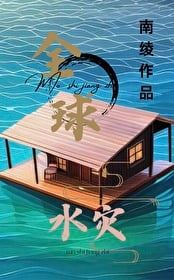
Global Flood: I Have a Floating Safehouse
+Add to Custom List
Novel Info
  • Author:
  • 南绫
  • Status:Ongoing

Summary

... Read More

Shu Fu is a screenwriter who awakens in a parallel world that closely resembles her own, inhabiting the body of a recent university graduate with similar memories and circumstances. She discovers a matte silver bracelet on her wrist that transforms into a glove, granting her access to a 150-cubic-meter spatial storage where time is suspended. This ability allows her to instantly store and retrieve items, a power she recognizes from an apocalyptic water-world animation script she previously wrote. The script features an "Unsinkable Floating Island Cabin," a cheat item for the protagonist, which initially appears as a decorative message bottle on her wrist but remains inactive.

Soon after awakening, Shu Fu realizes she is trapped within the city of Suicheng, unable to leave due to an inexplicable spatial barrier that prevents all transportation and navigation from functioning beyond city limits. Simultaneously, she observes a young man live-streaming from a rooftop, claiming to be reborn from a future where global floods have submerged most of the land. He warns of impending tsunamis, rising sea levels, and societal collapse, but is subdued by military forces and labeled mentally ill. Shu Fu attempts to warn others but suffers severe migraines and memory loss when trying to disclose the disaster details, forcing her to rely on her own notes and the script outline to prepare.

Shu Fu dedicates herself to stockpiling essential supplies, purchasing massive quantities of food, water, medicine, and survival gear using her savings. She acquires a small apartment in an old residential complex and a ground-floor garage for storage. During this process, she encounters a black mini notebook linked to her bracelet, which issues specific tasks to upgrade the "Drift Island House." Completing these tasks, such as clocking in at her workplace or visiting specific locations, grants progress toward leveling up the raft. She successfully activates the raft, a ten-square-meter floating wooden house with a temperature-controlled interior, wastewater filtration, and water purification systems.

The narrative shifts as the weather turns violent, with torrential rain, hail, and strong winds striking the city. Shu Fu tests the raft's capabilities, discovering it can drift with currents and dock within a twenty-meter radius. She continues to hoard resources, including generators, fuel, and household appliances, while navigating the social dynamics of her workplace and the growing chaos outside. The tasks from the notebook become increasingly specific, linking her survival progress to mundane daily activities, suggesting a deeper connection between her actions in this world and the fictional narrative she helped create.

As the storms intensify, Shu Fu faces the reality of a world on the brink of ecological collapse. The initial calm of the stockpiling phase gives way to the urgency of the coming disaster. She balances her need for resources with the constraints imposed by the bracelet's tasks, realizing that her survival depends not just on material wealth but on fulfilling the mysterious requirements set by the system. The story establishes a tense atmosphere where the boundary between her original world's fiction and this new reality blurs, setting the stage for a struggle for survival in a drowning world.

Latest Release
DateGroupRelease
2026-08-11shanghai fantasy c185
2026-08-11shanghai fantasy c184
2026-08-11shanghai fantasy c183
2026-08-11shanghai fantasy c182
2026-08-11shanghai fantasy c181
2026-08-11shanghai fantasy c180
2026-08-11shanghai fantasy c179
2026-08-11shanghai fantasy c178
2026-08-11shanghai fantasy c177
2026-08-11shanghai fantasy c176
2026-08-11shanghai fantasy c175
2026-08-11shanghai fantasy c174

Community Reviews

Rating(3.9 / 5.0, 28votes)
5 stars
8(29%)
4 stars
10(36%)
3 stars
8(29%)
2 stars
2(7%)
1 stars
0(0%)

Popular reviews

... Read More
Let's talk tension. The car accident scene is where everything shifts from mundane to catastrophic. One minute Shu Fu is buying dumplings, the next there's a deafening boom, black smoke, chain collisions, students dead. The author doesn't dwell on gore or drama—just facts. Two dead. Three critical. Seven or eight injured. A student walking near the school gate. This is where the stakes become real. Shu Fu isn't just completing tasks for points; she's surviving in a world where random tragedy can kill anyone, anywhere. The truck brakes failing on a rainy road, the chain collision, the student who didn't make it—these aren't plot devices, they're reminders that the world is fragile. But the real conflict is internal. Shu Fu is trying to prepare for something she can't fully understand. The wristband gives her tasks, rewards, a progression system—but no explanation. Why is she doing this? What happens at Level 2? What is the raft for? The uncertainty is the conflict. Every task she completes brings her closer to something, but she doesn't know what that something is. The ending of this section—Shu Fu at the gas station, rain still falling, about to go to a lunch she probably doesn't want to attend—is perfect tension building. Something is coming. The author has made us care about Shu Fu's survival, and now we're waiting to see what happens when the world actually changes.
... Read More
I keep coming back to the breakfast shop scene. Not because it's dramatic, but because it's so painfully ordinary. The shop owner's wife is happy to get a big order. She's scolding her daughter on the phone but smiling. Shu Fu is eating alone, watching the rain, doing something kind without making a scene. And then—the explosion. The smoke. The realization that the school is nearby. What gets me is the wife's phone call. She's relieved her daughter is safe, telling her to stay in the dorm, not go near the accident. The love in that voice is so raw and real. And Shu Fu, who was about to be in that same space, feels this mix of regret and fear. Not for herself exactly, but for the randomness of it all. One large order changed everything. The text says: "Sometimes, fate seemed predestined—or so she thought. Then a peculiar idea crossed her mind. No, perhaps fate could be changed!" That's the emotional core of the whole thing. It's not about surviving an apocalypse; it's about the terror and hope of realizing you might actually have agency. Shu Fu's emotional journey isn't about romance or friendship drama—it's about the quiet, internal shift from someone who follows tasks to someone who starts questioning whether she's the one writing the script. I also love how the author handles the roommate dynamics. Zhang Tian's birthday plans, Chen Fa's exhaustion, the compromise of meeting at a mall because of rain. These small moments of friendship feel genuine. They're the kind of relationships that exist before everything falls apart, and knowing what's coming makes them ache more.
... Read More
There's a lot of water imagery in this section. Rain. Hail. Downpours. The school gate near water. And the central metaphor—the Raft. It's not accidental. Water in literature always means transformation, danger, the subconscious. Here it feels like both a literal threat and a symbol of the world Shu Fu is preparing for. The laminated glass is another symbol I can't ignore. Shu Fu reinforces her windows against falling objects. Laminated glass doesn't shatter—it holds together even when hit. That's basically the thesis of the whole story: survive by staying intact, not by being unbreakable. The glass is transparent, so she can still see out. She's preparing for isolation but not blindness. And the Raft itself. It's a survival vessel, obviously, but it's also a progression system. Level 1, Level 2, tasks, wheels of fortune. It's gamified survival, which is interesting because it suggests that in this world, hope comes in the form of systems and rules. Shu Fu isn't just surviving; she's leveling up. The raft is her ticket, her goal, her purpose. The BBQ gift package from the prize wheel is funny but also telling. After all the tension about survival, the system rewards her with… food. Real food. Not points, not currency, actual wagyu ribeye and lamb skewers. It's a reminder that survival isn't just about staying alive—it's about finding moments of normalcy, of pleasure, of a good meal in a world that's clearly going to get worse.
... Read More
I need to talk about Shu Fu because she's not your typical protagonist. She's not loud, she's not dramatic, she doesn't monologue about her feelings. She just… does things. Buys laminated glass. Tips a delivery rider 50 yuan without explanation. Watches the rain. This restraint is what makes her compelling. The scene with the breakfast shop owner's wife is a perfect example. The wife is chatty, warm, scolding her daughter on the phone but clearly loving it. Shu Fu observes all of this silently, absorbing details. When she realizes the wife might have gone to the school that day if not for the large order, there's this quiet moment of guilt and relief. She doesn't say anything. She just thinks it. That's Shu Fu—internal, observant, carrying weight without showing it. Then there's the roommate group. Zhang Tian is the opposite of Shu Fu—loud, social, living for the moment. Chen Fa is exhausted, overworked, reluctantly dragged along. Wu Shaoshan is the quiet follower. These four represent different survival personalities. In an apocalypse scenario, which one would you want by your side? Zhang Tian's energy is infectious but unsustainable. Chen Fa would crack under pressure. Wu Shaoshan would go along with anything. Shu Fu? She'd prepare, plan, and survive. That's why she's the protagonist. The delivery rider moment also reveals something about Shu Fu. She tips him generously not out of kindness alone but because the task requires it. Yet she notices his damp hair, his surprise, his sincere thank you. There's a humanity there that she doesn't always show. I'm curious how these relationships will evolve when the stakes get higher.
... Read More
Okay I need to address the anonymous forum thread because this is where the author's voice is at its most brilliant. Shu Fu posts this question about whether her daily tasks have any meaning in a book where she's not the protagonist, and the comments she gets? Some of them read like the author is speaking directly to the reader. "Ever heard of the butterfly effect? What seems like an insignificant trivial matter to you might actually be the starting point for something crucial." That's not just worldbuilding, that's the novel's thesis statement disguised as an internet comment. And then: "This is just a backdrop, what's the point?" vs. "Without all these other people, how could the protagonist become the protagonist?" These comments are literally debating the entire premise of the book while also being background noise on a forum. Meta as hell. But what I love most is how Shu Fu's internal monologue contrasts with the forum. Her thoughts are chaotic, spiraling, full of screenwriting metaphors and existential dread. The forum comments are punchy, opinionated, almost flippant. That contrast tells us everything about her isolation—she's having a philosophical crisis at 9 PM on a Tuesday and the internet's giving her self-help blog post energy. The dialogue between Shu Fu and Zheng Feifei is also worth noting. Short, practical, layered with unspoken understanding. Zheng Fei's "I envy you, but I can't do that..." and Shu Fu's reply with just a hugging emoji. So much said in so little. Zheng Fei is worried about her attendance record, her performance review, her job security—and she doesn't even need to say any of that out loud. The author's voice throughout is this perfect balance of literary and accessible. The prose is clean, the metaphors land, and when Shu Fu thinks about being a wrench tightening screws, it's both philosophically profound and completely grounded in physical imagery. No pretension, just precision.
... Read More
Okay so here's the thing that absolutely wrecked me in these chapters. Shu Fu saves these two girls from a parking lot flood, right? And she's sitting there feeling smug about it, and then—BAM—Chen Fa calls and says the ACTUAL disaster was the subway. Line 14. The one they were supposed to take home. Eleven people died. Forty injured. Nine out of ten chance they would've been on that train. NINE OUT OF TEN. I literally sat there with my mouth open. The author just casually drops this and I'm over here losing my damn mind. This is such a brilliant narrative choice because it immediately undercuts everything. Shu Fu thought she was the main character, thought she had control over the plot, and the story is like "lol no, you're a wrench." That moment when she realizes she wasn't outside the event but IN the middle of it—that shift in understanding is chef's kiss. And the forum thread she posts about being an NPC? That's not just worldbuilding, that's the plot itself telling us what we already suspected: this girl has no idea what game she's playing in. The butterfly effect isn't a theme here, it's the actual mechanics of the story. Every tiny decision—leaving two hours early, spotting the cheating boyfriend, insisting on driving—rippled into life and death outcomes she couldn't possibly have calculated. The plot structure here is so deliberately unsettling. It refuses to give us the comfort of a protagonist who controls their destiny. Instead we get this creeping dread that every task, every choice, every random act of kindness could mean someone lives or dies, and she'll never know which.
See all reviews

Characters

See all characters

Custom lists

See all custom Lists