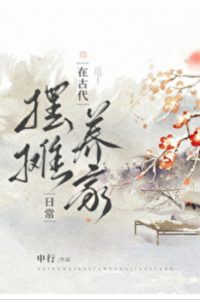
Gentle Jasmine Rain
+Add to Custom List
Genres:
Novel Info

Summary

... Read More
Yunyi is a twenty-year-old university freshman who inherited the Yunxi Museum, a century-old private collection business valued at tens of billions, after her parents died in a plane crash in Thailand when she was in junior high. Raised by her grandfather in the ancient town of Pingjiang in southwestern China, she grew up surrounded by antiques but lacks confidence in running the museum. Her nickname Jianjian means picking up bargains, a family tradition of finding hidden value in discarded items. The story begins with Yunyi attending an auction in Beijing where she attempts to buy a white jade vase for her grandfather but is outbid by a mysterious buyer who drives the price from 300,000 to 4 million yuan. Her grandfather reassures her and asks her to return home early because a distinguished guest is arriving. Upon returning to Pingjiang, Yunyi discovers the mysterious buyer is Shanze, the young heir to the Shan family, another prominent collecting dynasty with deeper historical roots. Shanze had purchased the vase as a welcome gift for Old Master Yun, revealing that the two families have a long-standing friendship and that his grandfather once sold many treasures to fund national resistance during the war. Yunyi and Shanze share an immediate connection through their mutual understanding of antiques. They spend the morning together sorting ancient coins in the courtyard, their movements synchronized like old friends. Yunyi notices Shanze's expertise and calm demeanor, while he is struck by her keen eye for authentication. Their interaction reveals that both families have been searching for lost Shan family heirlooms scattered overseas during the war. When Yunyi's grandfather arranges a matchmaker from the Zhou family to propose marriage between Yunyi and Zhou Shinian, a wealthy playboy, Yunyi is only interested in the engagement gifts, particularly a valuable artifact her grandfather coveted. She rushes to catch Shanze before he leaves, accidentally dropping the engagement gift list. In Beijing, Yunyi enrolls at Jingxi University to study Cultural Relics and Museology. She takes a part-time job as a livestream appraiser at the Shancheng Museum, a subsidiary of the Dezhou Group owned by Shanze, to fulfill her internship requirements. She hides her expertise initially, pretending to be an amateur. During her first week of livestreaming, she gains attention for her pure appearance and surprisingly sharp appraisal skills. One night, a viewer connects from a newly registered account and shows her a set of twelve Tang Dynasty painted pottery zodiac figurines. Yunyi recognizes them as the authentic set from Shanze's private collection, which she had seen earlier. The viewer is Shanze himself, testing her. She correctly identifies details about the glazed dragon eyes and broken-tailed monkey, going viral and gaining millions of followers. The livestream also attracts a tomb raider who shows off stolen Warring States period bronze artifacts, including a bronze sword and gold-thread jade burial suit. Yunyi recognizes the tomb entrance tools, revealing her familiarity with underground networks. The livestream is shut down for violating rules, but Shanze uses the incident to investigate the tomb raiding ring. Meanwhile, Shanze discovers that Zhou Shinian, Yunyi's arranged match, has been involved in threatening the Yun family. The story establishes a romantic tension between Yunyi and Shanze as they navigate their shared passion for antiques, family legacies, and the dangerous underworld of illegal artifact trading. Yunyi balances her university life, livestreaming career, and inheritance responsibilities while Shanze protects her from threats while maintaining his aloof public persona. Their relationship develops through shared appraisals, late-night conversations, and mutual respect for each other's expertise in the collecting world.

Latest Release
DateGroupRelease
2026-08-11shanghai fantasy c41
2026-08-11shanghai fantasy c40
2026-08-11shanghai fantasy c39
2026-08-11shanghai fantasy c38
2026-08-11shanghai fantasy c37
2026-08-11shanghai fantasy c36
2026-08-11shanghai fantasy c35
2026-08-11shanghai fantasy c34
2026-08-11shanghai fantasy c33
2026-08-11shanghai fantasy c32
2026-08-11shanghai fantasy c31
2026-08-11shanghai fantasy c30

Community Reviews

Rating(4 / 5.0, 5votes)
5 stars
1(20%)
4 stars
3(60%)
3 stars
1(20%)
2 stars
0(0%)
1 stars
0(0%)

Popular reviews

... Read More
The sensory richness of these scenes is what makes this world feel truly alive. The opening antique market is described with such specificity—the wobbly camera, the two-yuan shop vibe, the museum-like atmosphere of the formal antique shop—that I can practically smell the dust and hear the haggling. But what really elevates the worldbuilding is how the author transitions from this commercial, almost chaotic marketplace to the serene Fayu Temple. The description of the temple itself is understated but powerful: 'A falling leaf illuminates all living things. The mountain behind Fayu Temple is deserted. The solemn stone Buddha is covered in damp moss.' These lines create such a vivid contrast to the bustling market scenes. The wishing cauldron scene is particularly cinematic—I can see the dawn light, the red hemp ball spinning through the air, the way it bounces off the stone wall. And then there's Yunyi's home in Pingjiang, which feels like a character in itself. The bluestone bridge, the heavy wooden door, the old persimmon tree, the newly built parking lot that marks the tension between tradition and modernity—all of these details create a sense of place that feels both specific and universal. The Zhou family's exhibition hall, with its top-notch lighting and minimalist aesthetic, contrasts beautifully with the more rustic settings. And that Bentley with the Jiang A license plate appearing at Yunyi's home? It's such a perfect visual symbol of Zhou Shinian's intrusion into her world. The author understands that setting isn't just backdrop—it's emotional landscape.
... Read More
The central conflict here isn't about treasure hunting or antique authentication—it's about communication, or rather, the devastating power of what goes unsaid. Yunyi's refusal to reply to Zhou Shinian's messages creates this enormous emotional stake that permeates every scene. When he shows up at her home in Pingjiang, the tension isn't just about their romantic future—it's about who gets to define their relationship, who has the power to set boundaries, and what happens when obligation collides with personal desire. The stakes are raised even higher with Shanze's presence. When both Zhou Shinian and Shanze become interested in the same chopstick rest, it's not really about the object—it's about who Yunyi chooses to share her world with, who understands her language of antiques and history. The professional stakes are also significant: Yunyi's reputation as an appraiser is on the line throughout the opening scenes, and her quick identification of the fake Northern Song piece establishes her expertise while also showing how much she cares about preserving cultural heritage. But the deepest conflict is internal—Yunyi doesn't know how to tell Zhou Shinian that she doesn't want to marry him, especially when their families are so intertwined. The wishing ball scene captures this perfectly: she throws her hopes and prayers into the cauldron, but they bounce back at her in an unexpected form. The stakes here aren't about winning or losing—they're about finding the courage to speak truth to power, even when that power is someone you care about.
... Read More
This chapter sequence is a masterclass in how to layer multiple plot threads without overwhelming the reader. The opening scene at the antique market immediately establishes Yunyi's expertise and her role as a cultural treasure guardian—she spots a potential Northern Song Dynasty Jun kiln piece and moves with urgency, almost comically desperate to beat foreign buyers to it. But what I found most intriguing was how the plot pivots from a solo treasure hunt to a romantic entanglement. The livestream connection with Zhou Shinian—when he reveals those ten pieces are actually the engagement gifts from the Zhou family—feels like a deliberate plot twist that transforms what could have been a simple appraiser story into something far more complex. The structure here is brilliant: we start with Yunyi alone, trying to navigate her professional world, then suddenly Zhou Shinian's presence invades her personal space in Pingjiang. The author uses the chopstick rest scene as a perfect narrative bridge—Yunyi is teaching Zhou Shinian about antiques when Shanze appears, creating an immediate triangular tension that propels the plot forward. I especially appreciated how the plot uses objects as plot devices: the white porcelain dog, the jade amulet, the wishing ball—all serve dual purposes of advancing both character development and narrative momentum. The cliffhanger ending with Zhou Shinian asking about the chopstick rests while Shanze stares at them too creates this delicious unresolved tension that makes you desperate for the next chapter.
... Read More
The emotional core of this section hits me like that wishing ball bouncing off the cauldron wall—unexpected, almost comedic, but ultimately landing right where it's supposed to. Yunyi's relationship with Zhou Shinian is fascinating because it's built on this foundation of obligation rather than desire. She literally cannot bring herself to reply to his WeChat messages, which in our modern dating world is basically a silent scream of 'please leave me alone.' Yet the author never lets us dismiss her feelings as purely negative—there's a genuine warmth when she thinks about how Grandpa favors Zhou Shinian, and how she doesn't want to disappoint him. The scene at Fayu Temple is where everything shifts emotionally. When Yunyi throws that wishing ball and it bounces back to hit Shang Shanze, it's almost like the universe itself is saying 'pay attention, this matters.' The moment where she looks down and catches his upturned gaze—her heart literally grips her—is one of those rare moments in fiction where physical sensation and emotional revelation happen simultaneously. I also love the emotional complexity of the breakfast scene. Yunyi is simultaneously trying to teach Zhou Shinian about antiques while being painfully aware of Shanze's presence. When she shows him the white porcelain puppy and jade amulet, it's almost like she's performing expertise to distract herself from the emotional chaos. The author captures this perfectly—Yunyi's professional knowledge becomes her emotional armor. And that ending where both Zhou Shinian and Shanze are drawn to the same chopstick rest? It's not just about antiques anymore, is it? It's about who gets to stay, who gets to understand her world, and who she wants to share it with.
... Read More
What strikes me most about the pacing here is how the author uses professional expertise as a pacing mechanism. The opening livestream sequence moves at a breakneck pace—Yunyi is scanning stalls, making quick assessments, feeling the pressure of the auction environment. This creates a sense of urgency that contrasts beautifully with the slower, more contemplative scenes at Fayu Temple and Yunyi's home. The transition from the chaotic market to the quiet temple is almost meditative, giving readers a chance to breathe before the emotional complications begin. But the real pacing masterstroke is the breakfast scene. The author stretches out what could have been a brief interaction into something much more significant by focusing on small details—the chopstick rest, the white porcelain dog, the jade amulet. Each object becomes a beat in the narrative rhythm, and the arrival of Shanze creates this perfect structural pivot. The chapter ends not with a dramatic climax but with this quiet moment of shared interest in an object, which is actually far more powerful than any shouting match could be. I also appreciate how the author uses the livestream format to create natural pacing breaks—the comments section provides commentary that speeds up the narrative when things get slow, and the professional demands (like the Top 10 guest) create urgency when the story needs momentum. The structure here is almost musical in how it moves between fast and slow, loud and quiet, external action and internal reflection.
See all reviews

Characters

See all characters

Custom lists

See all custom Lists