Summary

... Read More
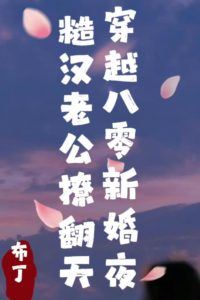
Qin He is a scholarship student at No. 13 Middle School in Yao’an City, raised by a single mother, Qin Wanqing, after escaping an abusive father, Li Zhuang. Orphaned and poor, Qin He endures a childhood of domestic violence, eventually separating from his alcoholic father through a court-ordered custody battle. He maintains a disciplined, isolated life dedicated to academic excellence and part-time work to support his family, harboring a secret passion for photography. Yu Cheng is the rebellious son of the wealthy Yu family, known for bullying and skipping class, yet he feels overshadowed by his capable older brother and resented by peers who only tolerate him due to his family’s donations.The two boys collide one evening when Yu Cheng bumps into Qin He while climbing over the school wall. Despite the encounter being minor, Yu Cheng insists on compensating Qin He for his torn pants, marking the beginning of an unusual connection. Following a confrontation with a harsh English teacher, Yang Man, who verbally abuses Yu Cheng and nearly incites him to violence, Qin He intervenes and records the incident to protect Yu Cheng from false accusations. This act earns Yu Cheng’s trust and fascination, leading him to transfer classes to sit near Qin He and hire him as a tutor.Qin He agrees to tutor Yu Cheng on weekends, establishing a relationship that gradually transcends their social divide. He visits Yu Cheng’s luxurious home, where he meets Yu Cheng’s caring mother, Lin Ying, and later invites Qin He to a photography exhibition. During these interactions, Qin He reveals glimpses of his softer personality, such as playing with stray cats, which Yu Cheng observes with growing affection. However, their bond is threatened when Li Zhuang, Qin He’s father, tracks him down at the exhibition. Li Zhuang attempts to extort money from Qin He, leading to a physical altercation where Qin He punches his father, asserting his independence.Desperate for money to pay off gambling debts, Li Zhuang sells Qin He out to loan sharks, resulting in Qin He’s kidnapping. Bound and blindfolded, Qin He manages to secretly call the police while negotiating with his captors. Simultaneously, Yu Cheng grows anxious when Qin He fails to arrive for their tutoring session, prompting him to investigate and alert authorities. The narrative culminates in a tense rescue scenario as Yu Cheng races against time to save the boy who has become central to his chaotic world, highlighting the stark contrast between their upbringing and the unlikely solidarity forming between them.

Latest Release
DateGroupRelease
2026-09-26knoxt c2
2026-09-26knoxt c1

Community Reviews

Rating(3.9 / 5.0, 97votes)
5 stars
28(29%)
4 stars
32(33%)
3 stars
35(36%)
2 stars
2(2%)
1 stars
0(0%)

Popular reviews

... Read More
Okay so let me just say — the bus scene is EVERYTHING. Yucheng trying to squeeze onto that bus and getting absolutely obliterated by regular commuters while Qin He just calmly boards and leaves him there? I laughed out loud. But here's the thing that actually gets me: Yucheng's entire arc in these chapters is him desperately trying to be seen by Qin He, and it's painful to watch. He transfers classes, takes up the seat next to him, drops his pen dramatically — all of this from a kid who literally has a driver and a mansion and still feels completely invisible to the one person whose opinion matters. Meanwhile Qin He? He doesn't even have the energy to engage. His head is somewhere else entirely — worried about his grandma, his mom's exhaustion, how to earn money. The contrast is brutal. Yucheng's problems are emotional and immediate; Qin He's are survival-level. And yet, when Qin He finally agrees to tutor him, there's this tiny crack in the armor. He could've said no. He could've ignored him completely. Instead he negotiates: double the market rate, weekends only, two hours at a time. That's not kindness — that's a transaction. But it's also the closest thing to connection either of them is going to get right now. And Lin Ying! Poor woman walking on eggshells with her own son, sensing he's up to something but not knowing what. She sniffs him for car exhaust — that detail killed me. The physical comedy of it masks something real: she's afraid he's spiraling again, and she's right to be. Yucheng promises to study hard, but we all know he's doing it for Qin He, not for his grades. The power dynamic here is so deliciously messed up.
... Read More
Okay so this whole confrontation in the office? Chef kiss. Absolute masterpiece of escalation. Let me walk you through why. Yang Man comes in with that fake 'concerned teacher' energy, and honestly I was already rolling my eyes before she even opened her mouth. But then she crosses line after line after line, and Yu Cheng is just... taking it. For a while. You could see the tension building in the text—the way he stays quiet, the way everyone thinks he's just going to swallow it again. But here's where the plot gets interesting: she keeps going. She hits his family. She calls him a 'manic monster.' And then the explosion happens. Kicking over the chair. Grabbing her collar. Bloodshot eyes. The whole thing reads like a pressure cooker finally blowing its lid. And Qin He? Oh man, Qin He is the MVP here. He didn't want to get involved. He just wanted his stuff and to leave. But something in him snapped and he pulled out his phone and STARTED RECORDING. That detail about him remembering the homeroom teacher said Yu Cheng doesn't hit people? That's not just foreshadowing—that's the author setting up the one piece of evidence that flips the entire narrative. Without that recording, Yu Cheng is completely screwed in this school system. The recording reveal when the principal shows up? That was the plot twist I wasn't ready for. Yang Man's face turning worse and worse as Qin He plays it back—chef's kiss again. And then Yu Cheng drops that threat about the Yu family's contributions to the school? Now the power dynamics have completely shifted. What started as a teacher scolding a student became a standoff where the student holds all the cards. I kept waiting for Yu Cheng to lose it completely, and for a second I thought he actually might. But the scene where he calms down and Yang Man escapes? That moment of silence with just panting sounds? That was the emotional low point of the whole chapter. And then Qin He kicking him lightly asking if he's okay? That's the kind of detail that makes you realize this character cares more than he lets on.
... Read More
Let's talk about narrative voice because this section is dominated by two distinct registers: the raw, unfiltered interiority of Yu Cheng and the carefully composed written voice of Qin He (through his letters). The contrast between them is where the writing truly sings. Yu Cheng's dialogue—even his monologue, even the stuff he says to no one—is pure id. 'Fuck it, what future?' 'Who do you think you are to be so relieved, leaving me alone?' This isn't a character performing for an audience. This is someone whose internal vocabulary has been reduced to fragments and expletives because language itself can't contain what he's feeling. When he whispers 'Do you want me or not? I'm so dumb; no one wants me' to a hallucination of Qin He, the dialogue sounds exactly like what it is: a person talking to empty air because the alternative is admitting the air is empty. Then Qin He's letters are completely different—measured, almost clinical in their tenderness. 'You should be proud of yourself, and you will have remarkable achievements in the future.' 'Remember to be gentle and smile more.' This is a man composing his own obituary, choosing every word with surgical precision. The nickname 'little hedgehog' is the crack in the armor—the one moment where the composed writer breaks character and speaks as a lover instead of an executor. The hallucination dialogue is the wildest choice though. '"Why are you so dumb, Yu Cheng? No one would want someone like you."' Is this Qin He mocking him? Or is this the voice Yu Cheng has internalized from the world—his father's disappointment, society's judgment, his own self-loathing projected onto the ghost of the man he loved most? The ambiguity is deliberate and it haunts me.
... Read More
Let's talk about stakes for a second because this chapter redefined what I think "stakes" even means in fiction. Usually stakes are about what might happen. Here, the horror is that everything has ALREADY happened. Qin He has already been broken. The question isn't whether he'll be hurt again—it's whether anything left inside him can survive what's coming next. The external conflict is clear: Qin Wanqing's abuse disguised as treatment, the society that enables it, the school system that failed to protect him. But the INTERNAL conflict is where this chapter truly grips you by the throat. Qin He doesn't want to push Yu Cheng away. He explicitly thinks—maybe not in those words, but in that ache—"He didn't dislike Yu Cheng anymore." He's aware of his own feelings. He wants connection. He wants to be loved. And yet his body betrays him every single time. The trauma response is automatic, involuntary, deeper than thought. Yu Cheng's conflict mirrors this from the other side. He CAN'T reach him. Every step forward is met with retreat. He ends up becoming a ghost in his own love story—present but invisible, watching from distances where he can't be seen. The helplessness here is suffocating and I mean that as the highest praise. What scares me most is that the person Yu Cheng begs for information—a vague figure on the other end who sighs and says alright—this suggests there's a whole network of people who know what happened and stayed silent. The stakes just expanded to an entire complicit system.
... Read More
Let me just say this: the dialogue in this chapter is devastating and I don't know how the author does it. Every line feels like it was written with the specific purpose of making you want to throw the book across the room. Let me give you the best one: "You want us to cut ties completely? Fine, I'll transfer schools. But you better not touch him. I want him to have a clean record with no punishments." Yu Cheng just negotiated his entire life away in that sentence. He offered to disappear, to transfer, to make himself irrelevant—and all he asked for in return was that Qin He be left alone. That's not a demand. That's a plea wrapped in a bargain. And his father? He just says fine and leaves. No debate. No consideration. Because he already won. Qin Wanqing's lines are equally brutal, and that's the point. "Why are you treating me like this? I raised you so that you could fall in love with a man!" Wait, what? She raised him to fall in love with a man? No, she raised him to be the son she wanted, and when he became someone else, she felt betrayed. But the way she says it—like it's some logical cause and effect—is absurd and that's what makes it hurt so much. The author's voice throughout this chapter never lets up. Even the narration carries weight. When it says Qin He 'kept his head down the whole time,' you can feel the silence. When it describes Yu Cheng's father's eyes as 'unnaturally cold,' you believe it completely. This writer knows exactly how to make every word count.
... Read More
The pacing in these chapters is absolutely relentless, and I need to talk about how the author builds tension like a master craftsman. It starts SO slow. Yang Man comes in with that passive-aggressive 'How did you do on the exam this time? Your score was zero' line. It's almost casual. Almost boring, if you're not paying attention. And that's the trap—the author lets you get comfortable before they yank the rug out from under you. Then the insults escalate. One after another. Each paragraph adds a new layer of venom: 'skipping classes,' 'getting into fights,' 'manic monster,' 'what kind of parents,' 'older brother,' 'not giving up on yourself.' Each barb is delivered with increasing speed and intensity, and by the time she says 'if I were your father, I wouldn't choose you as my successor,' you're holding your breath. And then—WHAM. The chair kick. The collar grab. 'What, don't you think I won't really hurt you?' The sentence structure itself changes. Shorter sentences. More fragments. The prose becomes fragmented, mirroring Yu Cheng's loss of control. But here's what I loved: the author doesn't let the tension stay at maximum forever. There's this moment after Qin He pulls Yu Cheng off where 'everything was silent, and only the sound of panting could be heard in the office.' That pause—that deliberate silence—is so powerful. It's the calm after the storm, and it makes the following scenes feel even more charged. The arrival of the 'leaders' and the principal creates a new wave of tension, but the recording reveal deflates it completely. And then the final exchange between Yu Cheng and Qin He—'Do you also think I'm a manic monster?'—that's the quiet ending that lingers. The story doesn't close with a bang; it closes with a question that haunts you. Also worth noting: the chapter ends mid-sentence with 'That…you…don't you need to take car'—cutting off abruptly. That's either a cliffhanger or a deliberate fragmentation, and either way it leaves you wanting MORE.
See all reviews

Custom lists

See all custom Lists