Formless - Reviews

Formless
+Add to Custom List
Sort
Add review
... Read More
I cannot get over Kangwoo. Actually, I can't. Every time I think I understand him, he does something that completely rewrites everything. The scene where he casually says "Instead of the leader, Jihwan sunbae should have been the one in the accident" — I literally dropped my phone. What kind of person says that? And then he SMILES. He has this faint smile on his face while basically threatening Heewoon through implication, and Heewoon is sitting there paralyzed, can't even look away. But here's what really gets me — their dynamic has shifted so subtly and I barely noticed it happening. This isn't just some abusive relationship at surface level. Kangwoo genuinely believes he's PROTECTING Heewoon. When he explains that the leader's accident was because "Sunbae always creeps away when there's an opening," he means it as affection. He's punishing someone who bothered his person. And Heewoon... Heewoon knows it. He KNOWS Kangwoo did it intentionally, but instead of running, he's calculating how much guilt to carry and how to keep Kangwoo from getting angrier. The worst part is the physical intimacy. Kangwoo stroking Heewoon's head. Touching his chin. Hugging him and patting his thigh like a good dog. These are gestures of care, but weaponized. Heewoon is trapped in a web where the person who terrifies him is also the only one showing him warmth. That contradiction breaks me every time.
... Read More
Bruises. That's what keeps appearing in this text, and I think they're doing a lot of symbolic work. Kangwoo examines the bruise on his own cheek. Heewoon has bruises from previous encounters with Kangwoo's anger. The leader now has an invisible bruise — hospitalized from an accident that was essentially assault by proxy. And then Kangwoo taps Heewoon's chin, his fingers moving over skin that has been marked before. Every physical contact between these two seems to leave some kind of mark, literal or otherwise. But the deeper symbol here is the accident itself. A car crash is sudden, uncontrollable, random-looking. That's exactly what Kangwoo's abuse is — it appears accidental from the outside. Heewoon kept telling himself "it wasn't Heewoon's fault" and "the person responsible was Seo Kangwoo," but society wouldn't see it that way. To anyone else, the leader just had bad luck. The bruises on Heewoon's body would look like he got into fights. The manipulation is designed to be invisible. Then there's the wine scene. Kangwoo asking about wine when Heewoon is clearly terrified of alcohol because of how Kangwoo behaves when drunk. It's a test. A gentle, smiling test to see if Heewoon will break his own rule. When Heewoon refuses, Kangwoo laughs and strokes his head — reward for obedience. The alcohol represents Kangwoo's loss of control, and Heewoon's refusal to drink is the only boundary he has left. What a devastating metaphor for an entire relationship.
... Read More
I need a minute. Seriously. The way the narrative cuts from this feverish romantic scene at Kangwoo's house to Heewoon dragging his exhausted self back to his empty apartment and his sick mother—that shift hit me like a truck. One moment he's breathless and flustered and Kangwoo is biting his earlobe and whispering dirty things, and the next he's sliding open a door and saying 'I'm back' in this weird high voice and his mom is just... lying on the couch watching reruns. Let me just say this line again because it deserves to live in my head rent-free: 'His mom was the only family Heewoon had left.' After his dad died, after everything, she's all he has. And he's carrying this grief like a second skeleton. He suppresses the 'why' questions. He forces gratitude. He types a message to his mom and then deletes it because he doesn't want to burden her. THAT is love. That is the specific, aching love of someone who has lost too much to risk adding weight to the one person they have left. And then when she says 'Nevermind. Go to sleep now' with her face in shadows, watching a drama rerun—that domestic normalcy against the backdrop of her illness and his secret life is just so much. The contrast between the fire with Kangwoo and the quiet coldness of coming home to a dying parent? I'm not okay. The guilt Heewoon must feel—enjoying something beautiful with Kangwoo and then having to perform normalcy for his mom? That's the emotional landmine this story keeps stepping on.
... Read More
There's a symbol in this passage that keeps returning like a drumbeat: the white towel wrapped around Heewoon's lower body. At first glance, it's mundane—post-procedure hygiene, practical necessity. But the author makes it resonate. "Heewoon looked down at the white towel wrapped around his lower body. It's not dirty or embarrassing to struggle to survive." This isn't just describing fabric. It's describing a man trying to maintain dignity while his body has been violated. The whiteness is ironic—purity versus trauma, cleanliness versus the blood and semen he can still taste. Food is another recurring motif that operates on multiple levels. The shrimp is plump, flavorful, carefully prepared—yet Heewoon can barely swallow. Kangwoo insists on feeding him, framing it as care when it's clearly control. Food becomes the vehicle for compliance: eat this, open your mouth, trust me. Every bite Heewoon takes is a small surrender. But the deepest symbol is the dental extraction itself. Teeth represent speech, agency, the ability to bite back. Kangwoo literally removing Heewoon's teeth—multiple attempts, violent, bloody—is symbolic castration. You can't speak against your captor when your mouth is full of blood and your jaw is numb. The pliers aren't just tools; they're instruments of silencing. And the phone—the modern lifeline, the connection to the outside world—becomes the instrument of isolation. Those KakaoTalk messages don't free Heewoon; they confirm his entrapment. Even his job, his independence, his financial survival—all gone in an afternoon orchestrated by the man sitting beside him. The bluish light through the window creates patterns on the ceiling, but Heewoon can't focus on beauty. He's counting exits, measuring distances, calculating whether running is possible. In a story about surveillance and control, even moonlight feels like a spotlight.
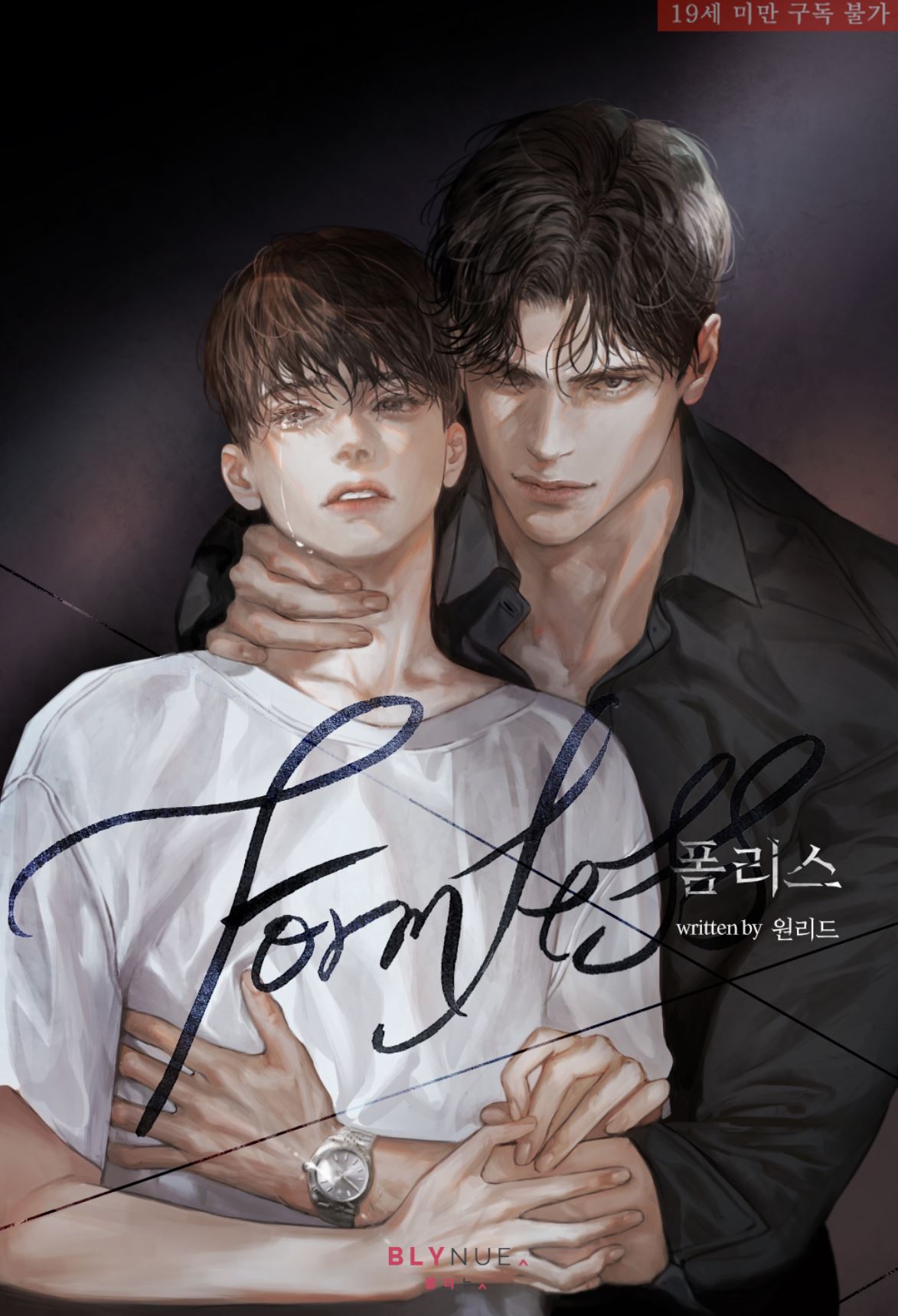
... Read More
"How can you act like this outside? What if other bastards get to you? I've been worried a lot lately." This line absolutely destroyed me. Kangwoo reaches out to tidy Heewoon's bangs, fingers brushing his forehead, and just... snaps. The protective instinct comes out raw and unfiltered. He's been watching Heewoon struggle through last year — the grade obsession, the despair, the feeling of wanting to abandon all hope — and now he sees this version of Heewoon who's actually thriving, who sends him food pictures without being asked, who smiles faintly when he thinks about Kangwoo being the reason things are going well. And then Kangwoo tries to say something meaningful and completely botches it: "But seeing you today..." Heewoon holds his hand and stares at him, and what comes out is "How pretty." Not deep. Not profound. Just... pretty. And it's the most honest thing Kangwoo could've said. Their dynamic here is pure soft boyfriends who express care through tiny gestures. The head pats, the cheek pinch, the finger stroking eyelashes, the nose kiss. Kangwoo even asks Heewoon to make an unreasonable request just to see how far he'd go. When Heewoon asks about joining a job study group and an academy, Kangwoo's whole demeanor shifts from teasing to immediately supportive. The frown, the hesitation, then the soft "You can." That's a man who would move heaven and earth for this person. The only complaint I have is that we don't see Heewoon's internal reaction to all this tenderness — it's all external action. But maybe that's the point. Heewoon barely knows how to process any of this himself.
... Read More
The imagery in this section is INSANE. Let me paint it for you: Dust floating in dim light. That's the opening shot — an almost poetic, quiet moment before the violence. Kangwoo's face half in shadow, Heewoon watching from behind a crate like some kind of prey animal. And then the bloodstain on Kangwoo's clean pants from the earlier grab, 'a dark bloodstain' — already the violence has touched him before we even see it happen. And then the knife goes in and the text doesn't flinch: 'Blood gushed from the man's neck like a fountain.' But what hits me most is the sensory detail AFTER the stabbing — Heewoon looking at the dying man's hand 'shapeless and distorted, scrabbling helplessly on the ground.' Then later, 'Red blood was slowly crawling toward his sneakers, as if being controlled.' AS IF BEING CONTROLLED. That phrase alone gave me chills. Blood as something alive, something obeying. The grasshopper buzzing in the vast silence afterward — that tiny sound against the enormity of what just happened? Chef's kiss. The setting feels claustrophobic despite being a 'vast space,' and every visual detail is saturated with this grimy, cinematic darkness. I could SEE this as a webtoon panel. I absolutely will.
... Read More
I need to talk about the structural way this chapter uses the leader's accident as both plot engine and emotional pressure valve. On one hand, we have the actual plot thread: the leader is hospitalized with a broken arm, there's insurance money involved, and Jihwan is casually mentioning future chicken-and-pizza hospital visits like this is all very normal. The text says "He felt a bit relieved. He knew he shouldn't feel relieved, but he did." And that single sentence — that's the entire subtext of this novel right there. Something bad happened to someone important, and Heewoon's first instinct is relief that it wasn't him. That's trauma response written without a single melodramatic adverb. Then the chapter pivots almost seamlessly from that darkness into a domestic scene — studying together, stolen pinky touches, the whole "we haven't seen each other for a few days" routine. It's like the author is saying: the world keeps breaking things, but here's a warm cup of coffee and a sandwich and someone who knows how you take it. The interrupted kiss at the end is the classic cliffhanger, sure, but I appreciate that it's not some dramatic reveal — it's just life knocking. Someone at the door during an intimate moment. The story knows how to balance the heavy stuff with the mundane without either feeling weightless.
... Read More
I need to appreciate Seo Kangwoo's dialogue for a moment because the author has given him a VOICE and it is distinctive as hell. Listen to how Kangwoo speaks versus how everyone else speaks. His lines are long, unapologetic, and they land with this casual cruelty that's actually kind of mesmerizing. When he says "I don't like playing hard to get" — it's so simple but it carries the weight of someone who has never had to soften his words for anyone. He states his desires like facts. That's the Kangwoo brand. And Heewoon's voice is the perfect counterweight. His dialogue is fragmented, hesitant, full of ellipses and trailing off. "...Is it not..." "...Yeah." "...I won't play hard to get." Heewoon barely gets to finish a sentence before Kangwoo is already three steps ahead. But here's what I love — Heewoon DOES start fighting back. That line where he writes 'Yeah' under Kangwoo's note instead of just nodding? That's growth. That's someone slowly finding his voice in a relationship where he's always been the quieter one. The note-writing as dialogue is such a clever narrative device. It lets us see thoughts that characters wouldn't dare speak aloud. Kangwoo can be brutally honest on paper what he would never say face-to-face. And Heewoon's written responses are where his real personality shows — thoughtful, careful, but increasingly assertive. "You're not even a squirrel." — this line is everything. It's playful, it's teasing, it's Kangwoo being weirdly affectionate without ever saying the A-word. And Heewoon's response about the notifications shows he's been thinking about Kangwoo's comfort too, even while being terrified of him. The dialogue between these two is layered with subtext on every single line and I am obsessed.
... Read More
I've been thinking about the imagery in these chapters and it's actually surprisingly rich if you look close enough. Blood — everywhere. Hyukjin's blood, Kangwoo's blood on his hands, the blood dripping from his forehead. But also, that 'shimmering on the floor like tiny pieces of glass' — is that blood crystallizing? Is it metaphorical? The author keeps returning to visual details that refuse to let you look away. Then there's the macaron. Sweet, delicate, French pastry — placed right next to broken bones and facial trauma. Kangwoo eating it earlier, dropping it, Heewoon swallowing it off the desk, and then Kangwoo gifting him a whole box. This cycle of sweet things appearing and being destroyed or consumed in desperate moments keeps happening. The abandoned factory setting itself is symbolic too — Heewoon thought he was in a study room filled with books (knowledge, safety, order) but he was actually in a dusty dark factory (violence, chaos, raw power). The setting shifts mirror the thematic shift: this story isn't about academics anymore, it's about survival. And that question Kangwoo asks at the end — 'is there another bastard like him around?' — feels like it's really asking 'am I the only monster in your life, or are there more?' The themes are stacking up and I can feel the story building toward something massive.
... Read More
Okay can we talk about how the author is systematically stripping Heewoon of every escape route and I am LOVING it? Let me walk through this because the plot engineering here is genuinely impressive. First layer: the personal crisis. Heewoon comes back from the military, physically and socially adrift, and already he's showing signs of something worse going on — the puffy swollen face that makes Kangwoo touch his eyelids gently. That's not just an injury, is it? The text deliberately withholds what happened but makes us feel the aftermath. Second layer: the academic pressure cooker. Group projects, presentations, exam schedules — it all lands on top of each other. Hyukjin signs up but ghosts them immediately, then Kangwoo announces their presentation is the week before finals. The author is stacking obstacles like someone who wants to see this character completely cornered. And Heewoon has NONE of this under control — no money, tutoring jobs, midterms, a body that apparently got roughed up. Third layer: Kangwoo. This is the most interesting plot design. Kangwoo shows up, remembers Heewoon's schedule, sits with him at lunch daily, has his number saved with the pet name [Heewoonie], and seems genuinely concerned. But then — right when Heewoon is trying to eat dinner in what should be a safe domestic space — Kangwoo drops: "It's been a week since we had sex." AND "Is your hole fully healed?" That isn't romance. That's a plot detonation. The tension architecture here is tight. Everything converges in this one dinner scene — academic stress, financial stress, physical recovery, emotional confusion — and Kangwoo weaponizes it all by reminding Heewoon that their last encounter might have been more complicated than Heewoon allowed himself to believe. The author is building toward something and I genuinely cannot tell if it's going to break Heewoon or save him.
... Read More
Okay so I need to talk about the library scene because this is actually brilliant plot engineering and I almost missed how layered it was on first read. Heewoon gets a chocolate bar with a sticky note that says 'I want to get to know you!' and he's visibly bothered by it — pushing it away, moving his chair, turning his body completely away. Then this person keeps touching his arm, writing notes asking him to dinner, and finally grabs his arm. Heewoon turns around and... it's Kangwoo. Just Kangwoo, sitting there laughing behind his hand. At first I was like what the hell is Kangwoo doing harassing his own boyfriend, but then it hit me — Kangwoo knew someone was bothering Heewoon, showed up to handle it without Heewoon even having to deal with the awkwardness alone. He even threw away the damn chocolate before they left. 'You like chocolate but you didn't eat it. Good job. From now on, don't eat things others give you.' That's not jealousy, that's protection wrapped in a casual tone. And the timing — Heewoon didn't even realize it was 5:50 PM until Kangwoo pointed at the clock. He was so absorbed in studying that he lost track of time entirely. Which actually loops back beautifully to how his entire arc this chapter is about things finally flowing smoothly for him. The past Heewoon would've panicked about this situation. Present Heewoon just deals with it and moves on.
... Read More
"The ring was gone." Five words that carry so much weight. This chapter is really about more than just a stolen piece of jewelry—it's about identity, possession, and what happens when the visible symbols of love disappear. Those couple rings were never just accessories. Kangwoo wanted Heewoon to wear them "even when you wash," which is such a specific kind of devotion. It's about permanence, about not hiding. And when the ring vanishes, it's not just an item lost—it's a piece of their public commitment stripped away. Heewoon's panic about telling Kangwoo reveals the power dynamic underneath their relationship. Kangwoo gives; Heewoon receives and worries he's not enough. The Italian setting amplifies this—Rome, with all its history and grandeur, becomes the backdrop for something painfully small and personal. The contrast between the eternal city and the temporary nature of their happiness.

Leave a comment

You must be logged in to leave comments. or
