Flying Dust [Fei Chen] - Reviews

Flying Dust [Fei Chen]
+Add to Custom List
Sort
Add review
... Read More
I need to talk about this formation scene because WOW. The 'Buddha's Light' formation of Ding Chan Temple — described as 'dozens of swords Qi coming down like an inescapable net' — this is one of those visuals that just LOCKS into your brain. It's not just a cool description, it's thematically perfect because the formation uses SWORDS, which in this world are supposed to be weapons of martial artists, but the Buddhist monks have literally turned them into a cage of judgment. The image of a net made of light and steel descending on Jun Wushuang felt suffocating just reading it. And then Mo Fei Chen's Flying Dust sword — 'like a light touch of a floating cloud, but when it fell, was as heavy as an exhausted stone.' That's not just poetry for poetry's sake, that's worldbuilding through combat choreography. The sword style itself tells us something about the philosophy of this martial world. His technique carries that contradiction of weightlessness and devastating heaviness, which mirrors how Mo Fei Chen himself operates in this story — soft on the outside, brutal when pushed. The Fu Mo Courtyard setting where this whole confrontation happens is also doing heavy lifting. Wu Liang Chanshi's back foot hitting the wall, the wall crumbling 'like powder except for the place where Wu Liang Chanshi was standing' — the spatial awareness here is so precise, you can feel every foot of distance. This isn't a vague battlefield, it's a confined courtyard with walls, corners, specific positions. You can see it like a movie scene. And Lu Qingmo's entrance! 'A sword Qi came out like splashing ink, smooth and natural, but with a great air.' The contrast between the golden Buddhist sword net and this dark, ink-splash sword energy — the visual language of this book is incredibly strong.
... Read More
I came for the cultivation battles and the sword rankings, but honestly? It's the quiet stuff that wrecked me this chapter. Not the grand gestures. Not the dramatic reveals. It's this: Wen Qian Liu reaching out to straighten Lu Qingmo's lapel. That's it. That's the moment. In a room full of sect leaders performing power dynamics and everyone wearing masks, one man adjusts another man's clothing like it's the most natural thing in the world. And Lu Qingmo—this guy who walks into formal gatherings drunk and mocking and untouchable—reaches back, holds Wen Qian Liu's hand, pats it, and says 'as long as you're happy, I'll listen to you.' That's the emotional core of this entire chapter, right there. Two people who have built entire personas for the world to see, but in this one gesture, they drop the act completely. No audience matters. No politics matter. It's just... them. And Mo Fei Chen notices. He doesn't say anything about it out loud—he's more focused on eating and getting poked by Li Du's chopsticks—but he SEES it. And that observation matters because Mo Fei Chen is the kind of reader you trust. He doesn't miss things. Then there's the He Yunfeng moment, which hits completely differently. 'Unfortunately, Lord Manor Wen will take this drink on behalf of He Yunfeng for me!' The word 'unfortunately' does SO much work here. It's not a boastful toast. It's not a challenge. It's an acknowledgment of absence. Someone isn't here, and Lu Qingmo is making sure everyone knows it. That's grief dressed up as etiquette. What I love about how the author handles emotion is that nothing is stated directly. Nobody says 'I love you' or 'I'm sad' or 'I'm worried.' They adjust lapels. They hold hands. They make strategic toasts. They sneer while bowing. And somehow it's more powerful than any dramatic confession could be. The friendship between Mo Fei Chen and Li Du is also sweet in its own low-key way—Li Du keeping poke him with chopsticks to show him things, the whispered gossip, the shared experience of watching a spectacle unfold. It's not dramatic either. It's just... two people enjoying being together at a weird dinner party. This book understands that the most emotionally resonant moments aren't the ones with the biggest dialogue. They're the ones where people show up exactly as themselves with someone they trust, while the rest of the world performs. And that's worth crying over at 2 AM.
... Read More
Let's talk about the embroidered character on those old clothes. Yu. 于. Or wait — is it 玉? The text is ambiguous but the context screams it: this is a garment connected to Yu Jin, the person from He Yunfeng's past who clearly meant something enormous. He Yunfeng gave Mo Fei Chen clothes that once belonged to someone else, clothes bearing the name of a lost love, and Mo Fei Chen has no idea what he's holding. The symbolism is almost painfully layered. The clothes represent: (1) He Yunfeng's inability to let go of his past, (2) Mo Fei Chen's unwitting role as a substitute vessel for emotions neither of them can name, and (3) the cyclical nature of attachment itself — Mo Fei Chen plans to pass the clothes to a new junior disciple, reproducing the same gesture of care that He Yunfeng just performed, unaware that he's continuing a chain of deferred longing. Then there's the tea writing at the end. He Yunfeng writing "Fei Chen" on his table with his fingertip dipped in tea — a name that will evaporate as the tea dries. The impermanence of it all is devastating. He can summon qi that cuts through air, can withstand months of brutal training, can maintain perfect composure in front of disciples — but he cannot hold onto a name written in liquid that will disappear on its own. The recurring motif here is invisibility. Invisible sword qi that Mo Fei Chen can't produce. Invisible emotional undercurrents between master and disciple. Invisible past lives shaping present attachments. Even Chang Yu herself is almost invisible now — faded, diminished, a ghost in a brothel room who can no longer provoke desire or grief, only a sigh. This story keeps asking: what happens to the feelings we can't see, can't name, and can't release?
... Read More
Let me just say: He Yunfeng is the most frustratingly restrained character I have ever encountered and I absolutely adore him for it. Here's this man who retired from the martial world, who built his life around grief for a woman who may not have even loved him back, and yet the moment Mo Fei Chen pricks his finger on a wooden thorn — THE MOMENT — He Yunfeng is suddenly all business. Squeezing out the blood, holding his fingertip in his mouth, leading him down to the pool like his entire world has narrowed to that one tiny wound. "Let me see!" — four words and I am deceased. And then the dialogue afterward, when Mo Fei Chen is flustered and sputtering about melodrama while He Yunfeng is just... calm. Controlled. The master of the house, even in intimacy. He Yunfeng doesn't say anything vulnerable after that. He just redirects to practical matters. Classic. Absolutely classic. But here's what gets me: Mo Fei Chen is doing this whole thing too. Notice how he keeps trying to distract He Yunfeng from his melancholy? Making grasshoppers, playing games, joking around. He's acutely aware that his Shi Fu沉溺 in grief, and he's trying everything to pull him back. Who does that? Who observes someone else's sadness with this much tenderness and tries to fix it without ever admitting why? Their dynamic is this beautiful, terrifying dance where neither will name what's happening. They're two people who've been abandoned or have abandoned themselves, orbiting each other with this enormous gravity neither will acknowledge. And the author just lets it BUILD.
... Read More
I need to talk about this one specific moment where Mo Fei Chen is UP ON THE ROOF, quietly removing tiles to peek into Yu Jin's room, and then—a tile falls. It hits Yu Jin in the face. The tension, the silence, the dramatic pause, and then Yu Jin's EYES snapping open with bloodshot intensity while half-dressed? I literally had to pause and stare at my screen. The author wrote that scene with such vivid visual storytelling. First you've got the moonlight, the ornate courtyard, the distant sounds of singing and dancing from the main hall contrasting with the quiet intrigue on the eastern side. Then the tiled roof, the careful crawling, the holding of breath—every detail pulls you INTO that moment. And when the tile falls, it's like a horror movie jump cut except it's played for comedy. The image of Yu Jin on the bed, caught mid-act, eyes flying open, realizing it's his junior brother of all people—that is a picture I will NEVER unsee. Also the earlier part where Mo Fei Chen crawls under a wine cart to enter the brothel? That's the kind of ridiculous, specific detail that makes a scene feel alive. The world here doesn't feel like a generic cultivation setting—it feels like a lived-in place where a scrawny, shameless kid knows exactly which back entrance to use and how to navigate a bustling entertainment district on foot.
... Read More
I need to praise the dialogue here because it's doing heavy lifting without anyone giving a speech. Lu Qingmo's voice is dry, practical, but with a softness he never names. When he says "Don't catch a cold," it's not romantic—it's caretaking. When he says "For forever, you need not to say thank you to me," it's almost teasing, but the weight is there. He's not promising forever in a poetic sense; he's saying our ledger is balanced. We're even. Mo Fei Chen's dialogue is shorter, often trailing off or changing subjects when emotions get too close. "Madam Qu's handicraft is really good!"—deflection. "This is definitely not only just a matter between you and Bai Xue Cult."—because his mother and sister are sleeping, not waking up. He doesn't say that last part out loud, but it's in every line. Qu Shaofeng's voice is elder-statesman formal, full of duty and restraint. "If anything bad happens to you after this, this old man…" He trails off because he can't finish the threat or the plea. It's perfect. And Ye Su's entrance? We don't get her dialogue yet, but the description of her—"a woman draped in black coloured overcoat in her shoulder elegantly approaching the door, slowly taking off the brim of her hat to reveal her beautiful and elegant face"—sets up a contrast to the wuxia trope of the disfigured poison woman. The text even references He Hong Yao and Zhu Erl, characters whose faces were ruined by betrayal. Ye Su might be the exception, which makes her more dangerous. She doesn't need to look broken to be broken. What I love is how no one talks in circles. Every line advances either plot or character. Even the silence between them says something. When Mo Fei Chen holds his wrist and Lu Qingmo meets his gaze, not a word is needed. The dialogue trusts the reader to feel what isn't said.
... Read More
Okay so let me just say this first: He Yunfeng's wrist. Mo Fei Chen's obsession with it. I am NOT OKAY. The author just casually drops that Mo Fei Chen's favorite part of He Yunfeng isn't his face or his eyes, it's the wrist bone. The shape of it gives him an indescribable feeling. And He Yunfeng knows this. He KNOWS this and he still lets Mo Fei Chen stare at his half-exposed wrist while propping his head up. The tension here is so thick you could cut it with a sword - literally, they've been practicing sword Qi for months. And then the whole departure scene. Mo Fei Chen asking 'will I come back?' like a kid who doesn't want to leave home, and He Yunfeng basically saying 'you joined Jianghu to leave Jianghu, don't you remember?' But then Mo Fei Chen pouts and says 'but when you're in Jianghu, how can you not suffer from the cut?!' and honestly I wanted to scream at both of them. He Yunfeng is sending him into danger and pretending it's fine, and Mo Fei Chen is scared but trying to play it cool. The fact that he just shook his head when He Yunfeng asked if he wanted to ask why he was being sent away - that's not acceptance, that's fear. Fear that he'll be told to stay and Mo Fei Chen will have to choose between his master and his own path. Also can we talk about how He Yunfeng predicted the ending before it even happened? 'You will forever be a speck of flying dust that doesn't know how to land.' That line hit me like a truck. He named the sword Flying Dust and then used it as a metaphor for Mo Fei Chen's entire existence - untethered, drifting, never able to settle. But also, the most beautiful thing in the world. Light, free, impossible to grasp. I'm crying.
... Read More
Okay, let me just sit with this for a second because the amount of calculated cruelty in this sequence is genuinely impressive. Ye Su doesn't just poison people—she weaponizes affection. She knows Mo Fei Chen would NEVER strike Lu Qingmo, so she puts the Gu worm in HIM. That's not just clever villainy, that's a deep, almost intimate understanding of their bond. And then the antidote trade? She hands over the Ten Days' Drunkenness cure in exchange for her OWN CRUPPED HAND. A literal severed limb as currency. When Lu Qingmo calls her bluff and tells her she'll have to come collect her own arm, she just... hums and leaves. No drama, no breakdown. She walks into the night protecting her broken wrist like nothing happened. That kind of composure under defeat is what makes a villain actually terrifying. The plot threading here is exquisite—three people poisoned with ordinary Gu worms (not the deadly kind Fei Chen had), the reveal that Wei Ping Lan and Li Du are likely ambushed by Bai Xue Cult, and the lingering question of who exactly is playing whom. Every rescue seems to unearth another trap. But honestly? The most satisfying beat was watching Mo Fei Chen himself step on the Gu worms after Lu Qingmo hesitated. Lu Qingmo was soft because of what Fei Chen suffered, but Fei Chen had zero patience for those things. 'It's really disgusting... that woman likes to do these things.' Classic Mo Fei Chen—immediately pivoting from trauma to pure revulsion. The plot is weaving layers upon layers and I am HERE for it.
... Read More
This sequence is a masterclass in tonal whiplash and I have so much respect for how the author handles it. It starts with a joke about ginseng and sister-in-law dynamics. Lu Qingmo is being snarky, Fei Chen is being lazy and deflective—light, almost comedic energy. Then it pivots to the pee scene which is genuinely funny (the Li Bai poem, the stream-is-the-milky-way joke). You're smiling. You're relaxed. And then Lu Qingmo drops the next-life proposal and for a second it feels like a sweet, slightly bittersweet moment. And then Fei Chen says He Yunfeng is the FIRST. And the tone CRASHES. Lu Qingmo stops. Pours his remaining energy into Fei Chen's sword seed. Shouts his name like he's trying to tear through flesh. And suddenly you're not laughing anymore. The pacing here is ruthless. The author lets you settle into comfort, then yanks the rug out. No warning. No foreshadowing in these chapters—the death threat arrives exactly when the emotional high peaks. That's why it hits so hard. The contrast between the casual tone earlier and the desperation at the end makes both moments stronger. If the whole chapter had been tense from page one, the He Yunfeng reveal wouldn't land nearly as well.
... Read More
There is this one image that has been stuck in my head since I finished reading—the abandoned tiny temple housing the village god, almost daylight, the three of them slipping inside like ghosts. The author does not go overboard with description but that is exactly why it works. You can see the dust, feel the chill of the early morning, sense the exhaustion in their bones. And then Jun Wushuang puts Mo Fei Chen's head against his shoulder and tells him to sleep. Just like that. The carriage scene too where Fei Chen refuses to squeeze in with 'Master Palace Liu' because of the whole men and women不应共处 rule—except Jun Wushuang immediately turns it around and says men together could also be dangerous. The humor lands because the world feels lived in, not constructed for the plot. Even the guards complaining about having to whip Yu Jin while the Vice Leader stays clean adds this texture of bureaucratic laziness that makes the Jing Shui Sect feel like a real organization with real dysfunction. And then the secret room smell of mold and dirty water pulling at his nostrils—the transition from warm carriage to that damp darkness was jarring in the best way.
... Read More
“Li Du spit out a mouthful of blood, scaring Mo Fei Chen's heart.” That single sentence made my stomach drop. Not because it was gruesome—but because of the way it landed right in the middle of everything, like a punch to the chest. Mo Fei Chen rushing up to him, following Wen Qing Yuan to examine his injuries, making tea, helping him drink—these small domestic moments amid a violent tournament scene. That contrast. That tenderness. It ruined me. I kept thinking: how many times has Mo Fei Chen been there for Li Du before? How many quiet nights of worry, secret meditations, unspoken fears? And now we see it all in one arc. The friendship between these two isn't flashy. There's no dramatic declaration, no grand speech about brotherhood. Just action. Mo Fei Chen doesn't yell at Meng Yu; he goes to get medicine. He doesn't threaten revenge publicly; he waits until nightfall, changes into dark clothes, and sets off alone. That's the kind of care that doesn't need an audience. Meanwhile, Lu Qingmo watching from the sidelines with “eyes full of smiles” while the tense battle unfolds—there's something almost tender about that too. He's not detached; he's present in his own way, enjoying the spectacle but clearly invested in outcomes. And Wen Qing Yuan's quiet intervention with Mo Fei Chen, whispering in his ear—that's intimacy without romance, platonic love that runs deeper than most relationships in fiction ever do. What got me was the ending. Jun Wushuang telling Mo Fei Chen he'll punish Meng Yu, and Mo Fei Chen's internal response: “You deserve to be called Jun Wushuang.” That's affection disguised as sarcasm. Pure. Simple. And when Mo Fei Chen goes out into the night alone to confront Meng Yu—not for glory, not for victory, but because he can't let his friend suffer alone—that's where the emotional core sits. This story doesn't sell grand romantic gestures; it trades in quiet loyalty, in hands that reach out when swords fall, in friends who become family without ever naming it. The scene where Li Du sits cross-legged on the bed exercising his Qi to heal—and Mo Fei Chen makes tea beside him—that's the kind of moment that stays with you. No drama, just presence. Presence is everything.
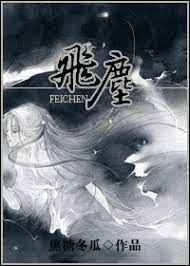
... Read More
There's a ton of symbolism packed into these chapters and it's quietly devastating. Let me break it down. The opening idiom — "only when the melon is ripe can it be removed with just a slight twist" — is basically the thesis statement for everything that goes wrong here. Forced arrangements don't work. Ye Su's entire operation is built on forcing things: forcing Yu Jin into suspension, forcing Mo Fei Chen into impossible choices, forcing the inn to become her personal dungeon. Meanwhile, Li Du says it directly: "persons who walk different paths, go separate ways." He and Mo Fei Chen used to be close, but now they walk different roads. That's not just plot — that's about how the world splits people who can't agree on what's right. And the threads. Those silk threads aren't just weapons. They're control. Ye Su holds them and Yu Jin becomes her puppet. Blood seeping from tiny wounds while he hangs helpless. Meanwhile the Gu worms — those tiny insects emerging from rat corpses — represent how corruption spreads. Something dies and from its decay, new horrors are born. Ye Su raised those worms. She cultivates them. The whole Xi Yu connection suggests this is an imported evil, a contamination of the Jiang Hu world. And the frozen people in the inn — breath gone, time stopped — that's the cost of Ye Su's presence. She doesn't just capture individuals, she stops life itself in her wake. The book is really asking: when evil holds your friends hostage with invisible threads, what part of yourself are you willing to lose to cut them free?

Leave a comment

You must be logged in to leave comments. or
