Flying Dust [Fei Chen] - Reviews

Flying Dust [Fei Chen]
+Add to Custom List
Sort
Add review
... Read More
If Jun Wushuang were a flavor, he'd be pure chaos spice. This guy walks into every scene and immediately changes the energy. Let me just quote the best exchange: Jun Wushuang: 'Who says I've never seen a woman ah… to be as far as that.' Mo Fei Chen: 'I've been running for my life for the past few days and I've had nosebleeds from exhaustion!' Jun Wushuang: 'I think… the truth is you've been holding it in for too long… Why don't I help you then?' I'm dead. Absolutely deceased. The audacity. The casual way he slides into that suggestion like it's the most normal thing in the world, pulling Mo Fei Chen toward an empty room while Mo Fei Chen is still clutching the door frame like a lifeline. The dialogue here is doing SO much work — Jun Wushuang's voice is consistently wicked, playful, impossible to predict, and Mo Fei Chen's responses are always slightly flustered but never truly rejecting. And the narrative voice during these scenes has this wonderful comedic timing. Watch how the author builds it: first the woman comes out, then Mo Fei Chen stares, then the nosebleed, then Jun Wushuang rushes over to help in a completely different way than expected. The physical comedy of Jun pressing Mo Fei Chen's nose with his sleeve while whispering in his ear — it's slapstick but intimate at the same time. What I appreciate most is how each character has a completely distinct voice. Liu Feiying's philosophical quips about lotus flowers growing from mud sound like someone who actually meditates. Jun Wushuang sounds like he's one step ahead of everyone at all times. And Mo Fei Chen's internal monologue versus his spoken words creates this constant gap that's both funny and revealing. But I need to ask — is Jun Wushuang doing this on purpose or is he genuinely oblivious? Because the way he teases Mo Fei Chen about the nosebleed and then just pulls him toward that empty room feels very deliberate. Very calculated. Am I right about this or am I projecting?
... Read More
"What a great intention!" Kemoluo says this with such dismissive venom and I love her for it. But let's talk about Mo Fei Chen because this kid has become my favorite character and I don't even know why. He says things like 'Pah, pah, pah, it's not that heroic!' in the middle of a hostage situation and it's the most honest thing anyone says in the entire passage. His voice is unmistakable—everywhere. While Liu Feiying is delivering solemn declarations about demonic martial arts and protecting the Jiang Hu, and Jun Wushuang is being the noble protector, Mo Fei Chen is over there narrating his own disbelief at what's happening around him. And the dialogue between the factions is genuinely good too. Liu Feiying's speech about how the Jing Shui Sect is 'no longer unusual'—that's not just exposition, that's a verdict. She's watching them cross a line from secretive to demonic in real time and calling it out. Meanwhile the Jing Shui Sect guy's response is perfectly cold and scripted: 'neither wishful thinking or vain attempt is not something that this subordinate has the right to interfere with.' He's a true believer in his cause, which makes him more dangerous than a cartoon villain. The author gives each faction their own rhetorical style—Liu Feiying speaks in principles, the antagonists speak in duty, and Mo Fei Chen speaks in pure unfiltered reaction. That contrast keeps every conversation vibrating with tension even when nobody's swinging swords yet.
... Read More
Okay the stakes here are layered in a way that keeps getting richer. On the surface Kemoluo is chasing them—she injured Liu Feiying, she knows Fei Chen's face, she is out there somewhere. But then Fei Chen has his own parallel conflict: he needs to find someone in Qiu City, someone connected to the Jing Shui Sect, someone named Yu Jin who is about to be punished. He is sneaking into enemy territory alone while his friends are hiding in a brothel two days away. The tension between these two threats—the external pursuit and the internal mission—creates this constant low-grade panic that never lets up. What if Kemoluo finds them before he finishes his business? What if he gets caught in the secret room? What if Jun Wushuang figures out who he is really looking for? And underneath all of that there is the emotional conflict of Fei Chen wanting to protect everyone but also needing to disappear for a while to deal with his own past. The guards mentioning that Yu Jin is still 'Protector of the sect' even while being imprisoned tells us this person matters—someone important is in that dungeon and Fei Chen is risking everything to reach them. I am invested. I am so invested.
... Read More
The wine motif in this chapter is doing SO much heavy lifting and I'm obsessed. Lu Qingmo tells the story of his first time drinking Jian Ci wine—he took a sip, spat it out, and it sprayed on Wen Qian Liu's body. Think about what that means. A shared intimate accident from years ago, a moment of closeness between them, and now here they are, ten+ years later, with Wen Qian Liu holding his newborn son and Lu Qingmo sitting alone in a bamboo forest. The wine has come full circle. They're drinking the same wine now, on a boat, under moonlight, and the ghost of that spilled drink hangs between them like everything unsaid. Mo Fei Chen trying to pull Lu Qingmo away from his mourning, offering drunken freedom—it's almost like Mo Fei Chen understands on a primal level that the only way through this is to get lost in the moment. The recurring question of what it means to be 'free, unrestrained and unruly' ties into this too. Lu Qingmo was described by others as those things, but Wen Qian Liu is the one who 'made it impossible' for him to actually be any of those. How does someone cage another person without using chains? With love, apparently.
... Read More
The way this story establishes its world without infodumping is actually insane. You've got this entire martial arts sect operating on a mountain manor - Kun Yun Mountain Manor - and we learn about it through tiny, organic details. Mo Fei Chen going to the stove room to grab steamed buns and accidentally eavesdropping on senior disciples gossiping. The five-year martial arts assembly. Yu Shi Xiong who left and became Protector of Jing Shui Sect. All of this worldbuilding happens while the protagonist is literally just trying to get dinner. And the training montages! Month one: Mo Fei Chen can only intermittently form his sword Qi, and he's so frustrated he wants to go up to He Yunfeng and bite him. Month two or three: he's already using invisible sword Qi with ease. The progression feels earned, not rushed. He Yunfeng's teaching method is basically psychological warfare - making Mo Fei Chen suffer first so he'd appreciate the tips more. 'If you do not suffer, how can you appreciate what I have taught you?' This man is a menace and I love him for it. The evening scene in the hut is so atmospheric. Oil lamp light filtering through the shadows between He Yunfeng's eyes and eyebrows. Chess games. Steamed buns and salted vegetables. It's domestic, quiet, intimate - and then Wen Qing Yuan shows up and shatters it. The contrast between the cozy mountain life and the incoming tournament drama is everything. You can feel Mo Fei Chen's heart thumping just from the shift in atmosphere. The world feels lived-in, real, like these people actually exist somewhere beyond the pages.
... Read More
Let me just lay out the threat landscape because it is genuinely stressful. You have the murderer of Liu Feiying still at large — that's the baseline mystery, the ticking clock that hangs over the entire sect. Then you have Cheng Yuran maneuvering politically, convincing Mo Feichen to take the Palace Master role not because she believes in him but because Yue Er would destabilize everything. She literally tells Wang Shuzhen it's about appearances and authority. Then there's Jun Wushuang, who has infiltrated Mo Feichen's quarters while he was literally sleeping, who can suppress his true qi through skin contact, who once required Liu Feiying and Great Master Wu Liang to join forces to defeat, and who is currently dislocating Mo Feichen's wrist while asking him what he needs to hear to feel loved. And I haven't even mentioned whatever sect politics led to Liu Feiying being killed in the first place. The stakes here are stacked on top of each other like cards in a house of fire. What makes it work is that Mo Feichen seems mostly aware of all of this. He's not naive about the political play — he accepts conditionally, with an exit strategy. But the physical danger from Jun Wushuang feels different, because you can't strategize your way out of someone who already knows your body and your habits. The collision of sword qi at the end — that was Mo Feichen's first real attempt to fight back, and it got him punished for it. So what does he do next? Fight harder and get hurt more? Or play along with Jun Wushuang's games to survive? Neither option feels good and that's exactly why I'm invested.
... Read More
I want to focus on the atmosphere in these chapters because the author really knows how to paint a scene without overdoing it. The opening image of Mo Fei Chen rappelling down the cliff path at the back of the mountain—grabbing that hemp rope, swinging toward the bottom of the valley, not knowing where the water ends and the shore begins in the fog. You can feel the cold mist on your skin. You can hear the rope creaking. It is cinematic in a way that few wuxia novels manage. And then the cave. He Yunfeng lying in that ice coffin, the 'Liang Yu' not feeling as cold this time because Mo Fei Chen has been practicing his master's cultivation method. The author turns a physical sensation into a metaphor without ever saying it outright: the cold is not so bad anymore because he has learned to absorb it, to let it become part of him. That is worldbuilding at its finest. There is also the manor itself, which feels increasingly claustrophobic. Wen Qing Yuan, usually relaxed with his tea and books, now stands alone in the courtyard at night. The older disciples are on inspection tours. Something is wrong, and the setting itself reflects that unease. The most striking image for me though is the moment Mo Fei Chen finds that blue coat and discovers the embroidered character hidden inside. The fabric itself becomes a time machine. A piece of clothing carrying the memory of another person, another era, pressing against his body as if Yu Jin had just stepped out of it centuries ago. The world feels lived in, layered, haunted by the past in the most beautiful way.
... Read More
Let me be clear about the stakes here because they're layered in a way that most stories don't attempt. On the surface, Mo Fei Chen was poisoned. He survived. He's recovering. That's a medical crisis resolved. But the author immediately complicates this by revealing that the poisoning wasn't random - it was calculated, targeted, politically motivated. The Bai Xue Cult kidnapped Qu Shaofeng's daughter Xiruo. They used poison needles developed by Ye Su, a woman who left the cult years ago but apparently maintains connections. Their goal wasn't just to harm - it was to control. To hold Qu Shaofeng hostage through his daughter, to force him into an alliance or submission. And when that didn't work perfectly, they poisoned Mo Fei Chen, who had saved Xiruo's life. The message is clear: cross us and we'll target your allies too. But the stakes go deeper than immediate physical danger. Mo Fei Chen possesses knowledge - he learned from Li Bilian about Wen Qian Liu and the Qian Yun Sword. Wen Qian Liu knows this. He says so explicitly: "I guess he might have already learned from Li Bilian how I was able to attain the Qian Yun Sword, so I can't let him be alive and see He Yunfeng again." This isn't just about revenge or eliminating a witness. It's about control of narrative, control of history, control of who gets to tell the story of the martial world. And the tournament - the gathering of righteous sect leaders - is happening now. Letters are being intercepted. Allies are arriving late. The conspiracy is active, ongoing, spreading. Every delay, every missed arrival, every intercepted message is another thread in a net being pulled tight around Mo Fei Chen and everyone he cares about. What makes this conflict so tense is that Mo Fei Chen is largely unaware of how close he is to death. He wakes up groggy, receives kind treatment from strangers, feels gratitude and warmth, and has no idea that two people in a sealed room are discussing how to murder him. The reader holds knowledge that the protagonist doesn't, and that dramatic irony creates a sustained tension that's almost painful. The stakes aren't just life and death - they're about truth and power. Who controls the story of the Qian Yun Sword? Who leads the martial world after He Yunfeng? What happens to the righteous sects if their allies are systematically eliminated? These questions hang over every scene like a blade. And the worst part? Mo Fei Chen is resting. Recovering. Smiling at the thought of Madam Qu's kindness. He has no idea that the people who should be protecting him are being maneuvered against him by people who wear smiling faces and speak in gentle voices.
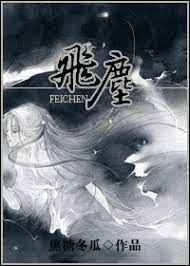
... Read More
The imagery in these chapters is something else. Let me just start with the basic geography because apparently this entire plot runs on someone's ability to rappel down a cliff face with a thumb-thick rope. We have Jing Valley — a closed valley with a cliff that's too high to climb, an underground palace below it, and a secret passage that leads to Jun Wushuang's room. Yu Jin found the house by looking down from the cliff face after following a bird with a cloth tied to its leg. That is a remarkably specific chain of events and the author treats it completely casually, which I think is brilliant. The underground palace itself — described as large enough that Wen Qian Liu had to search for a long time before finding Jun Wushuang's room. There's wall fire lighting, a secret passage, food boxes being brought in. It feels like a wuxia version of a penthouse suite that someone built specifically to imprison the person they're also sleeping with. The domesticity of it all is what makes it unsettling. Lotus seed cake, chestnut shortbread, pork knuckles in sauce, marinated pork belly, cucumber salad with dressing. A WHOLE SPREAD for a captive. And then Wen Qian Liu stepping out from the wall fire light like a ghost — the visual of him emerging from darkness into the lit space where Jun Wushuang has been hosting dinner for his prisoner is incredibly cinematic. You can literally see the frame. The author writes this wuxia world with such grounded sensory detail that every scene feels tangible, which makes the emotional cruelty hit even harder.
... Read More
"Since you paid for the banquet, I must at least get that braised hare back." — I am DEAD. Mo Fei Chen gets dragged out by his collar, his brother is threatening him, and his FIRST thought is FOOD. This is a man who has his priorities straight. And the dialogue between these two? Flawless. You can TELL them apart without any tags. Yu Jin is all sharp edges and quiet intensity — "I envy you, Fei Chen. I envy you for not wanting anything." That line hit me like a truck. It's jealous, it's honest, it's the kind of thing you can only say to someone you've known for ten years. And Mo Fei Chen's response? Reciting poetry like it's nothing, like he's not literally about to lose his best friend. The master too — Wen Qing Yuan just appears out of nowhere and drops this philosophical bomb: "A cup of wine, a pot of tea, a book... all of it can be Jianghu." Not "Jianghu is out there" but "Jianghu is in your heart." And Mo Fei Chen's reaction is just... confusion. He has a vague feeling it's deep but he can't unpack it yet. Which is PERFECT because he HASN'T BEEN TO JIANGHU YET. "Mo Fei-Chen! You deserved to be killed by a thousand knives!" — I'm still quoting this in my head. The banter is so natural it feels lived-in.
... Read More
I need to talk about Lu Qingmo because this guy is absolutely radiating main character energy even while tied up and powerless. There's this one line where it says he 'seemed to have seen him and frowned slightly' and then he's mouthing 'Go now!' to Mo Fei Chen. The fact that he's communicating silently while captured, the casual frustration in that frown — it tells you everything about who this person is. He's the type who would rather die than make a scene, who cares about dignity even when he has zero power in the room. And then later when Mo Fei Chen goes back in specifically to rescue him, and Lu Qingmo's first words are basically still useless because he's bound — the dynamic between these two is gorgeous. Lu Qingmo is described as 'this cheap big brother of his,' which is such a specific, affectionate insult. It's the kind of thing you say about someone who's always getting into trouble and you're always cleaning it up, but you'd never actually admit you care. Mo Fei Chen's internal monologue is also delightful. 'Yu woodenhead (blockhead)! I shouldn't believe you were a good person! You are entirely a wood!' The fact that he switches to calling Yu Jin a 'woodenhead' as his primary emotional response to betrayal is peak character voice. He's furious, panicked, his friends are captured — and his brain goes to 'you're a block of wood.' That's not a rational response, that's a tired response. And it's so human. The servant girl who delivered the tea and then immediately reports to Yu Jin is a nice touch too — she's practically invisible until the reveal, which makes her betrayal land harder. Small characters with clear functions, no fluff.
... Read More
I need to talk about Yu Jin. That's it. That's the review. He doesn't appear in these chapters. He's not in the room. We only hear about him through Mo Fei Chen's interrogation and through Mo Fei Chen's very specific, very chaotic emotional reaction to knowing where Yu Jin is. And yet, this entire sequence of events — the infiltration, the ambush, the fight — is motivated by one question: WHERE IS YU JIN? The most emotionally honest moment in this whole batch isn't a fight scene or a revelation. It's this: Mo Fei Chen threatening a man with torture, building up this whole performance of sadistic menace, and then the actual reason he's doing it drops like a stone: "I recently fell for your guy's protector Yu Jin, that good looking appearance and that great body, but in the end, without good reason he insists on dumping me." On the surface, it's a joke. It's Mo Fei Chen being ridiculous, deflecting, wrapping something vulnerable in layers of performance and threat and comedic exaggeration. But read it again. He fell for someone. That someone chose someone else. And now that someone is being punished by an enemy sect and Mo Fei Chen doesn't know how bad it is and he's going to move heaven and earth to find out. That's not a side plot. That's the emotional backbone of everything happening here. Every ambush, every sword strike, every disguised disciple in this village — it's all filtered through one person's refusal to let Yu Jin face anything alone. And then there's the small detail that wrecked me: Mo Fei Chen doesn't kill the disciple he interrogates. He knocks him out, puts his pants back on, carries him to a river, and sets him adrift on a raft. "Bye-bye." The casualness of it is almost tender. This is a man who can threaten people with dismemberment in the same breath as showing mercy he'll never admit he's showing, and that contradiction is what makes everything he does feel so painfully human.

Leave a comment

You must be logged in to leave comments. or
