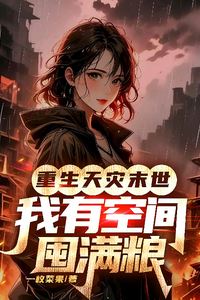
Fleeing Famine: I Rose to Godhood Through Farming and Breeding
+Add to Custom List
Genres:
Novel Info

Summary

... Read More

Lin Zhaozhao, a survivor of a post-apocalyptic world, transmigrates into the body of a weak, timid widow in an ancient Chinese setting. She awakens in a shabby hut to find her mother-in-law, Xu Juanzi, and brother-in-law, Li Zhong, attempting to steal the jade pendant left by her deceased husband, Li Yu, and his fifteen taels of silver pension. When Zhaozhao refuses, they assault her, causing her to hit her head. Upon regaining consciousness, Zhaozhao realizes she has inherited the memories of the original owner and recognizes the situation from a novel she read in her previous life. She is no longer the submissive woman who was bullied into death; instead, she is a capable individual with a mutated wood-type ability that allows for healing and purification. She escapes the hut and returns to her natal family, the Lin household, where she is greeted by her fierce mother, Li Xiuyuan, and younger sister, Lin Yanyang. Zhaozhao reveals the abuse she suffered, and her mother violently defends her, beating Xu Juanzi and Li Zhong until the village head intervenes.

A confrontation ensues regarding Zhaozhao’s future and the unborn child she carries. Xu Juanzi attempts to claim the child as the heir to the Li family, but Zhaozhao and her mother refuse. Li Xiuyuan threatens to expose the Li family’s greed and abuse to the authorities, which would ruin Li Zhong’s scholarly ambitions. Under pressure, the Li family signs a severance document, cutting all ties with Zhaozhao. Zhaozhao then returns to the Lin family home, where she discovers she has brought her spiritual space with her. Inside the jade pendant’s inner world, she finds a spiritual spring, fertile land, and a mysterious mall app. She uses her abilities to purify food and accelerate crop growth, generating income to stockpile supplies. She learns that the world is facing severe drought, rising taxes, and an impending locust plague that will lead to famine.

As the locusts devastate the crops, the Lin family prepares to flee south to escape the starvation. Zhaozhao uses her spatial abilities to store vast amounts of food, clothing, and baby supplies, keeping her powers secret from most outsiders. During the journey, they encounter Lin Jinxiu, the novel’s protagonist and Zhaozhao’s cousin, who is also fleeing the disaster. Zhaozhao realizes that Lin Jinxiu deliberately withheld warnings about the locusts to ensure the Lin family’s downfall, mirroring the original plot where the main branch of the Lin family perished. Suspicious of Lin Jinxiu’s actions, Zhaozhao becomes determined to survive and protect her family. The group faces attacks from desperate bandits, including a nighttime ambush. Zhaozhao and her sister Yanyang defend themselves, with Yanyang making her first kill. Zhaozhao treats the wounded members of their traveling party, including Li Minghuang, using her healing abilities.

The journey grows increasingly perilous as resources dwindle and hostility from other refugees intensifies. Zhaozhao continues to use her space to grow food and raise animals, including pigs, chickens, and cattle, ensuring her family has a sustainable food source. She also crafts weapons and teaches her sister archery to prepare for further conflicts. The group encounters relatives from Shitou Village who are also fleeing, revealing more about the social dynamics and betrayals that have occurred. Zhaozhao maintains a cold distance from those who wronged her family in the past, including the Lin Village chief who facilitated the conscription that killed her husband. As they travel, Zhaozhao’s reputation for ruthlessness spreads, frightening those who might consider attacking them. She remains focused on reaching a safe destination, managing her debt from the spatial mall, and preparing for the birth of her child in a world on the brink of collapse.

Latest Release
DateGroupRelease
2026-08-11shanghai fantasy c36
2026-08-11shanghai fantasy c35
2026-08-11shanghai fantasy c34
2026-08-11shanghai fantasy c33
2026-08-11shanghai fantasy c32
2026-08-11shanghai fantasy c31
2026-08-11shanghai fantasy c30
2026-08-11shanghai fantasy c29
2026-08-11shanghai fantasy c28
2026-08-11shanghai fantasy c27
2026-08-11shanghai fantasy c26
2026-08-11shanghai fantasy c25

Community Reviews

Rating(4.4 / 5.0, 15votes)
5 stars
8(53%)
4 stars
5(33%)
3 stars
2(13%)
2 stars
0(0%)
1 stars
0(0%)

Popular reviews

... Read More
The locust scene is genuinely cinematic. Let me paint it for you: She's walking home, machete in hand, just finished building a grape trellis in her space. Half an hour of work, bamboo strips tied with grass rope, twenty meters of vine coiling around the frame. She's tired, she's eating grapes, and then—darkness falls. Not night darkness. A SHADOW. A deafening buzz that makes her scalp tingle. She looks up and the sky is moving. "A swarm of locusts sweeping across the sky, devouring every leaf in their path and leaving desolation behind." The word desolation. That's not just describing insects eating plants. That's the sound of a world ending. And then we cut to the villagers below, still unaware, still going about their day, and by the time they realize what's happening—"their crops were gone. All that remained was devastation." The locusts don't just eat. They erase. But here's what makes the worldbuilding sing: the contrast between the apocalyptic outer world and the lush inner world of her space. Outside: cracked soil, withered grain, starving villagers. Inside: golden rice stalks, fruit trees heavy with cherries and peaches, a spiritual spring that never runs dry. The text describes her walking among the trees and urging them to bloom again—"budding, blooming, fruiting"—and you can literally feel the life pulsing through that space. The bamboo forest behind the house, the wooden cabin, the four storage rooms, the spiritual spring in the center—it all feels like a sanctuary carved out of despair. And that trellis she built? Twenty meters of glossy black grapes like gemstones? That's not just worldbuilding. That's hope made physical.
... Read More
The stakes in these chapters are razor-sharp because the author keeps raising them just when you think things might settle down. Let me walk through the escalation: First, you have the mob attack — a direct, violent threat to the group's survival. These aren't abstract dangers; they're people with bowls, ready to charge, willing to overwhelm five families through sheer numbers. The scene where Zhu Sanzhuang tries to climb the mule cart and Zhaozhao shoots arrows at their knees to warn the rest — that's life or death tension. One wrong move and someone gets hurt badly. But then the author pulls the rug out from under you. The mob is repelled, everyone's safe, and immediately the next crisis hits: they've used up all their water. In a famine setting, water is more valuable than food. Food can be foraged; water sources are unpredictable. The fact that the water they should have had for two days is already gone creates a ticking clock. Every hour in the blazing sun is an hour closer to danger. What makes the conflict so effective is that the author never lets the characters breathe for too long. After the mob, there's the water crisis. After finding the spring, there's the realization that they still need to keep moving. After finding food, there's the problem of seeds and long-term planning. Each resolution immediately becomes the setup for the next problem. The internal conflicts are just as well-handled. Li Xiujuan's anger at her family isn't just about the mob — it's about fear masquerading as frustration. She's terrified for her unborn child, and that fear makes her lash out. Lin Fu's quiet patience in the face of her anger shows a different kind of strength. And Zhang Dandan's refusal to see her own role in the conflict creates a secondary tension that could explode at any moment. The highest-stakes moment for me is probably when the scouts from the ruined temple are described as 'ragged, pale, sunken-eyed, and intimidating.' These are people who have nothing left to lose, and the Lin and Li families know it. That knowledge hangs over every scene like a dark cloud — the mob attack was just the beginning, and the people who sent them are still out there, still watching, still hungry.
... Read More
The sensory details in these chapters are what make this story feel so real to me. Let me paint you a picture: the blazing noon sun, throats parched, stomachs empty, people resting in whatever shade they can find. The author doesn't just tell us it's hot — they make you feel the heat pressing down on everyone's skin. And then the moment they find the mountain spring? Pure relief. The water is described as clear and sweet, and when everyone gulps it down, you can almost hear the collective sigh. But what really impressed me was how the wilderness itself became a character. Lin Zhaozhao navigating through the forest with Xiao-Guai leading the way, the grapevine following close behind — this is what it means to actually move through wild terrain. The cat darting between trees, stopping to mew for praise, then suddenly digging into the soil like a hunting fox. These details make the world feel alive and untamed. The spirit spring scene is where the fantasy elements blend seamlessly with the survival setting. Zhaozhao using her mental energy to survey half a mountainside, then supplementing a natural spring with her spiritual water. She even grows sweet potatoes, watermelons, and potatoes in a clearing but makes them look like wild growth on purpose — slightly irregular, natural-looking. That's worldbuilding with intention. She's not just solving problems; she's maintaining the illusion that they're surviving on their own wits. I also love the contrast between the ruined temple encounter and the mountain discovery. The temple was claustrophobic, tense, full of suspicious people and moral blackmail. The mountain is open, sun-drenched, filled with the sounds of digging and laughing. The shift in atmosphere is almost physical — you feel the tension draining out of everyone as they find water and food. Even the hollow in the earth where Li Yunzhou finds nothing feels real, because not every dig yields treasure.
... Read More
Okay so I need to talk about Zhang Laotai because honestly I've never wanted to punch a book character more in my life. The woman is absolutely unhinged. Let's just lay out the facts: she lies to her own daughter about having no food, hoards meat buns while her family pretends to be starving, and then when Lin Zhaozhao's family shows up with a kitten... she goes full monster mode. But the worst part? It's not even the cruelty itself — it's the calculated, cold-blooded way she does it. Every word is a weapon. That scene where she deliberately brings up the missing daughters and whispers about starving refugees and... you know, the other stuff? That wasn't even an accident. She planned it. She watched Li Xiujuan's face and kept going. And then the little five-year-old kid says "we'll skin them and eat the meat" and suddenly everything clicks into place for the Li family. The Zhang family isn't just poor refugees — they've been eating things they have no business eating, and they've been lying about it the entire time. What really got me was Zhang Dandan's shift. She used to be this girl who would've immediately taken her mother's side, who was trained from childhood to be loyal to her natal family no matter what. But after everything — the flight, the starvation, seeing her mother's true face — she actually stands with Li Xiujuan. She pushes her own mother away. That's not just growth, that's a complete reorientation of her moral compass. And Zhang Laotai? She's fuming because her manipulation tactics finally backfired. For months this woman has been using her daughter's loyalty as a tool, and now the tool is turning on her.
... Read More
I have to start with Li Xiujuan because her dialogue alone is worth the price of admission. This woman is a force of nature and every time she opens her mouth you know something explosive is coming. Her line — "Am I your father?" — when the girl asks for more porridge? Perfect. Short, sharp, and it establishes immediately that she's not in the mood for nonsense. And then later, when she's scolding her family after the mob incident: "You enjoyed watching the show, but now you're sulking? Act for me, will you? So filial — dragging elders into hardship with us." I laughed out loud. The sarcasm is dripping. She's furious but she's also clearly relieved they're all alive, and that anger-fear mix comes through in every word she says. The girl's dialogue is equally effective in establishing her as a manipulative antagonist. "Auntie, can I have a bowl of rice porridge? Make it with more rice. I didn't get any taste last night." The audacity. The casual entitlement. She's not even pretending to be grateful — she's critiquing the porridge like it's a restaurant review. And when Li Xiujuan explodes, the girl's response — dropping to her knees and claiming moral victimhood — shows how calculated she is. The dialogue here reveals character faster than any description could. Zhu Sanzhuang's voice is distinct too. He's the instigator, the one egging the mob on, and his lines are all about manipulation: "Charge!" and "If you can afford the mule carts, it means there's more food in them." He's not just hungry — he's strategic, reading the situation and exploiting it. But the real dialogue gem is Li Yunyun gently correcting her mother. "Mom, you only look at the surface." She's respectful but firm, and the way she explains the situation to Zhang Dandan — pointing out that the Lin family shared water when they had almost none left — shows a different kind of intelligence. Not the sharp, survivalist intelligence of Zhaozhao, but the social intelligence of someone who understands how to defuse tension and make people see clearly. The narrative voice itself is also worth noting. It's close third person, mostly anchored to Zhaozhao's perspective, but it dips into other characters' thoughts when it serves the scene. The tone is never pretentious — it's practical, observant, and occasionally wry. When Zhang Dandan gets a murderous glare from her mother-in-law and goes silent, the narration just says "Li Yunyun: …" and that ellipsis does more work than a paragraph of description.
... Read More
I need to talk about this one scene because it absolutely got me. Old Madam Lin pulls out a big chest from under the bed. Inside: baby clothes, hats, tiger-head shoes, cloth diapers. All neatly folded. All made by Zhaozhao's mother and grandmother. And she just... gives them to her. Without a speech. Without making it dramatic. The text says: "A warmth filled Lin Zhaozhao's chest. After living through the cold cruelty of the apocalypse, this simple, untainted affection almost felt foreign—her eyes stung red." Her eyes stung red. That's it. That's the whole emotional payload. This woman survived the apocalypse, watched everything burn, and somehow this chest of handmade baby clothes is what makes her almost break. Because it's PURE. It's love with no strings, no calculation, no betrayal attached. And then—AND THEN—she gets shooed back to her room by her no-nonsense grandmother before her tears even fall. The narration literally says: "My tears didn't even have time to fall..." I wheezed. The grandmother is like "I see you, I love you, now go cry somewhere else so I don't have to deal with this softness." Also the cherry scene with Old Madam Lin? She eats ONE cherry, tries to give the rest back, says "Something this good shouldn't be wasted on an old woman like me." And Yanyang just GRINS and goes for seconds. These two women operating on completely different emotional wavelengths and it's so funny and so tender at the same time.
See all reviews

Characters

See all characters

Custom lists

See all custom Lists