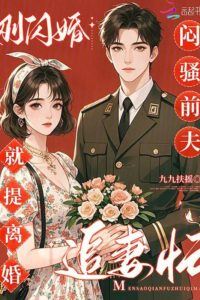
Flash Marriage, Then Divorce? The Reserved Ex-Husband is Busy Chasing His Wife
Novel Info

Summary

... Read More

Fang Muyu, a wealthy and spirited young woman, finds herself trapped in the role of a malicious supporting character in a novel titled Seventies: Secret Love Comes True, Spoiled by the Stoic Big Shot. In the original story, she is destined to suffer a tragic fate after divorcing her cold, stoic husband, Lu Yancheng. The narrative reveals that Gu Shiyi, Fang Muyu’s seemingly gentle and kind stepsister, is actually the novel’s female lead who schemes to steal Lu Yancheng and frame Fang Muyu for various crimes, ultimately leading to Fang Muyu’s death and the loss of her inheritance. Upon realizing her predicament, Fang Muyu decides to reject her predetermined fate. When Lu Yancheng presents her with divorce papers, she eagerly signs them, declaring that she never cared for him anyway. However, shortly after, she discovers she is pregnant with his child, conceived only on their wedding night. Refusing to let the child suffer the same fate as in the book, she decides to keep the baby and demands that Lu Yancheng fulfill his paternal duties, despite their divorce.

Fang Muyu travels to Qingyu Island, where Lu Yancheng serves as a company commander in the military garrison. During her train journey, she encounters Lin Guodong, a soldier who becomes an unwitting witness to her confrontation with a seat-occupying man. Fang Muyu cleverly uses the situation to her advantage, claiming to be Lu Yancheng’s wife to deter trouble. Upon arriving at the island, she navigates the military guesthouse system with shrewdness, paying another military wife to swap a triple room for a single one. Meanwhile, Lu Yancheng, unaware of her pregnancy initially, is confused by her sudden appearance and her claim of being his wife on the train. He interprets her actions as desperate attempts to win him back, which only deepens his resolve to maintain the divorce. However, when Fang Muyu suffers severe morning sickness after a confrontation with a neighbor, Miao Guifen, who had encroached on her land, Lu Yancheng’s demeanor shifts dramatically. He rushes her to the hospital, where Doctor Zhou confirms the pregnancy.

The revelation of the pregnancy forces Lu Yancheng to reconsider his stance. Although he initially believes Fang Muyu is using the child to manipulate him, he agrees to support her and the baby. He begins to actively improve their living conditions, building a stone wall to protect Fang Muyu’s privacy and repairing their home. His efforts, however, are often clumsy and misunderstood; for instance, he attempts to pick dandelions to coax her, only to have the seeds blow onto her, leading to awkward interactions. Despite his cold exterior, Lu Yancheng’s actions reveal a growing, albeit reluctant, care for Fang Muyu and the unborn child. He also secretly returns to Yun City to pack Fang Muyu’s belongings, showing a level of attentiveness that surprises his subordinates.

As Fang Muyu settles into island life, she forms a friendship with Lin Xiaoxiao, a local teacher, after intervening in a cafeteria dispute where Liu Mei, another military wife, attempts to manipulate public opinion. Fang Muyu’s direct and capable nature contrasts sharply with the scheming behavior she associates with Gu Shiyi. Back in Yun City, Gu Shiyi learns of Fang Muyu’s pregnancy and arrival on the island. Realizing her plans are threatened, Gu Shiyi devises new schemes to undermine Fang Muyu and reclaim Lu Yancheng. The story concludes with Fang Muyu firmly establishing herself on the island, determined to raise her child away from the toxic influences of the novel’s original plot, while Lu Yancheng struggles to balance his military duties with his unexpected role as a father and his complicated relationship with Fang Muyu.

Novel Items

More
Document
A yellowed paper document with bold characters reading Divorce Application Report. Lu Yancheng had already signed his name at the bottom. Fang Muyu also signed it with a willful flourish. This document triggers her realization about the novel plot and her decision to change her fate.
Item
A fly swatter that Fang Muyu uses to beat Ji Mingyuan after he tries to touch her. She hits him multiple times, leaving red welts on his cheeks and bruising the back of his hand.
Document
Zhao Xiuhua received a train ticket for next Monday to return to her hometown.
Item
Xu Huai'an managed to get Shi Qingqian a sleeper berth on the train to Xi Province. Since he bought the ticket at the last minute, only one sleeper was available, so he took a seat ticket for himself.
Novel
A novel whose plot Fang Muyu remembers after signing the divorce papers. It features Lu Yancheng as the male lead, Gu Shiyi as the female lead, and Fang Muyu herself as the malicious supporting female character with a tragic fate. This meta-novel within the story serves as the framework for Fang Muyu's awareness of her predetermined fate.
Item
The amount the calligraphy shop owner paid the middle-aged man for a painting during the secret transaction Li Luo witnessed, which inspired her business plan.
Latest Release
DateGroupRelease
2026-08-11shanghai fantasy c3
2026-08-11shanghai fantasy c2
2026-08-11shanghai fantasy c1

Community Reviews

Rating(3.9 / 5.0, 10votes)
5 stars
3(30%)
4 stars
3(30%)
3 stars
4(40%)
2 stars
0(0%)
1 stars
0(0%)

Popular reviews

... Read More
This scene made me laugh out loud and I need to process why it hit so hard emotionally. On one level, it's just funny. The image of a grown man (or at least, an adult character) being so dramatically upset about his pants being thrown in a tree is inherently comedic. But there's something warmer underneath the humor that I didn't expect to feel. Jiang Zhuangzhuang is genuinely upset about these things. He's not pretending. He's counting on his fingers, his hands were shaking while fishing, he got beaten by his dad because of Lu Yancheng's tattling. These are real wounds for him, even if they seem silly to us. And the fact that he trusts Fang Muyu enough to pour all of this out? That's actually kind of sweet in a weird way. He's seeking comfort from someone who is clearly not going to give him comfort. Then there's Su Wan's laughter. 'Su Wan laughed until she couldn't straighten up.' This is the emotional climax of the scene, and it's not mean-spirited laughter—it's genuine delight at the absurdity of it all. The author uses humor to create warmth between characters, which is a really nice touch. But the most interesting emotional layer is Fang Muyu's internal reaction. She finds this 'too much' and her mouth twitches. Is that amusement? Is that something else? The text says 'How interesting!' and I think that word 'interesting' is doing a lot of heavy lifting. It's not just amusement—it's fascination. She's finding Lu Yancheng interesting now, and that changes everything for her character arc.
... Read More
The dialogue in this passage is genuinely sharp. Let me break down why it works so well. First, there's the misdirection. Fang Muyu says 'You misheard me. I said enlighten me.' This is such a natural, quick-witted response. It feels exactly like something a clever, slightly cruel person would say in the moment. The author doesn't over-explain it—we get the narration of her true thought right after, and that contrast is where the humor lives. Then there's Jiang Zhuangzhuang's voice, which is distinctly different. He's dramatic, emotional, counts on his fingers. His dialogue is full of exclamation marks and escalating outrage. 'He's a big villain!'—this line is peak Jiang Zhuangzhuang. It's childish, earnest, and completely sincere. You can hear his puffed-out cheeks. And the best part? The dialogue between these two reveals their entire relationship without any exposition. Fang Muyu is cold and amused. Jiang Zhuangzhuang is warm and oblivious. They're fundamentally different people, and the author shows us that through how they speak, not through telling us. The pacing of the dialogue is also worth noting. It starts slow with Jiang Zhuangzhuang recounting one incident, then accelerates as he gets more animated, counting on his fingers, listing grievances faster and faster until he runs out. The dialogue itself mimics the emotional escalation. It's a small technique but it works really well.
... Read More
I need to talk about Fang Muyu because this character is fascinating and honestly kind of terrifying in the best way. Let's look at this exchange: Jiang Zhuangzhuang says 'enlighten me' and Fang Muyu corrects him, but then the narration tells us her actual thought: 'Seeing you upset makes me happy.' That right there? That's a character moment that tells us everything we need to know about her. She's not just amused by Jiang Zhuangzhuang's suffering—she actively enjoys it. And she says it out loud to the reader but masks it with a polite correction to Jiang Zhuangzhuang. The dynamic between these two is so layered. Fang Muyu pulls over a stool, casually invites him to share his grievances, and then literally says 'Let me enjoy the story.' She's treating his pain like entertainment. And Jiang Zhuangzhuang? He has no idea. He just happily dumps all this information about Lu Yancheng onto her. There's something almost tragic about how naive he is here, paired with how sharp and knowing Fang Muyu is. And then Lu Yancheng enters this scene purely through Jiang Zhuangzhuang's complaints, but we already know enough about him to understand the dynamic. The 'irreconcilable feud' between these two boys reads less like genuine hatred and more like two kids who are oddly obsessed with each other. Classic trope energy. But Fang Muyu watching all of this with that twitching corner of her mouth? She's reading the subtext way better than anyone in the room.
... Read More
Okay so this scene is actually really clever when you think about it. On the surface it's just Jiang Zhuangzhuang listing off all the times Lu Yancheng annoyed him, but the plot structure here is doing something way more interesting. It's recontextualizing Lu Yancheng in real time. We've been told he's this terrifying big demon, this block of ice, right? And then suddenly all these 'crimes' come out and they're not evil at all—they're just petty, childish pranks. The pants in the tree thing? That's not villainy, that's playground bullying energy. The trap sign? Classic kid stuff. The slingshot to the butt? Come on. What's brilliant is how the narrative uses Jiang Zhuangzhuang's genuine distress as dramatic irony. He's telling this like it's serious stuff, like Lu Yancheng is some monster, and the reader is sitting there going... that's it? That's your big villain? And then Su Wan's reaction seals it—she laughs until she can't straighten up. The plot twist here isn't a big reveal, it's a tonal shift. Lu Yancheng goes from feared antagonist to someone with a mischievous, almost playful side. It completely changes how we're supposed to read him going forward. I love how the author uses a complaint session as a character-reveal mechanism. Who would've thought?
... Read More
The way the author shifts from this bright, sunny beach comedy into something way more ominous in Chapter 15 is masterful. One minute you've got kids screaming with joy over crabs and a bucket overflowing with seafood, and the next — 'The tide, which had been gently rising, suddenly grew more urgent. In the distance, the sea surface darkened and churned, carrying a sense of oppressive tension, as if a storm was about to break.' I literally felt the temperature drop reading that. The imagery is so vivid — the darkening sea, the churning waves, the wind picking up. It's not just 'a storm is coming,' it's rendered in a way that makes you feel the weight of it. And then you cut to Lu Yancheng on that white ship, and the text says 'the people on the island only saw the churning waves and the fierce sea wind. But out on the water, Lu Yancheng could clearly sense that this typhoon was different — it was likely going to be a big one.' That contrast between what the islanders experience and what Lu Yancheng experiences out at sea is such a good cinematic choice. The beach scenes themselves are also wonderfully rendered. That semi-circular pool enclosed by reefs, calf-deep water, murky but rippling — you can see it. The kids scrambling with their shovels, the military wives competing over clams, the whole atmosphere of a close-knit island community. It feels lived-in and real, not like a generic backdrop. The author doesn't over-describe, but every detail lands.
... Read More
Okay so Jiang Zhuangzhuang is basically the definition of a little nightmare — his own mom calls him a monkey, he sneaks off to the beach without permission, he talks back to adults like it's a sport. And yet somehow Fang Muyu walks up and the kid is COMPLETELY under her spell within five minutes. Like, she offers him candy as a bribe and he's hers. She shows him how to find clams and suddenly he's calling her 'Sister, pretty sister, teach me please, I beg you.' The transformation is hilarious and honestly kind of impressive. What I love is that Fang Muyu doesn't coddle him at all. When he refuses to come back before the tide rises, she literally says 'Fine! You can stay and wait to be eaten by sharks. We're leaving first.' She's not going to baby him. And that's exactly why he respects her. She's competent, she's sharp, and she's not afraid to be firm. The kid would rather follow someone who actually means what they say than someone who just coddles him. Then there's the whole dynamic with his mom Zhu Hongyu — she's desperate for help watching him because a typhoon is coming and she and her husband are busy. She basically begs Fang Muyu, and Fang Muyu agrees without even really thinking about it. Not because she loves kids, but because, as she tells Lin Xiaoxiao, 'If he's a troublemaker, then what do you think I am, the Buddha?' She knows exactly what she's dealing with and she's not intimidated. And the Lu Yancheng stuff in the background — his mom and Wu Weiguo are gossiping about how he picked dandelions to cheer up his wife. Meanwhile Fang Muyu has no idea he's even back on the island. The dramatic irony here is delicious. He's arriving on a ship through a storm, face grim, thinking about supplies and the typhoon, while she's at home about to cook for a kid who keeps calling her 'Sister' instead of 'Auntie.' When they finally cross paths, it's going to be something else.
See all reviews

Characters

See all characters

Custom lists

Oops…There is nothing here.