First Love Never Comes True - Reviews

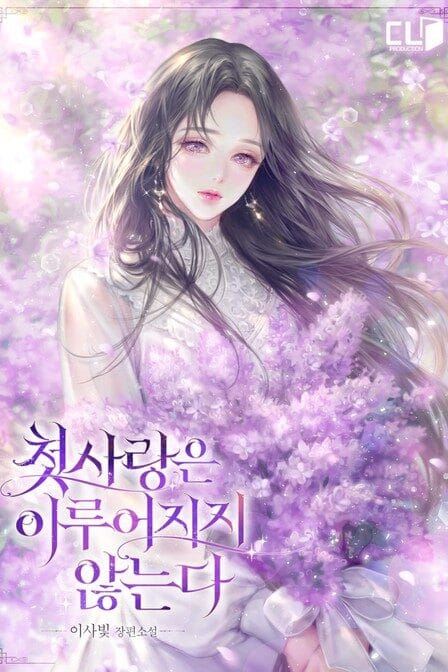
First Love Never Comes True
+Add to Custom List
Sort
Add review
... Read More
The dialogue in these chapters is genuinely exceptional and I need to highlight why. First, Lihi's letter. The opening line—"You were the one who left first"—is such a perfectly calibrated response. It's not sweet. It's not grand. It's a twenty-something-year-old man who still hasn't forgotten a two-year silence, who opens with criticism instead of warmth, and who then follows up with this incredibly tender gesture of sending a magical flower branch. The dissonance between his words and his actions IS the character. He's saying "I'm annoyed at you" while doing something that proves he still cares deeply. That's how real people talk when they're hurt. That's not melodrama—that's human. Then there's Mrs. Hauer in the prison, who drops this absolutely devastating line: "I'm sure His Grace loves you. At my age, I can tell such things just by looking into someone's eyes. The two of you love each other." And Maia's response? She says "I have something to do" and leaves. She doesn't confirm it. She doesn't deny it. She just goes. That silence is louder than any dialogue could be. And the Emperor's single line—"Rise."—delivered with a "calm, rippling beautiful voice" that somehow makes Maia feel like ice? One word. That's all we get of his dialogue so far and I am already terrified of this character. The author doesn't need a monologue to establish menace. One syllable does it.
... Read More
There are SO many symbols stacking up in these chapters it's barely fair. First, the earth spirits. Maia is trying to break free from a system that treats her like property, and the earth itself REBELS on her behalf. This isn't just cool magic worldbuilding—this is the natural world recognizing that something unjust is happening and reacting to it. The garden that was supposed to be peaceful gets destroyed because someone spoke nonsense near it. What nonsense? We don't know yet, and I am losing my mind. Then there's theveil. A thin, translucent barrier between Maia and the world. She's literally being dressed for a performance—the performance of a happy Duchess—and the veil is supposed to make her look pure, innocent, untouched by scandal. But it's also a barrier, something between her and reality, just like the constant surveillance from the Emperor's maids. And Maia herself keeps being described as ice, as a statue, as frozen. "A goddess's statue carved from ice." She's become something hard and beautiful and utterly unmoving because softness got her nowhere. But here's the thing—the statue has VIOLATED energy inside it. The legacy of the ancients is locked in those violet eyes. The ice isn't empty. It's pressurized. What is this story really saying about women who survive by becoming unbreakable? I'm not okay.
... Read More
Let's talk about stakes because this book is playing 4D chess with them. On the surface: a woman wants a divorce, her husband won't let her leave. Simple marital conflict, right? Wrong. Layer in the class disparity—she's middle class, he's imperial blood, everyone around her despises her for existing in his house. The head maid's hostility isn't just personal, it's systemic. 'Don't even think of taking back the divorce or returning here'—that threat carries the weight of an entire social hierarchy behind it. Then there's the ghost of the former Duchess. Whatever happened to her, it's clearly traumatic for him. 'Achilles' heel,' Maia calls it. And now she's trapped in a house where she's both unwanted andReplaceable—a 'convenient substitute' who can't escape. But the real conflict—the one that keeps me turning pages—is internal. Maia knows she made a mistake marrying him. She KNOWS she should leave. And yet when the moment comes, when she's standing at that gate ready to walk away for good, part of her is praying he'll appear. That's the tragedy. She's fought so hard to be dignified, to be brave, to do the right thing—and her heart is still lagging behind her feet. The Duke locking that gate? That's the external manifestation of his own internal war. He can't let her go, but he also can't tell her why. The tension here isn't just 'will they or won't they'—it's 'who will break first and what will it cost them both?'
... Read More
I need to talk about the portrait. The one of the former Duchess and the Duke. Let me tell you, the writer painted that scene so vividly I could see it in my head. "Wavy, silver-white hair." Even with paint, it created the illusion of shining. And those eyes — redder than the rarest pomegranate gemstone. Can you imagine? The text literally says it felt "sinful to look away." And the Duke's gaze in that portrait — "eyes swirling with deep emotion" as he looked down at his wife. Two years after her death and the portrait still hangs in the CENTER of the corridor, untouched. Maia walked past it on her way out, deliberately NOT looking at the man in the portrait, only the woman. And I could feel her ache. "Yes, with someone this beautiful, of course His Grace couldn't forget her." But there was this quiet strength in her walking away. She understood, but she also knew it was never her place. The snow scene too — the duke's voice "as cold as his appearance, rang out amidst the drifting snowflakes." That image stuck with me. And the gate — he struck it with his gloved hand and the whole castle echoed. The atmosphere in that chapter shifted from cold isolation to something dangerous and thick. The mansion itself felt like a character. Those portraits lining the grand corridor, the vast hall where the duke threatened the head maid, Maia's room where she eventually retreated and slammed her quill down. Every space had weight. The writer doesn't just describe rooms — they describe power dynamics in physical space. Oh and the weather! The freezing cold outside matching the freezing treatment inside. Maia came back from the snow and her whole body remained cold even after warming up. That's not just physical temperature, is it?
... Read More
Let's talk about the hawthorn branch because this symbol is doing SO MUCH heavy lifting across these chapters and I am here for it. On the surface, it's a romantic gesture—a childhood friend sending a gift to remind someone of their bond. But look at what it represents layer by layer. First, it's courage: Lihi tells young Maia it has magic to make fear disappear, and when she calls him out on it being just a regular hawthorn branch, he calls HER a fool because she can't see what's special about it. The magic isn't in the branch itself—it's in what the branch represents. It's a physical anchor for belief, a token that says "someone saw your fear and chose to help you carry it." Then there's memory. The branch blooms white flowers "like scattered rice grains" with a scent "sweeter than summer roses." Maia places it in water in her dim, cold room and gazes at it as if engraving it in her memory. The contrast between the cold, dark ducal palace (where Mary Hauer sits in a windowless basement cell) and this small vase of living flowers by Maia's window is not accidental. Life persisting in impossible places. And finally—there's the trial itself, the place where Maia goes clutching those petals, seventeen years after her first journey to the same palace. The hawthorn is the thread connecting her seven-year-old self to her twenty-year-old self. It's the physical proof that she is not alone, that someone across any distance still remembers who she is and wants her to be brave. When the Emperor's cold red eyes meet hers and she feels chills, it's the hawthorn in her palm that grounds her. The symbol works.
... Read More
Let's talk about structure for a second because the author knows how to build tension like nobody's business. Maia had already submitted divorce papers. Three full days of silence from the duke. She decided that was her answer and planned to leave quietly. This was supposed to be the calm before the storm — no, this WAS the calm. And then the duke appears at the gate, scoops her up, and everything flips. The burn of the documents reveal hits hard: "Those laughable documents you handed me — I burned them all long ago." He never even considered divorce. He destroyed her escape route and then physically prevented her from leaving. And he says it so casually, like he's discussing the weather. But here's where it gets interesting — the head maid calls him out. Actually CALLS him out. Says they were preparing for divorce, asks why they're returning together. And the duke's response? Cold enough to freeze blood. The way he goes from ignoring Maia's mistreatment for months to suddenly threatening execution over one whispered word about divorce — the inconsistency IS the plot hook. Maia's internal monologue is doing a lot of heavy lifting here. She's running through all the novel tropes — pretend to be mad, stage revenge — and then immediately dismisses them because "How could she possibly act well enough to completely fool THAT Duke of Western?" The chapter ends with her spiraling: "No, there must be a way." And I'm left absolutely desperate to know what happens next. The author didn't give us a single concrete answer, just questions upon questions. That's good pacing. That's making me turn the page whether I want to or not.
... Read More
Let me just say this about Lihi first: I am OBSESSED with him already and we've only met through flashbacks. The scene where seven-year-old Maia meets him is one of the most tender things I've read. She's a crybaby, he's this weird boy who throws an owl figurine at her head instead of offering comfort, and then delivers the most devastatingly sweet line: "If you feel like crying, write a letter instead. I'll listen to it." That's not just dialogue—that's CHARACTER. This boy is emotionally intelligent beyond his years, which makes everything about their later connection ache in advance. Maia keeping that owl figurine all these years and clutching it at the banquet tells me more about her emotional state than any internal monologue could. It's her anchor. Her safe harbor. And it came from HIM. Now let's talk about the Duke. Lucas de Agnolis. The man married Maia through imperial decree, stood beside her at the ceremony, held her arm—and then watched her get publicly accused and did... nothing. He just watched with "trembling eyes." Trembling doesn't mean indifferent. But in that moment, it functioned as one. There's this devastating moment where Maia looks at him and hopes—actually hopes—that he'll take her side. The narrative says it outright: "If he would defend her... she would no longer be torn apart by people's words." That's not love language. That's survival language. And the fact that he doesn't move makes everything about their marriage question the reader (and Maia) is supposed to feel about it. But then—AND I'M NOT SHAKING—the text ends with someone approaching from behind, touching her hand, stopping her from digging her nails into her own palm. Blood dripping. The Duke was in front of her. Who's behind her? The paragraph cuts off at the most agonizing moment. I NEED TO KNOW.
... Read More
Okay, I need to talk about this whole mana barrier situation because it is genuinely delicious. So Maia wakes up after deciding to get a divorce, and boom—her garden is destroyed by some insanely powerful spell. A mage from the Mage Tower comes in, looks at it, turns pale as death, and literally runs away screaming that he'd die if he tried to repair it. This man said: "This vicious mana, this violent spell! The vivid energy that seems to threaten that if you even touch what I've accomplished, your hand will be chopped off first!" And then he just LEAPS out of there. Classic. Then Lihi shows up with that creepy satisfied smile and goes "Maybe the earth spirits got angry after hearing some ridiculous nonsense." Ridiculous nonsense being what exactly?? Did someone insult Mother Nature in front of the Duke's mansion? Is this Lihi's doing or not? Because the way the author frames it—Maia doesn't know, we don't know, and the narrative refuses to confirm or deny anything. Meanwhile the Emperor has declared he won't accept any objections to the divorce. So Maia is trapped between a Duke who won't let her go and a political system that treats her like a possession. And now the banquet is happening where everyone's waiting to watch her publicly humiliated while the Grand Duke keeps whisking the Duke away, leaving her alone with those vicious noblewomen gossiping about whether the trial was all an act. The layers here are insane. Every door closes and then another one slams shut behind her.
... Read More
Can we just take a moment for this line: "Her relationship with him had always been this way. One side poured out anger unilaterally, while the other couldn't understand it." That's it. That's the whole marriage in one sentence. Maia is drowning in here and the Duke is just standing on the shore looking confused. He's not even a villain—he's just fundamentally incapable of grasping what she needs, and honestly that might be worse than if he was actively cruel. But then Lihi shows up and offers something completely different. "Would he even pretend to be a lover if I wanted?" And he says he'll help her, that he'll USE HIMSELF as her fake lover to force the Duke's hand. Do you understand what that means? This guy who just casually leveled a mansion garden is willing to throw himself into political fire for her. And Maia's immediate reaction isn't excitement—it's fear FOR him. She thinks about what might happen to him and decides she can't ask. That's not a woman who's fallen out of love. That's a woman who still cares deeply and is trying to protect someone despite everything. And then she sits in the carriage alone while the Duke leaves her again, and Grand Duke Adelstein calls her "a goddess's statue carved from ice" like it's either a compliment or an insult and she can't tell which. The relationship web in this book is exhausting to read and I cannot stop.
... Read More
I need to talk about the scene with Luar because it's so beautifully atmospheric. The Mage Tower sitting silent for over two years, the master refusing to come down, Hael Terzen sighing over mountains of paperwork. You can feel the weight of that tower — it's like a character itself, vast and brooding and neglected. And then the owl. Flapping against the high sky, landing at a window sealed with thick dark purple cloth in a room where not a single ray of light enters. The description of Luar himself — snow-white hair, genderless beauty that swings between awe-inspiring and chilling — is gorgeous. And his hands trembling as he unties the knot? The man who hasn't shown his face in years, who everyone finds annoying and meddlesome, breaks character completely at two words: 'You've returned to me.' 'Maia.' I'm not even sure if he's talking about the owl or the person who sent it. The ambiguity is perfect. That room — no light, dark purple cloth, silence — it mirrors his emotional state.隔绝于世. Also the torture chamber scene has this incredible sensory detail: the thick scent of blood, the maid barely breathing, the click of the jade-green magic stone recording device, the crash of the empty potion bottle hitting the floor. Each sound is deliberate.
... Read More
The pacing here is absolutely ruthless, and I mean that as the highest praise. We open with Maia and Lihi in an intimate confession scene—vulnerability, trust, emotional rawness. It feels slow, almost meditative. Then Lihi drops the adultery proposal like a bomb, and suddenly we're in thriller territory. Maia's panic, the frantic wardrobe shoving, the Duke's arrival—all of it accelerates at a pace that makes your heart hammer. The author understands that tension isn't created by action alone but by the space between actions: the knock at the door, the hesitation before entering, the moment Maia realizes she's barely dressed. Each beat builds on the last without a single wasted sentence. And that ending—BOOM, another BOOM, a crater where a garden should be—is pure structural genius. The author has been carefully establishing normalcy (flowers, fragrance, gentle shrubs) only to shatter it completely. It's the narrative equivalent of pulling the rug out from under the reader. What's remarkable is that despite the escalating chaos, every emotional thread remains clear. We never lose sight of Maia's desperation, Lihi's complicated motives, or the Duke's confused tenderness. The pacing serves the characters rather than the other way around, which is how you keep readers turning pages at 2 AM.
... Read More
This passage is steeped in symbolism that rewards careful reading. The marriage bond itself functions as the central metaphor—a legal and spiritual tether that cannot be broken unless one party commits adultery first. This rule becomes both plot device and philosophical statement: what binds people together can only be broken through betrayal, suggesting that trust and institution are fragile opposites. The wardrobe is rich with meaning. It's a space of concealment, yes, but also of transformation—Lihi disappears into darkness, reemerging only when safety permits. It echoes fairy tales and folklore where closets become portals to other worlds. The garden crater operates similarly: the destruction of natural beauty represents the destruction of Maia's hopes for a normal life. Flowers don't just die—they're replaced by void, by absence, by something that couldn't have been predicted or prevented. Lihi's long silver hair is another potent symbol. It marks him as different, otherworldly, outside the normal social codes that trap Maia. When he tucks it behind his ear, the gesture is intimate and Performative—a man performing femininity while proposing a scandalous solution. The moonlight throughout these scenes is no accident either. It's the light of hidden truths, of things visible only in partial illumination. Maia sees Lihi's handsomeness only in moonlight, just as she begins to see her situation with painful clarity only after darkness has fallen.

Leave a comment

You must be logged in to leave comments. or
