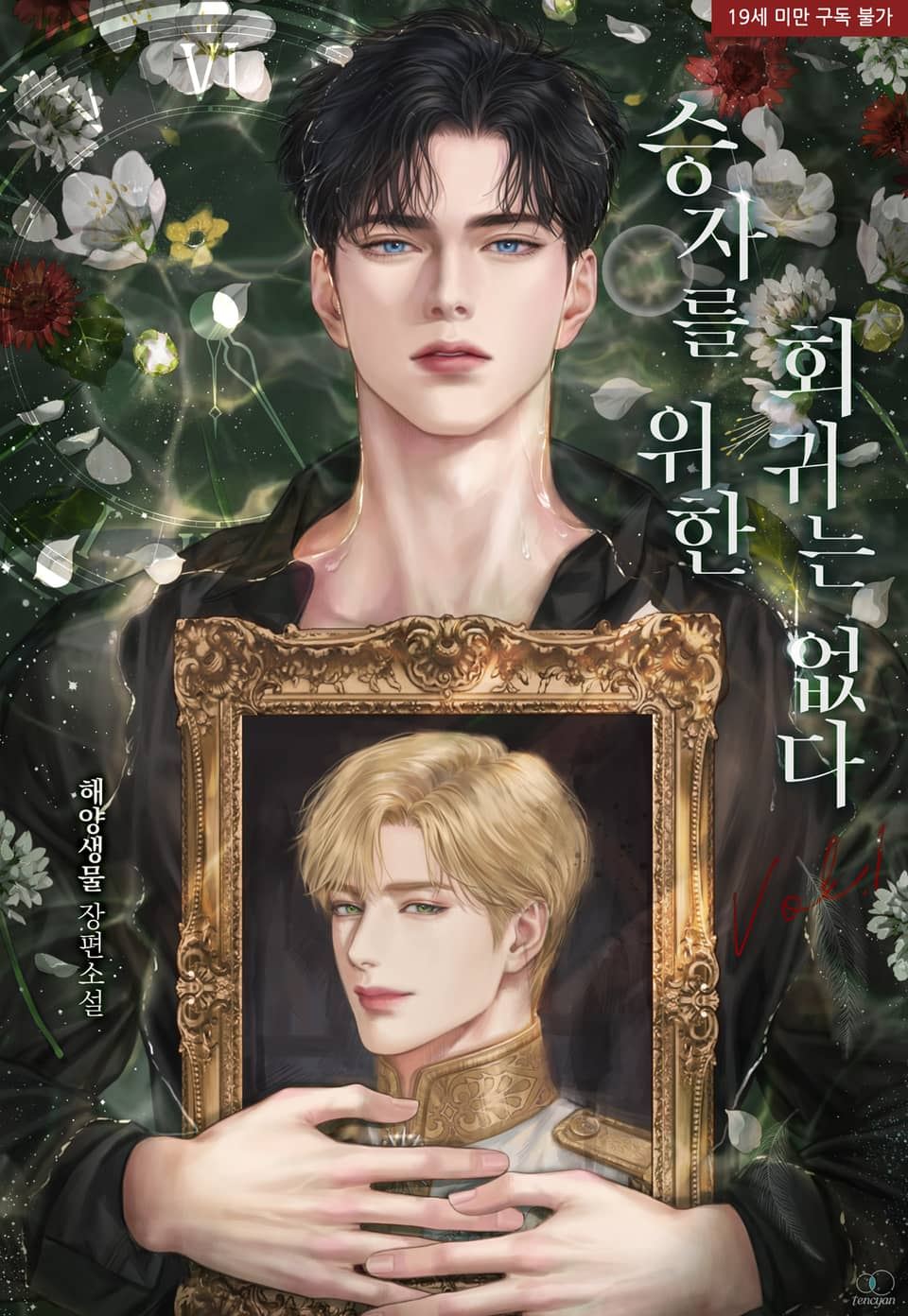
First Love Never Comes True
Novel Info
  • Author:
  • Status:Ongoing

Summary

... Read More

Maia Hansberg, a wealthy middle-class woman, marries Lucas de Agnolis Western, the Duke of Western, fulfilling a childhood crush but entering a cold and hostile environment. For two years, she endures the Duke's emotional neglect and the open contempt of the household staff, who remain loyal to his deceased former wife, the Imperial Princess Rivka. Believing the marriage is a mistake born of her own foolishness, Maia decides to end it. She prepares divorce papers and attempts to leave the ducal residence, only to find the gates sealed by the Duke. Lucas reveals he burned the papers and refuses to let her leave, declaring that she will remain the Duchess of Western forever. His motivation remains opaque, leading Maia to believe he simply finds it inconvenient to find a new wife.

Stranded in the mansion, Maia initiates a hunger strike to force a divorce. During this ordeal, she discovers a letter from her secret childhood friend, Lihi, who had warned her against the marriage before cutting ties. Simultaneously, the benevolent kitchen maid Mary Hauer provides Maia with soup, breaking her fast. This act triggers a poisoning attempt; Hauer is accused of trying to kill Maia, and she is imprisoned. As Maia collapses from the effects of the attempted poison, she experiences vivid hallucinations of her past with Lucas and Lihi. Upon waking, she learns that the Empress, jealous of Maia occupying her daughter’s former position, ordered the assassination through the head maid, Helia. Realizing the gravity of the threat and the incompetence of the Duke’s investigation, Maia takes charge of the situation.

Maia confronts the accusing maid, Shale, using a gun to extract the truth that Helia ordered the conspiracy. She then allies with Viper, an information broker, to secure a magical confession from the head maid. In a dramatic turn, Maia brings the confessing Helia before the Duke, forcing him to acknowledge the conspiracy. Instead of handling the matter quietly, as the Duke prefers to protect the family's reputation, Maia insists on taking Helia to an Imperial trial. Her true objective is to create a public scandal severe enough to compel the Emperor to grant her divorce. She submits a petition to the Imperial court, setting the stage for a legal battle that will expose the Duke’s failure to protect his wife and the political machinations of the Empire.

The narrative shifts as Maia receives a reply from Lihi, who has been secluded at the Mage Tower for years. The return of his messenger owl signals a reconnection with the outside world and hints at deeper magical and political layers involving the Emperor, the Mage Tower, and the true reasons behind Lucas’s protective yet controlling behavior. Maia’s transformation from a resigned victim to an active strategist marks a pivotal shift in the story, as she prepares to fight for her freedom through legal and possibly magical means, while the Duke struggles to comprehend her newfound resolve and the hidden dangers surrounding their marriage.

Latest Release
DateGroupRelease
2026-10-03dusk blossoms c67
2026-10-03dusk blossoms c66
2026-10-03dusk blossoms c65
2026-10-03dusk blossoms c64
2026-10-03dusk blossoms c63
2026-10-03dusk blossoms c62
2026-10-03dusk blossoms c61
2026-10-03dusk blossoms c60
2026-10-03dusk blossoms c59
2026-10-03dusk blossoms c58
2026-10-03dusk blossoms c57
2026-10-03dusk blossoms c56

Community Reviews

Rating(0 / 5.0, 48votes)
5 stars
0(0%)
4 stars
0(0%)
3 stars
0(0%)
2 stars
0(0%)
1 stars
0(0%)

Popular reviews

... Read More
The dialogue in these chapters is genuinely exceptional and I need to highlight why. First, Lihi's letter. The opening line—"You were the one who left first"—is such a perfectly calibrated response. It's not sweet. It's not grand. It's a twenty-something-year-old man who still hasn't forgotten a two-year silence, who opens with criticism instead of warmth, and who then follows up with this incredibly tender gesture of sending a magical flower branch. The dissonance between his words and his actions IS the character. He's saying "I'm annoyed at you" while doing something that proves he still cares deeply. That's how real people talk when they're hurt. That's not melodrama—that's human. Then there's Mrs. Hauer in the prison, who drops this absolutely devastating line: "I'm sure His Grace loves you. At my age, I can tell such things just by looking into someone's eyes. The two of you love each other." And Maia's response? She says "I have something to do" and leaves. She doesn't confirm it. She doesn't deny it. She just goes. That silence is louder than any dialogue could be. And the Emperor's single line—"Rise."—delivered with a "calm, rippling beautiful voice" that somehow makes Maia feel like ice? One word. That's all we get of his dialogue so far and I am already terrified of this character. The author doesn't need a monologue to establish menace. One syllable does it.
... Read More
There are SO many symbols stacking up in these chapters it's barely fair. First, the earth spirits. Maia is trying to break free from a system that treats her like property, and the earth itself REBELS on her behalf. This isn't just cool magic worldbuilding—this is the natural world recognizing that something unjust is happening and reacting to it. The garden that was supposed to be peaceful gets destroyed because someone spoke nonsense near it. What nonsense? We don't know yet, and I am losing my mind. Then there's theveil. A thin, translucent barrier between Maia and the world. She's literally being dressed for a performance—the performance of a happy Duchess—and the veil is supposed to make her look pure, innocent, untouched by scandal. But it's also a barrier, something between her and reality, just like the constant surveillance from the Emperor's maids. And Maia herself keeps being described as ice, as a statue, as frozen. "A goddess's statue carved from ice." She's become something hard and beautiful and utterly unmoving because softness got her nowhere. But here's the thing—the statue has VIOLATED energy inside it. The legacy of the ancients is locked in those violet eyes. The ice isn't empty. It's pressurized. What is this story really saying about women who survive by becoming unbreakable? I'm not okay.
... Read More
Let's talk about stakes because this book is playing 4D chess with them. On the surface: a woman wants a divorce, her husband won't let her leave. Simple marital conflict, right? Wrong. Layer in the class disparity—she's middle class, he's imperial blood, everyone around her despises her for existing in his house. The head maid's hostility isn't just personal, it's systemic. 'Don't even think of taking back the divorce or returning here'—that threat carries the weight of an entire social hierarchy behind it. Then there's the ghost of the former Duchess. Whatever happened to her, it's clearly traumatic for him. 'Achilles' heel,' Maia calls it. And now she's trapped in a house where she's both unwanted andReplaceable—a 'convenient substitute' who can't escape. But the real conflict—the one that keeps me turning pages—is internal. Maia knows she made a mistake marrying him. She KNOWS she should leave. And yet when the moment comes, when she's standing at that gate ready to walk away for good, part of her is praying he'll appear. That's the tragedy. She's fought so hard to be dignified, to be brave, to do the right thing—and her heart is still lagging behind her feet. The Duke locking that gate? That's the external manifestation of his own internal war. He can't let her go, but he also can't tell her why. The tension here isn't just 'will they or won't they'—it's 'who will break first and what will it cost them both?'
... Read More
I need to talk about the portrait. The one of the former Duchess and the Duke. Let me tell you, the writer painted that scene so vividly I could see it in my head. "Wavy, silver-white hair." Even with paint, it created the illusion of shining. And those eyes — redder than the rarest pomegranate gemstone. Can you imagine? The text literally says it felt "sinful to look away." And the Duke's gaze in that portrait — "eyes swirling with deep emotion" as he looked down at his wife. Two years after her death and the portrait still hangs in the CENTER of the corridor, untouched. Maia walked past it on her way out, deliberately NOT looking at the man in the portrait, only the woman. And I could feel her ache. "Yes, with someone this beautiful, of course His Grace couldn't forget her." But there was this quiet strength in her walking away. She understood, but she also knew it was never her place. The snow scene too — the duke's voice "as cold as his appearance, rang out amidst the drifting snowflakes." That image stuck with me. And the gate — he struck it with his gloved hand and the whole castle echoed. The atmosphere in that chapter shifted from cold isolation to something dangerous and thick. The mansion itself felt like a character. Those portraits lining the grand corridor, the vast hall where the duke threatened the head maid, Maia's room where she eventually retreated and slammed her quill down. Every space had weight. The writer doesn't just describe rooms — they describe power dynamics in physical space. Oh and the weather! The freezing cold outside matching the freezing treatment inside. Maia came back from the snow and her whole body remained cold even after warming up. That's not just physical temperature, is it?
... Read More
Let's talk about the hawthorn branch because this symbol is doing SO MUCH heavy lifting across these chapters and I am here for it. On the surface, it's a romantic gesture—a childhood friend sending a gift to remind someone of their bond. But look at what it represents layer by layer. First, it's courage: Lihi tells young Maia it has magic to make fear disappear, and when she calls him out on it being just a regular hawthorn branch, he calls HER a fool because she can't see what's special about it. The magic isn't in the branch itself—it's in what the branch represents. It's a physical anchor for belief, a token that says "someone saw your fear and chose to help you carry it." Then there's memory. The branch blooms white flowers "like scattered rice grains" with a scent "sweeter than summer roses." Maia places it in water in her dim, cold room and gazes at it as if engraving it in her memory. The contrast between the cold, dark ducal palace (where Mary Hauer sits in a windowless basement cell) and this small vase of living flowers by Maia's window is not accidental. Life persisting in impossible places. And finally—there's the trial itself, the place where Maia goes clutching those petals, seventeen years after her first journey to the same palace. The hawthorn is the thread connecting her seven-year-old self to her twenty-year-old self. It's the physical proof that she is not alone, that someone across any distance still remembers who she is and wants her to be brave. When the Emperor's cold red eyes meet hers and she feels chills, it's the hawthorn in her palm that grounds her. The symbol works.
... Read More
Let's talk about structure for a second because the author knows how to build tension like nobody's business. Maia had already submitted divorce papers. Three full days of silence from the duke. She decided that was her answer and planned to leave quietly. This was supposed to be the calm before the storm — no, this WAS the calm. And then the duke appears at the gate, scoops her up, and everything flips. The burn of the documents reveal hits hard: "Those laughable documents you handed me — I burned them all long ago." He never even considered divorce. He destroyed her escape route and then physically prevented her from leaving. And he says it so casually, like he's discussing the weather. But here's where it gets interesting — the head maid calls him out. Actually CALLS him out. Says they were preparing for divorce, asks why they're returning together. And the duke's response? Cold enough to freeze blood. The way he goes from ignoring Maia's mistreatment for months to suddenly threatening execution over one whispered word about divorce — the inconsistency IS the plot hook. Maia's internal monologue is doing a lot of heavy lifting here. She's running through all the novel tropes — pretend to be mad, stage revenge — and then immediately dismisses them because "How could she possibly act well enough to completely fool THAT Duke of Western?" The chapter ends with her spiraling: "No, there must be a way." And I'm left absolutely desperate to know what happens next. The author didn't give us a single concrete answer, just questions upon questions. That's good pacing. That's making me turn the page whether I want to or not.
See all reviews

Custom lists

See all custom Lists