Fierce chirp~chirp! - Reviews

Fierce chirp~chirp!
+Add to Custom List
Sort
Add review
... Read More
I cannot stop thinking about how this chapter juxtaposes two completely different worlds and makes them collide in the most glorious way. On one hand you've got the Dragon Clan Elders' Hall — stern, formal, dripping with political tension. The elders are discussing academy funding, the King's long slumber, whether he should go undercover as a student. Heavy, serious, regal. Then cut to the servant's quarters where the system is basically losing its mind: "[Host, wake up!! Two big cats are fighting, aaaah!!! [Hands-over-face panic]]" and Leihman is just trying to steady paintings while two giant beast forms tear through the house. And then Qiu Qiu walks in and the whole thing merges. The text describes him perfectly: "His milky-golden wings pressed flat with a sleep crease. Like a fluffy little ball of fur just waking up, utterly defenseless." This contrast — the most powerful being in the room looking like a breakfast pastry — is everything. The servants' reaction alone: "we must contact Head Butler Leihman immediately!" Because obviously the only solution to this is more chaos. The worldbuilding detail that sold me hardest though was the system's internal monologue: "So this is the joy of the System nurturing its Host cub in reverse!?" That line alone tells me so much about the relationship between Qiu Qiu and his system. It's not just a guide — it's practically a doting parent watching its baby grow.
... Read More
This chapter sequence is so well-controlled that I want to just appreciate it for a second. We get three distinct scenes here and each one builds on the last without feeling repetitive or padded. Scene one: Qiu Jingyu in his office. Quiet, restrained, almost meditative. He's alone with his thoughts, rubbing that candy, analyzing a stranger's homework answer like it's a national security threat. The pace here is slow—deliberate. The author lets you sit in his suspicion. 'If there is no malice, then what is the intention?' That internal question hangs in the air and the scene just... lingers. Then BAM—cut to Stanford's office, which is chaos incarnate. Professors talking over each other, laptops being snatched, papers sliding everywhere, the old man physically jumping out of his paper mountain. The energy completely shifts from cold introspection to warm panic. And scene three? Qiu Chongshan kicking open a door with a 'bang' and walking into Qiu Yiming's room. Shortest scene, biggest impact, ends mid-action. Cliffhanger mode activated. What I love is how the pacing mirrors the emotional arc. It starts internal and private, moves to external and social, and ends on confrontation. Each transition feels earned because the connecting thread—the assignment—grows more significant in every scene. By the time we reach Stanford, it's not just homework anymore; it's a recruitment crisis. By the time we reach Qiu Chongshan, it's someone's personal life about to be disrupted. The author never rushes, never drags. Every beat lands.
... Read More
"So this is the joy of the System nurturing its Host cub in reverse!? There probably isn't a happier System in the entire world, right!?" I keep coming back to this line and what it represents thematically. The system, this cold mechanical entity, is experiencing something almost maternal watching Qiu Qiu grow. And Qiu Qiu himself — described repeatedly as soft, fluffy, defenseless, a little ball of fur — is actually the emotional anchor of every situation he walks into. He doesn't know it, but his mere presence stops two combatants mid-fight. His cry of "Second Brother?!" freezes the entire hall. There's something deeply symbolic about a creature that looks utterly harmless being the one person who can end a physical altercation just by showing up. The text emphasizes his vulnerability: wet lashes, sleepy tears, a sleep crease on his wings, hugging his eraser like a security blanket. But it's exactly this vulnerability that gives him power. The elders bow to the King on the throne. The servants hide chaos from Qiu Qiu because they're afraid he'll see something traumatic. Yet it's Qiu Qiu's innocent panic that restores order. And then there's the King's decision to level the playing field between the academies — "let's level the playing field between the two factions." Balance. Fairness. Not indulging arrogance. These aren't just plot points, they're thematic statements about power and justice that echo throughout the chapter. The fluffy ball and the sleeping king — both seemingly weak, both actually the center of gravity.
... Read More
This chapter is obsessed with the idea that categories don't stay where they're supposed to. The dragon clan doesn't recognize their own sub-dragon cubs—that's stated outright. The tiger father tries to be a hunter but ends up a failed instructor. The prey decides it wants to be a pet instead of food. The bird flies when it should stay still. Nothing adheres to its expected role and the story seems to be building toward something about what happens when natural hierarchies get disrupted. Jin Lin's 'spiritual body' that he hates emerging at a moment of crisis is another symbol—this forced transformation, this inability to control his own nature, mirroring how he's been grabbed and swept into a world that isn't his. And Qiu Chongshan's roars and territorial paw strikes represent brute force trying to impose order on something that can't be ordered. The real question this chapter is asking, I think, is: what happens when the predator becomes the caregiver and the prey becomes the companion? That inversion feels like it's going to be the thematic engine for everything that follows.
... Read More
'Damn it, Kleist!!!! You're so cruel!! You had the nerve to show the kiss, so you should've let me hear what he said, for crying out loud!!!' There are no named characters speaking these lines, and yet they have more personality than half the protagonists in epic fantasy. The dialogue here isn't carried by traditional character speech—it's distributed across a hive mind of internet users, each with a distinguishable voice. One commenter is the doting auntie energy ('I suddenly want an older brother too'). Another is the policy analyst ('I get the feeling the new principal is taking education seriously'). A third is the confused bystander ('Is this some new law enforcement measure from the Council??? So trendy??'). The narrative voice of the author is almost invisible—we're watching the story through a hall of mirrors made of fan comments, and somehow that feels more immediate than any first-person narration could. Even Dax's official-sounding confession reads like performance art: the formal language of a public apology undercut by the desperate 'I hope to unlock my account once I get 30 likes [teary-eyed].' The humor comes from the gap between bureaucratic tone and human vulnerability. It's the kind of voice that makes you laugh out loud at 2 AM while simultaneously feeling weirdly for these faceless commenters.
... Read More
"WHAT??? You changed your mind!?" — this line alone deserves a monument. The sheer CHAOS in Komodal's voice when Lord Raymond calls to flip the entire enrollment situation is comedic gold. And the kid in the background screaming "Darn it, Dad! Give me the light brain!" while someone tries to conduct official business?? This is peak absurdity and I love it. The author's dialogue writing is just fundamentally DIFFERENT from most web novels I've read. Everyone sounds like a real person who might briefly lose their composure. The way Komodal YELLS at his own admissions officer "Do you think this kind of herbivore is normal!?" while simultaneously being absolutely devastated about his career nightmare—that's not just writing, that's PERFORMANCE. And then there's the comment section interspersed throughout, which I think is GENIUS. The fans screaming "AAAAHHH!! It's starting!! My NNNN+1 loop!!" and "Can a three-hundred-year-old beast still go to kindergarten? Principal!!! Please accept me!!!" reads like a real social media thread. Qiu Yiming's desperate "I'm clearly the real brother, okay!?" is the kind of line that lives in my head rent-free. Even the narrator occasionally breaks into snark—"The principal seemed rather unreliable when we first met"—that's such a distinct voice. The author isn't just telling a story, they're conducting an ENSEMBLE. Everyone gets their moment to shine with words.
... Read More
I need a minute. The moment where Qiu Qiu tries to be brave and authoritative—standing next to this massive panther, puffing out his chest, threatening to withhold breakfast—and the panther just... melts. Literally lays back down and starts using its paw to gently poke at Qiu Qiu's robe like it's showing weakness. Like it's apologizing without words. And Qiu Qiu, despite being genuinely flustered and a little scared, immediately drops his act and flies over to check if he's okay. THAT'S the brotherhood right there. You don't need grand declarations. It's in the small stuff—the ticklish ear rubs, the pretend sleeping, the way Qiu Qiu imitates the kindergarten auntie to make his brother laugh. And then there's Qiu Yiming downstairs, genuinely worried, fork flying, tail flicking, rushing upstairs because his big brother's wellbeing matters to him too. Three brothers, different personalities, all circling each other in their own ways. The author doesn't overexplain these feelings. They just live in the spaces between actions. Which is honestly more powerful than any heartfelt speech.
... Read More
Beneath all the comedy and chaos, there's this really tender thread about identity and belonging running through this chapter. Qiu Qiu has transformed — finally achieved what the system called 'a crucial step toward the goal of being a villain' — and his immediate reaction isn't triumph, it's confusion and fear. 'Why does everyone seem to not recognize me.' That line cracked me open. He's become human, or something human-adjacent with wings and lavender eyes, and what he experiences isn't empowerment, it's alienation. The apple is such a loaded symbol here. It's described as plump, big, his favorite fruit — but now he's so small that even holding it is a struggle. It represents everything familiar that has suddenly become inaccessible, not because it's gone, but because he has changed. The wings themselves are interesting too. They're described as 'soft milky golden,' still growing, still imperfect — not the full majestic wings of a true beast, but something in between. He's caught between forms, between identities, between who he was and who he's becoming. And Ah Lin, the dragon who was already there, who gave comfort without any words — is he the anchor to his old self, or the bridge to whatever comes next?
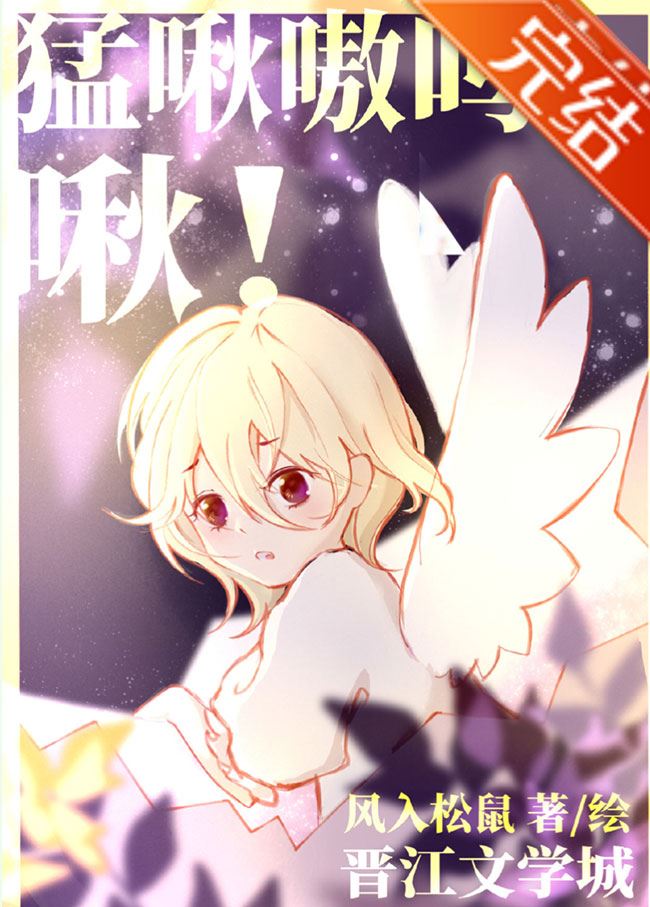
... Read More
I need to talk about Qiu Qiu's ability to dismantle an entire family's stoicism with one apologized sentence. This boy says 'Dad' and Qiu Chongshan immediately scratches his head and says it's not serious, and Qiu Jingyu just watches with a sigh like he's documented this dynamic thoroughly. The family hierarchy has been completely rewritten by a creature who can barely reach the table. But the real gold is the brother dynamics. Qiu Yiming is the classic oldest brother who expresses care through aggression — slamming tables, threatening to go settle accounts, accusing dragon blood is broken — but the second he almost flips Qiu Qiu over while grabbing his hem, the panic is immediate. 'Ack — be careful!!!' Then holding him like an ice cube, afraid of melting. That's not annoyance, that's terror of hurting someone smaller than himself. And yet he can't even process his own guilt properly, looking around for help that nobody gives. The author writes this man who wants to fix everything but has no script for gentleness. Meanwhile Qiu Jingyu is the observer, the strategist. He notices the red scale, connects it to the prophetic painting, recognizes the pattern. But even he can't quite crack the Qiu Qiu puzzle. When Qiu Qiu whispers 'Brother...' the whole room freezes. There's something unspoken between them that the narrative doesn't explain but absolutely feels. And Jin Lin! Always present, always watching, always knowing more than he's saying. That moment where he glances outside then closes his eyes instead of speaking — the pet who has been subdued still holds information. The relationships in this chapter all orbit Qiu Qiu but none of them fully understand him, and that's the beautiful frustration of it.
... Read More
let me just start by saying — the author's ability to shift tones between scenes is genuinely impressive. you go from this tense, almost comedic moment with Jin Lin discovering that someone put MILKY GOLD on his dragon portrait (which is absolutely unhinged and i loved it) to this beautifully rendered rooftop garden scene at the Star Hotel, and the transition feels completely natural. the Star Hotel rooftop garden is described with such specific, vivid detail that i could literally see it. well-dressed men, gorgeous skirts, bartenders behind the bar — all casually glancing toward this tiny corner where two small cubs are hiding from the adults. and the district manager is THERE, standing nearby with a smile. this isn't just background; it's a world where even the lowest-level staff are invested in protecting these two boys. that alone tells you how important the political situation is. "The little carrot that has transformed is holding the little ball in his arms seriously, just like holding a furry little pillow in his arms." — this description is SO specific and charming. i can picture it perfectly. the visual of a dragon boy cradling a small golden bird creature is both ridiculous and adorable. but what really sold me was how the adults' perspective reinforces the worldbuilding. they see two cute children playing house, completely unaware of the actual stakes. "After all, the two tribes were incompatible before!" — one line of dialogue drops an entire political history into the scene. the feathered tribe and the dragon tribe have a strained relationship, and this gathering is a diplomatic attempt to repair it. the setting itself becomes a character. the scene also has this wonderful layered quality where we (the readers) know about the dragon blood in Qiu Qiu's bag, the system's reactions, and the political tension, while the adults in-scene just see cute kids whispering. that dramatic irony is delicious.
... Read More
The visual imagery in these chapters is genuinely cinematic. Let me just paint what I'm seeing: a dark room, a table, and this black dragon cub with scales that have "a mysterious texture like black gold" — the contrast alone is striking. But then the author hits you with "the traces of cracks and fragments are particularly shocking." You immediately understand this isn't a healthy cub. This is something broken that was found dying. And yet it exudes this ancient majesty. The scene where Qiu Qiu lands on Jin Lin's ear and whispers is so intimate in its framing — you can feel the closeness, the warmth, the soft breath against hard scales. The sensory detail of "the smell of soft fluff sweeping across the hard scales" is the kind of writing that makes you feel like you're actually there. I also love how the world builds through casual dialogue. Qiu Chongshan explaining that pure dragons are nearly impossible to reproduce, that the last one is in the palace, that dragon clans are arrogant and noble — all of this worldbuilding happens naturally through family conversation rather than exposition dumps. The Interstellar Forest, the Dragon Clan palace, subdragon species — it all feels like a lived-in universe. And Jin Lin as a spiritual body, struggling with the burden of using mental power after being inactive for so long? That's worldbuilding that connects directly to character. The setting isn't just backdrop, it's actively shaping what he can and cannot do.
... Read More
So Qiu Jingyu—big brother, the impeccable eldest—who never misses anything, is literally staying in bed pretending to be asleep? That alone is a massive character beat. The fact that Leihman notices this is out of character for him really tells you something. And then Qiu Yiming immediately figures it out and calls him out on it. The sibling dynamic here is so specific. But what really got me is the moment Qiu Jingyu, after all that posturing and ignoring his brother, actually reaches out to touch Qiu Qiu's cheek. He's usually cold, distant, the one who moved out and only comes back when it suits him—and yet this small gesture, this almost sub rosa tenderness, shows that despite his posture, he's completely soft for his siblings. The system even notes that when Qiu Yiming isn't talking, he looks genuinely intimidating, but that's just performance. Everyone in this family has a public face and a private soft spot. And Qiu Qiu—the little guy hiding behind Qiu Yiming's head, peering out, then flying over to wish big brother safety even after being fussed over that morning—that's the emotional anchor of the whole scene. He's the one holding everyone together.

Leave a comment

You must be logged in to leave comments. or
