Fierce chirp~chirp! - Reviews

Fierce chirp~chirp!
+Add to Custom List
Sort
Add review
... Read More
I'm still recovering from the pacing in these chapters. Let me just say: the author knows EXACTLY when to slow down and when to let everything fly. It starts with the social media chaos—fast, punchy, breathless. The bracketed comments read like actual forum posts, and it creates this wonderful sense of a live incident unfolding in real time. You feel the internet losing its collective mind. Then the scene cuts to the venue itself, and the pacing shifts. The narration becomes tighter, more focused on physical movement. The cub running. The reporter trying to catch him. The panic building. Each sentence gets shorter, more urgent. 'He actually flew to the middle platform!!!' Three exclamation points. I felt that. And then—ABRUPT STOP. The Speaker catches him. Everything goes quiet. 'Why are you here, alone and scared?' The entire tempo drops from sprint to walk. The prose slows. We're given space to breathe in this intimate moment. Then the candy scene, the apology, the teasing about bringing the system along, and just as we settle into warmth—the hidden villain notification hits like a freight train. One line. Game over. The author doesn't give you time to process anything before throwing the next curveball. And honestly? That's why I couldn't put it down. Every chapter ends somewhere that makes you immediately open the next one. No filler. No breathing room. Just momentum.
... Read More
there are so many layers to the dragon blood in this scene that i think deserve more attention. on the surface, it's a plot device — a transformation prop, an A-level villain plot item that Qiu Qiu accidentally acquires. but the symbolism runs much deeper. dragon blood represents power, legacy, and belonging. for Qiu Qiu, it's especially loaded because he's already struggling with his own identity and transformation. the fact that he carries it hidden in a candy bag — disguised as something ordinary, something a child would carry — mirrors his own position in this world. he's small, seemingly harmless, but holding something enormously powerful that could change everything. "My blood can unlock all the seals in the family." — Torrance saying this casually is fascinating because it speaks to inheritance and destiny. some people are born with keys, while others have to earn theirs. Qiu Qiu doesn't have that kind of access. his strength comes from elsewhere, and that's part of what makes him special. the brick-red cloth bag itself is also telling. it's described as becoming "strangely heavy" — not just physically, but emotionally. what's inside represents a threshold, a point of no return. once the dragon blood is used, transformation happens. but transformation isn't just physical; it's about becoming someone new, someone capable of standing beside the people you love. and then there's the portrait scene with Jin Lin, where the milky gold figure is perched on the dragon's head. it's rebellious imagery — something small and golden claiming space on something enormous and noble. "Even if he shouted 'Ah Lin' ten times, he will never allow such a rebellious thing to happen." — but he WILL, because that's what these characters do. they defy expectations. the real theme underneath all of this? power isn't about bloodlines or lineage. it's about who you choose to protect and what you're willing to risk for them.
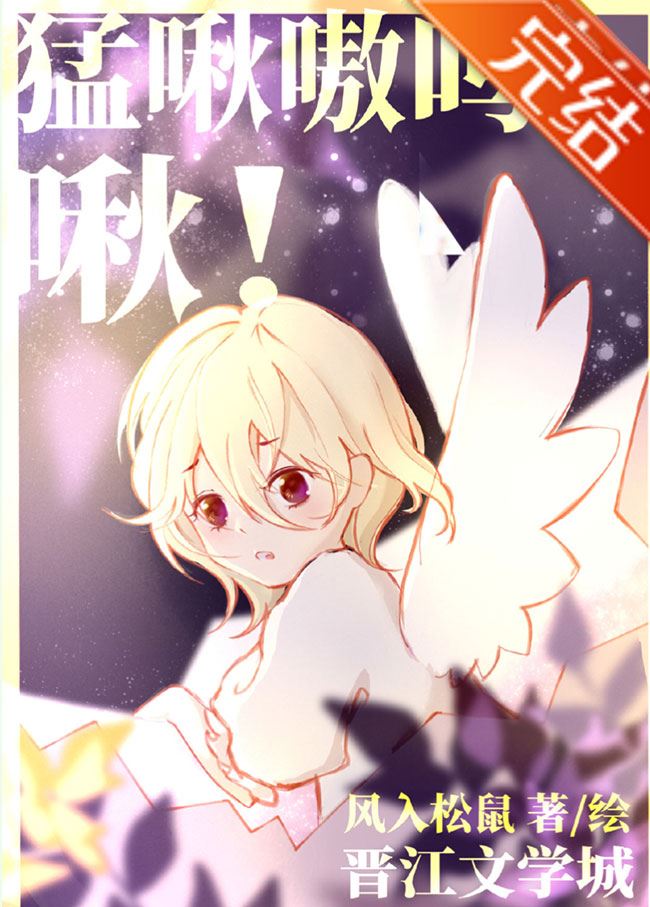
... Read More
The dragon tail in this passage is doing enormous symbolic work. It's described as sacred among all dragons, off-limits except to close relatives, and yet it becomes the very instrument of connection between two beings who have no right to touch each other. When Jin Lin's tail wraps around Qiu Qiu midair, it's both an act of protection and a transgression — the tail that should only be touched by kin is itself doing the touching, bridging a gap that should remain un-crossed. There's also the falling golden dumpling motif that keeps returning. Qiu Qiu is repeatedly dropped — first by his own weakness, then by the dragon's apparent cruelty, then finally caught safely. Each fall represents a different kind of vulnerability: physical limitation, social rejection, and ultimately rescue. The fact that he lands in Qiu Yiming's palm at the end transforms the image from one of danger to one of trust. The hand that was ready to strike becomes the hand that catches. The theme of firsts threads through everything. First time calling dad. First time saving someone. First time Qiu Qiu has done something out of line. First time the system has felt panic. These moments accumulate into something larger about boundaries being crossed not through rebellion but through necessity, through love, through the simple fact of being alive and needing connection. And then there's the image of wings failing — 'my wings seemed unable to hold on anymore.' This is both literal and metaphorical. Qiu Qiu has never been able to fly long distances; his body limits him. But he tries anyway. The wings that can't sustain him become the very thing that carries him into this moment of transformation. Failure and courage are not opposites here; they're intertwined.
... Read More
The chapter structure here is a masterclass in tonal whiplash done right. You go from Qiu Jingyu coldly calculating how to extract dragon blood from someone else's child... to Qiu Qiu whispering "I will raise you well" to Jin Lin. Three minutes of reading time, four emotional galaxies apart. What's brilliant is how the author uses the system as a pacing device. The system interrupts the cute moments with villain point updates — ["your family's villain values have also soared"] — which suddenly undercuts the tenderness and reminds you this is a comedy with stakes. Then it immediately recovers with Jin Lin writing on the table. The rhythm feels like breathing: tension, release, tension, release. The transition from the prince's palace back to the cub room is also perfect. One line — "Fortunately, my eldest brother stopped them in the end" — and we're instantly back in the safe, warm space. No over-explanation, just a snapshot that tells us everything. If the eldest brother hadn't intervened, dad and the others would've become full villains again. So there IS a timeline where this goes sideways, and that's what keeps me turning pages. The chapter ends on "Jin Lin was silence" — cut off mid-thought. Not even a proper ending. Just abrupt. And somehow that's the most effective cliffhanger of all.
... Read More
Okay so this whole chapter is one giant misunderstanding that just keeps escalating and I am wheezing. Qiu Chongshan grabs this adorable little dragon cub, clearly thinking he's about to give his son a hunting lesson—like, here's how you take down prey, follow dad's example—and the kid just kind of blinks at him. Nobody warned him that the tiger IS the predator apparently. Then Qiu Qiu flies over and grabs the tail, chirping that he wants to raise it, and the dad is just standing there in pure cognitive dissonance. A tiger keeping a rabbit? This is narratively delicious. The plot doesn't stop there either—the sleeping cub opens his eyes and there's this moment of intense eye contact that feels like the inciting incident for the whole story. Jin Lin's perspective shift from passive prey to someone with terrifying mental power bubbling under the surface? That's a plot ticking bomb right there. And don't even get me started on the parallel with Qiu Jingyu getting an urgent search warrant while simultaneously wondering if his dad went to Dragon Clan territory. These threads are about to knot together and I need to know what happens next.
... Read More
There's this one line that stopped me cold: "how could a herbivore possibly emerge from a pack of carnivores." It's casual. It's almost whispered. But it contains an entire worldview. The world of this novel operates on a taxonomy that feels simultaneously ridiculous and devastatingly real. You're either a carnivore or a herbivore. Your nature determines your potential. Your species—your very biology—labels you before you've had the chance to open your mouth. And the Prince's Mansion, presumably full of the galaxy's most fearsome carnivores, produced... Qiu Qiu. A herbivore. Soft eyes. Fluttering wings. A kid who gets teary when his big brother says something nice on camera. The author never explains this system outright. We learn it through implication—through thecomments, through the 'Star Glory incident' references, through Leihman's dry observation about image management. The world feels lived-in because the rules are never stated; they're just assumed, like gravity. You don't explain gravity to someone. You just show them what happens when you jump. The setting details are equally sparse but effective. Lightbrains. The Senate. The Space Pirate Act. The Prince's Mansion archives. Kleist Academy. None of these are described in paragraph-long exposition dumps. They appear as furniture in the room—as background elements that become significant only when the plot needs them to. And the visual composition of the key scene—the interview setting, the cameras rolling, Qiu Qiu perched on his brother's shoulder eating candy, the pale purple irises catching light—reads like a storyboard. You can see the framing. You can see the director calling 'action.' The author understands cinematic language without ever slowing down to describe it. The world feels enormous because it's barely mentioned. Like the real ocean is always just beneath the surface of the scene.
... Read More
I need to just talk about this relationship because it's honestly one of the most touching dynamics I've read in a while. Qiu Jingyu — this character who's apparently been alive for tens of thousands of years, this powerful, probably terrifying figure — and the first time we really see him experience 'warm expectation' it's because of a tiny bird spirit sitting on his shoulder. The contrast is everything. And he's so gentle with Qiu Qiu, touching his fluff, smiling, letting him bounce around on the atlas pages. It's not condescending or fake. It genuinely seems like the first real soft thing in his life. And Qiu Qiu! He has zero self-awareness. He bullied the subdragon. He's just out here causing chaos and doesn't even know it. But then he calls out 'Brother?' with this dependence in his voice and flies to Qiu Jingyu's hand — that moment hit me harder than it should have. Also the fact that the WHOLE FAMILY was worried about sending him to the junior department because other kids would exploit his innocence? That's not just worldbuilding, that's love. Multiple people clearly adore this little guy. Even Qiu Chongshan tearing apart dictionaries trying to find the perfect name — that's dad energy I can respect.
... Read More
Can we just appreciate how good the dialogue voice work is in this chapter? Qiu Chongshan's lines are pure chaos energy — 'Child get up, don't sleep in today, I, your dad have specially learned to cook!' That self-introduction as 'your dad' while simultaneously being utterly incompetent at cooking is character assassination through breakfast. The internal monologues are where it really shines though. The narrator's voice flips between genuine lyrical beauty and straight-up internet brainrot, and it never feels jarring. 'This is clearly a Disney elf on the run' after building up the villain transformation goal? The system's deadpan delivery of '[System crash. jpg]' is the funniest line in the entire text and I will die on this hill. Qiu Qiu's dialogue is appropriately small and vulnerable — 'Dad...' with that trailing off, the whispered questions, the way he stammers when he's confused. And Jin Lin barely speaks at all, which is perfect because his voice would've ruined the deadpan contrast. The one line he does have — 'Ah Lin, are you awake?' — hits harder because everything else is noise and panic. The author clearly understands that dialogue isn't just about what characters say, it's about who talks too much, who stays quiet, and who communicates through silence and scales.
... Read More
I need a moment. Just — give me a moment. The entire emotional trajectory of this passage goes from comedic (Ortnes being jealous of his own dragon blood situation) to tender (Jin Lin carefully feeding the blood) to devastating (the autumn festival line at the end). And it does that without any melodrama. No swelling music, no tearful confessions. Just a dragon cutting his claw and a little bird falling asleep in his tail. "It was hot...and very sleepy." That's Qiu Qiu's entire experience of receiving what is probably the most significant gift in his life, and he describes it as warm and sleepy. The understatement is killing me. This is a creature who has never known this kind of care and his body doesn't even have the vocabulary for it yet. And Jin Lin — he's clearly exhausted from using his mental power AND giving origin blood, and his first thought isn't about himself. It's 'just grow up well.' He's nurturing something and pretending it's no big deal. The indulgence he adds to his tone without even realizing it? The author is writing romance at the level of micro-expressions. The final line about becoming human and the festival where Qiu Qiu won't recognize him — that's the emotional landmine. Because we KNOW it's going to hurt when that reveal happens, and we're sitting here watching two characters build something beautiful while marching toward inevitable pain.
... Read More
I need to talk about this midnight scene because it completely wrecked me. Qiu Qiu flying over to check on the injured little dragon, worried about the same thing his dad was worried about when they found him—that parallel is chef's kiss. He's projecting his own loneliness onto this creature, and he doesn't even seem to realize it. But the real fire is Jin Lin's perspective shift. Here's this proud, ancient dragon who refuses to be anyone's pet, and suddenly this tiny soft guy is circling around him checking his wounds. And Jin Lin... doesn't stop him. He could have, but he didn't. The narration says 'Jin Lin rarely didn't interrupt'—that word 'rarely' does SO much work. This is the first time something like gentleness has met him, and he's letting it in. Also: 'It seems he was really treated as a pet.' I laughed out loud. Even as his guard drops, Jin Lin still frames it transactionally. Classic deflection.
... Read More
Can we just talk about Jin Lin for a second because the way he acts around Qiu Qiu is giving me major possessive energy and I am not mad about it. When Qiu Qiu comes in all cheerful after being out with his family, Jin Lin's immediate reaction isn't warmth—it's suspicion. Hesniffs him, notices the smell of another dragon, and internally seethes about it. That's not how a casual friend acts. And then he makes this promise: "I won't leave you alone in the future. I will always hold you by my side." bro. bro said it like it was a vow. Like he was looking straight at him and meant every word. Meanwhile Qiu Qiu just thinks about how he's gonna grow up soon and become human, completely missing the weight of what was just said. The dramatic irony here is delicious. Then there's Qiu Yiming fuming in the background because apparently his brother calls this subdragon "Ah Lin" with a sweet voice that he himself doesn't get. That's such a petty but relatable feeling and it makes the family dynamic feel real instead of just functional. You've got Qiu Jingyu quietly observing everything, suspicious but saying nothing. The whole cast has their angles and I love it.
... Read More
The system's voice in this passage is genuinely comedic gold. Listen to this exchange: [This group of perverts peeked at you while you were sleeping! I suggest that in the future you should find a hidden place! For example, on a beam or in a drawer.] And Qiu Qiu's response: ...QAQ. What's so interesting about sleeping, don't talk nonsense. I literally screamed. The system is treating this like a full-blown security breach while Qiu Qiu is just over here like 'guys are looking at me sleeping, big deal?' The contrast between the system's dramatic panic and the cub's total bluntness is perfect comedic timing. And then there's Qiu Yiming dropping YYDS into his Starblog post like it's no big deal—that's the kind of casual modern slang insertion that makes the narrative voice feel fresh and punchy. The Dragon Clan elders' dialogue is more formal and weighty, which creates this nice tonal layering. Abraham saying 'it makes the dragon feel... feel very happy' with that heavy hesitation? Chef's kiss. Every character has a distinctly different way of speaking, and the author never lets them blur together.

Leave a comment

You must be logged in to leave comments. or
