Summary

... Read More

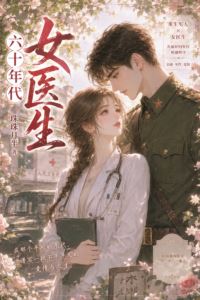
Fang Yuan is a nineteen-year-old clinical medicine graduate returning to her hometown of Yuyang County after completing her studies at the provincial medical university. She is the eldest daughter of Fang Xiaoqin, an accountant at the local textile factory, and the granddaughter of Fang Zhiyuan, a renowned traditional Chinese physician known as Divine Needle Fang. Following the death of her father and her maternal grandfather, Fang Yuan chooses to work at the county hospital rather than staying at the prestigious affiliated hospital in the provincial capital. Her primary motivation is to support her mother and bring her four-year-old sister back from the countryside, where she has been raised by her paternal grandmother. Fang Yuan possesses a unique medical background, combining her formal Western medical training with the acupuncture and moxibustion techniques inherited from her grandfather. She hides a significant amount of cash, gold bars, and jade inherited from her grandfather, concealed in a sandalwood box beneath her bed.

Upon reporting for duty at Yuyang County People's Hospital, Fang Yuan is assigned to the surgery department under the supervision of Doctor Jiang. The hospital is led by Director Lin, a compassionate leader who prioritizes patient care over financial constraints, and Director Chen, who manages administrative and financial matters. Fang Yuan’s first night on duty is interrupted when neighbors rush to her home because the youngest son of the Chen family has collapsed. Using her grandfather’s moxibustion technique with burning matchsticks, Fang Yuan successfully revives the young man, who had suffered from qi collapse due to chilling his waist with ice during a hot summer night. This incident establishes her reputation in the community and earns the gratitude of her neighbors.

At the hospital, Fang Yuan observes the challenges of working in a rural medical setting. Director Lin advocates for treating a poor farmer, Liang Youtian, who is suspected of having gastric cancer but cannot afford the necessary examinations or surgery at a larger hospital. Despite financial concerns raised by Director Chen, Director Lin insists that the hospital fulfill its duty to the people, ordering that Liang undergo full examinations and that Doctor Jiang perform the gastrectomy if cancer is confirmed. Fang Yuan assists Doctor Jiang in various cases, including a pediatric surgery for a boy with intestinal obstruction caused by roundworms. She also encounters a young man who had pinned a Chairman Mao badge directly into his chest flesh, a result of extreme fanaticism, which she treats with clinical detachment.

A significant emotional conflict arises when Yao Hongying, a medical assistant in the obstetrics department, breaks down after failing to save a pregnant woman and her twins. The tragedy occurred because the patient’s family refused to let the male surgeon, Doctor Tian, perform the emergency C-section due to feudal beliefs about male-female modesty. Yao Hongying vows to learn surgical skills from Doctor Tian to prevent such tragedies in the future, and Fang Yuan supports her resolve.

The narrative shifts when Chen Nanfang, a tall PLA soldier, arrives at the hospital in the rain looking for Fang Yuan. He reveals that he is there for medical treatment but acts with obvious nervousness and affection, suggesting a prior connection between them. Fang Yuan is bewildered by his behavior, as she does not recognize him, but he departs with a promise to return the next day. This encounter introduces a romantic subplot and hints at a past history that Fang Yuan has yet to recall or recognize. Throughout these events, Fang Yuan balances her professional duties, her family responsibilities, and the complex social dynamics of the county hospital, striving to grow as a physician while navigating the limitations of her environment.

Novel Items

More
Furniture
Uncle's bamboo bed where Xu Yao sprawls out for an afternoon nap. Xu Jia'an climbs onto it to snuggle with her.
Item
Two large blocks of ice hauled by the Chen family's eldest son from the textile factory. They brought great joy to the workers on a midsummer night. The Chen family's youngest son used ice against his body to cool himself, which caused his waist to become chilled.
Item
Used by Qin Yajuan to block the keyhole of Xu Jingchu's drawer lock, making it appear broken and requiring someone to fix it.
Manuals
A medical text that Fang Yuan memorized from her grandfather. She silently recited it in her mind to help herself fall asleep before reporting for duty.
Item
A mosquito coil lit by Qin Mian at the entrance of their room to keep mosquitoes away during the hot summer nights.
Event
The medical condition of the Chen family's youngest son. His waist was chilled by ice, and during intercourse his yang qi leaked downward, causing him to lose consciousness. Fang Yuan treated it with moxibustion on the Governing Vessel using burning matchsticks.
Latest Release
DateGroupRelease
2026-08-11shanghai fantasy c10
2026-08-11shanghai fantasy c9
2026-08-11shanghai fantasy c8
2026-08-11shanghai fantasy c7
2026-08-11shanghai fantasy c6
2026-08-11shanghai fantasy c5
2026-08-11shanghai fantasy c4
2026-08-11shanghai fantasy c3
2026-08-11shanghai fantasy c2
2026-08-11shanghai fantasy c1

Community Reviews

Rating(3.9 / 5.0, 23votes)
5 stars
8(35%)
4 stars
5(22%)
3 stars
10(43%)
2 stars
0(0%)
1 stars
0(0%)

Popular reviews

... Read More
Okay, let's talk about stakes because this chapter is a masterclass in escalating tension without a single action scene. On the surface, the conflict is simple: a poor farmer's son needs surgery the hospital can't afford to perform. But the author immediately layers this with at least four different levels of conflict, and they all feed into each other. First, there's the patient-level conflict. Liang Youtian is in his thirties. He has a suspected stomach tumor. If they don't treat him, he has ten months to live. That's not abstract — that's a man who will go home and wait to die. Director Lin has personally visited him. This isn't a statistics problem; it's a person. Second, there's the institutional conflict. Director Chen lays it out plainly: the last two emergency patients' expenses are still outstanding. The hospital is already strained. Performing a gastrectomy — a surgery they've never done before — at a county hospital that lacks the equipment and expertise is a enormous risk. If something goes wrong, the hospital bears the responsibility. If they can't collect the fees, they absorb the loss. Third, there's the personal conflict for Fang Yuan. She's arrived at this hospital full of idealism, and within hours she's witnessing the collision between that idealism and reality. Director Chen's admonishment about ambition, Director Lin's moral certainty, Doctor Jiang's clinical pragmatism — she's standing in the middle of all of it, and she hasn't even started working yet. What will she believe? Who will she become? Fourth, and this is the most subtle layer, there's the conflict between different definitions of what a hospital is. Is it a business that needs to balance its books? Is it a charitable institution that must treat everyone regardless of ability to pay? Is it a government entity that must follow procedure? Director Lin believes it's the second. Director Chen knows it's the third. Doctor Jiang just wants to perform the surgery. And Fang Yuan... she's still figuring it out. The stakes are raised even higher when Director Lin reveals that if the tumor is malignant, the surgery must be performed at the provincial hospital — meaning Liang Youtian would need to travel, endure another level of bureaucracy, and face costs the county hospital can't control. The system is designed to push poor people out, and Director Lin is explicitly choosing to resist that design. What makes this conflict so gripping is that everyone is right. Director Chen isn't a villain — he's protecting the hospital's survival. Director Lin isn't a saint — he's making a calculated moral gamble. Doctor Jiang isn't indifferent — he's focused on what he can control. And Fang Yuan isn't naive — she's just beginning to understand that medicine isn't just about saving lives, it's about navigating the impossible choices between saving some lives and preserving the ability to save others. The chapter ends without resolving any of this. A temporary meeting will be held. The Party Secretary and department heads must agree. The family must obtain certification. The surgery may happen, may not. And Fang Yuan is standing there, holding her ration coupons, watching the steam rise from the cafeteria's braised pork meatballs, completely unaware that her first day has already changed everything.
... Read More
Let me just say — the way this chapter opens is chef's kiss. Fang Yuan walks into Yuyang County Hospital and the very first thing she witnesses is Director Lin helping an elderly farmer who can't afford surgery. That's not accidental worldbuilding, that's the author slamming the thematic door open and saying: this is the story we're telling. From page one, the hospital isn't just a workplace — it's a moral arena where every decision carries weight. The plot structure here is deceptively simple on the surface — a fresh graduate's first day — but underneath, it's layering three separate narrative threads that are about to collide. There's Fang Yuan's personal arc (ambition vs. roots, idealism vs. reality), the institutional arc (can a county hospital actually practice compassionate medicine when the money isn't there?), and the patient arc (Liang Youtian, a man in his thirties with a suspected stomach tumor, caught between hope and poverty). These three threads are braided together and the tension builds almost invisibly. What I found most impressive is how the author uses the onboarding sequence — usually the dullest part of any workplace story — as a deliberate pacing device. The bureaucratic paperwork, the ration coupons, the awkward encounters with staff, the white coat that makes her feel hotter — all of this slows the narrative down so that when Director Lin drops the Liang Youtian bombshell, it hits like a physical blow. The contrast between the mundane (two jin of meat coupons) and the existential (a man's life hanging in the balance) is exactly what makes this story feel so grounded and real. The cliffhanger ending of this section — Fang Yuan holding her meat coupons while the hospital's moral crisis simmers behind the scenes — is a brilliant structural choice. It mirrors her own position: she's just arrived, she's still figuring out the small things (cafeteria food, ration coupons), and she has no idea yet how deeply she's about to be pulled into the big things.
... Read More
The sensory details in this chapter are what make it feel like I'm actually standing in Yuyang County Hospital. Not metaphorically — I mean the author gives me enough concrete, specific information that I can almost smell the place. The gray outer wall painted with the large black slogan "Serve the People Wholeheartedly" — that's not just decoration. That's the entire ideological framework of this world rendered in paint and brick. The hospital exists under that slogan, and every moral decision in this story will be measured against it. Director Lin literally embodies that slogan. Director Chen worries about whether the hospital can afford to live up to it. And Fang Yuan, in her white coat that makes her sweat, is about to find out what it actually costs. The office descriptions are equally precise. Director Chen's office: simply furnished, desk, chairs, filing cabinets, the portrait of the Great Leader on the wall. This is a man who lives at the hospital — he stayed overnight after his shift just to welcome a new graduate. The rattan chair Fang Yuan sits on, her back straight, hands on her knees — she's performing the role of the respectful junior, and the setting demands it. But the most surprising worldbuilding detail comes at the very end, and it's about food. Two jin of meat coupons. Braised pork meatballs made from lean meat. The tip about buying fatty cuts and pork offal instead. This is the China of the planned economy, where your relationship to the state is mediated through coupons and rations, and the smallest details of daily survival matter enormously. A young doctor's first paycheck isn't just money — it's the difference between her family eating meat or not. The hospital itself feels like a character. It's underfunded, overworked, caught between its mission and its means. The fact that the last two emergency patients' bills are still outstanding tells you everything about the institutional pressure these doctors face. And yet — and this is the crucial thing — it still functions. People still show up. Director Lin still helps farmers at the door. Doctor Jiang still stays late to train a new graduate. The building is gray, the slogan is faded, but the people inside are trying.
... Read More
There are so many layers to unpack in this chapter that I barely know where to start. Let me just pick one thread and follow it. The white coat. Fang Yuan puts it on and immediately feels hotter. This is not an accident of writing — it's the first symbolic moment of her professional identity. The white coat represents everything she's trained for, everything she chose when she decided to study medicine. But it also represents the weight of expectation, the institutional authority she now carries, and the physical discomfort of stepping into a role that's larger than her. Then there's the ration coupon. Two jin of meat. In a world where the state controls distribution, the coupon is a tiny piece of paper that determines whether a family eats well or barely survives. It's a symbol of the system that both sustains and constrains these people. Fang Yuan smiles until her eyes narrow into crescents when she receives it — this is genuine joy, the kind that comes from knowing you've provided something tangible for your family. But it's also a reminder that her salary, her status, her entire position as a doctor, is mediated through a bureaucratic apparatus that could just as easily withhold it. The portrait of the Great Leader on Director Chen's wall is another symbol that does heavy lifting. It's not just set dressing — it's the ideological framework against which every decision in this hospital is measured. "Serve the People Wholeheartedly" isn't just a slogan on the outer wall; it's the standard by which Director Lin judges himself and everyone else. When he says the hospital exists for the people, he's not being poetic. He's quoting the wall. And the bicycle — Director Lin arrives on a black Forever bicycle, the most common bicycle in China, the symbol of ordinary dignity. He doesn't arrive in a car. He parks it, walks over to help an old farmer, and becomes the moral center of the story. The bicycle is his equalizer. It says: I am one of you, and I will ride back to you. The production team certificate of financial hardship that Director Lin proposes — this is perhaps the most important symbol. It's a piece of paper that transforms a moral obligation into an administrative procedure. The system can accommodate compassion, but only if it's documented, certified, and routed through the proper channels. Director Lin knows this. That's why he doesn't just declare that the hospital will treat Liang Youtian — he immediately starts thinking about the paperwork.
... Read More
I need to talk about the scene where Fang Yuan wipes her little cousin's face. This is the kind of detail that just DESTROYS me every time. The kid has a trail of snot 'almost reaching his mouth,' and Grandma Xu just pinches it off with her bare hand and flicks it onto the ground, saying 'don't let him get your handkerchief dirty.' And then Fang Yuan—clean, city, university-educated Fang Yuan—catches the boy, wets her own handkerchief, and gently wipes his face. The little boy twists and tries to break free and is about to cry and she gives him candy. This is the entire emotional architecture of the book right here. Fang Yuan is someone who has left the village, someone who has become a doctor, someone who lives a different life now. But she still has this handkerchief in her bag. She still knows how to be gentle with these kids. She still brings candy. And then Aili—her own little sister—doesn't recognize her. 'Who are you? Why are you in my house?' I literally felt my chest tighten. They'd only been apart for six months but that's apparently an eternity in a five-year-old's memory. And Aili's response isn't even emotional, it's transactional: 'Did you give him that? I want one too.' She's already learned the language of this family—love is measured in candy and dolls and who gets what. The scene where Grandma Xu distributes the gifts is equally devastating in its quietness. She keeps the floral fabric for Guimei, gives shoes to both nephews' families, and Aunt Xu just... stares at the malted milk with wide eyes and says nothing. She knows her place. She knows her mother-in-law won't share. The way Aunt Xu 'did not dare entertain any thoughts about asking'—that single line contains an entire lifetime of learned powerlessness. But then Fang Yuan gives Aili the blinking cloth doll and the girl's face 'lit up with a brilliant smile.' She hugs it, feels the blinking eyes, and for one moment the whole complicated hierarchy of this family collapses into something simple: a little girl happy with a toy. That's the emotional core of this book, I think. Not the grand tragedies or the heroic deaths, but these tiny moments where love manages to find a way through all the messiness.
... Read More
I'm convinced the author has this one trick up her sleeve: every character's dialogue reveals their social position without her ever having to explain it. Take the malted milk scene. Aunt Xu 'stared at them with wide eyes' but 'did not dare entertain any thoughts about asking.' She doesn't say anything at all. Her silence is her dialogue. We know exactly who she is in this family hierarchy, and we know she has spent a lifetime learning her place. The fact that she wants the malted milk 'for her younger son to nourish his health' but can't ask for it—this is a woman who has internalized her own invisibility. Compare that to Grandma Xu, who distributes the gifts with absolute authority. 'She distributed the two pairs of Liberation shoes... She kept one for herself and gave the other two to her two sons' families as before.' The 'as before' is doing so much work there. This is how she's always done it. This is the established order, and she maintains it without explanation or apology. And then there's Aili, whose entire personality is contained in these exchanges: 'Who are you? Why are you in my house?' 'Did you give him that? I want one too.' 'I'm not called Aili. I'm Guimei.' 'The doll looks so well made. It must have been very expensive.' This is a five-year-old who is already calculating, already negotiating, already protecting what she's gotten. She hides the candy behind her back 'afraid that if Fang Yuan realized she had mistaken her for someone else, she would snatch the candy back.' This kid is a survivalist. The dialogue in the Li Dagen scene is even more striking because of how little the villagers actually say. 'What a disgrace. Such a disgrace. She's not even married, yet her belly's already swollen.' The old man doesn't need to say more. The collective voice of the village speaks through him, and it's a voice that has already judged, already sentenced, already decided that a fifteen-year-old girl's life is worth less than family honor. What I love most is how the author lets silence do as much work as speech. Grandma Xu's hurried steps, Aunt Xu's wide eyes, Aili's huffed pigtails—these are all forms of communication that don't require words.
See all reviews

Characters

See all characters

Custom lists

Oops…There is nothing here.