Fake Heiress Returns to the Village, Pampered by a Scheming Rustic Man
Novel Info

Summary

... Read More

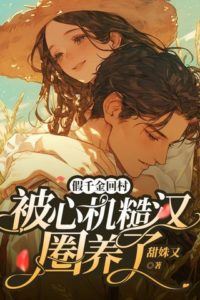
Li Jiao, once a pampered heiress from the capital, was abandoned by her adoptive parents and sent to the remote Shishui Village after the real heiress returned. In her previous life, she married Qin Lie, a man with a problematic political background and a disabled leg, only to despise him and elope with the deceitful educated youth Li Wenbo. Li Wenbo sold her into slavery, leading to a decade of suffering and a tragic death where Qin Lie, having searched for her relentlessly, died of grief beside her frozen body. Reborn on a snowy night in 1982, Li Jiao retains her memories and resolves to change her fate. When Li Wenbo appears at her window to collect the hush money Qin Lie earned at great personal risk, Li Jiao violently rejects him, smashing an enamel mug over his head and throwing him out. She then turns her attention to Qin Lie, who is suffering from a high fever and a gangrenous leg wound, believing her kindness is merely an act before she leaves him.

Despite Qin Lie’s self-loathing and attempts to push her away, Li Jiao insists on staying. She warms her icy hands against his chest and declares that she will not abandon him. The next morning, Qin Lie’s abusive sister-in-law, Wang Cuifen, arrives to demand the money, insulting Qin Lie’s status and threatening to take the funds for her own children. Li Jiao fiercely defends her husband, threatening to expose the Qin family’s embezzlement and abuse if they touch the money. She physically repels Wang Cuifen, establishing her dominance in the household. Recognizing the severity of Qin Lie’s leg infection, Li Jiao takes him to the county hospital. She pays for emergency surgery and expensive imported antibiotics, spending their entire life savings of 550 yuan. The surgery is successful, saving his leg, but the medical bills deplete their funds almost immediately.

With no money left for further treatment or food, Li Jiao ventures into the hospital corridor to find a way to earn income. She encounters an old man selling what appears to be worthless firewood. Utilizing her knowledge of traditional Chinese medicine, Li Jiao identifies the branches as rare, fifty-year-old wild Broad-tendon Vine, a potent herb for bone and tendon recovery. She buys the entire stock for forty cents and begins stewing it with an old hen in the hospital ward. The aromatic soup attracts the attention of the retired Old Bureau Chief, a patient suffering from severe rheumatism. After tasting the broth and experiencing immediate relief from his chronic pain, the Old Bureau Chief agrees to buy the remaining herbs and the recipe for eighty yuan. Li Jiao continues to sell the soup and herbs, generating enough income to cover hospital fees and purchase warm clothing and food for Qin Lie. Throughout this process, Qin Lie remains skeptical of her sudden devotion, suspecting it is a manipulation, yet he finds himself increasingly captivated by her genuine care and protective nature. Li Jiao’s transformation from a spoiled, blind bride to a capable, fierce protector marks the beginning of a new dynamic in their marriage, as she works to secure their future while nursing Qin Lie back to health.

Novel Items

More
Item
A blue cloth bag patched with gray fabric that contains exactly 550 yuan. 500 yuan is hush money from the coal mine cave-in, and 50 yuan came from selling the family's last rations. Qin Lie kept it as Li Jiao's way out to survive the winter. Li Jiao clutches it tightly upon rebirth and later throws it onto the kang bed.
Item
A new enamel mug placed on the desk in Su Xiaoyin's prepared room by Yuan Songzhi.
Item
A single one-cent coin that Li Jiao pulls out and hurls at Li Wenbo after smashing him with the enamel mug. She tells him it is money for his coffin and orders him to get lost.
Earnings
The amount You You earned by collecting recyclables door-to-door with A Jiu's help, which she used to treat her brothers to a meal.
Clothing
Lu Shili brought one military coat; Grandma Lu mentioned sending three more from home.
Item
A thin pink sweater worn by Li Jiao under her military coat. When she climbs onto the kang to warm herself with Qin Lie, the sweater clings tightly to her graceful figure. Her exceptionally fair skin glows brightly in the coal-dust-filled room.
Latest Release
DateGroupRelease
2026-08-11shanghai fantasy c6
2026-08-11shanghai fantasy c5
2026-08-11shanghai fantasy c4
2026-08-11shanghai fantasy c3
2026-08-11shanghai fantasy c2
2026-08-11shanghai fantasy c1

Community Reviews

Rating(3.4 / 5.0, 5votes)
5 stars
0(0%)
4 stars
2(40%)
3 stars
3(60%)
2 stars
0(0%)
1 stars
0(0%)

Popular reviews

... Read More
The atmosphere in this book is NO JOKE. I don't think I've ever felt the cold so viscerally from reading. The author doesn't just say "it was cold"—they make you feel it. The howling wind driving snow through cracks in the earthen house windows. The icy dirt floor under bare feet. The kerosene lamp casting dim light. Qin Lie in just a black work vest on a freezing night, his leg wrapped in tattered black cloth with a faint smell of rotting flesh. These details aren't decoration, they're the whole point. The poverty here is so specific and sensory that it becomes a character itself. And the contrast! Li Jiao's skin described as "smooth as peeled eggs" versus Qin Lie's bronze skin covered in scars, versus Wang Cuifen's greasy, unwashed clothes and the children with crusty sleeves and yellow snot. The visual worldbuilding is almost cinematic. There's this one moment in Chapter 1 where Li Jiao steps barefoot onto the icy dirt floor and the freezing wind rushes in with snowflakes—that's a scene I will not forget. The earthen room filled with coal dust, the thin worn quilt barely covering Qin Lie, the way the snow blocks the mountain passes. Every setting detail serves the emotional story. The cold isn't just weather, it's the literal and figurative environment these people are surviving in. And the 1982 setting with its class background politics, the illegal coal mines, the educated youth references—it all feels grounded and real, not like a generic historical backdrop. This is a world I can smell, feel, and shiver in.
... Read More
Okay, let me just say it upfront—rebirth novels are everywhere and most of them are trash. But this one? This one has me hooked from page one and I don't even care that the premise is familiar. The structure here is surprisingly tight. You've got the classic setup: protagonist dies miserably, wakes up at the critical turning point, and gets to rewrite everything. But what makes it click is the TIMING of the rebirth. She wakes up on the exact snowy night when Li Wenbo comes to collect her—the moment she betrayed Qin Lie in her past life. That's not just convenient, that's surgical. The author could have dropped her back years earlier, but no, they put her right at the crossroads where everything went wrong. And then—BAM—she smashes an enamel mug on Li Wenbo's head. Not a subtle confrontation, not a clever verbal takedown. She just goes full physical violence and it is SO satisfying. The plot doesn't waste time either. Chapter 1 establishes the past life tragedy, the betrayal, the death, and the rebirth. Chapter 2 immediately throws in the next conflict with Wang Cuifen coming to steal the money. There's no filler, no unnecessary exposition dumps. The narrative moves like a freight train. But here's what I'm curious about: we only got seven chapters and the text cuts off mid-scene. How is the author going to sustain this momentum? The rebirth trope always risks becoming repetitive—will Li Jiao just keep one-upping everyone, or is there going to be real complication? Because if the plot stays this efficient, I'm not complaining, but I do wonder where the real twists are hiding.
... Read More
This story is really about worth. Not money worth, though the 550 yuan is obviously central to the plot—it's about human worth. Who deserves to live? Who deserves to be loved? Who gets to be valued? Li Jiao was abandoned by her adoptive parents the moment the real heiress returned. She married Qin Lie for protection but despised him for his background. Li Wenbo represents false value—sweet words, education, charm, but ultimately worthless. And Qin Lie? He's the one whose value no one sees, not even his own. The blue cloth bag is such a loaded symbol. It contains the hush money from a fatal cave-in, money earned at the cost of a leg, money that was supposed to buy coal to survive the winter. In her past life, she stole it and ran. In this life, she throws it back at Qin Lie and climbs into bed with him. That single gesture—returning the money—is the thematic core of the entire story compressed into one moment. The money represents everything the world told her had value (safety, escape, a better life) and everything Qin Lie told her he had to offer (nothing, or so he believed). By rejecting Li Wenbo and choosing Qin Lie, she's rejecting the whole system of value that the story critiques. The class background politics, the village's scorn, the family's exploitation—all of it comes down to who decides someone is worth something. And Li Jiao is rewriting that calculation. The recurring imagery of cold and warmth is doing heavy thematic lifting too. Cold isn't just temperature, it's abandonment. Warmth isn't just heat, it's being chosen. Qin Lie's body becomes a symbol of everything the world discards—and she's clinging to it.
... Read More
"Qin Lie kneeling in the snow, dragging his bad leg, holding her already stiffened body... tears of blood streamed from his eyes as he followed her in death." I need a minute. I actually need to step away from this screen because my heart is literally aching. Let me just... let me just say that the past-life prologue alone wrecked me. Ten years of suffering, sold into the mountains, freezing to death—and that man who she despised, who she ran away from, who she thought was worthless—he spent ten years looking for her. His hair turned white. He died holding her cold body. And then she wakes up and her first instinct isn't even revenge, it's to climb into BED WITH HIM because she's cold. That contrast is everything. The way the author writes Qin Lie is what kills me. He's sitting there, feverish, leg rotting, and when she smashes that mug and slaps his sister-in-law, his first thought isn't relief or confusion—it's that she's putting on an act to leave him. He WANTS her to hate him. He thinks he deserves nothing better. And then she climbs into his bed, presses her icy hands against his chest, and says "Don't you know how to warm me up?" and his earlobes turn red. I am not okay. The CP chemistry here isn't built on grand romantic declarations—it's built on this devastating asymmetry where she knows everything and he knows nothing, and she's trying to protect him while he keeps assuming she'll leave. That tension? Chef's kiss. Also the moment where she shows him her red palm and says "her face was too thick, it hurt my hand"—she's playing the spoiled wife role but it's actually genuine because she just slapped someone to defend him. I'm a mess.
... Read More
The stakes in this opening are IMMENSE and the author knows exactly how to keep you gripping the edges of your seat. Let me break down what we're working with here because it's not just one conflict, it's a whole ecosystem of them. On the personal level: Li Jiao's life depends on not repeating her past mistakes. One wrong move and she's sold into the mountains again for TEN YEARS. That's not abstract tension, that's visceral. She literally died and came back. On the relational level: Qin Lie is convinced she's going to leave him. Every kind thing she does, he interprets as part of an act. That dramatic irony is agonizing because we KNOW she won't leave, but HE doesn't, and every scene between them is loaded with that gap. Then you've got the external threats multiplying fast. Li Wenbo is still out there plotting. Wang Cuifen just tried to steal life-saving money and got slapped. The Qin family sees Qin Lie as a burden and the money as theirs. And underneath all of this is the class background issue—Qin Lie's "problematic" heritage makes him a target in 1982 rural China. What I love is how the author escalates. Chapter 1 ends with Li Wenbo at the window and Qin Lie watching from the bed, wounded and doubting. Chapter 2 immediately introduces Wang Cuifen kicking the door in. There's no breathing room and that's intentional. The conflict never settles, it just shifts shape. And the physical stakes are real too—Qin Lie's leg is infected, he's running a fever, they're surviving on barely anything in the dead of winter. Every conflict layer raises the question: can they make it through this winter, let alone the decade ahead? The suspense is maintained because we know the past-life ending (death, betrayal, loss) and we're watching every scene with the dread of whether history will repeat. But Li Jiao is different now. She's armed with knowledge and she's not playing nice. That's what makes the conflict so electric.
See all reviews

Characters

See all characters

Custom lists

Oops…There is nothing here.