Fairy Tale Chronicles - Reviews

Fairy Tale Chronicles
+Add to Custom List
Sort
Add review
... Read More
Okay so let me just say this first—how does a crafting chapter turn into a boss fight and somehow still hold together? I literally did not expect that. We start with Hiroshi and Haruna discussing underwear enchantments and somehow we're fighting a 15-foot spider boss in the deep forest. But here's the thing—it actually makes sense within the world's logic. They NEED spider silk for the armor, which means they GO TO THE SPIDER NEST, which means THEY FIGHT THE SPIDER BOSS. Classic cause-and-effect chain. The author didn't cheat us into a random encounter; the plot EARNED this fight through the crafting system. "Considerin' the worst case scenario, someone who can take down a Berserker Bear mano-y-mano in two seconds flat." That line right there—it's the perfect threshold moment. It tells us how dangerous this is without outright stopping the story. And when Haruna literally says "I knew I shouldn't have mentioned it" right before Piaranork shows up?chef's kiss. The meta-awareness of "we spent too long talking about it so it HAS to appear now" was honestly funny AND satisfying because it's such a natural storytelling device. The fight itself had multiple turning points that kept me hooked. Haruna gets knocked down, Hiroshi has to hold the line alone, then she chugs potions for the big finish. Each beat raises the stakes differently. By the time Elemental Dance hits, I was genuinely on the edge of my seat. The plot threads weaved together—literally—like the spider silk they were gathering.
... Read More
I'll be honest—I almost skimmed the first few pages because it's just two kids talking in a game lobby, right? Wrong. The pacing here is actually really smart and I want to talk about why. The author opens IN MEDIA RES with Hiroshi and Haruna already reacting to something impossible, then immediately pulls back four hours to show us the normal world before crashing us back into the crisis. That structural choice does so much work. We spend the first section establishing who these people are—Hiroshi the self-aware loser otaku, Haruna the untouchable beauty with English blood, both of them actually brilliant students despite their reputations—and then WHAM, they're sorting through a dead bear's remains and asking "what do we do?" The middle section, where Hiroshi is interacting with his crafting friends, might seem like filler to some readers but it's actually essential groundwork. We learn about the potion economy, the difficulty of crafting, the social dynamics of the game. It's exposition disguised as casual conversation, which is honestly one of the hardest things to do well and the author nails it. Friend A's voice is distinct—we can tell them apart just from dialogue. "Cheap!!" and "Your storages are all that ridiculous?" These are people, not NPCs. But the real masterstroke is the ending. Hiroshi is about to suggest delving into a dungeon, the text cuts off mid-sentence, and we're left hanging. The author just LEFT US THERE. No dramatic reveal, no cliffhanger narration—just a sentence cut short like someone getting interrupted. That's how you make me open the next chapter immediately.
... Read More
What I love about this worldbuilding is how the author doesn't just drop exposition—they make you FEEL the systems through the characters' reactions. The garbled mail invasion is such a brilliant way to explain the isekai trigger. It's not a mysterious truck or a glowing summoning circle, it's a BUG. A literal game-breaking security flaw that corrupts your mailbox and yanks you into another world. That's SO much more interesting because it makes the game world feel like a real system with real vulnerabilities. Then there's the forest itself. The text says Hiroshi recognizes nearly all the plant names even though most don't exist in the real world—and that detail hit me hard. His game knowledge has BLED into his actual perception. The world is responding to his avatar's expertise. That's the kind of subtle worldbuilding that makes you sit up and pay attention. The crafting system is where this really shines though. Making glass bottles from river stones with a short-hand enchantment, turning rabbit fur into string with bare hands at high weaving skill, building a furnace from rocks and firewood, making a mortar, crushing vegetation into potion ingredients—the whole process feels tactile and real. "The knack for crafting's repetition, routine, and acceptance of futility." That line alone tells me everything about this world's philosophy. Craft isn't just a mechanic, it's a MINDSET. And the startup clothing detail? Brilliant. It's loose enough to avoid full exposure but "depending on the pose or angle, it wasn't difficult to be able to see cleavage." The author acknowledges the absurdity of fantasy game outfits existing in real bodies. That's worldbuilding that winks at you.
... Read More
I'm going to be honest with you — when this entire middle section started with Hiroshi explaining Crafting skill branches, I was one second away from skimming. List of skills, sub-skills, extra skills, Making Mastery, rank systems — it's a LOT. And then he goes further into Carpentry, Ship Building, Construction, Farming, Fishing? Another list? But then I realized something: the pacing here is deliberately slow and it's working. This is the calm between the bear fight and whatever comes next, and the story knows it. Instead of rushing to the next action beat, it's giving us this long conversation that serves three purposes simultaneously — character development, worldbuilding, and plot setup. Every piece of skill information also tells us something about Hiroshi's personality, his playstyle, his history. The level difference between them (124 vs 153) matters for the story later. The fact that he tanks while she supports matters for their combat dynamic. The crafting drama explains why he's cautious. The transition at the end is where I really appreciated the pacing. After pages of skill discussion, the author just... stops. "So if something goes down, I hold up the target while you take care of it?" And then: "Come to think of it, a Berserker Bear meant we're pretty far from town." Cut to the next morning, two days passed, walking toward civilization. No cliffhanger, no fake-out. Just a clean scene break and forward motion. That confidence in structure is what separates good pacing from great pacing. The author isn't afraid to let the story breathe.
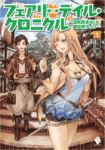
... Read More
"My want for clothes and my dignity are duking it out right now." — I literally laughed out loud at this. The whole exchange between Hiroshi and Haruna about making each other's clothes is one of the funniest things I've read in a while, and it works because neither of them is being dramatic about it. It's just two people who've been traveling together for days, running out of clean clothes, and slowly getting comfortable enough to have genuinely awkward conversations. What I appreciate most is that Haruna's reaction is so human. She doesn't swoon or get shy — she makes a crack about dignity and moves on. And Hiroshi's immediately backpedaling about not knowing how to make underwear for someone he barely knows measurements for? That's the kind of detail that makes their dynamic feel real. There's no manufactured tension here, no forced romance beats. It's just two people figuring out how to exist together in this weird new world. There's also this small moment where Haruna checks prices of clothes and sighs, and then immediately starts calculating whether making them herself is worth it. She's practical to her core. And Hiroshi, despite being apparently overpowered with his crafting, is the one who mumbles about recipes. Their dynamic is less "battle couple" and more "roommates who accidentally became a team," which I find way more interesting.
... Read More
The pacing in these chapters is genuinely masterful, and I want to break down WHY it works so well. It starts SLOW—really slow. Two paragraphs of dialogue about Auto-Size-Adjust on underwear. For anyone not invested in crafting systems, this could drag. But the author uses Haruna's reactions as a pacing valve: she groans, she groans again, she realizes making a single piece of attire was "quite the ordeal back in the middle ages." She's our stand-in for the reader, and her exasperation tells us exactly how tedious this process is without needing a million words of explanation. Then the pace SHIFTS. "In the end, Haruna had decided to traverse to the nest of spiders, blinded by desire." Boom—commitment to action. No more deliberating. We move from the forest path to the nest, and within pages we're already in combat. "I knew I shouldn't have mentioned it…" —this is the PERFECT pacing pivot. It's a moment of humor that simultaneously signals "the fight is about to start." The author uses dramatic irony as a gear shift between exploration and battle. The fight itself maintains excellent rhythm: Haruna draws the spider → fire pillar → charged Smash → Haruna's magical sword penetrates → Hiroshi disables fangs → spider flips Hiroshi → HARUNA GETS KNOCKED DOWN → desperate defense → heroic last stand. Each beat is shorter than the last, accelerating toward the Elemental Dance climax. And then— "Agh, I'm exhausted…" ... "Yeah sure no problem…" The sudden drop from maximum intensity to absolute depletion. That contrast is everything. If they'd ended on a triumphant note, it would've felt unearned. The exhaustion grounds the victory in reality.
... Read More
'Natural enemy' he says while clearly trusting her with his life. I'm not even mad about this character dynamic, I respect it. Hiroshi's gotta be one of the most uncomfortable male leads in the isekai space. The author does NOT let him off the hook — he gets pale and breaks out goosebumps whenever Anne or Myuzzel come within arm's reach, and his internal narration about needing to 'avoid putting pressure' on Haruna because of his condition? Chef's kiss for writing a guy who's genuinely trying despite being completely unhinged around women. But Haruna is the real treasure here. She's not just tolerating it — she's actively grateful. 'I really am glad that you're my partner, Azuma-kun!' comes out so panicked and sincere that I almost fell out of my chair. She sees his worth beyond the awkwardness. She explicitly counts 'he makes most things himself' as a positive trait. This woman has PRIORITIES and I love her for it. Their banter has this rhythm where she's observing him like a scientist and he's just... existing beside her while digging rocks. 'You've been studying me, I see' — said with zero defensiveness, like they're both aware this is how they operate now. Former classmates who somehow ended up as each other's closest person in a foreign world. There's no romance pressure, no forced tension, just two people who chose to read each other's tea because survival depends on it. Also the part where she puffs her chest out after explaining the stat system? Adorable. She's proud of her min-maxing knowledge and he notices and lets her have it.
... Read More
That hill. Just one geographical difference between the game and reality, but it's carrying SO much thematic weight. It's the story's way of saying: the fantasy is over, now you're in the actual world. Not the curated version, not the balanced version, not the version with tutorial text explaining who you are. The version where a random hill appeared on the road to Wulls and now you can't trust your own memory of this place. It's a beautiful metaphor for growing up — that moment when the world you knew from childhood texts stops matching the world you actually experience, and you have to recalculate everything. The antidotes themselves are symbolic too. They're preparing for a threat they can't yet see, making remedies against something they hope won't materialize. It's the human impulse — plan for the future even when the future is a mystery. Three hundred bottles of something that might save knights who might get poisoned. Hope as practical action. Hiroshi's attribute discussion ties into this theme of measurable versus experiential reality. In the game, you could see your progress. Here, 'you weren't able to subjectively see any effects until after ten or so attribute points.' The gap between feeling strong and being measurable is where the real tension lives. They're people who trusted numbers before, and now the numbers might not apply. And the 'Visitors from the Unknown Continent' — if the world's own tutorial acknowledged them, then this reality has an architecture that anticipated their arrival. That's either comforting or deeply unsettling depending on how you look at it. Does the world WANT them here? Or is it just prepared for them?
... Read More
I need to talk about how this chapter breathes, because the rhythm is deceptively controlled. It opens at the calmest possible frequency — measuring ingredients, stirring pots, bottling. The prose even slows down to match: 'stirring for ten seconds... stirring them again for about fifteen seconds... stirring it earnestly for about forty minutes.' You feel the time passing. Three hours of work. Eleven o'clock. This is ASMR storytelling and I let myself relax into it. Then: tool procurement scene. Still slow, still practical. Conversation about forging, about self-sufficiency, about the guild's institutional knowledge. Myuzzel's dialogue keeps the pace forward without urgency. You're still breathing easy. Mountain climb. Nature interrupts. Clothing tears. The prose gets physical again — branches, thorns, frustration. A slight elevation but still in the same gear. And then: the hill that shouldn't exist. Everything pivots. The conversation drops into this quieter, more focused register where they're actually processing what it means. Then the 'Visitors from the Unknown Continent' line hits and the chapter basically changes temperature. By the end, they're deep in statistical analysis of attribute growth rates like it's a seminar, not an adventure novel. The cliffhanger is intellectual, not dramatic. No monster appeared, no one was threatened. But I need to know what happens next because the ground they're standing on just became uncertain. That's actually more effective than any cliffhanger where someone yells 'run!'
... Read More
OK so let me just say this: when Hiroshi drives that knife into the bear, I literally gasped out loud. Like, he was SHAKING. The text explicitly says his head was a blank slate and his entire body wouldn't stop trembling. And you'd think he'd run from the BEAR, right? Wrong. He steps TOWARD it because he's more scared of the girl than he is of a three-meter monster. That is some genuinely beautiful character writing. He's terrified of females—"Faced with the deep trauma associated with the beings known as 'females'"—but his instinct to protect kicks in anyway. That's not just a funny gag, that's him choosing to do the right thing while absolutely falling apart inside. And then there's Haruna. She trips on a rock in a panic, can't use her abilities properly, and is about to get eaten. She didn't come in strong here, she came in desperate. But then Hiroshi shows up and she covers him with support magic. Two scared kids, startup knives, barely any equipment, and they take down a boss-level bear together. The partnership feels earned because we WATCHED them earn it. They're not instantly best friends, Hiroshi is still clearly guarded, but there's this unspoken recognition between them like "we're the only two people who understand what just happened." I also love how casually the author handles the clothing embarrassment moment. Haruna worries about walking around without makeup and her famous parents, and Hiroshi just... notices that her startup outfit leaves a LOT to be desired given it's now her actual body. "There really are quite a few issues with fantasy clothing..." The subtext is roaring but neither of them addresses it directly. Classic. So yeah. Hiroshi x Haruna energy? I'm here for it. Not romantic yet, but the foundation is solid.
... Read More
This scene where Hiroshi sets up a covert smelting operation inside the public smithy while bribing the attendant with a single Chrone as 'hush money' is one of the most vividly rendered worldbuilding moments I've read in this series. It's not just 'he made a sword.' It's an entire ecosystem of how craft works in this world. Let me walk through the layers: First, the magic circle drawn on the ground with fire extinguisher powder—that's enchanting being used as part of the INDUSTRIAL process, not just for personal buffs. Then the firewood gets runes carved into each log, which makes them burn hotter. The attendant's explanation about special vs. regular firewood, the pricing breakdown (20 Chrones with supplied firewood, 8 with your own heat source), the currency split between ingredients, cooperative workers, the Association—this is a functioning economy being shown, not told. And the visual of Hiroshi drawing a magic circle midair with his fingertip, the design getting sucked into the furnace, the flame visibly surging—the whole thing reads like a cinematic cutscene. The old smith's face twitching the ENTIRE TIME while watching this is the perfect reaction shot. You can see him processing that everything he knows about metalwork just got upstaged by a guy who treats enchanting like a standard production technique. The workshop cleanup detail where Haruna sweeps wood chips and the magic circle disappears, meaning 'erasure of evidence would be complete'—that single line tells you so much about how secretive and regulated crafting is in this world. This isn't a cozy fantasy village blacksmith. This is underground artisanal weapon-making with corporate oversight.
... Read More
Okay so the plot in this stretch isn't doing anything explosive — no cliffhangers, no twists, no massive reveals — but I genuinely enjoyed what's happening here. The narrative has decided to spend some quality time with its two leads figuring out how they fit together, and honestly? That's the plot. The bear encounter and the derailed train earlier got them stranded together, and now the story is naturally building a partnership from that awkward starting point. Hiroshi's reluctance to share his full cards because of "drama going 'round craftin'" is a really grounded reason — not some edgy secret, just a real-world analogy to why players might hide their build. It felt like the author knew exactly what kind of trust-building moment this needed to be. What's clever is how much plot information gets embedded in what reads as casual conversation. The level cap at 100 for the first chapter, the fact that Hiroshi already beat it and hit 124 while Haruna is at 153, all of this is world-building disguised as friendly chat. By the end of it, I actually know way more about how this game world operates than I did at the start of the chapter. And that walk toward town at the end — the line about being "pretty far from town" because of the Berserker Bear and calling it "a weird spot to be dropped in" — sets up the next journey without any drama. Just... "we're here, let's go there." Sometimes that's exactly what a story needs. But seriously, when is the actual adventure going to start again?

Leave a comment

You must be logged in to leave comments. or
