Fairy Tale Chronicles - Reviews

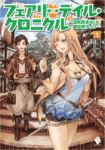
Fairy Tale Chronicles
+Add to Custom List
Sort
Add review
... Read More
Okay so let me just say this upfront: the way this story sets up the economic and institutional landscape is genuinely impressive, and I don't think I'm exaggerating when I say most isekai-type stories would just hand-wave this entire section. Instead, we get a full-on lesson in potion valuation, literacy rates, guild registration, and the logistical nightmare of mass-producing antidotes — all woven into what feels like daily life rather than exposition dumps. That's not easy to pull off. The plot here is doing something clever: it's making the world feel real by showing us the infrastructure behind the adventure. The fact that Class 7 potions cost 5,000 dollars but can resurrect someone from the brink of death? That immediately tells us what kind of economy this is. High risk, high reward, and the pricing reflects actual scarcity — not just "magic is rare so it's expensive" but "there are barely any potion makers who can craft Class 7, and they need Metalworking and Enchanting skills on top of Compounding." And then there's the political thread starting to tighten around them. The court magician's familiar showed up, a deal was struck, and suddenly Hiroshi and Haruna are being pulled into obligations they didn't sign up for. "At this point, they didn't have a clue how they were about to get involved with all of it." That line hit me like a truck. The author is laying the trap slowly, letting readers feel the noose tightening without the characters even noticing yet. What I found most satisfying was how the plot connected personal moments to larger consequences. Hiroshi's refusal to contract with the Association isn't just a character beat — it ripples into the economy, the guild system, and potentially the political balance. Every decision he makes now will matter later, and the story is smart enough to let us see the dominoes falling. I'm already worried about tomorrow's mission. The author made it very clear this is "one of the causes for getting them wrapped up with the court in the most troublesome and irreversible manner." When the narrator tells you that directly, you don't just nod and move on — you start keeping score of every minor detail, wondering which one will be the tipping point.
... Read More
There's a recurring motif in this section that I think the author accidentally made intentional — the idea of showing and hiding your hand. Haruna says "why don't we show each other our cards already." Cards as metaphor for who we are, what we can do, what we've been through. And Hiroshi's whole backstory about the crafting drama is about the pain of showing too much. One person revealed their full build, someone exploited it, and it destroyed relationships. So the caution becomes a survival mechanism. But here's the thing: the bear they fought, the train they ditched, the wilderness they survived — none of that required hidden cards. They won because they were transparent with each other in the moment. Haruna supported, Hiroshi tanked, they covered each other's weaknesses. The explicit discussion at the campsite is just formalizing what already happened organically. The "weird spot to be dropped in" line is the thematic core. They're not just physically in an unfamiliar place — they're in a world where the rules of their old life don't apply, where stats that used to be numbers on a screen are now real capabilities, where past grievances from a virtual world carry real emotional weight. The symbolism of being lost between forest and plateau mirrors their psychological state — not quite in the game, not quite out of it, navigating by memory and instinct. The potions Hiroshi makes are another layer — transformation through effort, turning raw materials into something that sustains. That's basically the whole story in miniature.
... Read More
This is a story about crafting. Not literally—well, also literally—but about how the things we build quietly hold entire worlds together, and how nobody notices until they're gone. Hiroshi is the ultimate support character. He's the guy making potions while everyone else is out hunting monsters. He's the one whose entire existence in this game revolves around preparation, patience, and producing things that other people get to USE. And here's the thing that got me—the text literally tells us: "Most of all, in this game where for a certain reason players training their crafting skills were extremely few." He's rare. His skill is valuable. And he thinks it's nothing special. "Everyone who does advanced crafting pretty much all have storages that resemble one another." This mirrors his real life so perfectly it hurts. He's the kid who gets good grades but describes himself as having a "loser aura." He avoids popular girls because he thinks it's pointless. He undervalues himself constantly. Meanwhile Haruna—literally beautiful, brilliant, successful—agrees with him about herself. Two kids who can't see their own worth, thrown into a world where their skills might literally determine survival. The potion system itself is symbolic AF. Those Level 8 potions that Hiroshi treats as junk? They're MORE effective than top-tier healing magic. But because nobody knows their value, because they can't be traded through official channels, because the NPCs won't touch them—they're essentially invisible. Sound familiar? I'm genuinely curious where this theme goes. In a world that's about to become REAL, will the crafters finally be valued? Or will the warriors get all the credit?
... Read More
I have to give credit where it's due — the description of Wulls is genuinely immersive. The author doesn't just tell you it's a big city, they build it piece by piece. The stone-and-brick architecture mixing with wood, the canals crisscrossing like streets, the sewer system actually working. That last detail is the one that sold it for me. Most fantasy novels pretend sanitation exists; this one mentions water pumps and sewage treatment integration. It's a small thing but it makes the city feel inhabited rather than staged. The history bit about Wulls and Agurina merging into one city under the seventh king was another nice touch. A three-hour walk between gates, public construction that brought in workers from everywhere, population explosion, investment paid back in fifteen years instead of a hundred — that reads like urban development, not just background lore dropped in for atmosphere. You can almost see the blueprint. And then there's the transportation system. Shared carriage stops, private carriages, canals, transportation gates. The fact that they have different options for different budgets makes it feel lived-in. The Black Cat's Eye inn being fifteen minutes from the East gate by canal — specific enough that you could navigate this place, vague enough that it doesn't feel like a game map. That's good worldbuilding. It doesn't announce itself, it just works.
... Read More
Okay can we just talk about the whole potion reveal? The setup is perfect. You have these two walking around with bags of what look like low-tier supplies, and the reader's like oh they're just selling level 2 stuff right? But then it hits you — Hiroshi crafted these, and that changes everything. The whole logic chain is so satisfying: crafting skill modifies item quality → his skills are absurdly high-tier → these potions are basically stealth OP. It's not just plot convenience, the book actually shows the cause-and-effect. That's rare. And then the whole Antidote scene at the Adventurers' Association — that's where it really lands. Kurt literally can't walk from the venom, and these guys hand over a cure like it's nothing. The receptionist's skepticism, the testing equipment, the moment her face drops when she sees the results... I loved that beat. It went from "oh these newcomers are nice" to "what IS this teenager." The tension between whether to trust them and whether to exploit them is woven into every interaction there. Also, the Venomous Wolf subplot feeding into the village request — that's good plot engineering. It's not just world flavor, it's a direct problem that Hiroshi's skills can solve, which justifies why he's valuable to the party beyond combat. The plot rewards preparation and specialization instead of just making everyone equally strong.
... Read More
The pacing here is honestly Masterclass-level. Let me break down why this works so well. Chapter 7 opens with what feels like a normal day—Hiroshi maxing out a skill, chatting with friends, getting suspicious mail. It's breezy. Almost mundane. Then BOOM: mailbox floods with errors, transition stone activates against his will, consciousness fades. The shift from slice-of-life to survival horror happens in about three paragraphs and I was NOT ready. But here's what's genius: the author doesn't linger on the panic for long. Once Hiroshi wakes up in the forest, there's a brief moment of confusion, then a female scream, then the bear appears, and within minutes they're fighting for their lives. The action escalates FAST but it never feels rushed because each beat has a clear purpose—introduce the threat, establish Hiroshi's fear, show his courage anyway, bring in Haruna as a partner, defeat the bear together. Then comes the recovery scene, which could have dragged, but instead becomes this quiet, almost domestic sequence of them splitting meat, cooking, discussing how they got here. It's a palate cleanser before the real work begins. The crafting section that follows is where I almost wish it had moved faster, but also... I get it. This is survival. Every step matters. The author uses the crafting process to naturally deliver worldbuilding information without it feeling like an info-dump. We learn about potion levels, enchantments, Extra Skills—all through dialogue between two people who need this information to survive. The chapter ends on "what's our goal here?" which is the perfect structural pivot. They've survived day one. Now the real story begins. I need to know what happens next. And I'm curious whether that goal of "heading back to Japan" is going to be as simple as it sounds.
... Read More
Let me just say—the atmosphere in these first chapters is TOP TIER and I need everyone to understand how much I appreciate what the author is doing here. The scene where Hiroshi and Haruna realize they're not just in a game anymore gave me actual chills. I'm talking about the moment Hiroshi looks around and thinks: "This was not the weak, anime-esque scenery of your typical VRMMO. The way it looked with its fresh hues, the way it felt, and the smell of the air. The living beings modeled unlike anything in the real world. And most importantly, the extremely sharp, unrestricted, real pain that you would feel when you got attacked." READ THAT AGAIN. Fresh hues. Smell of the air. REAL PAIN. The author doesn't need fancy prose to make you feel the shift from fantasy to nightmare—they just list the sensory details and boom, you're there. And the worldbuilding of Fairy Tale Chronicle itself is genuinely impressive for an opening chapter. We get the grinding congestion on day one, the crafting system so brutal it drives people away, the potion market dynamics, the fact that NPCs won't buy potions above Level 5, the stamina system that actually makes crafting feel like WORK. This isn't a game world that exists just as backdrop—it has RULES, ECONOMICS, CONSEQUENCES. The author spent real time thinking about why crafting is hard (stamina depletion, multi-skill requirements, the poison system on low-level potions) and that effort shows. You can FEEL the weight of this world. The bear scene at the very beginning—sorting through the realistic remains—while seemingly a small moment, is actually the author's way of saying: pay attention, none of this is cartoonish. Everything here has texture. I love it.
... Read More
The dialogue in this batch is genuinely funny and each character has such a distinct voice that I can tell who's speaking without looking at the tags. Hiroshi's voice is immediately recognizable—dialect-heavy, relaxed, full of contractions and casual phrasing. 'Darn skippy,' 'Exactamundo,' 'Whaddya,' 'ya don't seem perturbed.' He sounds like someone who's entirely comfortable in his own skin and has zero pretense. Even when he's doing something incredibly impressive—like enchanting a smelting furnace mid-process—he responds to praise with 'It really ain't that impressive though.' Classic deadpan deflection. Haruna's voice contrasts beautifully. She's more precise, more emotionally expressive, and when she's frustrated she goes FULL THROAT: "I sooo need to vent" "Do you realize how much of a shock it was to see my precious old weapon that I had cultivated with enchantments just get easily beaten..." She literally needs to TALK IT OUT on a party-chat frequency while walking home. That's not just dialogue—that's character. The secondary voices work too. The smithy attendant is dry and professional ('If we're talking about a guest from the Unknown Continent, it's to be expected that they're a bit removed from the average skill level')—he's seen weird stuff before but this still ranks high. The wry smiles throughout the batch are doing so much heavy lifting as non-verbal characterization. And the banter rhythm between Hiroshi and Haruna feels genuinely comfortable, like two people who've been through enough together that they can joke about life-threatening boss fights while walking home. Their dynamic isn't explained—it's just demonstrated through how they talk to each other.
... Read More
Let me be crystal clear about what's at stake here, because this author does NOT pull punches. Hiroshi and Haruna have been dropped into a fantasy world with NOTHING. No money. No proper gear. No shoes. Just startup clothing and a shoddy knife. They're not overpowered isekai protagonists who get handed cheat skills on arrival—they're regular players whose abilities transferred, yes, but abilities without resources are just potential. And potential doesn't stop a bear from eating you. The Berserker Bear itself is described as "a field boss meant to kill first-time players." That's not a minor enemy—that's designed to be a death sentence for newcomers. And these two barely survived with light bruises. One wrong move, one moment of panic, and the story ends there. But the stakes go deeper than immediate physical danger. These are people who were pulled from their reality—Hiroshi from his work, Haruna from wherever she was—without consent, without preparation, and without a clear path home. The garbled mail incident suggests this wasn't random. Something is BREACHING the system. And the fact that management sent a notification about it? That implies the developers KNOW something is wrong, which means the rules of this world might not be stable. The emotional stakes are just as high. Hiroshi's trauma around females is played for laughs but it's clearly genuine—he freezes, he stammers, he functions on pure instinct. Haruna is worried about her appearance and her famous parents, which seems trivial until you realize: if they're stuck here, who's looking for them? How long before people notice they're gone? The isolation is absolute. And that ending line—"what's our goal here?"—it's not just a plot question, it's an existential one. They need to survive, yes, but they also need PURPOSE. Without a goal, survival becomes just... waiting to die.
... Read More
Okay so I HAVE to talk about the Haruna Alvan arc because this is genuinely one of the funniest and most satisfying mini-arcs in this entire batch. She goes out, does a plaza performance, a unique quest just drops, and somehow she wrestles with both Chivalrous Thief Darl AND Chivalrous Thief Alvan—a humanoid unique boss—and WINNS. Just casually defeats him. And then the absolutely PEAK moment is when she gets Hiroshi to craft her a NEW weapon and it turns out the handmade sword from local area trash materials is BETTER than her +6 refined legendary she grinding-mode saved up for. The humor here is brutal in the best way. Haruna's party-chat meltdown is perfection: "I struggled to complete a quest and finally got my hands on Chivalrous Thief Alvan's Rapier. I saved up as much as I could and refine it to +6. Yet now! Do you realize how much of a shock it was to see my precious old weapon that I had cultivated with enchantments just get easily beaten by a weapon that was only made using the ingredients around this first-timer area?" She basically had to emotionally decompress because her favorite weapon got BYE-FELICIA'd by a sword Hiroshi whipped up in an afternoon. The narrative doesn't even moralize about it—it just lets the absurdity sit there and breathe. Also, the reveal that Hiroshi helped catch Alvan too? That layers in perfectly. These two operate on completely different skill tiers but they keep intersecting in ways that make the plot feel surprisingly cohesive despite the slice-of-life wrapping. The attribute/skill system exposition woven through their mining conversation is also clever plotting—you learn about level caps, modifier ceilings, the 200 hard cap for most people, and how extra skills stack modifiers like crazy. It's worldbuilding disguised as idle chatter while digging ore. Very seamless.
... Read More
I need to talk about the energy between these two because it is SO underrated. On the surface, this is two gamers who got transported into a game world figuring out their builds. But read between the lines and there's this quiet, almost accidental warmth building between them that the text never explicitly acknowledges but absolutely radiates. They're sharing everything — levels, skills, fears, past experiences — and the intimacy of that conversation is staggering when you stop to think about it. Haruna initiates the whole "show me your cards" moment. She's the one creating the space for vulnerability. Then when Hiroshi opens up about the crafting drama and his caution, she just... accepts it. "Haruna, sensing the gist of said drama, simply replied sorry." No judgment, no mockery. Just understanding. That's the kind of emotional beat that hits you in the chest. And Hiroshi — he's this incredibly capable person, level 124 with a ridiculous amount of Extra Skills, and yet he's still nervous about being honest. Still worried about repeating past mistakes. The fact that Haruna makes him feel safe enough to drop the guard? That's huge. The cuteness thing is the real emotional peak of this entire section for me. His instinct to protect her, her instinct to set a boundary, and then the mutual decision to just... walk toward town together. Nothing dramatic. No confessions. Just two people choosing to move forward side by side. I kept waiting for the romance to escalate and the author just kept making it feel more real and grounded instead. That's actually more romantic to me.
... Read More
I need to talk about how this world feels tangible, because honestly it's rare to find a story where I can practically smell the processing herbs and hear the grinding of Dulk bark. The opening scene at the potion buy-out counter is a masterclass in environmental storytelling. We're not just told "they sold items" — we get the economics laid bare through dialogue between Randy, Kurt, and the woman in charge. The casual discussion about Class 7 potions healing a Class 9 adventurer, the comparison to game mechanics (which grounds it for us as readers who might know that system), the sigh of the woman explaining why prices won't drop — this is worldbuilding that happens through people doing their jobs, not through an info-dump narrator. Then there's the Inn scene. This is where the atmosphere really shifts. Haruna alone in her room, throwing her bag under the table, pretending to sleep to watch Hiroshi. The description of him working in "a sort of zen" — carving mortars, polishing bear ribs, never looking at her while she slept — paints such a vivid picture of isolation and routine. You can see the dim light, hear the scraping of his tools, feel the distance between them both physical and emotional. And the potion-making montage the next morning? Absolutely electric. "Voices of admiration rang out as they watched the skilled process unfold." You can picture it — the young potion makers gathered around, the mountain of materials, Hiroshi moving faster than anyone else while calmly explaining techniques that are apparently common knowledge to him but revolutionary to them. The scene has movement, sound, hierarchy, and respect all packed into one setting. What really sells the world for me is how the author treats literacy as a worldbuilding detail rather than ignoring it. Nine out of ten in the city, less than half nationwide. Illiterate people get paperwork read to them. Combat training and literacy classes run together. These small touches make Farlane feel like a real place with real inequality, not just a video game map. The inn itself, the Adventurers' Association, the forest where they hunted the Berserker Bear — each location has a distinct texture. I could close my eyes and picture walking through any of them.

Leave a comment

You must be logged in to leave comments. or