Summary

... Read More

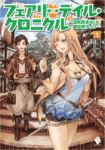
Azuma Hiroshi and Toudou Haruna are high school classmates who reconnect in the VRMMO Fairy Tale Chronicle. Hiroshi is an unremarkable third-year student with thick eyebrows who hides his otaku interests behind a self-deprecating demeanor. Haruna is a beautiful seventeen-year-old with three-eighths English heritage, long blonde hair, and transparent blue eyes, whose mother is a singer. Despite their physical attraction and academic parity, social barriers keep them apart in real life. In the game, Hiroshi has mastered Advanced Crafting, reaching level 124 through relentless grinding of manufacturing skills. Haruna plays a support-focused magic rapier user at level 153, possessing the Extra Skill Song of the Gods. Their in-game conversation reveals they were both trying to escape the pressure of impending entrance exams when the accident occurs.

The turning point begins when Hiroshi receives garbled mail in the game, a known bug that management failed to fix. Before he can investigate, an irregularity triggers, and his consciousness fades. He awakens in a forest alongside Haruna, who was also transported after encountering a Berserker Bear while traveling through an eastern gate. They have lost their inventory, money, and equipment, retaining only their levels and skills. TheVR headset they wore in Japan has vanished, replaced by tangible, painful physical reality. Pain from injury is real, hunger is immediate, and there is no logout function. They confirm their parameters and skills persist, but they cannot access their stat screens or menus.

Survival becomes the immediate priority. The two butcher the dead Berserker Bear, splitting the meat and utilizing the pelt. Hiroshi demonstrates his crafting expertise by creating basic tools from scratch: a mortar from stone, glass bottles from river sand, and string from rabbit fur. Haruna gathers vegetation and prepares food at a nearby river. They craft level 2 potions and special antidotes from the bear organs. The potions prove effective, lasting twelve hours with gradual wear-off, confirming that game mechanics translate directly to this new world. Their initial cooperation is strained by awkwardness and Hiroshi’s lifelong habit of avoiding popular girls, yet necessity forces them to rely on each other’s combat abilities.

After two days of wilderness survival, they encounter two Class 7 adventurers, Randy and Kurt, traveling toward the capital city of Wulls. Kurt has been clawed by a Venomous Wolf, and the slow-acting poison has rendered him immobile. Haruna lacks a specific antidote spell for this venom, but Hiroshi offers one of his specially crafted bear-stomach antidotes. The potion cures Kurt rapidly, saving his life. Grateful, Randy and Kurt offer to escort the teenagers to Wulls, covering their entrance fees and providing cash for expenses. They learn that Wulls is the starting city of the game, now a real metropolis with a population over one million.

Upon arriving in Wulls, the differences between the game and reality become stark. Potions are classified by class rather than level, with Class 7 corresponding to Level 2 potions. However, Hiroshi’s expertly crafted potions exceed standard market quality due to his maxed crafting skills and divine Extra Skills. Randy and Kurt recommend registering as adventurers at the local Adventurers’ Association. There, they witness a request involving a horde of Venomous Wolves near the village of Leit. The receptionist tests Hiroshi’s antidote and is stunned by its potency. Hiroshi agrees to sell his surplus potions to the Association, generating much-needed funds. Randy and Kurt explain that people from the unknown continent are rare but recognized by court decree, and the gatekeepers had already provided a voucher for free inn lodging and a letter recommending they report to the palace.

While registering, Hiroshi and Haruna discuss their situation. They retain knowledge of the game’s main quest, skill systems, and geography, but the world has evolved beyond the game’s design. The existence of royal decrees regarding transported individuals suggests the court is aware of similar cases. Hiroshi realizes that his crafting abilities, which were once dismissed as a niche hobby, now hold immense value in a world where advanced potion making is restricted to government artisans. Haruna notes that his combat skills, though secondary to crafting, make him a formidable tank. They acknowledge that returning to Japan is their primary goal, but first they must establish themselves, gather information, and navigate a political landscape that is far more complex than any VRMMO quest line. The story concludes with them preparing to explore Wulls, register formally as adventurers, and begin their new lives in a world where their game expertise is the only advantage they possess.

Latest Release
DateGroupRelease
2026-10-01light novels translations c99
2026-10-01light novels translations c98
2026-10-01light novels translations c97
2026-10-01light novels translations c96
2026-10-01light novels translations c95
2026-10-01light novels translations c94
2026-10-01light novels translations c93
2026-10-01light novels translations c92
2026-10-01light novels translations c91
2026-10-01light novels translations c90
2026-10-01light novels translations c89
2026-10-01light novels translations c88

Community Reviews

Rating(3.9 / 5.0, 42votes)
5 stars
12(29%)
4 stars
12(29%)
3 stars
18(43%)
2 stars
0(0%)
1 stars
0(0%)

Popular reviews

... Read More
Hiroshi's voice is immediately recognizable and the author commits to it fully. 'Ya,' 'ain't,' 'whadda,' 'hafta' — this isn't decorative dialect, it's consistent enough that I can tell when he's speaking without any tag. And the great thing is it never tips into caricature. It just sounds like a guy who talks fast and casually and doesn't care about proper grammar when he's focused on a task. Haruna's voice is the perfect counterpoint. She's clearer, more standard, but she still slips into casual register when she's comfortable ('Yer the one who's studying me'). Their dialogue doesn't sound like two characters performing different accents — it sounds like two people who've been together long enough to develop shared speech patterns. Myuzzel is another delight. '~' in every line, professional warmth, the ability to read between someone's questions like a seasoned association worker. When she says 'There are things related to forging in the Association's equipment, so if necessary, please do let them know,' she's not being vague to be mysterious — she's giving them an opening and knowing they'll take it when ready. The stat discussion at the end is where the dialogue really shines. Haruna explaining attribute scaling with the strength-150-to-151 example is pedagogical but not lecture-y because Hiroshi interjects with 'Is that right?' and 'Wow, Toudou-san, you really know your miniscule number details.' He's engaged, not lectured AT. Even the humor lands naturally — 'miniscule number details' is such a specific dig that you know he's half-impressed and half-teasing. No dialogue in this chapter feels written. Every exchange sounds like people thinking out loud together.
... Read More
There's a recurring motif in this text that I can't shake: the idea that what we CREATE defines us when everything else is stripped away. Hiroshi and Haruna arrive in this world with nothing but their skills and the clothes on their backs. Their possessions are gone. Their social status is irrelevant. Their real-world identities—Hiroshi as a worker, Haruna as the child of famous people—mean absolutely nothing in this forest. What's left? What can they DO? What can they MAKE? The crafting system becomes metaphorical armor. Every potion they brew, every bottle they shape from raw stone, every stitch of rabbit-fur string they weave is an act of defiance against helplessness. They're not just surviving—they're rebuilding civilization from scratch, one tiny craft at a time. "Everything in the Game can be Crafted" isn't just a slogan in-universe, it's a thematic statement: in this world, agency comes from creation. The bear kill is also deeply symbolic. They defeat it not through overpowering strength but through COMPLEMENTARY skills—Hiroshi's raw physical courage (driving the knife into the bear while shaking uncontrollably) and Haruna's support magic. Alone, each would likely have died. Together, they survive. The theme is clear: interdependence isn't weakness, it's strategy. And then there's the garbled mail itself—a corruption of communication, of connection. The very thing that brings them together (the bug that transports them) also threatens to destroy them (destroying clients, corrupting systems). It's a symbol of how technology and systems meant to connect us can also trap us. The glitch that should have been deleted becomes the gateway. I keep thinking about that line: "The knack for crafting's repetition, routine, and acceptance of futility." Acceptance of futility. Even knowing the work might not matter, they do it anyway. That's not just a crafting philosophy—that's a life philosophy. And it's one I find myself strangely moved by.
... Read More
I need to talk about this fight scene because WOW. The stakes were set up SO well that every moment of danger felt REAL. First, let's establish what Haruna was risking. She's not some combat specialist—she was out gathering potion materials WHILE THE BOSS WAS OUT THERE. She literally says it herself: she has no Weaver skill. She's in over her head. And then BAM, she makes eye contact with a creature that moves three-dimensionally on a flying harness. The dread in her face when Hiroshi describes it? I felt that. My palms were sweating just reading about it. "Like a spider? …Does it fly?" The horror was palpable. And when the cliché hits—"just because we talked about it, I'm going to run right into it, aren't I?"—it's almost comedic, but then the spider appears and ALL humor vanishes. Because now it's real. The moment Haruna gets knocked down and can't move? That's when the stakes hit maximum. "Once she was caught, she would be wrapped into a silk ball in no time. Struggle, and the spider may shatter every bone in her body." Think about that description. There's no "you will die"—it's MORE creative than that. The spider doesn't just kill you; it wraps you. It preserves you. It's terrifying because it's specific to the monster's nature. And Hiroshi stepping up? He admitted he was TERRIFIED. "Truth be told, Hiroshi was terrified of facing off this one." But he did it anyway. That's the whole point of stakes—not that characters are brave, but that they act despite fear. His defense line held. His Smash attack bought time. Every second he kept that spider off Haruna was a second she needed to survive. I was genuinely gripping my screen.
... Read More
Let's talk about the atmosphere of this part, because there's a specific kind of quiet beauty in how the world exists around these characters. They spent two days sleeping under the open sky. Not in a forest — the text specifically says "Their surrounding vegetation wasn't tall enough to call it a forest, nor short enough to call it a plateau." I love that. The author could have thrown them into some dramatic wilderness, but instead chose this in-between space that feels almost liminal. They're not quite anywhere. Just... existing between places. The scene where they're walking toward town is gorgeous in its simplicity: "In order to find the town from their vague memories, they kept on the small pathways that looked like people used regularly. It wasn't paved like a main road, but more defined than a single footpath." This is such an evocative image. These aren't main roads with clear signage — they're relying on ghost impressions of paths, worn by people who existed in this world before them. It gives the whole thing this melancholy, exploratory quality. Like they're tracing someone else's footsteps. And the detail about the Berserker Bear being evidence of how far they are from civilization — that's worldbuilding through implication. You don't need a giant description of the landscape when a single monster type tells you everything you need to know about distance and danger. The author trusts the reader to connect those dots. I keep coming back to that phrase "a weird spot to be dropped in." It's the whole emotional summary of the setting.
... Read More
I keep coming back to that image of the wide road in Farlane with absolutely no signposts. Five years since Beta, and even a veteran like Hiroshi can't remember which way leads where. The road goes in one direction or another and nobody knows. Isn't that exactly what being trapped in this world feels like for our protagonists? They came from a world where the map was clear — where grinding routes were memorized, where every quest marker glowed on your HUD, where failure meant reloading a save. Now? No markers. No UI. Just a wide road splitting into two directions and the desperate hope that you pick the right one. The road is the entire metaphor for their situation and the author doesn't even have to say it out loud because it's there, right in front of us, in plain sight. Then there's the Venomous Wolf poison itself. Kurt was clawed — a wound that spreads invisibly through his system, turning him from full consciousness to barely alive. And the only thing that can save him is something that took a BEAR to make. The antidote requires a Berserker Bear's stomach. To survive the venom, you need something even more dangerous. That's not just clever game logic, that's thematic. Survival in this world demands that you harness the very things that could kill you. The poison and the cure come from the same ecosystem. You can't escape the danger — you have to use it. And the royal decree about 'those individuals' — people who appeared from elsewhere — being taken in by the court... there's a recurring question in this text: who gets to decide what's normal? The court claims they can detect real cases from imposters. But detection implies power. And whoever holds the power to define reality holds the power to control it. Hiroshi feels unease about this. So should we.
... Read More
Let me just say this — the dialogue in these chapters reads like actual humans talking, not characters delivering plot points. There's a scene where they're trying to decide which direction to go and it goes: 「All right, let's tip a stick…」 「And what if it goes fallin' down the middle?」 「Eeny meeny miny moe?」 「Why don't we eeny meeny from the start?」 THAT is not something an author writes when they're forcing dialogue. That's something that HAPPENS between people who have been together long enough to be silly together. The banter has rhythm. It has the natural staccato of two people who don't need to finish each other's sentences but somehow do anyway. And Hiroshi's voice specifically — the way he uses contractions, the Southern-tinged spellings like 'somethin'' and 'don't' and 'ain't' — it creates this very specific persona. He sounds like someone who's chill on the surface but calculating underneath. Which is exactly what he is. Compare that to Haruna's voice, which is cleaner, more direct, and carries this quiet authority even in casual conversation. When she says 'It's an adventurer's blend, so it can't be too slow treatin' a little poison' — there's pride in that line. Subtle, but there. The narration itself also deserves mention. It doesn't lecture. When information needs to be delivered — like the potion classification system or the currency exchange — it comes through casual Q&A between characters walking down a road. You're learning game mechanics disguised as small talk. That's skilled writing. The author trusts the reader to absorb information without feeling like they're reading a textbook. Even the exposition about status conditions and resistance building — which could've been a boring info-dump — gets woven into Hiroshi's internal monologue as he's explaining why they don't have healing spells. It's practical, it's character-driven, and it NEVER stops the momentum.
See all reviews

Custom lists

See all custom Lists