Exiled to the Border, the Criminal Wife Clears the Wasteland and Raises a God of War - Reviews

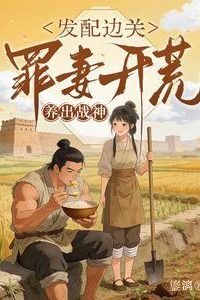
Exiled to the Border, the Criminal Wife Clears the Wasteland and Raises a God of War
+Add to Custom List
Sort
Add review
... Read More
I need to just talk about Xiao Zheng's dialogue for a second because THIS MAN is a comedy goldmine wrapped in a romance novel package. The author has given him the most distinct voice in this entire book and I am obsessed. Let's start with his first real exchange with Su He after she comes out of the room: "You look quite nice now." Pause. "Even nicer than when my mother wore it in her youth." That's not just dialogue, that's a man whose brain short-circuited and his mouth just started outputting whatever was available. And then when she teases him about his mom hearing it, his response is: "Then I won't say it in front of her." I am wheezing. This is the most Xiao Zheng answer possible. He's not being romantic, he's being LOGICAL. His brain went: compliment wife → accidentally compare to mom → potential conflict → solution: don't say it where mom can hear it. The straight-guy logic is immaculate. And earlier, when Su He says she wants to adapt to each other quickly and he just goes: "Yeah, you're right. I'm just a bit unused to it." No pretense. No trying to sound cool. He just... admits it. This man cannot lie to save his life and it makes every interaction with him absolutely delightful. Wang Guixiang's voice is equally distinct. Her dialogue is all sharp edges and practical commands: "What are you standing there for?" "Yue'er! Why haven't you taken the bowls inside yet?!" "Not bad. You finally look like a proper human being." But then she immediately follows up with genuine care — telling Su He to eat more, telling Xiao Zheng to rest, her eyes lingering on Su He's transformed appearance. The author never lets her warmth be obvious; it always comes disguised as criticism or practical advice. That's such a realistic portrayal of a certain type of Chinese mother figure. Su He's voice is different from both of them — she's direct, analytical, sometimes dryly humorous. When she says 'Unused to having a wife?' to Xiao Zheng, that's a woman who's completely unbothered and actually enjoying flustering this stoic soldier. And her internal monologue about the Qianqi system? That's pure Su He — cold, calculated, assessing threats and opportunities like the apocalypse survivor she is. The narrative voice itself is interesting too. It's third-person limited, mostly following Su He's perspective, but it dips into Xiao Zheng's head occasionally (like when he's thinking about having a wife and his ears burn). This dual perspective gives us both the external romance AND the internal stakes, which is exactly what makes these scenes work so well. One line that perfectly captures the tone: 'This Company Commander, who didn't even blink when killing enemies on the battlefield, turned around and walked out, his stride even faster than usual.' The contrast between battlefield stoicism and romantic fluster is the entire comedy of this scene and it's executed flawlessly.
... Read More
I need everyone to understand that the most romantic moment in this entire passage is a man finishing his eighth flatbread and then silently pushing a bamboo basket toward a woman who's already at seventy percent full. Let me paint the scene for you: Su He is sitting there, stomach satisfied, watching this giant man demolish food like it personally offended him. She says 'I'm full,' he says 'you eat,' she pushes it back, and the narration goes 'her desire to grow grain and make money burned even more fiercely! As a superpower user, how could she let the man who belonged to her go hungry?' BRO. That is the most domestic, apocalypse-survival-romance energy I have ever encountered. This isn't some grand declaration of love. This is two people who barely know each other learning how to share food at a wooden table in a drafty courtyard. And the fact that Su He is literally calculating her own fullness percentage while also mentally planning her next mountain expedition shows how her emotional attachment and her survival instincts are already braided together. The wedding banquet scene that follows only deepens this—Wang Guixiang counting every last ingredient like 'we still have a piece of smoked meat about the size of a palm that I've been reluctant to touch' and Su He immediately thinking 'no, I need to go into the mountains today, I can't let them bear all the expenses.' They're both trying to provide for each other in the only language they know. That's not romance. That's something way more dangerous.
... Read More
I keep coming back to the meal scene. Four flatbreads. That's it. That's the entire emotional arc of this chapter. Su He sits down, hungry for the first time in who-knows-how-long, and she just... eats. No pretense. No 'I'm not hungry.' No delicate nibbling. She devours four pieces of black flour bread that would make a capital-dweller gag, and she does it with the calm of someone who has eaten Moldy Ration Brick #47 in the apocalypse and lived to tell about it. But here's what got me—the guilt. After she finishes, she looks at the empty bowls and feels a twinge. 'Stepping through the door only to grab other people's rations really wasn't great.' She's been through hell, she's survived a collapse of civilization, and her first thought isn't 'I deserve this' but 'I took from people who have less than me.' That's the moment I was sold on this character. She's not a victim. She's not even really a protagonist in the traditional sense—she's someone who's already been through the end of the world and decided, quietly, that she's done suffering. 'This wasn't the apocalypse anymore. This world had supplies; the resources were just limited.' And then the warmth at her fingertips. That's when the emotional tone shifts from 'surviving' to 'thriving.' She's not just going to eat—she's going to grow. She's going to build. The hunger that drove her through the apocalypse is now redirected into something creative, something hopeful. Xiao Zheng watching her eat is also quietly devastating in its own way. He's used to people looking at him with fear or calculation. Here's this woman who just ate five flatbreads in silence, not a word, not a complaint, and he's genuinely puzzled. 'Wasn't she a first-class maid from a Minister's estate?' The gap between his expectation and reality is where the tension lives. And Wang Guixiang's old clothes—'Just take this as your bridal attire.' That's not just generosity. That's a mother claiming someone as hers. In a world where everything is scarce, she gives away something she kept for years. That's emotional weight. The CP energy here is... not romantic yet. It's something quieter. Mutual assessment. Mutual survival. Two people who've been through hell recognizing something in each other. I'm here for it.
... Read More
Okay so let me just say this: Su He is a SNAKE. A beautiful, calculating snake and I am HERE for it. Like, the moment she lays out her entire assessment of the Qianqi system in her head — no divorce rights, if he divorces her she gets sold or becomes a camp prostitute — and then decides the smartest play is to just be straight with him and make the marriage work? Chef's kiss. This is not some naive girl walking into an arranged marriage hoping for love. This is a woman who survived the APOCALYPSE and is applying those same survival instincts to a completely different kind of war. And Xiao Zheng? Oh my god. The man is a walking contradiction and I love him. He's this fierce company commander who doesn't even blink at killing enemies, but the second Su He walks out of that room in the pink dress — his ears turn red and he literally bolts. He chokes on his own water. He says the most brutally honest thing like 'You look quite nice now' and then immediately panics. The way he says 'Even nicer than when my mother wore it in her youth' and then tries to cover it by saying he won't say it in front of his mom?? I'm DEAD. But here's what really got me — their first real conversation where Su He just lays it all out: 'We are husband and wife, and this relationship is already a fact. It's best for both of us to adapt to each other's presence as quickly as possible.' And Xiao Zheng's response? He just... agrees. No games, no manipulation. He scratches his head and admits he's unused to it. These two are going to be absolutely devastating together because they're both so genuinely honest with each other in a world where everyone else is playing roles. Also can we talk about Wang Guixiang? 'What do you mean lend? Once you enter this door, you're one of us. This outfit is yours now.' Harsh exterior, soft heart. Classic. She's already claiming Su He as family even while pretending to scold everyone. The family dynamic here is SO wholesome compared to the apocalypse Su He came from. No backstabbing, no killing each other for bread. Just a poor family trying to survive together. And Su He, who's seen the worst of humanity, is genuinely moved by this. 'As long as everyone worked together, they could slowly build a good life!' I literally teared up a little. This woman has been through hell and she's finding peace in the most ordinary, beautiful things — a family that works together, a mother-in-law who gives her her wedding dress, a husband who can't handle how pretty she looks. The wooden twig hairpin detail destroyed me though. After everything they went through — stripped clean during exile, had to use twigs from the road as hairpins — and now Xiao Zheng notices it and his eyes linger. He remembers. He SEES her. That's the moment I knew this relationship was going to be the real deal.
... Read More
I need to talk about this one moment with Xiao Yue. She was pacing outside, worried sick, and when Su He walks in, her first reaction isn't to ask about herbs or rabbits or any of that. It's: 'Where did you go? I was worried sick!' She thought Su He was missing. She went to check on her because the room was quiet. That's... that's genuine care. Su He's been in this family for exactly one day and Xiao Yue already treats her like family. And Su He notices it too - the text literally says 'her heart warming up.' I felt that. In a story full of scheming and comparison and face-saving, this tiny moment of someone genuinely worrying about you hit different. Then there's Wang Guixiang shielding Su He's backpack from the villagers' greedy hands. 'Keep your hands to yourselves! Don't go untying the rabbit now!' She's not just being protective of property - she's protecting her daughter-in-law's pride in front of everyone. That's mother-in-law energy right there. And the contrast with Su Lan is brutal. Su Lan is so consumed with envy that she can't even process the warmth around Su He. She sees the rabbit and thinks about how it makes her look worse. She sees the banquet and thinks about how to counter it. Her emotional world has shrunk to this single dimension: comparison. Meanwhile Su He just walks in with a backpack full of herbs and a rabbit and everyone around her lights up. It's not dramatic. It's not a confession. It's just people being happy for her. And that's somehow more powerful.
... Read More
There's a lot happening beneath the surface in these chapters and I can't stop thinking about the symbolism. The herbs themselves are a perfect metaphor—Su He takes something ordinary (wild-growing plants) and through her hidden power transforms them into something valuable. That's essentially her entire arc: she's in a harsh, poor environment and she's finding ways to make life better through quiet, almost invisible means. The rouge Xiao Zheng buys her is equally symbolic. It's peach-pink, soft, beautiful under the setting sun—a splash of color and delicacy in a world that's all dust and survival. He gives it to her not as frivolity but as preparation for their wedding, as something she'll need. There's a tenderness in that framing. And then there's the money—the three taels and six mace that completely upends Xiao Zheng's sense of himself as a provider. The story is quietly asking: what does it mean to be a man in a relationship where the woman can out-earn you? Xiao Zheng's answer isn't to belittle her; it's to resolve to try harder. That's a surprisingly progressive take for what appears to be a historical setting. The encounter with Shen Feng and Su Lan reinforces this theme too—they're obsessed with appearances (bargaining over a cheap veil while Su Lan wears secondhand clothes), while Su He is focused on substance (buying practical fabric for her whole family, choosing durable wedding clothes she can actually work in). The story keeps contrasting performative status with genuine care.
... Read More
Can we talk about Xiao Zheng for a second? Because this chapter is the first time I'm really seeing him notice Su He as a person rather than just... whoever he married. The text says it all in one moment: he looks at the rabbit, looks at the herbs, then looks at her face, and there's 'a distinct look of surprise in his eyes.' He's doing this whole internal calculation where he's trying to reconcile the image of a pampered capital maid with the woman who just came back from the mountains with enough herbs to buy silver and a live rabbit. And he doesn't say anything about it. He just watches. That silence is so loaded. Meanwhile, Wang Guixiang's relationship with Su He is developing in this really warm way. She went from defending her daughter-in-law publicly to privately being genuinely awed by what Su He brought back. The moment she nearly loses her balance when Su He says 'a few taels of silver' - that's not just about money, that's a mother-in-law realizing she married her son to someone extraordinary. And Xiao Yue! This girl is pure sunshine. She's the only one who says exactly what everyone's thinking: 'Sister-in-law, you even caught a rabbit?!' and 'Sister-in-law is amazing~' She's not scheming, she's not comparing, she's just genuinely happy. That contrast with Su Lan is everything. Su Lan can't even look at Su He without calculating. Xiao Yue looks at her and sees someone wonderful. The dynamic between these two women around Su He tells you everything about who they are.
... Read More
The worldbuilding in these chapters is quietly exceptional. The author doesn't info-dump—instead we get Su He walking into town and naturally absorbing everything: the wind on the border, the sea buckthorn and withered grass, the loess hills stretching to the horizon, the military villagers with their donkey carts. It's a barren but vast landscape, and you can feel the harshness of it. The town itself is sketched in with just a few brushstrokes—single main street, low shops, armored soldiers passing through—and yet it feels completely lived-in. The pharmacy scene is particularly vivid. The shopkeeper tapping his abacus, the way his eyebrows shoot up when he sees the herbs, the heavy silver ingot placed on the counter. Every detail grounds us in this world. And the clothing shop encounter! The drab dusty environment making those bright red and pink garments look 'exceptionally eye-catching'—that's a small detail but it tells us everything about the color palette of this place. Life here is gray and hard, and bright colors are a luxury. Su He's commitment to making her whole family look neat for the wedding, despite having limited funds, says so much about the culture too. Festivals and ceremonies matter, even on the frontier.
... Read More
Okay so I need to talk about Wang Guixiang because this woman is EVERYTHING and I am obsessed. On the surface she's all sharp edges—scolding her son for bringing a 'delicate lady' home, muttering about how they can't even feed themselves, telling Su He to 'make do' with the old clothes. She comes off as harsh, pragmatic, maybe even a little bitter. Border life has worn her down, and she's not pretending otherwise. But then she goes and digs out her YOUNG outfit for Su He. Like—she literally kept it all these years, neatly folded in a chest, and the first thing she does is hand it to a stranger she just brought home. And her excuse? 'We can't have people saying a daughter-in-law of the Xiao family looks like a beggar.' That is SO her. She can't just be kind, she has to wrap it in bluster and practicality. And the way she reads Su He in that one moment—'Such a temperament was actually quite decent'—she's assessing her, yes, but she's also protecting her. She sees that Su He isn't crying or cowering like the other criminal slaves, and that earns respect. The mother-son dynamic with Xiao Zheng is also chef's kiss. He tries to protest 'I can help' and she shuts him down with a glare because his injuries aren't healed. That's love, folks. That's a family that bickers but holds together. I also love how Su He and the younger siblings click instantly. Xiao Jun's awkward 'Sister-in-law... I'm Xiao Jun' and Xiao Yue's wide-eyed curiosity—there's no hostility, just genuine wonder. This family is poor but they're not cruel. They're just surviving. And Su He herself? She's calculating everything—resources, food, grain—but the moment she feels that warmth at her fingertips and thinks 'Grain—I could grow it!' that's when I knew she's not just some displaced noble. She's a survivor who's found something worth building. That shift from 'I need to eat' to 'I need to feed THIS family' is huge. Also the bit where Wang Guixiang looks at both of them and thinks 'The two of you actually make a good match. One was a bottomless pit. The other could really pack it away too.' I SCREAMED. This woman has no filter and I love her for it.
... Read More
There's something really interesting happening with the symbolism here that I want to unpack. The herbs and the rabbit aren't just plot devices - they represent something deeper about how value is perceived in this world. In a village where no one has seen meat in a month, a rabbit isn't just food. It's status. It's proof that someone can provide. Su He walks out of the mountains with what amounts to actual silver on her back, and the villagers' reaction shifts from curiosity to pure envy. But the real symbolism is in the comparison between the two families. The Xiao family is poor but they're hosting a banquet. The Shen family has a Company Commander son but they haven't said a word about a celebration. Su Lan can't reconcile this - both their husbands hold the same rank, so why does the poorer family look like the winner? The answer, of course, is that worth isn't about rank. It's about capability. Su He's herbs are 'silver. Actual silver!' and that changes everything. The rabbit being kept alive rather than killed immediately is also telling - it's a symbol of potential, of something that will keep giving. And Su Lan's response to all of this? She doesn't try to match Su He's capability. She tries to match the appearance of it. Two tables instead of a proper feast. That's the theme right there: real value versus performed value. The story keeps asking which one actually matters.
... Read More
Okay, let me just say this upfront: the author absolutely nailed the opening hook. Transmigration on day one, about to be sent to become a military prostitute—what a nightmare start! But here's the thing that made me actually sit up and pay attention: Su He doesn't panic. She assesses. Like, coldly, methodically assesses the situation and picks her target. That's not your typical transmigrator who just screams and cries. She's already running survival calculations in her head while everyone else is losing their minds. The plot structure here is tight. We get the setup (transmigration + dire situation), the inciting incident (the decree reading), the strategic choice (locking onto Xiao Zheng), and then the payoff (her bold move). It's a complete narrative arc in just three chapters, and I was genuinely invested. The tension builds perfectly—you can feel the desperation of those slave girls, the cold indifference of Xiao Zheng, and then Su He's sudden, calculated risk that changes everything. What I found really clever was how the author set up the power dynamics. Shen Feng thinks he's being shrewd by manipulating the selection order, but Xiao Zheng's complete lack of interest in the social game undermines his entire scheme. And Su He? She sees right through everyone. She doesn't play the social game at all—she goes straight for the strongest man and tells him exactly why she chose him. No manipulation, no games. Just brutal honesty that somehow works better than anything Shen Feng could have done. The only question I have is: what happens when Xiao Zheng realizes Su He might actually be more capable than she looks? Because that green light at her fingertips? That's not just a survival skill—that's a plot device waiting to explode. I need to know what she's hiding.
... Read More
Okay, can we talk about how good the dialogue is in this? Like, genuinely. The author has a real talent for giving each character a distinct voice, and the supporting characters are especially impressive. Let me start with the border soldiers. When Su He makes her declaration, the reaction isn't just generic cheering—it's specific, characterful dialogue that tells us who these men are: "This girl has guts! She's practical!" "Xiao Zheng, you've picked up a treasure." "Old Xiao, your appetite is notoriously huge. Maybe marrying a wife will actually get you full for once~" That last line! That's not just comic relief—that's world-building. We learn about Xiao Zheng's massive appetite, the border soldiers' humor, their straightforwardness, all in one joke. And it's genuinely funny. I laughed out loud. But the dialogue isn't just about humor. Look at how Su He speaks versus how Shen Feng speaks. Su He is direct, concise, almost clinical: "I don't need you to support me. I know how to farm, cook, and manage a household! I won't waste your rations, and I won't be a burden to you. Furthermore, you are strong! Following you keeps me safe." Every sentence is functional. No filler. No emotional manipulation. Just facts. This is a woman who has survived the apocalypse and learned that words are tools, not decorations. Shen Feng, on the other hand, speaks in calculated layers. "Old Xiao, since you have no interest in this, how about I go first and set an example for you?" He's performing kindness while actually manipulating the situation. His dialogue is always two steps ahead. And Xiao Zheng? His dialogue is almost nonexistent. "Doesn't matter. Let him." "I don't need a woman!" "Follow me." Three words, maximum. This is a man who speaks only when necessary, and every word carries weight. The contrast between his sparse dialogue and Su He's directness creates this incredible tension. The author's narrative voice is also worth mentioning. It's third-person limited, mostly following Su He, but it dips into other characters' perspectives when it serves the story. The tone is grounded, slightly gritty, with moments of warmth and humor that prevent it from becoming too dark. I really appreciate that balance.

Leave a comment

You must be logged in to leave comments. or