Summary

... Read More

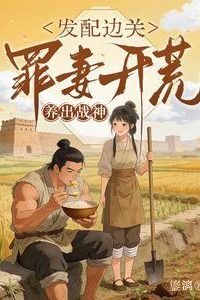
Su He, a logistics officer from a post-apocalyptic era, transmigrates into the body of a criminal slave on the Liaodong border. The original owner was a first-class maid in the household of a corrupt minister who was executed for bribery. Stripped of her status, Su He is among eighteen women sentenced to be distributed as wives to soldiers or sent to the rear camp, where they would effectively become military prostitutes. Recognizing the dire consequences of her situation, Su He relies on her survival instincts from the apocalypse: strength and choosing the right leader. She identifies Xiao Zheng, a towering, scarred, and fiercely capable soldier who ranks first in military merit, as the only viable path to safety. While other slave girls covet the shrewd Shen Feng, Su He deliberately steps forward to claim Xiao Zheng, declaring her ability to farm, cook, and manage a household without burdening him. Her directness and practicality impress the onlookers and Xiao Zheng himself, who is initially reluctant to take a wife due to his family's poverty.

Xiao Zheng, a hereditary military household member, struggles to support his widowed mother, younger brother Xiao Jun, and younger sister Xiao Yue. His pay is minimal due to corruption and drought, and he fears he cannot feed another person. However, he accepts Su He after she proves her resilience and willingness to work. Upon arriving at their modest earthen home, Su He observes the family's harsh living conditions and their close-knit, hardworking dynamic. She discovers that her wood-element superpower, though weakened, has mutated to include a perceptual ability that allows her to sense the location and condition of plants within a kilometer. This discovery becomes her key to survival and prosperity.

On her first morning, Su He accompanies Xiao Yue to the mountains to gather wild vegetables. Using her enhanced perception, she locates hidden patches of purslane and wild astragalus, a medicinal herb valuable for both health and income. The family is astonished by their bountiful harvest, and Su He’s reputation for having good luck begins to spread. She plants the astragalus in their courtyard, using her power to accelerate its growth secretly, and prepares to sell it for profit. Wang Guixiang, initially skeptical of the delicate-looking maid, warms to Su He as she sees her daughter-in-law’s industriousness and contribution to the household.

As Su He integrates into the Xiao family, she takes charge of improving their diet and finances. She plans a modest wedding banquet to formally recognize her marriage, contributing her own resources to ease the family's burden. The story follows her efforts to build a stable life in a harsh environment, leveraging her unique abilities to overcome food shortages and economic hardship. Her relationship with Xiao Zheng evolves from a pragmatic arrangement into a partnership based on mutual respect and shared goals. Meanwhile, Shen Feng and Su Lan, who married each other, view Su He with disdain, underestimating her capabilities. Su He remains focused on her mission to secure her family's future, using her apocalyptic knowledge and supernatural powers to transform their destitute existence into one of comfort and security.

Novel Items

More
Document
An imperial decree declaring the execution of the Imperial Concubine, issued alongside the guards dragging away Shi Ronglan. It was part of Emperor Zhaoyuan's punishment order.
Supernatural Ability
A faint, subtle green light that briefly shimmered at Su He's fingertips when she looked at her hands after being paired with Xiao Zheng. It suggested she possessed some mysterious ability from her transmigration, giving her confidence that they would be able to get by.
Food
The family's main food staple, considered decent at the border. The black flour is hard and coarse, with bran that scrapes the tongue and tastes astringent. Xiao Zheng devoured five flatbreads and Su He ate four during their first shared meal.
Food
A thin soup served with the flatbreads, with no oil floating on top. It is merely water with a hint of rice flavor, clear enough to reflect a person's shadow, with a few wild vegetables and barely perceptible salt.
Clothing
An old set of light pink clothes that Wang Guixiang wore when she was young. The fabric is somewhat aged but has virtually no wear and tear, showing it was meticulously kept. Wang Guixiang gives it to Su He as bridal attire so she would not look like a beggar.
Item
A large, heavy basket Su Xiaoyin carried on her back after returning from the city. It was completely filled with items including a medicine-grinding pestle, medicinal herbs, and braised dishes.
Latest Release
DateGroupRelease
2026-08-11shanghai fantasy c34
2026-08-11shanghai fantasy c33
2026-08-11shanghai fantasy c32
2026-08-11shanghai fantasy c31
2026-08-11shanghai fantasy c30
2026-08-11shanghai fantasy c29
2026-08-11shanghai fantasy c28
2026-08-11shanghai fantasy c27
2026-08-11shanghai fantasy c26
2026-08-11shanghai fantasy c25
2026-08-11shanghai fantasy c24
2026-08-11shanghai fantasy c23

Community Reviews

Rating(4.3 / 5.0, 32votes)
5 stars
15(47%)
4 stars
11(34%)
3 stars
6(19%)
2 stars
0(0%)
1 stars
0(0%)

Popular reviews

... Read More
I need to just talk about Xiao Zheng's dialogue for a second because THIS MAN is a comedy goldmine wrapped in a romance novel package. The author has given him the most distinct voice in this entire book and I am obsessed. Let's start with his first real exchange with Su He after she comes out of the room: "You look quite nice now." Pause. "Even nicer than when my mother wore it in her youth." That's not just dialogue, that's a man whose brain short-circuited and his mouth just started outputting whatever was available. And then when she teases him about his mom hearing it, his response is: "Then I won't say it in front of her." I am wheezing. This is the most Xiao Zheng answer possible. He's not being romantic, he's being LOGICAL. His brain went: compliment wife → accidentally compare to mom → potential conflict → solution: don't say it where mom can hear it. The straight-guy logic is immaculate. And earlier, when Su He says she wants to adapt to each other quickly and he just goes: "Yeah, you're right. I'm just a bit unused to it." No pretense. No trying to sound cool. He just... admits it. This man cannot lie to save his life and it makes every interaction with him absolutely delightful. Wang Guixiang's voice is equally distinct. Her dialogue is all sharp edges and practical commands: "What are you standing there for?" "Yue'er! Why haven't you taken the bowls inside yet?!" "Not bad. You finally look like a proper human being." But then she immediately follows up with genuine care — telling Su He to eat more, telling Xiao Zheng to rest, her eyes lingering on Su He's transformed appearance. The author never lets her warmth be obvious; it always comes disguised as criticism or practical advice. That's such a realistic portrayal of a certain type of Chinese mother figure. Su He's voice is different from both of them — she's direct, analytical, sometimes dryly humorous. When she says 'Unused to having a wife?' to Xiao Zheng, that's a woman who's completely unbothered and actually enjoying flustering this stoic soldier. And her internal monologue about the Qianqi system? That's pure Su He — cold, calculated, assessing threats and opportunities like the apocalypse survivor she is. The narrative voice itself is interesting too. It's third-person limited, mostly following Su He's perspective, but it dips into Xiao Zheng's head occasionally (like when he's thinking about having a wife and his ears burn). This dual perspective gives us both the external romance AND the internal stakes, which is exactly what makes these scenes work so well. One line that perfectly captures the tone: 'This Company Commander, who didn't even blink when killing enemies on the battlefield, turned around and walked out, his stride even faster than usual.' The contrast between battlefield stoicism and romantic fluster is the entire comedy of this scene and it's executed flawlessly.
... Read More
I need everyone to understand that the most romantic moment in this entire passage is a man finishing his eighth flatbread and then silently pushing a bamboo basket toward a woman who's already at seventy percent full. Let me paint the scene for you: Su He is sitting there, stomach satisfied, watching this giant man demolish food like it personally offended him. She says 'I'm full,' he says 'you eat,' she pushes it back, and the narration goes 'her desire to grow grain and make money burned even more fiercely! As a superpower user, how could she let the man who belonged to her go hungry?' BRO. That is the most domestic, apocalypse-survival-romance energy I have ever encountered. This isn't some grand declaration of love. This is two people who barely know each other learning how to share food at a wooden table in a drafty courtyard. And the fact that Su He is literally calculating her own fullness percentage while also mentally planning her next mountain expedition shows how her emotional attachment and her survival instincts are already braided together. The wedding banquet scene that follows only deepens this—Wang Guixiang counting every last ingredient like 'we still have a piece of smoked meat about the size of a palm that I've been reluctant to touch' and Su He immediately thinking 'no, I need to go into the mountains today, I can't let them bear all the expenses.' They're both trying to provide for each other in the only language they know. That's not romance. That's something way more dangerous.
... Read More
I keep coming back to the meal scene. Four flatbreads. That's it. That's the entire emotional arc of this chapter. Su He sits down, hungry for the first time in who-knows-how-long, and she just... eats. No pretense. No 'I'm not hungry.' No delicate nibbling. She devours four pieces of black flour bread that would make a capital-dweller gag, and she does it with the calm of someone who has eaten Moldy Ration Brick #47 in the apocalypse and lived to tell about it. But here's what got me—the guilt. After she finishes, she looks at the empty bowls and feels a twinge. 'Stepping through the door only to grab other people's rations really wasn't great.' She's been through hell, she's survived a collapse of civilization, and her first thought isn't 'I deserve this' but 'I took from people who have less than me.' That's the moment I was sold on this character. She's not a victim. She's not even really a protagonist in the traditional sense—she's someone who's already been through the end of the world and decided, quietly, that she's done suffering. 'This wasn't the apocalypse anymore. This world had supplies; the resources were just limited.' And then the warmth at her fingertips. That's when the emotional tone shifts from 'surviving' to 'thriving.' She's not just going to eat—she's going to grow. She's going to build. The hunger that drove her through the apocalypse is now redirected into something creative, something hopeful. Xiao Zheng watching her eat is also quietly devastating in its own way. He's used to people looking at him with fear or calculation. Here's this woman who just ate five flatbreads in silence, not a word, not a complaint, and he's genuinely puzzled. 'Wasn't she a first-class maid from a Minister's estate?' The gap between his expectation and reality is where the tension lives. And Wang Guixiang's old clothes—'Just take this as your bridal attire.' That's not just generosity. That's a mother claiming someone as hers. In a world where everything is scarce, she gives away something she kept for years. That's emotional weight. The CP energy here is... not romantic yet. It's something quieter. Mutual assessment. Mutual survival. Two people who've been through hell recognizing something in each other. I'm here for it.
... Read More
Okay so let me just say this: Su He is a SNAKE. A beautiful, calculating snake and I am HERE for it. Like, the moment she lays out her entire assessment of the Qianqi system in her head — no divorce rights, if he divorces her she gets sold or becomes a camp prostitute — and then decides the smartest play is to just be straight with him and make the marriage work? Chef's kiss. This is not some naive girl walking into an arranged marriage hoping for love. This is a woman who survived the APOCALYPSE and is applying those same survival instincts to a completely different kind of war. And Xiao Zheng? Oh my god. The man is a walking contradiction and I love him. He's this fierce company commander who doesn't even blink at killing enemies, but the second Su He walks out of that room in the pink dress — his ears turn red and he literally bolts. He chokes on his own water. He says the most brutally honest thing like 'You look quite nice now' and then immediately panics. The way he says 'Even nicer than when my mother wore it in her youth' and then tries to cover it by saying he won't say it in front of his mom?? I'm DEAD. But here's what really got me — their first real conversation where Su He just lays it all out: 'We are husband and wife, and this relationship is already a fact. It's best for both of us to adapt to each other's presence as quickly as possible.' And Xiao Zheng's response? He just... agrees. No games, no manipulation. He scratches his head and admits he's unused to it. These two are going to be absolutely devastating together because they're both so genuinely honest with each other in a world where everyone else is playing roles. Also can we talk about Wang Guixiang? 'What do you mean lend? Once you enter this door, you're one of us. This outfit is yours now.' Harsh exterior, soft heart. Classic. She's already claiming Su He as family even while pretending to scold everyone. The family dynamic here is SO wholesome compared to the apocalypse Su He came from. No backstabbing, no killing each other for bread. Just a poor family trying to survive together. And Su He, who's seen the worst of humanity, is genuinely moved by this. 'As long as everyone worked together, they could slowly build a good life!' I literally teared up a little. This woman has been through hell and she's finding peace in the most ordinary, beautiful things — a family that works together, a mother-in-law who gives her her wedding dress, a husband who can't handle how pretty she looks. The wooden twig hairpin detail destroyed me though. After everything they went through — stripped clean during exile, had to use twigs from the road as hairpins — and now Xiao Zheng notices it and his eyes linger. He remembers. He SEES her. That's the moment I knew this relationship was going to be the real deal.
... Read More
I need to talk about this one moment with Xiao Yue. She was pacing outside, worried sick, and when Su He walks in, her first reaction isn't to ask about herbs or rabbits or any of that. It's: 'Where did you go? I was worried sick!' She thought Su He was missing. She went to check on her because the room was quiet. That's... that's genuine care. Su He's been in this family for exactly one day and Xiao Yue already treats her like family. And Su He notices it too - the text literally says 'her heart warming up.' I felt that. In a story full of scheming and comparison and face-saving, this tiny moment of someone genuinely worrying about you hit different. Then there's Wang Guixiang shielding Su He's backpack from the villagers' greedy hands. 'Keep your hands to yourselves! Don't go untying the rabbit now!' She's not just being protective of property - she's protecting her daughter-in-law's pride in front of everyone. That's mother-in-law energy right there. And the contrast with Su Lan is brutal. Su Lan is so consumed with envy that she can't even process the warmth around Su He. She sees the rabbit and thinks about how it makes her look worse. She sees the banquet and thinks about how to counter it. Her emotional world has shrunk to this single dimension: comparison. Meanwhile Su He just walks in with a backpack full of herbs and a rabbit and everyone around her lights up. It's not dramatic. It's not a confession. It's just people being happy for her. And that's somehow more powerful.
... Read More
There's a lot happening beneath the surface in these chapters and I can't stop thinking about the symbolism. The herbs themselves are a perfect metaphor—Su He takes something ordinary (wild-growing plants) and through her hidden power transforms them into something valuable. That's essentially her entire arc: she's in a harsh, poor environment and she's finding ways to make life better through quiet, almost invisible means. The rouge Xiao Zheng buys her is equally symbolic. It's peach-pink, soft, beautiful under the setting sun—a splash of color and delicacy in a world that's all dust and survival. He gives it to her not as frivolity but as preparation for their wedding, as something she'll need. There's a tenderness in that framing. And then there's the money—the three taels and six mace that completely upends Xiao Zheng's sense of himself as a provider. The story is quietly asking: what does it mean to be a man in a relationship where the woman can out-earn you? Xiao Zheng's answer isn't to belittle her; it's to resolve to try harder. That's a surprisingly progressive take for what appears to be a historical setting. The encounter with Shen Feng and Su Lan reinforces this theme too—they're obsessed with appearances (bargaining over a cheap veil while Su Lan wears secondhand clothes), while Su He is focused on substance (buying practical fabric for her whole family, choosing durable wedding clothes she can actually work in). The story keeps contrasting performative status with genuine care.
See all reviews

Characters

See all characters

Custom lists

Oops…There is nothing here.