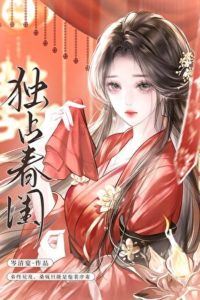
Sang Wu is a young widow from a merchant family who married Pei Liulang, the only son of the Third Branch of the prominent Pei clan in Yuhang County. Her husband died suppressing bandits before they could consummate their marriage or produce an heir. Despite her youth and the social stigma of being a childless widow, Sang Wu chose to remain in the Pei household to fulfill filial duties to her parents-in-law, earning commendation for her chastity. However, her position is precarious. Her mother-in-law, Third Madam, resents her because Sang Wu’s marriage to Pei Liulang was a source of pride for the couple, and his death represents a tragic loss. Furthermore, Sang Wu faces hostility from Pei Ba Niang, the pampered daughter of the Second Branch, who harbors a long-standing grudge against Sang Wu for supposedly interfering with her own romantic interest in Pei Liulang.
The narrative tension escalates with the return of Pei Silang, the Third Branch’s most successful scion and Pei Liulang’s elder cousin. Pei Silang is a celebrated Top Scholar and a high-ranking official in the Court of Judicial Review in Chang’an, known for his cold, disciplined, and upright nature. His return coincides with a political crisis in the capital involving the Duke of Wei, whose faction is maneuvering to control the imperial court. Pei Silang has been ordered to return home ostensibly to visit family, but also to avoid a forced marriage alliance with Princess Yiyang, a political trap set by the Duke of Wei. Meanwhile, the health of Third Master, Sang Wu’s father-in-law, continues to deteriorate due to grief and illness. He is deeply concerned about the future of his branch, which lacks a male heir to inherit the family line and assets.
A central conflict emerges when Third Master proposes a "Jian-si" marriage, a traditional succession arrangement where a widow marries a male relative to produce an heir for the deceased husband’s line. He intends for Sang Wu to marry Pei Silang, who would effectively become the adopted son of the Third Branch. Pei Silang initially refuses, viewing the proposal as a violation of morality and kinship. However, Third Master pressures him by highlighting the political dangers in Chang’an and the vulnerability of Sang Wu as a woman without protection. Pei Silang agrees to meet Sang Wu to assess her resolve before making a final decision.
The meeting takes place at a Buddhist nunnery on Cuwei Mountain. Sang Wu, aware of the political and familial pressures, responds to Pei Silang’s probing questions with a mix of obedience and subtle defiance. She acknowledges her low status and willingness to follow arrangements but also hints at her inner strength and complexity. This interaction shifts Pei Silang’s perspective, leading him to agree to the arrangement, though he remains guarded. Back in the household, Sang Wu swears an oath to Third Master to protect Third Madam, securing her position within the family structure.
The story progresses with Sang Wu navigating the hostile environment of the Pei residence. She encounters Pei Ba Niang and her childhood friend, He Yin, who accuses Sang Wu of betraying Pei Liulang’s memory. Sang Wu handles the confrontation with calm dignity, refusing to be intimidated. The narrative concludes with the formalization of the succession plan. Under the witness of clan elders, Third Master transfers his assets to Pei Silang, who is now designated as the heir to the Third Branch. Sang Wu publicly declares her reliance on Pei Silang, signaling the beginning of their new, complicated relationship as they face external political threats and internal family dynamics.
| Date | Group | Release |
|---|---|---|
| 2026-08-11 | shanghai fantasy | c10 |
| 2026-08-11 | shanghai fantasy | c9 |
| 2026-08-11 | shanghai fantasy | c8 |
| 2026-08-11 | shanghai fantasy | c7 |
| 2026-08-11 | shanghai fantasy | c6 |
| 2026-08-11 | shanghai fantasy | c5 |
| 2026-08-11 | shanghai fantasy | c4 |
| 2026-08-11 | shanghai fantasy | c3 |
| 2026-08-11 | shanghai fantasy | c2 |
| 2026-08-11 | shanghai fantasy | c1 |