Every Day After Marriage Is Really Fragrant - Reviews

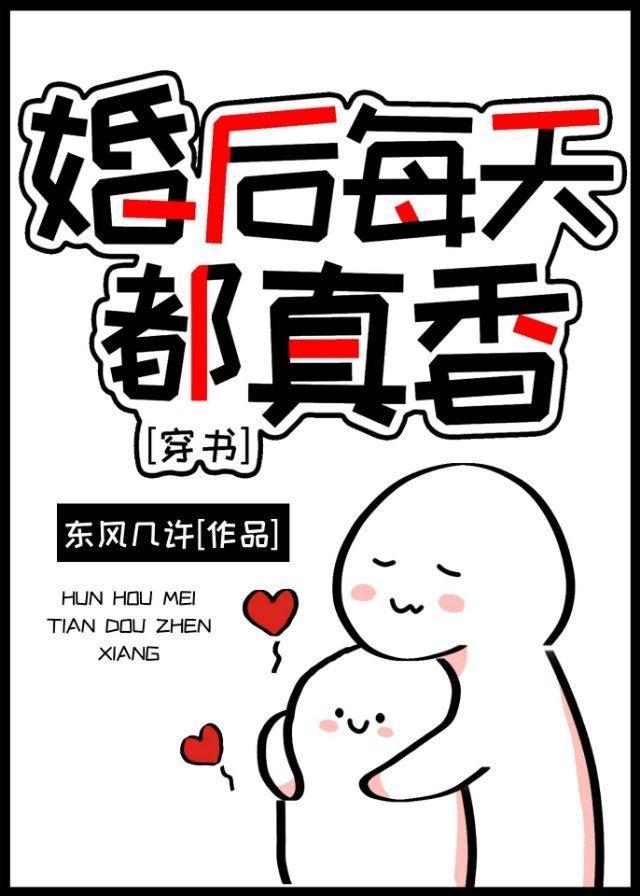
Every Day After Marriage Is Really Fragrant
+Add to Custom List
Sort
Add review
... Read More
"My Xiao Yu is so cute, like a little penguin." I read this comment in the text and I literally screamed out loud. This novel has no shame and I respect it so much. But seriously, the whole Yu Antong vs. Xing Lixuan dynamic around the pregnancy is one of the sweetest things I've read in a while. Yu Antong is just counting days, muttering about how slow time is passing, and Xing Lixuan is over there internally panicking because 'even a woman's pregnancy could still be life-threatening, let alone a man like Yu Antong who has no such precedent case.' This man is carrying emotional weight like a separate organism. And Yu Antong? Completely chill about everything except the internet making fun of his coat. The contrast is comedy gold but also kind of heartbreaking when you think about it — Yu Antong getting to just bicker about fashion while Xing Lixuan is probably losing sleep over medical risks. The moment that got me though was Yu Antong rubbing his stomach and saying 'Smelly baby, making me unable to stay late.' That's not an excuse, that's love. That's a man literally talking to his unborn child like the baby is the reason he can't keep scrolling. And Xing Lixuan hearing that and just letting it happen instead of being jealous of the baby? That's the real romance. Also the fact that they've already named the baby Xiao Nian as a nickname but the official name is still TBD? That's a tiny domestic detail that makes their relationship feel SO lived-in. They're a team. They're building something. The dumpling factory expansion, the naming debate, the coat argument — all of it adds up to two guys just trying their best while the world watches. I'm not crying, you're crying.
... Read More
Shen Yuexin walking in last, taking one small bite, and then immediately declaring 'Since you all tasted it, the rest of the bowl belongs to me. I want to finish eating the noodles and soup!' and then shamelessly devouring it. This woman has no filter and I am HERE FOR IT. Her voice is so distinct — she goes from 'Pleeasseeee' begging for one bite of Yu Antong's squab to dramatically standing up and announcing the competition is over because 'the God of Chefs has already been born.' She treats the entire serious cooking show like her personal buffet and somehow it works because she's genuinely charismatic. Then there's Jia Sibo grabbing her and saying 'I'm the sponsor, listen to me' like that's even a valid argument in this moment. The banter between them feels lived-in, like these people have a history. And Jiang Liushen dropping the entire mythological backstory of Fengming Qishan — 'a phoenix inhabiting and singing on Qishan... it was a good omen for the Zhou Dynasty's prosperity' — is such a sharp tonal shift from everyone else's energy. He brings weight to every line. Yu Antong's refusal of Sun Ming's job offer is also perfect in its brevity: 'Thank you for your affirmation, but I am more interested in becoming a God of Chefs at the moment.' Polite but firm, ambitious without being arrogant. Every character has a voice I can hear in my head.
... Read More
The narrative arc in these chapters is doing some serious heavy lifting under the guise of domestic slice-of-life, and I have so many thoughts. It opens with a mundane disagreement about a coat that somehow becomes a full existential crisis about their marriage, then pivots to a heartwarming scene with flower arranging that feels almost too normal after the emotional intensity. Then Little Judy exists—chaos incarnate—and the chapter ends with Yu Antong discovering he got NOTHING from red envelopes after giving them all out. This is the most chaotic domestic comedy rhythm I've read in a while. What's striking is how the author uses micro-conflicts to build the macro-picture. The coat argument isn't really about the coat. The flower arranging isn't really about flowers. The red envelope math isn't really about money. Each scene is a vessel for something deeper—the pregnancy adjustment, the family acceptance narrative, the financial entanglement of marriage, the slow integration of two people's lives into one shared chaos. The Judy subplot is especially well-placed right after the emotional climax with Yu Antong and Xing Lixuan. After that heavy, intimate conversation about vulnerability and fear, we get a kid destroying flowers and spinning in petals. It's the narrative equivalent of someone needing to breathe after a panic attack. The contrast IS the point. And that ending? "Xing Lixuan, you are a big liar!" after counting red envelopes? The fact that he promised something (probably financial or lifestyle related) and the reality doesn't match—this is the author setting up future conflict while making it feel casual and funny. I'm already suspicious and intrigued.
... Read More
The dialogue in this section is surprisingly layered, especially between Yu Antong and Fu Xin. Their conversation starts with what sounds like a standard business call but quickly reveals the underlying warmth—and the power dynamic—between them. "You are not human. You only care about making money"—this line from Yu Antong made me laugh out loud because it's exactly the kind of exasperated complaint you'd expect from someone who's dealing with a crisis and their manager immediately pivots to "let's monetize this." And then Fu Xin's cold calculation: "If we take the opportunity to promote our products, when the public slowly mentions you, they will only think that you are the founder of Immortal's Banquet... a talented cook, and an outstanding young entrepreneur." That is honestly brilliant strategy disguised as opportunism, and the way it's delivered without any emotional framing makes it feel even more ruthless. But what really surprised me was the food blogger reviews section. These comments don't read like generic marketing copy—they have actual personality. ": How delicious a chili sauce can be? This is too fake." Someone still doesn't believe it! And ": I would like to thank all the non-believers. So there will be fewer people to fight me." That is the energy of a true fanatic, and it makes the world feel populated with actual humans rather than plot devices. The author clearly understands how online communities actually behave.
... Read More
Okay so let's talk about the Xing Lixuan situation because this guy is EVERYTHING and also absolutely maddening. On one hand, the man clearly planned everything out like a chess master. He didn't just show up as a judge — no, he "spent money to buy a family seat" which means he was already thinking three steps ahead about protecting Yu Antong from backlash, from criticism, from anyone questioning his legitimacy. That is either the most romantic or the most controlling thing I've ever read, and I'm still not sure which camp I'm in. "Anyone who has been to the Immortal's Banquet will not question your skill." BRO. He went into research MODE. He literally consulted Han Xingyan about the competition system. This man doesn't love casually — he loves with spreadsheets and contingency plans. But then you have the other side, where he makes unilateral decisions and Yu Antong has every right to be upset about it. The whole car situation — morning with Lin Haoning, evening with Xing Lixuan, and Xing Linguan basically just decides "you're taking my car now" without a prior conversation. And honestly? Yu Antong's response is so relatable: "Why did you come here without discussing it with me? You deliberately kept it from me." That line hit me hard. It's not even about the car or the show — it's about being treated like an afterthought in your own relationship. And yet Xing Lixuan's defense, while questionable in execution, actually comes from a genuinely protective place. He's not trying to belittle Yu Antong; he's trying to shield him. The problem is that shield doubles as a cage sometimes. I also love that Yu Antong immediately turns it around with "You are so handsome. Once the show airs, those netizens should call you husband" — the man is hurt, yes, but he's also FLIRTING through his anger. That's such a specific couple dynamic that feels REAL.
... Read More
Okay, so this whole arc—where Yu Antong accidentally gets arrested at a massage parlor thinking it's just a regular massage—honestly had me wheezing. The plot setup is brilliant because it takes a mundane situation (stress from midterms) and explodes it into national humiliation via social media. What really sold it for me was how the author layered the revelation. First, we get the news headline, then the video, then the hilarious interrogation where everyone claims they were wronged too, and finally the masseuse vouching for him. It's structured like a comedy sketch, each beat taller than the last. I love that the plot doesn't just rely on the arrest; it follows the fallout—the campus reactions, the official university statement, the way Xing Lixuan's anger is less about the prostitution angle and more about Yu Antong hiding it. That's a solid subversive twist: the real conflict isn't the arrest, it's the secrecy. And then it ends on a mini-cliffhanger with Han Lele entering the classroom. The plot feels tight, every scene pushes the embarrassment forward while peeling back more of the characters' dynamics. Really satisfying structure, even if my face burned reading it.
... Read More
Okay so this whole scene with the four friends eating hot pot? On the surface it's just bros hanging out, but let me tell you, it's doing SO much heavy lifting for the plot. Yu Antong casually drops the idea of opening a restaurant, and the way everyone reacts is basically a mini roadmap for everything that's about to happen. Han Lele? Of course he's all in—because secretly he's calculating how to get free food for the next six years. That's not just comic relief, that's character-driven plotting. His loyalty is real, sure, but it's also transactional in the funniest way possible, and that's the kind of messy human detail that makes these friendships feel actual. But then there's the Xing Lixuan thread happening in parallel. The cold open in his office, eating bland lunch food, getting the call from Qi Jingyao about the viral video, seeing his wife cornering her uncle on screen—it's a whole mini arc compressed into maybe three pages. The fact that he immediately agrees to suppress the online abuse without even asking Yu Antong if he wants help? That's interesting. Is it protective or controlling? I keep oscillating on that. And then the QI JINGYAO birthday lie—Xing Lixuan lying to buy time to figure out what gift to get? That's not nothing. He's thinking about this relationship. He's investing. And yet he can't just say so directly. Classic Xing Lixuan. The two storylines are clearly converging toward something, aren't they? The restaurant plotline + the marriage plotline + the viral video fallout—it's building toward a collision. And I'm here for it.
... Read More
There's a symbol hiding in plain sight in this chapter and I think it's the most important one in the book so far. The Yu family. Once imperial chefs. Now their descendants have no talent—they survive on handed-down recipes, maintaining reputation without the skill to back it. Meanwhile Yu Antong, the orphan treated harshly by the family,自学成才. He learned knife skills alone, created secret seasonings that made money, and never once became a professional chef despite having the gift. Why? Because he was sick. Because the physical demands of a real kitchen were impossible for his body. But the author doesn't present this as tragedy. Yu Antong is PROUD. 'His craftsmanship has not declined.' He measures himself against his own standards, not society's. And then there's the open-style kitchen—a space that's aesthetically pleasing but practically flawed for Chinese cooking. 'The ventilation to outside the house was poor, so any smells from the kitchen easily wafted to the other rooms.' This kitchen is like Yu Antong himself: designed for beauty, built for show, but the REAL substance leaks through walls it wasn't meant to fill. The aroma reaches everywhere anyway. Xing Lixuan represents another kind of trapped potential—successful on paper, miserable underneath, forced into a marriage he didn't choose. Both of them are cooking in kitchens that weren't built for them, producing something that leaks through and changes everything. The noodles aren't just noodles. They're evidence that someone existed. Someone cared. Someone fed you when you didn't ask.
... Read More
What I love about the conflict architecture here is that EVERYTHING is layered. On the surface, it's a romantic comedy about a guy who wakes up married to a cold CEO type. But peel it back one layer and you've got: identity conflict (is Yu Antong truly himself or still performing?), trust conflict (Xing Lixuan explicitly says 'we are not very close' and yet keeps engaging), and the looming mystery of WHY this marriage happened at all. The most tense moment isn't an action scene — it's quieter than that. It's when Xing Lixuan says 'I'll kiss you, but only if you tell me why you marry me.' This is a man who negotiates intimacy like a business deal. He's putting conditions on affection, and the fact that Yu Antong actually plays along — flustering through it, covering his face, saying 'I have to say it out loud? I'm shy!' — creates this incredible push-pull where both of them are protecting something. What's at stake for Yu Antong? Truth. If he reveals he's not the original owner of this body, everything falls apart. Every hug, every 'husband,' every moment of genuine connection is built on a foundation of concealment. And yet — and this is the brilliant part — he keeps getting closer anyway. The line 'I'm more greedy for your body!' isn't just comic relief; it's a confession of genuine desire that exists DESPITE the deception, not because of it. For Xing Lixuan, the stakes are equally high but invisible. He's a man who has never brought anyone into his private world, who has a housekeeper already anticipating his domestic arrangements, who touches his own lips after a kiss like it's a foreign concept. He's risking something just by letting this person stay.
... Read More
Let me be honest — on paper, this chapter has almost zero plot escalation. Two friends eat lunch. One complains about work. The main character brings Tupperware to his husband's office. Employees gossip. By any traditional metric, this should drag. But it doesn't. Here's why: the author uses micro-tensions to keep the engine running. First beat: Han Lele arrives, establishes the restaurant opening date (deadline ticking). Second beat: the variety show complaint introduces a potential future conflict/opportunity. Third beat: the sour plum juice scene — small sensory detail that grounds us in the physical world. Fourth beat: Han Lele's pity play for takeaway service, which gets resolved immediately, giving us a miniature narrative arc in under two pages. Fifth beat: Yu Antong calling Xing Lixuan, the lunch preparation, the office gossip explosion. Each beat resolves quickly so the reader never stalls. The chapter ends not with a cliffhanger but with a warm afterglow — employees imagining scenarios, the chubby guy wanting the leftovers. It's a breath-out moment after whatever tension came before. And structurally, that's smart. You can't maintain peak intensity forever. The author knows when to let the reader exhale, which paradoxically makes them MORE engaged because they trust the pacing. The transition from Han Lele's scene to the Xing Lixuan scene is also seamless — just a phone call and a time check. No jarring cuts. It's effortless storytelling that hides its craft very well.
... Read More
"I take a bath and you make it look like I'm the Emperor. This Emperor shall reward you for your service." Slap. "Ah! You hit me again!" I cannot stop replaying this scene. The bath itself is such a charged space—warm water, intimacy, vulnerability—but the author subverts it perfectly. Xing Lixuan sets up this tender, almost sacred moment, and then YU ANTONG MAKES A JOKE ABOUT EMPERORS and gets spanked for it. The sensory details are there but never overwhelming: warm water, fleshy buttocks trembling slightly, the non-slip mats that used to annoy Yu Antong but now might save his life. These small physical details ground the absurdity of male pregnancy in bodily reality. Then there's the bedroom scene at the end—Xing Lixuan carrying Yu Antong, calling him "Baby," the refusal of the expected goodnight kiss. The domestic intimacy of it all feels earned, not manufactured. This isn't a romance novel with fancy settings; it's a story about people learning to navigate an extraordinary situation in an ORDINARY bathroom. The world feels real because the details are specific and slightly inconvenient. The author isn't trying to impress me with descriptions. They're showing me a life.
... Read More
I just want to take a moment to appreciate how distinctly every character sounds, because that is genuinely impressive writing. Yu Antong's voice is this perfect mix of bratty and vulnerable. He switches from threats ('I will divorce you now and divide your property!') to sweet coercion ('Good husband, lend me~') to wounded pride ('You treat me as your family's canary?!') in the span of five minutes. His dialogue reads like someone who's performing confidence while simultaneously falling apart, and that's SO accurate to how real people communicate when they're scared. Xing Lixuan is the anti-Yu Antong—short sentences, commands, zero flourish. 'Sit down, don't make trouble, and talk well.' 'We signed a prenuptial agreement, now you won't get a penny from the divorce.' This man doesn't even use question marks half the time. He's all flat statements and practical refusals, which makes the rare moments where he shows any softness land so much harder. The contrast between his brutal pragmatism and his reflexive catching of Yu Antong mid-fall? That gap is where the whole romance lives. Han Lele is genuinely my favorite voice in this passage. 'See the truth and don't take them with you when we eat hotpot later'—this man is weaponizing affection as a survival tactic, quoting his own father's warnings while actively disobeying them, and doing it all with a sing-song tone that makes you want to squeeze his face. Which, yes, Yu Antong does. 'I don't see it' regarding weight loss. Casual cruelty wrapped in fondness. And Zhao Peng's entire energy is captured in one line: 'I am a 24K pure straight man!' That's not dialogue, that's a personality explosion. Sun Ming's desperate 'Why don't you take me with you?' feels like a plea from someone who knows his place in the hierarchy and is trying to negotiate. The narrative voice itself is also doing heavy lifting—it's sardonic but warm, quick to notice the absurdity of situations but never mean-spirited about it. 'A man's mouth is a deceitful ghost, especially when the talk is done on the bed'—that line alone is worth the price of admission.

Leave a comment

You must be logged in to leave comments. or