Even You, Too Precious to Kill - Reviews

Even You, Too Precious to Kill
+Add to Custom List
Sort
Add review
... Read More
This novel has me absolutely wrecked because the emotional journey goes from pure swooning to pure horror and I didn't see either shift coming. The ball scene? Peak romance. His hand through that thin white silk glove—'firm and unyielding, like stone. But it was the warmth that unsettled her more than anything.' THAT LINE. A constant heat that would never fade, not even in winter. I was breathless. But then the nightmares start and suddenly EVERY memory of him is tainted. The man who taught her to read the stars is now a monster with a blood-stained axe in her dreams. And the scariest part? She still goes to him. She still asks to see him despite knowing she could be asking whether he killed her before. That moment where she clenches her skirt fabric and suppresses her frustration instead of confronting him—that's not weakness, that's survival. She's afraid of what he might say yes to. And that fear is so much more powerful than any romantic tension the author built before.
... Read More
I need to talk about how the narrative structure keeps shifting under your feet. On the surface this reads like a straightforward romance—grand duke meets provincial noblewoman, they dance, they fall in love, marriage happens. But then BAM: nightmares. Monsters with beautiful faces and blood-stained axes. And the line 'What if I ask him... if he's the one who killed me in my past lives—and he says yes?' That's not a throwaway thought, that's the whole game changing. The author is layering something much darker beneath the romance and I am HERE for it. The court scene earlier is actually a setup—this group that lures noblewomen and distributes illicit substances? He wasn't just being chivalrous, he was protecting her from something much bigger. And his comment at the end about her parents being 'isolated' and 'being interrogated for heresy' is genuinely chilling. Something is very wrong with this picture and the author is doling out breadcrumbs so perfectly that I can't stop reading.
... Read More
This section starts at absolute maximum velocity. Isabelle leaps from her bed - the text literally says 'for the first time in days' - and starts packing. She runs to her father, gets shut down, sits at dinner still panicking, and then BOOM the Inquisition arrives at the castle. No breathing room. The captain bursts in breathless, armor-clad knights storm the dining hall, and she's torn from her parents and dragged downstairs. Then it drops into this long, slow interrogation scene that could easily have dragged. But it doesn't because Tenetta keeps pivoting. First he offers the water/burning trial (which is basically asking her to commit suicide). Then he offers the marriage solution. Then he reveals he knows she's innocent. Each beat lands faster than the last, and by the time he says 'we'll get married and live happily ever after' the whole tone has shifted from horror to something almost romantic in its absurdity. The flashback to their first meeting at the Spring Festival is a brilliant pacing choice right at the end. We've been through three days of Isabelle's terror and then suddenly we're in a bright festival scene with colorful crowds and dancing. It gives the reader air to breathe after the intensity of the banquet hall, and it recontextualizes everything we just experienced - we now see that this man she's terrified of was once just a stranger she watched from across a room. The transition between present and memory is smooth enough that you don't even notice the pivot until you're already in it. That's good craft.
... Read More
The pacing in these first seven chapters is absolutely masterful, and I want to talk about why it works so well. Chapter 1 drops us into a scene that is simultaneously intimate, violent, and deeply uncomfortable. We don't know WHO these people are or WHY this is happening, but we're hooked because the emotional stakes are so high. Every line crackles with tension. The author doesn't waste a single word. Then — BAM — "There is no such thing as eternal love in this world. Isabelle only realized that when she was on the brink of death. It happened when she was twenty-two." That sentence is a PLOT NUCLEAR BOMB. It reframes everything we just read. The sex scene wasn't passionate — it was desperate. The church wasn't sacred — it was profane. And we're immediately curious: HOW did she die? WHAT happened? The flashback sequence that follows is where the pacing really shines. It moves from domestic warmth (him drying his hair, examining her wrist, the gentle voice) to horrifying betrayal in about three paragraphs. The transition is seamless because the author uses sensory details to bridge the gap — the gold goblets, the paralytic poison, the calloused hand sliding up her spine. Each detail escalates the dread. The chase scene through the cathedral corridors is short but EFFECTIVE. No wasted movement. Just her running, her legs stiffening from the poison, the stairs, the fall. It's over in seconds — and that's intentional. Her death shouldn't linger. It should be sudden, brutal, irreversible. Then the rebirth. Back to her 19-year-old body. And immediately, the POV shifts to Aaron and... apparently Tenetta, now in a different role. The reveal that someone is watching a provincial noblewoman get married — this is the hook that pulls us into the next act. The pacing never drags. Every scene serves a purpose. Every chapter ends with a question that demands the next chapter. The author understands that suspense isn't about slowing things down — it's about controlling the RELEASE of information.
... Read More
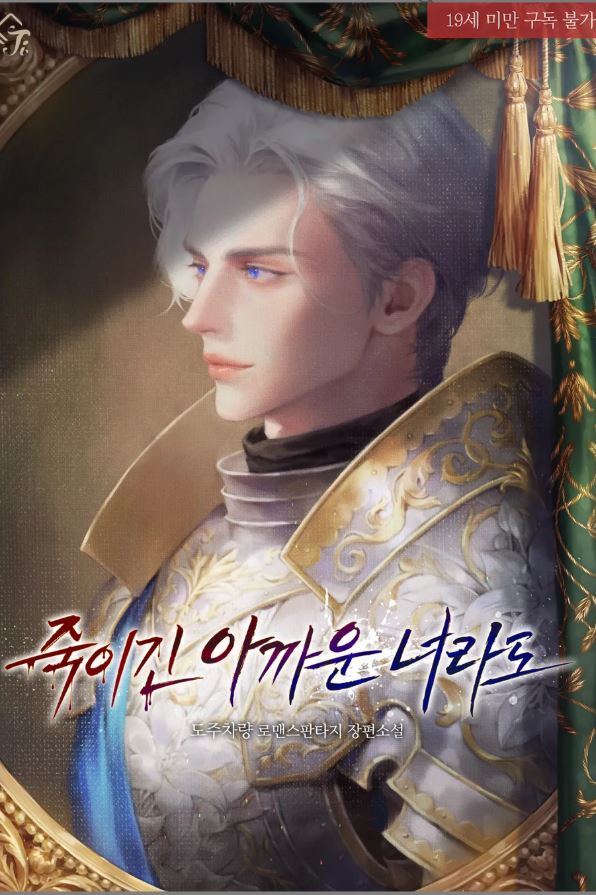
I need to just say this out loud because I can't contain it anymore—Tenetta Achilleton is the most complicated person I have ever encountered in fiction and I am HERE for it. Let's talk about the scene where he takes the Lines' hands one by one. "As though offering a final confession." Final confession. He's not giving them absolution. He's giving them something else entirely. Something softer than death. Something almost tender. And that terrifies Isabelle more than watching them die does. Can you imagine being so close to someone and still not understanding what they're capable of? "There was something about his gentle demeanor that filled her with an inexplicable dread." DREAD. Not love. Not respect. DREAD. And yet she watches him walk back to her after three people turn into sand and catch her when she faints. Who is this man? What is he actually feeling? The text gives us nothing concrete about his internal state except that Pharos DESPISES him. And Pharos is apparently blind to half of reality, so can we really trust that assessment? Then we get the flashback and Pharos's entire demeanor shifts. He sees Tenetta shaking water off his body and notices the silver hair and blue eyes and has this whole physical reaction—being struck by his beauty, the innate elegance. This isn't just professional assessment. This is someone who was genuinely affected by another person's presence and chose to interpret it as threat instead. The jealousy angle is so thick you could cut it with a knife. Pharos couldn't handle Tenetta getting recognition first. Couldn't handle being the one left behind while another young commander of similar standing got all the glory. "He found it unbearable." Two words. Two fucking words that carry an ocean of resentment and insecurity and wounded pride. And Tenetta? He defeated Guido in front of everyone. Made him crawl. Broke his face and his leg. Did it for reasons that have nothing to do with military discipline and everything to do with protecting something—and probably someone. The fact that he's now called Dusk and leads an order of wild dogs who the capital treats as glorified legends... there's so much pain underneath all of this. I'm already emotionally compromised and we're only halfway through.
... Read More
Okay so this plot twist absolutely wrecked me. Let me just say it first: the idea that Tenetta literally chose to marry her instead of executing her family, only to reveal that if he loses his divine power through marriage, HE becomes the heretic and KNEELS where they kneel—this is the kind of narrative grenade that makes you slam the book shut and just stare at the ceiling. Who writes something like that?? What I love most is how the author plays with misdirection. For most of this section, we read it as Tenetta having all the power. He interrogates her casually like it's weather talk. He commands her body. He shows her Chester's mangled family as a threat. But then the final revelation flips everything. The high priest, the blessed warrior, the man who holds life and death in his hands—his greatest vulnerability is MARRIAGE itself. And the woman he's been bullying and manipulating? She's actually the one who holds the kill switch for his entire identity. The execution scene with the Lines being dragged in while Isabelle watches is also brilliant plot construction. It's not just spectacle—it's the author showing us exactly how far Tenetta will go to make his point, while simultaneously demonstrating that he's already bending the rules for HER. He was supposed to carry out the execution, but he chose her instead. That contradiction is the whole engine of this story, isn't it? I also need to mention the flashback structure with Pharos and the mass scene. It's a subplot that ties into the larger world (the rivalry between Dawn and Dusk Orders) while also giving us a window into their domestic dynamic. The author uses it as both worldbuilding AND character revelation, which is skilled storytelling. One detail that made me actually gasp: when Tenetta says 'my faith is put to the test' and then locks her in bed during mass—that's simultaneously hilarious and deeply unsettling. This man weaponizes affection.
... Read More
The central symbol of this entire section is fire. Heresy means burning. The Church's punishment is fire. Tenetta mentions that heretics 'burn in fire or sink in water' as a trial by ordeal. And yet the man himself - who claims he wouldn't mind burning in the 'depths below' for love - walks through all of this unharmed. There's also the water motif connecting to the escape she's trying to make. She wants to go to Pessen by sea. She's thinking about boarding a ship. Water as freedom versus water as the method of execution. Both are possibilities she's weighing simultaneously. But the thing that actually stuck with me is the wedding vow discussion. When Tenetta asks 'do you know what the bride and groom vow to each other at a wedding?' and Isabelle gives the safe religious answer about offering it to Pax, he corrects her: 'A wife promises her husband, and a husband promises his wife—eternal love and devotion.' This is a man who has been sent to execute her family for a crime they didn't commit, who has chased her across multiple lifetimes, and who is now proposing marriage as both salvation and genuine romantic offer. The wedding vow becomes this weird bridge between duty and desire, between religious institution and personal commitment. He's reframing the very thing that would make him lose his divine power as something worth losing it for. The abandoned banquet hall itself is symbolic too - a space meant for celebration and community now hollowed out, just like Isabelle's family situation. They're supposed to be powerful nobles and they're being treated as disposable by a Church that has grown too powerful.
... Read More
Okay, the plot structure here is genuinely clever and I need to unpack it because it's doing SO MUCH work. The story opens IN MEDIA RES with the poisoned marriage, then drops us a time skip: "There is no such thing as eternal love in this world. Isabelle only realized that when she was on the brink of death. It happened when she was twenty-two." Boom. Right there. The author tells us exactly how she dies — paralysis, poison, a fatal fall — and THEN we see it happen in real time. That reverse structure is satisfying as hell. But here's where it gets interesting: after she dies and wakes up in her 19-year-old body, the POV shifts. We're now following Aaron and... wait, is this Tenetta? The man locked in his room for a month, haunted by visions of a woman with black hair and deep green eyes? The one who ordered surveillance on a provincial noblewoman who's getting married? "That woman... is getting married?" His reaction — white muscle tensing, that blade-like scar standing out — tells us this man is CONNECTED to her in ways we don't yet understand. And the report mentions "the address of a small provincial cathedral — the place where her wedding was to be held." So here's my theory: did HE die and get reincarnated too? Or is this some kind of shared reincarnation situation? Because the description of him — silver hair, blue eyes, the scar on his chest, the calloused hands of a former knight commander — these are ALL Tenetta's details. But he's reacting to a report about a woman getting married, and he's haunted by visions of her falling. The narrative is playing with causality and possibly dual rebirth, and I am OBSESSED. The plot isn't just "she goes back and gets revenge." It's asking: what if BOTH of them got a second chance? What does that do to the power dynamic? What does that do to the tragedy? Also, the worldbuilding around the Church of Peace, the two holy knight orders (Dawn and Dusk), the inheritance laws, the imperial politics — all of this is layered in naturally without info-dumping. Every detail serves the story.
... Read More
Let's talk about what's actually at stake here because it keeps escalating and my chest hurts. On the surface level: Pharos executes heretics. Tenetta watches. Isabelle faints. Fine. Seems straightforward. But then you peel back one layer and suddenly the stakes involve an entire order of knights being secretly condemned to die so that one man's pride doesn't get bruised. The Order of Dusk knows the truth. They know Guido leaked information. They know the church abandoned them. And they won the war anyway. What happens when a group of people who have nothing left to lose realizes they've already won? "The Knights of Dusk—like a pack of wild dogs that had never been tamed—quickly muddied the waters of the capital." Muddied the waters. Such a polite way of saying they disrupted the carefully constructed narrative of virtue and orthodoxy. They exist. They fought. They won. And their very existence contradicts everything the Church claims about who deserves salvation. Pharos's internal conflict is where the real tension lives though. He's commander of the most prestigious order in the realm. He has power, title, proximity to the archbishop. And he has done absolutely nothing of note. Meanwhile Tenetta—a man he dismissed as undisciplined trash, a bastard son of foreign gods, a troublemaker who gambles and drinks and abandons posts—is returning as a war hero who seized the royal banner. The comparison is suffocating. "And now, belatedly, you think to trail behind others and claim what's left." His father's voice in his head probably. The weight of expectation without the receipt of achievement. That's a different kind of death, isn't it? Not dissolving into sand, but crumbling slowly under the weight of someone else's success. And Tenetta? What does he stand to lose? His order? His position? The people who followed him into that war? The text doesn't tell us directly but the way he carries himself—with that mix of roughness and dignity, of malice and elegance—suggests he's already lost more than he'll ever admit. Who is actually winning here? Because I'm not sure that question has a clean answer.
... Read More
Okay so let me just... process what I just read because my jaw is literally on the floor. The execution scene. The Line family dissolving into red sand like it was nothing. And Tenetta watching it all with this expression that made Isabelle's face drain completely. Like he felt something but it wasn't the horror you'd expect, was it? It was dread. Pure, uncut dread. "Stay here quietly. I'll be back in a moment." What kind of person says that before watching three people get executed in front of them? And then he walks back to Isabelle afterward like absolutely nothing happened. My brain keeps going back to that contrast. But then the flashback hits and suddenly the whole thing recontextualizes. We go from present day massacre to FOUR YEARS AGO and the eastern front. The Order of Dusk. That name alone should've been foreshadowing, honestly. DUSK. Not dawn. Obviously these guys are the opposite of what the church claims. Pharos sending Tenetta to the capital with letters while deliberately leaving out the truth about Aaron... that's such a specific kind of manipulation. The author doesn't even spell it out directly. You just put two and two together and suddenly Pharos looks really, really guilty of something. "He will personally send letters to those among Dusk who are worthy, and have them transferred to the Order of Dawn." Said the man who couldn't be bothered to tell the whole truth. This plot is moving like a train and I am just sitting here trying to catch my breath. Who is Tenetta actually? Because right now he seems like he's on the side of the angels but the way Pharos looks at him—with this visceral hatred underneath—I'm not buying it. There's a beast under there. The text literally says it. And what about that ending where Tenetta seized the royal banner? That's apparently his official war credential now? Four years ago Pharos dismissed him as undisciplined trash and now this man is returning as a war hero while Pharos hasn't done anything? The political maneuvering here is insane and I need answers.
... Read More
Let me just appreciate the dialogue in this text for a second because the author is playing 4D chess with subtext and I am living for it. "I will personally send letters to those among Dusk who are worthy, and have them transferred to the Order of Dawn." Said Pharos, deliberately omitting the part where he's essentially signing the remaining Dusk knights to die for political convenience. The way he phrases it—personal, benevolent, righteous—all while plotting their quiet elimination. That's not just good dialogue, that's character assassination by conversation. And then Guido's complaints about Tenetta: "He ignores orders completely, gambles away his superior's entire pay, then scatters the winnings among the beggar-like villagers—only to get drunk, pass out, and abandon his post…" The escalation! The exaggeration! The way Guido starts reasonable and just keeps building until Tenetta sounds like a cartoon villain. But here's the thing—Guido is the unreliable narrator of Tenetta's reputation, and we know it because Pharos himself notes the contradiction: "At the very least, there was no sign of intoxication about him." Pharos saw Tenetta and made up his mind before the man even spoke a word. "Even after committing all that, he may still find salvation. He'll die for God, after all." Cut. Gone. Dismissed. Not out of mercy but out of pure contempt. He couldn't be bothered to try. The roundtable scene is where the dialogue really shines though. "A letter has arrived from His Majesty the Emperor, urging a reduction of the Church's military power." Such a casual way to drop political tension. And then the advisor's response: "Even if they were to lose their lives in the process, would that not be martyrdom?" Martyrdom. The church weaponizing death as theology. And nobody speaks. Nobody. The silence between those lines is louder than any shouted objection. Agulus closing with "I made you the head of Dawn long ago, yet you've done nothing but linger in the capital" hits like a physical blow. A father reducing his son's entire existence to failure. And Pharos takes it. Just takes it. The dialogue here doesn't need emotional labels. It delivers them through structure alone.
... Read More
The imagery in this book is genuinely cinematic and I need to discuss it because the author knows exactly how to use setting to amplify emotion. Let me start with the scene where Tenetta builds the fire. This is one of those moments that stays with you. Spring hasn't arrived yet, the castle feels colder than ever, and he takes a matchbox and brings the hearth to life with these 'steady, rough motions.' The fire casts a flickering glow across the room, illuminating the deep furrow in his brow and the strength of his arms beneath his priest's robes. Then he tosses the poker aside carelessly and folds his arms. Every detail is deliberate. The cold castle, the warm fire, his massive hands that can build warmth and destroy lives, the priest's robes hiding a body built for violence. This is visual storytelling at its finest. Then there's the execution courtyard scene. Someone being dragged in—mangled bodies, as though they'd been tortured. Isabelle recognizes them. Chester and his family. The same faces from her wedding in her previous life. The contrast between the warm, intimate bedroom scene and this brutal public display of power is jarring, and I think that's exactly the point. Tenetta's world is one where tenderness and brutality coexist in the same day, sometimes the same hour. The flashback to the mass scene is another example of the author using setting to reveal character. Sunlight spilling across rumpled silk sheets. Isabelle trying to slip her feet free, her porcelain skin glowing. The contrast between sacred space (the cathedral, the Mass) and profane desire (Tenetta keeping her locked in bed) creates this incredible tension. The world feels alive because every location has meaning—the cold castle represents her isolation, the warm bedroom represents her entrapment, the execution yard represents the ever-present threat of death. I also want to mention the visual design of Pharos. Short black hair, clean jawline, navy eyes that follow Isabelle like prey. The author paints him like a completely different species of man from Tenetta—rigid, principled, watchful. He's the moral mirror to Tenetta's chaos, and his presence in the execution scene adds another layer of visual and thematic complexity. Two holy orders, two leaders, one heretic execution. The symbolism is almost too on-the-nose, but it works because the author executes it with such vivid specificity.

Leave a comment

You must be logged in to leave comments. or