Even If I Have to Pluck the Runaway Flower - Reviews

Even If I Have to Pluck the Runaway Flower
+Add to Custom List
Sort
Add review
... Read More
So here's the thing that got me the most—there are essentially two plot threads running in parallel, and they're both about people desperately trying to reach someone. Charlotte wants to get to Biorettia to find Chris. Christian wants to escape his life and go to Mary Robinson. Neither of them knows the other is literally already there, or close to being there. The dramatic irony is almost unbearable in the best way possible. I loved how the Earl's subplot weaves in—on the surface it's just a family reunion story, but really it's the Earl actively engineering the circumstances so that Charlotte can't run off on her own. He invites Chris to come to Roimond instead. It's a clever move because he genuinely believes he's protecting her, not manipulating her. The reader sees both layers simultaneously, which makes every warm exchange between them sting a little. And then Christian shows up a full day early. 'In case Mary Robinson had gotten the day wrong.' That detail broke me. He's so eager, so restless, and his sensory torment is literally driving him to the port. Two people, same destination, completely unaware. I can practically hear the universe cackling.
... Read More
The Earl's dialogue is genuinely fascinating because nearly everything he says is a performance. 'You may call me Father.' 'I am always on your side.' 'Rather than meeting in Biorettia, bring him to Roimond.' On the surface, this is the warm, generous patriarch. But the narration constantly undercuts him—we're always inside his head, watching him 'quietly despair,' 'inwardly rejoiced,' calculating that Chris 'would still be no match.' Every tender line is also a strategic move. Compare that to Charlotte's speech patterns, and you get this brilliant asymmetry. She stammers through lies badly—'Unfortunately, she had never been very good at spinning out lies at length.' Her sentences trail off, she hesitates, she can't quite commit to the fiction. The Earl, meanwhile, speaks in complete, polished paragraphs of manipulation disguised as care. 'If he truly was an officer in Duke Eponhart's direct unit, then I too would welcome him.' What a line. It sounds like acceptance but it's actually a trap. Christian's internal voice is a totally different register entirely—short, clipped, almost brutal in its honesty. 'Women are even worse.' 'Christian is in his prime, so it cannot be helped.' The Emperor's drunken vulgarity ('Should they not be fanning themselves under their skirts') provides this grotesque comedic counterpoint that makes Christian's suffering feel even more isolated. Three distinct voices, zero overlap.
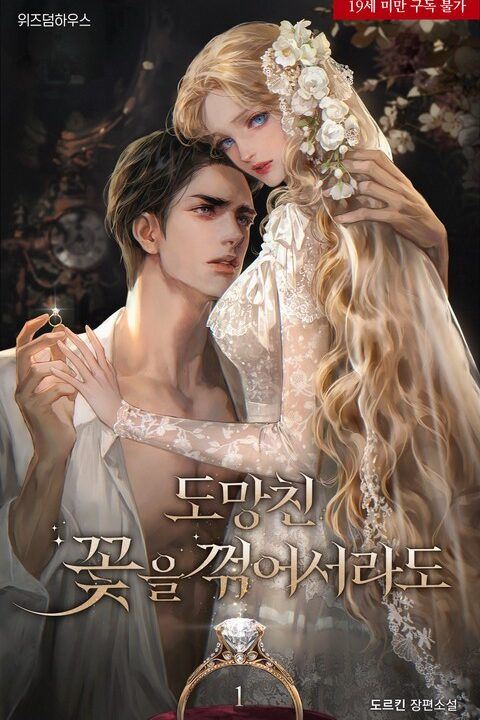
... Read More
I keep coming back to this single line from Harrison: 'Bring the lady with you as well.' It's delivered almost casually, like an afterthought, but it detonates everything. Because in that moment, Christian's entire internal world shifts. The nausea, the fury, the thought of placing his woman inside the 'hateful shackles of the Imperial Family' — it's not just jealousy or possessiveness. It's trauma. His parents died because of this system. He survived ten years as a political hostage. The Imperial Palace isn't a place of honor for him; it's a tomb that wears a crown. So when Harrison casually suggests hauling Charlotte into that world, Christian doesn't just feel anger — he feels sick. His body physically rejects the idea. And this raises the stakes SO much. Before this scene, the conflict was abstract: the Emperor wants Christian back, Christian wants freedom. But now? Now there's a person the Emperor could use as leverage. A person Christian would burn the world down to protect. That's the moment the story shifts from political tension to genuine emotional danger. Charlotte's storyline amplifies this even further. She's weak, physically broken from the night before, emotionally unsteady, and she's about to board a ship to meet a man who may not show up — all while her only living relative, Earl Roimond, waits with what seems like genuine love but whose true intentions we haven't fully seen yet. The layers of risk are stacking up. Every decision Charlotte makes from here is made with incomplete information. And Christian? He's walking back into a den of vipers with nothing but a letter and a pocketful of stolen hair. The stakes aren't just personal anymore — they're existential.
... Read More
I need to just sit with this for a minute. The way this author writes Chris losing his senses—smell, taste, touch—during the war and then slowly getting them back through Charlotte is some of the most devastating romance writing I've ever read. "A strange sensation, as if a colorless world were being dyed with yellow paint." That line. That single line made me actually pause my phone and stare at the wall. Two years of his life, gray and numb, and then one whiff of freesia from Charlotte's hair and suddenly he's FEELING things again. The heat of her skin, the pounding of his own heart, the dryness in his mouth. His body is remembering what it means to be alive through her. And the tragedy of it is—he doesn't see it as loss. He never let himself grieve what he lost. "A romantic sentiment like having lost something precious from his life was not the kind of emotion he dared feel." He's been surviving, not living, for two whole years. And Charlotte walks in smelling like spring and his mother's memory and suddenly the color comes back to his world. The scene where she puts food on HIS plate—lobster claw, eggplant, mushrooms—and says "you should hurry and eat too" when she thinks he can't taste anything... she doesn't know about his condition but she treats him like a normal person anyway. Like someone worth feeding. And he responds by eating everything she offers while pretending he's just being difficult. Classic Chris.
... Read More
The stakes in this passage operate on at least three levels simultaneously and the author never lets you forget any of them. Level one: survival. Fred the pickpocket is stealing because he and his sister are starving on a ship. If Chris reports him as a Dalteum spy, the punishment is torture - not discipline, not jail, torture. The stakes are literally life and death for a child who made one bad choice. Charlotte risks her own social standing by shouting at Chris to stop, and she does it without thinking. That's character revelation through conflict. Level two: class and power. Chris could have just taken the bag back and walked away. He had every right to. Instead he uses the spy accusation as leverage, not to actually harm the kid but to force him to comply. Then he flips it and offers practical help. Charlotte sees all of this and understands that Chris's cruelty and his compassion come from the same place - he knows how the world works and he's been surviving it. Level three: the interpersonal tension between Charlotte and Chris. Every exchange is a power struggle disguised as casual conversation. “You're more mischievous than I expected” vs “You're the most mischievous man I've seen in my life.” They're boxing with words and neither will concede. But then her stomach growls and suddenly the power dynamic shifts because she can't even maintain the facade of not needing anything. The Biorettia stop adds another layer - what happens when they're forced off the ship together? The confined space of a docked port, a day to kill, and two people who can't stop provoking each other. The suspense isn't “will they or won't they” - it's “how much longer can they keep this up before something breaks?”
... Read More
I need to talk about this one moment because I genuinely teared up. Charlotte is standing there, exhausted, half-dead from seasickness, and the Earl takes her face in his hands and strokes her cheek. And suddenly she remembers her mother's scent—'the smell of a dense forest, the smell of clean cold water.' It's not just nostalgia, it's like her body remembers safety before her mind does. She's been alone for so long and in this one gesture from a man she just met, she accesses something ancestral, something deep in her bones. But then the chapter cuts to Christian, right? Who is sitting at a banquet surrounded by women who want him, feeling nothing, unable to even eat because everything tastes like rotting flesh. And all he can think about is 'Mary Robinson'—replaying her scent, her touch, her face 'like a rose.' The parallel is so exquisite it hurts. Two people who have lost something fundamental about how they experience the world, both driven by an almost physical need to find the one person who makes it bearable again. And the Earl remembering his sister Katrina leaving in the dead of night for some lawyer—how he reads that letter and feels that 'tearing pain in his chest'—that generational echo is what makes this emotional thread so rich. He's not just preventing Charlotte from repeating his sister's mistake. He's trying to save her from the kind of heartbreak that echoes through families.
... Read More
The dialogue in this section is ridiculously good because it does SO MUCH with such simple exchanges. Watch how Chris operates—he drops bait deliberately. 'After eating that much, shouldn't you walk a little?' is clearly a tease, and she bites every time. 'You're the first lady I've seen feel wronged for not managing to eat more.' She fires back immediately: 'You're probably the only person who talks so rudely to a lady too.' This is their entire dance. But then the moment shifts and his voice changes completely. 'May I taste them?' That question—after everything, after all the provocation and physical closeness— he actually asks for permission. And she says no, and he doesn't push, he just... resets. The dialogue goes from sparring to devastating in one sentence. Charlotte's lines are frantic and scattered ('No. You can't.' 'Why are you doing this to me?') while his are economical and heavy. Each word costs him something. And that final 'Let's go up. The observatory.' after all that tension? He just... moves on like he didn't just lay himself completely bare. That's such a Chris move. The author never lets the characters explain themselves fully, and that's what makes every conversation feel real.
... Read More
Okay so I need to talk about the Fred incident because I know what you're thinking - 'it's just a random kid who tried to steal Charlotte's bag' - but no, this is actually doing heavy lifting in the plot. Chris doesn't just return the bag and move on. He threatens the kid with being reported as a Dalteum spy, which is basically a death sentence, and Charlotte has to physically intervene. That's how we learn about the geopolitical tension between Westden and Dalteum in like three lines. The author is sneaky like that. And then the whole thing pivots when Chris reveals he was a soldier and a war orphan too. Suddenly Charlotte's act of kindness toward Fred takes on this completely different weight - she's not just being soft, she's recognizing herself in this kid. The scene flips from tension to something warm, then back to tension when Chris basically commands the kid to leave. It's a mini arc within a scene. But here's what actually got me: Charlotte realizes Chris remembers her fake name 'Mary Robinson.' She gave a rough fake name because she didn't think they'd meet again. He remembered it. That's a tiny detail but it signals that this guy pays attention to everything. When he casually drops 'Miss Mary Robinson' later during their food banter, it's like... yeah, he noticed you. He noticed everything. The temporary stop at Biorettia is another plot device I can't ignore. It forces Charlotte and Chris into proximity, gives them a reason to leave the ship together, and interrupts whatever stalemate they were in. Classic forced proximity setup but the author earns it because the ship inspection reason feels practical, not manufactured.
... Read More
Okay so I need to just sit with this image for a moment because the author dropped it like it was nothing and I'm still not over it: "Even when the calluses on the soles of his feet split open and bled, he felt no pain. Only the military socks damp with blood remembered the hours of suffering." THAT'S IT. THAT'S THE SCENE. No dramatic music, no internal monologue about his devotion. Just socks. Bloody, damp socks that carry the evidence of his searching while he himself feels nothing. The body keeps score when the mind goes numb. And the restaurant scene? Twenty shellings as a tip. Four portions of food consumed in an hour while he waits for someone who isn't coming. The author describes the "blazing sunlight of late June" beating against his brow bone — this is literally hellish heat, and he's sitting in it, devouring food he doesn't taste, staring at a door that never opens. But the scene that haunts me is Charlotte's collapse. "That very night, Charlotte began to bleed in the midst of pain so severe that cold sweat ran over her whole body." The dual meaning of bleeding — physical and emotional, the body rejecting the heartbreak — is almost too on-the-nose, except the author doesn't explain it. They just show us. The contrast between the Earl's sunlit study, lush green leaves filling his eyes as he reads about diamonds, and Charlotte's frozen interior — "the sunlight of summer grew warmer and warmer, but her heart froze like deep winter" — this isn't accidental. The world keeps turning outside while inside these rooms, people are dying slowly. I also need to mention the observatory. It's referenced as the place of the promise but never shown directly. It exists only as absence, which makes it more powerful than any description could.
... Read More
I keep coming back to this one moment. The ship shakes, Charlotte wobbles, and instead of just steadying her, Chris wraps an arm around her waist and pulls her chest against his. Her face is literally pressed into his pectorals. She muffled-“thank you” because her face is buried in muscle and he knows it and he teasingly says “I can't tell what you're saying?” like a absolute menace. And the smell! I cannot emphasize enough how important this sensory detail is. Charlotte expected sweat because of his shabby clothes but instead he smells like expensive perfume oil with this musk undertone. His body is “hard as rock, without a single soft place” - she literally describes him as a weapon wrapped around her. There is so much unpacked in this scene. Physical danger and physical attraction braided together. But what killed me was after he lets her go. She's trembling with anger and he walks away like nothing happened, then starts slowing down because she's not following. He doesn't turn around, just asks “Anything you want to eat?” in this completely casual voice. The man is emotionally illiterate AND hyper-attentive at the same time and it's driving me insane. The way Charlotte keeps lying about being hungry when she's clearly starving? That's not just pride - it's her trying to maintain some semblance of control when this man keeps reducing her to flustered silence. And yet she still follows him. Of course she follows him. Her stomach is growling so loud it betrays her and she has to bite her lip to hide the sound. I'm not okay.
... Read More
Every scene between these two is layered with so much unread tension it's almost painful. On the surface it's just two people having dinner, but underneath there's a constant current of danger and desire and history that neither of them will name out loud. Chris is this physically imposing man—huge, scarred, a retired officer who fought in the most brutal war anyone alive can remember—and he's barely containing whatever he's feeling about Charlotte. His gaze alone is described as SCORCHING her neck and cheek. He's literally vibrating with the effort of NOT grabbing her hair and burying his face in it. The restraint is making me Lose It. But the external stakes matter too. Charlotte is on a passenger ship heading north, she's an orphan with no real protection, and Chris is... what exactly? A decorated war hero with more money than makes sense and a pocket watch he won't let anyone see? The reader knows there's more to him. Duke Eponhart's direct unit. Ridiculous combat achievements. All of this is being doled out in fragments, and I am DEVOURED. The scene also has this delicious social tension—everyone in the restaurant is watching Chris eat like a wild animal, staff suspicion, guests uneasy. Charlotte is sitting there rubbing her palms on her skirt, worried he might actually RUN WITHOUT PAYING. The contrast between how the world sees him (dangerous, unstable, possibly criminal) and how she's starting to see him (a lonely kid who hasn't laughed in twelve years) is everything.
... Read More
The author drops this single image and suddenly the whole story has a body. “The village packed with buildings topped by pure white dome-shaped roofs visible nearby.” That's it. That's all we get before the scene cuts away to food drama, but I have seen enough to know that place exists and I want to walk through its streets. What I love is how the world-building seeps into everything without a single exposition dump. The fact that ash-gray hair and eyes make someone guess you're from Dalteum tells us there's a whole ethnic/regional identifier system just from one observation. The coin system - shellings and lirang, with 20 shellings equaling a commander's daily wage - grounds us in an economy where a child working in a munitions factory earns one shelling a day. We don't get a history lesson, we get a kid counting coins in a canteen and suddenly we understand the entire economic hierarchy. And the ship itself! The deck corridor, the dining room with its foul-smelling steak, the announcement system, the temporary docking procedure. This is a living, breathing space. The floor shaking when they approach the dock, Charlotte's unsteady balance versus Chris's perfect stability - even the physics of the ship reflect their characters. I also appreciate that Chris throws the kid an old canteen and explains why it's smarter than Charlotte's handbag: “In a rough world, the more precious something is, the more it needs to be dirtied.” That line alone tells us more about this world's danger level than any paragraph of description could.

Leave a comment

You must be logged in to leave comments. or
