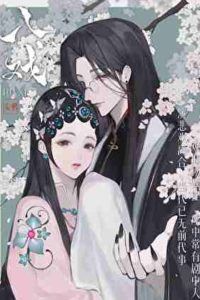
There's a quiet tragedy in how Yuan Qingzhi watches Xie Shuyao and Shi Honghua's story play out, and I couldn't stop thinking about it.
Xie Shuyao — this girl who rescued a wounded stranger in a rainstorm, exchanged tokens, pledged her life to him — waited and waited. When she finally heard he was to be married to a princess, she made the boldest decision of her life: enter the palace, demand answers. For a woman who'd never left her residence, this is everything.
But here's the thing that broke my heart: she never showed him her face. She was careful. She sent her maid with medicine instead. She wore a veiled hat when exchanging tokens. The Weaver Girl knows the Cowherd, but the Cowherd doesn't know the Weaver Girl. And Yuan Qingzhi, sitting there as Wu Wu, just wants to SCREAM at her: FEMALE LEAD, YOU FOOL!
Because Yuan Qingzhi knows the script. She knows that this misunderstanding is what leads to the female antagonist assuming Xie Shuyao's identity. She knows the opera ends with everyone dying. She's watching a tragedy unfold in real time and she can't even warn the people involved without exposing herself.
Then there's Yuan Xiangming — her "Senior Brother" from the real world, the martial arts performer who got pulled into this story during rehearsals and forgot he was ever anything else. Yuan Qingzhi feels this deep, aching kinship with him. Two modern souls in a world that isn't theirs, but one of them has forgotten they're visitors.
The moment he arrives on his horse, saber-wielding guards at his back, looking like a crane among chickens — Yuan Qingzhi's internal monologue is pure comedy gold: "Alright, alright, the male lead has entered the stage now too." But underneath the humor is this desperate hope that HE might be the one to wake everyone up.