Dry Land - Reviews

Dry Land
+Add to Custom List
Sort
Add review
... Read More
Okay I need to talk about this entire emotional contrast the author built between Min Zhi and Fu Baiqi because WOW. Fang Fengzhi has been sitting in this loveless marriage for TWO YEARS and what does he get? Silence, neglect, broken promises. Meanwhile Min Zhi — someone he had a completely unwanted sexual encounter with — handles him with so much gentleness it made me want to scream. Look at this moment: "From beginning to end, this man never asked him why he was crying, nor did he get angry because of his struggle, and he didn't even make excuses for his behavior. He just hugged him and took all the blame." And then later, when Fang Fengzhi is embarrassed and trying to clean him up after the whole mess, Min Zhi is just... asleep. Exhausted. Still holding space for him without demanding anything. That is not the behavior of someone who just got used. That's the behavior of someone who genuinely cares. Meanwhile Fu Baiqi comes home, smells another alpha's pheromones on his husband, and his first instinct is jealousy and possessiveness — not about FANG FENGZHI'S FEELINGS but about HIS OWN territorial instincts. "He felt that he was bewitched by pheromones and had a possessive desire." Brother, have you even ASKED how he's been doing? The phone call where Fang Fengzhi finally asks "After we got married, have you done it with others?" — I literally gasped. He's at the end of his rope. He doesn't even care about the answer anymore, he just needs to know so he can finally let go. And when Fu Baiqi says he broke up with Bai Zhen, Fang Fengzhi's reaction isn't hope — it's bitterness. "He didn't expect Fu Baiqi to try to save their marriage, but it was too late." This is the most devastating line in the entire passage. Because it's not just about cheating. It's about timing. It's about how two years of waiting for someone who never showed up can completely hollow out a person's ability to believe in love. Fang Fengzhi wasn't saved by Fu Baiqi's sudden change of heart because the damage was already done. The marriage died long before this scene. What's happening now is just the funeral. I'm still not over the imagery of Fang Fengzhi curled up against Min Zhi "like a turtle, perhaps out of shame" while Min Zhi strokes his gland. That vulnerability — allowing himself to be held even though he's covered in tears and snot — that's him finally letting someone see him as he is. Not the obedient omega husband, not the strong one, just... a tired person who needed comfort. And Min Zhi gave it without a single condition.
... Read More
I need to talk about the pheromone dynamic here because it's doing so much heavy lifting emotionally. Min Zhi's scent — thick smoke, fierce blaze — vs. Fang Fengzhi's chamomile. On paper these are opposites, and the text makes that explicit when it says the chamomile 'seems to purify his pheromones.' But purification isn't the whole story, is it? What's really happening is reciprocation. Min Zhi has been burning through himself in that facility, and Fang Fengzhi's presence — even just his smell lingering on sheets — is what keeps him anchored. The marking bond is supposed to be one-directional in its function, but emotionally it's been two-way this entire time. Fang Fengzhi sneaking into Min Zhi's room isn't just about pheromone withdrawal; it's about staying as close to him as physically possible when distance makes that impossible. And then the kiss scene — Min Zhi pressing his thumbs against Fang Fengzhi's eyelids, saying 'keep them closed, surrender' — that's not just possessiveness, it's desperation masked as control. He's terrified of losing him, terrified of hurting him again, and the only language he has is physical. When Fang Fengzhi says 'I'll only forgive you once,' he's not being petty. He's setting a boundary because he knows he'll cross it otherwise. That's love that's been tested and chose to stay anyway.
... Read More
I need to talk about the stakes here because they're NOT subtle. Fang Fengzhi just swallowed some inhibitory capsules before going back to Min Zhi's room, and you can literally see the tension in that decision - he KNOWS they won't work as well as real inhibitors but he's doing it anyway. Why? Because he can't just leave Min Zhi alone in this. The conflict isn't just external, it's this agonizing internal tug-of-war between self-preservation and loyalty. And Min Zhi himself - he's losing consciousness mid-intimacy, his body failing him, and yet even unconscious he's still pulling Fang Fengzhi closer. The auntie's dialogue accidentally raises the stakes even more when she reveals Min Zhi has dealt with this ALONE before. So the real question hanging over everything is: what happens when Fang Fengzhi can't protect Min Zhi either? When the pheromones get too strong, when the抑制剂 fail, when someone has to choose between their own survival and staying? This isn't just romance tension, this is survival tension wrapped in romance, and I am NOT okay with it. The author keeps the danger present but muted, like a storm just beyond the door.
... Read More
The dream sequence is genuinely haunting. Fang Fengzhi dreams about dry land with dead grass stretching to the horizon - which is such a vivid visual and I think deeply symbolic given what we know about their world - and then this burning smell pulls him toward something he can't quite reach. The air grows thick with each step, his throat itches from smoke, and he can't breathe. It's not even a full description, it's more like sensory fragments, and that makes it feel MORE real, you know? Like you're experiencing the panic rather than just watching it. The transition from that suffocating dream to waking up in pitch darkness with pheromones so dense they make his limbs go weak again - the contrast is brutal. One moment he's free in this desolate landscape, the next he's trapped in warm darkness surrounded by the scent of gunpowder and safety. The room itself becomes this liminal space where reality and instinct blur. Even the lighting matters - that bedside lamp he fumbles to switch on, the only small island of control in a world that's become entirely sensory overload. The author doesn't over-explain any of it, just drops you into the heat and the smoke and the heaviness and makes you feel it.
... Read More
Let's talk about sensory worldbuilding for a second because this author is a certified witch. The entire chapter is built on scent and temperature, and it creates this world that feels so tactile you could reach through the page. Gunpowder. That's Min Zhi's pheromone, and it's described as "strong and choking," hanging in the air like smoke after a bombing. Meanwhile, Fang Fengzhi smells like chamomile—this soft, herbal, calming scent—and the clash between them is basically the thesis statement of the entire novel. The scene where Xu Meng encounters Min Zhi in the elevator is *chef's kiss*. She can't even identify him because his pheromones completely override the Omega's scent. She's pressing herself against the wall, breathless, and he doesn't even look at her. He's carrying a half-naked man in an oversized trench coat and he doesn't register the existence of anyone else. That's worldbuilding through behavior, not exposition. And then the apartment scene—Fang Fengzhi buried in the quilt, a wet spot from tears, Min Zhi noting that he's young but still cries like this. The image of the trench coat swallowing Fang Fengzhi whole, his eyes and toes the only things visible, is so cinematic I can see the lighting, the framing, everything. Even the car interior becomes intimate through small details: the mat where shoe-printed feet normally go, the blanket Min Zhi fetches from the back seat, the red light pause where hands almost touch. Every scene uses physical space to tell emotional truths.
... Read More
Let me trace the plot geometry here because this chapter is essentially a detonation disguised as a quiet scene. The main plot thread running through chapters 70-74 is clearly about the love triangle between Min Zhi, Fang Fengzhi, and Fu Baiqi—but the author is playing 4D chess with it. On the surface, it's a heat scene. But underneath, it's about BONDING, CONSENT, and who gets to claim whom in a world where biology is destiny. The pivotal moment—the literal fulcrum of the entire arc—is Min Zhi's offer: 'It's just a temporary mark. We've done it before.' This implies history. This implies INTIMACY that existed before the current crisis. The plot is peeling back layers we didn't know were there. How many times have they done this? When? Under what circumstances? The author drops this like a bomb and walks away. Fang Fengzhi's refusal 'Baiqi will find out' sets up the central dramatic irony: we KNOW Baiqi is already on the phone. We KNOW he 'knows.' The trap is already sprung and Fang Fengzhi doesn't realize it. He's refusing Min Zhi to protect a bond that may already be compromised. That's not plot—it's tragedy. The infertility revelation ('You won't be able to conceive') is a plot device that raises the stakes from emotional to biological. In this world, reproduction isn't just personal—it's structural. A wrong mark could mean death, or permanent bonding to the wrong person, or both. The author has built a world where every intimate gesture carries the weight of fate. And the cliffhanger ending—Fang Fengzhi calling Fu Baiqi while Min Zhi watches—reshapes the entire power dynamic. Min Zhi offered help and was refused. He offered a temporary mark and was refused. He suggested calling the doctor and was sidestepped. He is FULLY AWARE that he is being rejected in favor of another Alpha, and his expression is 'blank.' Not angry. Not hurt. Blank. That's more terrifying than any reaction. The plot just loaded a gun and pointed it at all three characters simultaneously. Also: the author inserted a content warning mid-chapter right after the most intense moment. Like, hey, just so you know, this got explicit right there. That's a structural choice that reminds us the author is in full control of our experience. We don't get to look away—we get a hand on our shoulder saying 'keep going.'
... Read More
You want to understand a character? Watch what they do when they're barely holding themselves together. Min Zhi in that stairwell, cigarette between his lips, trying to smoke away a feeling—that's not a man who's indifferent. That's a man fighting something he didn't expect. And his internal monologue afterward? Brutal in the best way. "Omega is just like that, even managing to sprain their foot at home." He sees the bandage the next morning and immediately writes the whole person off as fragile, predictable, annoying. But we know he saw him on the floor. We know he witnessed the collapse. And he still makes that cold generalization. That's not dismissal—that's armor. The bar flashback is the key though. "Sorry, I feel a little unwell." He literally stood up and left after an Omega orgasmed from his fingers, unable to handle the vulnerability of being needed that way. Too delicate. He didn't like anything delicate. This man has built an entire identity around never being compromised, never being overpowered by someone else's needs. And now here comes Fang Fengzhi, whose pheromones are described as "exactly to his liking," and his body betrays him completely. There's also this weird parallel with Bai Zhen—the person who answered the phone instead of Fu Baiqi. Fang Fengzhi's first instinct was to call his husband, and when that didn't happen, he settled for the next available Alpha contact. Meanwhile Min Zhi has spent his life avoiding exactly this kind of desperate, lonely dependence. Two characters, opposite sides of the same coin, both terrified of needing someone.
... Read More
Okay so let me just... process this. Min Zhi went and physically attacked Fu Baiqi. Not hinted at it, not threatened it—actual hands-on violence. His hand is literally bleeding, he's got blood stains he can't wash off, and he's twisting his neck like he's working through a physical urge he's never acted on before. The narration explicitly says this is the FIRST time he's ever advocated violence as a solution. That should be a red flag the size of Texas. And what's the stake here? Well, on the surface it's 'oh no will Min Zhi hurt Fang Fengzhi too?' But it's deeper than that. It's about how far someone will go when they convince themselves their possessiveness is actually love or protection. Min Zhi literally tells his assistant 'don't disturb me for the next three days' like he's planning something. Three days. With Fang Fengzhi. Alone. In a villa. The pheromone manipulation scene later is where it gets truly disturbing. Whether or not the aphrodisiac actually worked (the text leaves this ambiguous—Fang Fengzhi's body reacts but he's not sure why) the INTENT is what chills me. Min Zhi prepared it. He had it ready. He said 'I'm afraid you'll feel uncomfortable' which is basically him acknowledging he's about to do something to Fang Fengzhi's body that he wouldn't normally do. And then after everything—after Fang Fengzhi is literally in a state of 'near death for several days'—Min Zhi kisses his hand and says 'Wait for me.' Wait for me to do WHAT exactly? Because honestly at this point I don't know if this is a romance or a hostage situation and that uncertainty is keeping me up at night. The stakes just shifted from 'will they get together' to 'is Fang Fengzhi going to survive this relationship.'
... Read More
Okay so the way Min Zhi carries Fang Fengzhi everywhere after the birth? Like. I know this is supposed to be romantic but also it's kind of terrifying how much power dynamics are at play here. On one hand you've got this enigma who is apparently a terrifying boss at work — employees are GASPING at seeing him with his wife — and then he's gently moving his entire work schedule to home just to be there 24/7. That's dedication, sure. But then you read the scene where he's like 'you weren't ashamed when I screwed you until you peed on the bed?' and honestly I threw my phone across the room. The thing is Min Zhi DOES seem to love Fang Fengzhi genuinely. The part where he kisses the eyelids and says 'good boy' and then when Fang Fengzhi tries to push him away, Min Zhi just... doesn't force it. He pulls out, goes soft, and says 'just scaring you.' There's this weird tenderness underneath all the dominance. But is that actually healthy or is the author romanticizing coercive control? I don't know, I keep going back and forth on this.
... Read More
"We are the destined ones." How many times do I have to read that before it stops wrecking me? The dialogue in this sequence is raw, unhinged, and absolutely perfect. Fu Baiqi doesn't sound like the composed Alpha we've seen before—he's losing his mind and the author lets him. The way his sentences fragment, the pauses, the questions that aren't really questions but accusations: "You already like him?" "Do you think he really likes you?" "Who knows why he wanted to hook up with you?" Each line peels back another layer of his desperation. And Fang Fengzhi? He barely speaks—he just says "No" and "That's right" and the silence between his words screams louder than any monologue could. But the most chilling dialogue comes from the calmest moment: "Do you know how painful it is for an omega to have a mark covered?" "Then do you know that I am his legal husband?" Two lines. Two people. One completely devastating exchange. Fu Baiqi weaponizing marriage the same way he weaponizes destiny. Min Zhi's silent reaction—just watching, fists clenching, then deliberately unclenching—is more powerful than anything he could have said. The author's narrative voice during the violent scenes shifts almost imperceptibly into something more fragmented, more desperate. Short sentences. Dashes instead of commas. It mirrors the characters' loss of control without ever breaking the prose. When Fang Fengzhi points the knife, the dialogue becomes sparse and dangerous: "Don't come over here…" Just six words and a trailing ellipsis that conveys more terror than any description could. The voice of every character is distinct—Fu Baiqi's possessive cadence versus Fang Fengzhi's desperate brevity—and I'm convinced the author never lets anyone sound like anyone else. Even in rage, they sound like themselves.
... Read More
There are so many layers to unpack in these chapters, and the symbolism is hitting different today. Let's start with the simplest image: Fu Baiqi tapping DELETE on the word "wife." Three keystrokes and someone ceases to exist in his narrative. But here's the cruel irony—moments later, Fang Fengzhi receives a permanent mark that can NEVER be deleted. A bite mark on the gland, pheromones injected into his bloodstream, a bond that changes his biology forever. One man erases a word; another etches himself into someone else's body. The parallel is almost too on-the-nose, and I love it. The marking itself is loaded with meaning beyond the plot. In this world, a mark isn't just romance or commitment—it's ownership, territory, control. And Fu Baiqi marking Fang Fengzhi in a construction site cubicle, surrounded by other Alphas who wanted the same thing, is the ultimate display of dominance. But it's also the ultimate act of desperation. Fu Baiqi has spent the entire novel pretending Fang Fengzhi doesn't matter. And then he loses his mind and brands him in front of a crowd of predators. What does that say about feelings he won't admit? Then there's the recurring motif of heat and temperature throughout these chapters. Fang Fengzhi is burning up—fever, then heat, then the pheromones making him feel like he's on fire. Meanwhile Fu Baiqi's pheromones are described as cold and hot simultaneously, creating a contradiction that mirrors his entire character. And Min Zhi, feverish from illness, sensing pheromones from fifty meters away—heat as connection, heat as danger, heat as something you can't escape. The most powerful symbolic moment, though, is Fang Fengzhi's comparison of the dusty construction floor to his own body. A construction site is something being built, something unfinished, something that belongs to someone else's vision. That's exactly how Fang Fengzhi has been treated—never completed, never his own. But the mark changes that equation. Once branded, he's no longer just an obstacle in Fu Baiqi's perfect life. He's property. And property can fight back. I think the novel is asking: who owns whom?
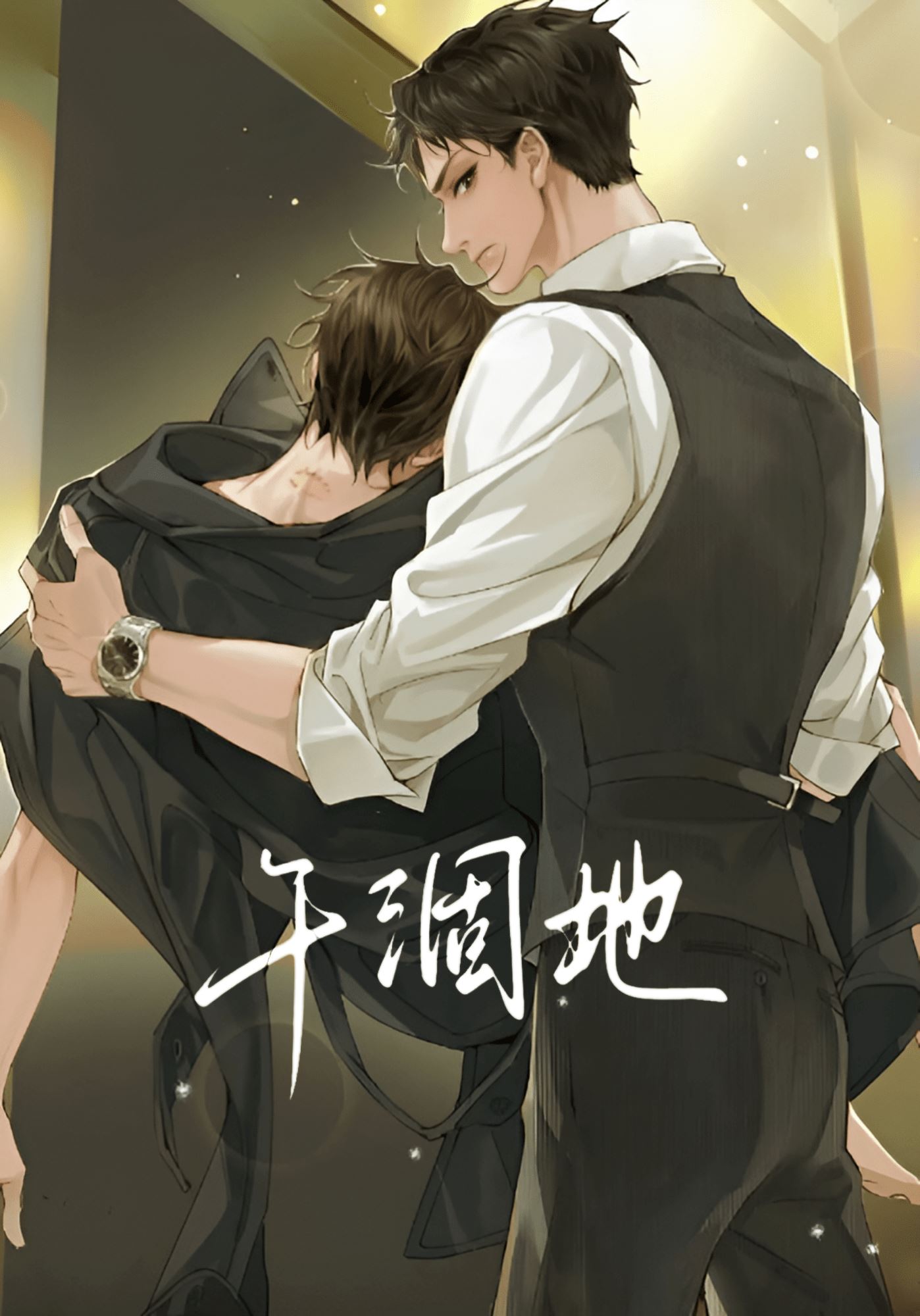
... Read More
Okay so let me just say - the way this whole divorce plotline is structured is genuinely brilliant. We go from the intense heat period drama, to the week-long wait where nothing resolves but everything changes, to this mundane-seeming trip to the registry office that somehow carries more emotional weight than any action scene. That's good plotting right there. What really got me was how Fang Fengzhi's body literally became the battleground between two Alphas. Fu Baiqi marks him, Min Zhi gets jealous to the point of wanting murder, and then they all have to deal with the administrative fallout. The protection association showing up, the physical examination requirement - these details make the world feel real, not just some abstract omegaverse backdrop. "He will be detained for half a month." One line and suddenly the entire romantic tension resolves into something manageable. But then - of course - the divorce itself isn't the end. The mark is still there. The rejection reaction is still there. Min Zhi saying "No" when Fang Fengzhi asks about pheromones affecting him, followed by that devastating "Except Fu Baiqi" internal monologue... The author is really playing 4D chess with this plot. Every resolution creates a new problem.

Leave a comment

You must be logged in to leave comments. or
