Don’t Provoke That Miaojiang Youth, He’s Yandere and Perverted - Reviews

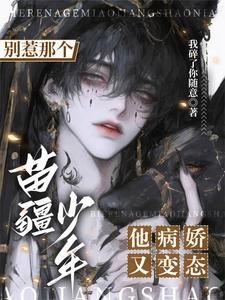
Don’t Provoke That Miaojiang Youth, He’s Yandere and Perverted
+Add to Custom List
Sort
Add review
... Read More
I need to process what I just read. The emotional whiplash in these chapters is unreal and honestly I'm not okay. Let's start with the most unhinged romantic beat: Chai Xiaomi has a LOVE GU on her hand that's supposedly supposed to make her treat Wu Li as her most precious person, and yet the narrative keeps showing us that she's fully aware of what's happening and is actively fighting against it. She swallows back her drool when she sees how beautiful he is—that moment of genuine attraction breaking through the manipulation layers is so deliciously complicated. Is it the gu? Is it him? Both? Neither? My brain cannot handle this. But the real emotional gut-punch is Wu Li's moment when she refuses the ditch water. The text says: "a trace of regret surfaced in his eyes." Regret. From the guy who was literally just planning to feed her to tomb bats. He wanted her to obey. He wanted to see how far the gu would make her go. And when she chose death over compliance, something in him felt... loss? That single detail undoes everything about how I thought I understood this character. Then there's the jungle trek where he pushes her to collapse, calls her useless, threatens her with thirty lashes—and yet he also doesn't leave her behind. He says "keep up" and waits enough for her to follow. This contradiction is the essence of their entire dynamic. I keep thinking about that line where she vows to climb mountains of swords and cross seas of fire for him. Whether the gu makes her say it or she means it, both possibilities are equally devastating to me.
... Read More
The atmosphere in these chapters is SO thick you could cut it with a knife. Like, the author genuinely understands how to make a setting feel alive and immersive without over-explaining everything. That transition from the paved bluestone tourist path to the muddy, leaf-covered trail a thousand years in the past—this is such a simple detail but it immediately grounds the time-travel element in physical reality. You can feel the difference. One is manicured for visitors; the other is raw, dangerous, and ancient. Every step Chai Xiaomi takes through that mud, her sneakers turning into heavy clumps, her hair plastered to her face—you're there. You're suffering with her. The village itself feels hauntingly real. The wooden structures, the fetid ditch, the damp humidity of the jungle, the old patriarch arriving with his white beard surrounded by villagers—all of it paints a picture of a world that exists fully outside of Chai Xiaomi's modern sensibilities. She's a fish out of water in the most literal sense, and the environment constantly reminds her of it. The gu cave setting adds this eerie mythological texture too. Voodoo tribes, divine bloodlines, scorpion gu hidden under skin—this world has its own rules and magic system that feels organic rather than forced. The author doesn't info-dump; they just let the world reveal itself through action and description. And that final image—the patriarch's deep Miao voice ringing through the air as he confronts Wu Li—this cliffhanger of a scene is pure cinematic. I can see it on screen. I need the next chapter NOW.
... Read More
The atmosphere in these chapters is UNREAL. The Chishan Deep Forest isn't just a backdrop—it's a character. From the very first paragraph you're drowning in sensory detail: the cold, the carved-beauty of Wu Li's face, the ear-splitting roar that shakes the ground, the flutter of countless birds taking flight all at once. That tree demon scene is pure cinematic horror. The ancient tree shrouded in vines that SEEMS to come alive. Wu Li's arrow embedding itself deep in the bark. Fresh blood gushing from where wood should be. The hoarse, pained screech. Vines thrashing like tentacles. One of them swiftly coiling around Chi Lie's ankle. This reads like a horror film shot in a single continuous take. And then there's the contrast of Wu Li's stillness against all that chaos. While everything around him is shaking, screaming, thrashing—he leans casually against a nearby tree, bow slung, arms crossed. A flash of bloodthirsty excitement in his eyes. He's ENJOYING the show. The composition of that frame is chef's kiss. The forest itself reacts to Wu Li's presence: "Wherever he passed, not a blade of grass grew." His baleful aura withers plants instantly, turning them to black ash. This isn't just worldbuilding—it's character revelation through environment. The world bends around him because he's fundamentally incompatible with life as we know it. But then there are the tender details that catch you off guard. The dry leaves crunching under approaching footsteps. The mountain-spring quality of his laughing voice cutting through the horror. The thin morning light catching the reddened tips of his ears when he's flustered. These small moments of beauty woven into darkness make the world feel so much more real. The Gu cave mention, the Miao language, the ancient incantations whispered to the snake—this is a world where folk magic, indigenous spirituality, and supernatural horror exist as ordinary reality. You never feel like you're missing context because the author trusts you to keep up. Every detail feels earned and purposeful.
... Read More
I am NOT okay with this boy's energy. Like, truly not okay. You've got this devastatingly handsome heterochromatic-eyed kid who can make ancient tree demons flinch, has a venomous snake coiled around his waist, and just casually watches a man being drained to death as if he's at the theater. And then—AND THEN—he gets absolutely SHOOK when Chai Xiaomi accidentally brushes her lips against his ear while crying into his neck. "He felt as if he had been bound by some invisible rope moments ago, utterly flustered." An invisible ROPE. Wu Li, the boy who doesn't even flinch at blood-drenched tree demons, gets completely unraveled by a girl's accidental cheek rub. This kid is so aggressively tsundere I want to shake him. The scorpion love Gu backlash theory he has about his own heartbeat? Oh my god. He's SO sure it's the Gu reacting rather than actual feelings, which means he's been actively suppressing whatever this is. He didn't just not expect to feel anything—he actively looked for an explanation that wasn't about HIM. "Even the eighty-year-old grannies in the village gather herbs on the mountain more nimbly than you." Every single one of these barb exchanges made me wheeze, but what's actually happening is so much more interesting than the surface banter. Wu Li deliberately slows his pace to wait for her. He waits. IMPATIENTLY. Then compensates by destroying plants around him because he's too frustrated to just say "walk faster." The dynamic between them is this beautiful push-pull where she's constantly trying to read him and he's deliberately staying opaque, but every action betrays him. The snake that once crawled on HER neck is now coiled around HIS waist — did he bring it specifically because of what happened before? Is that possessive or protective or both, I can't tell. Also his line: "If anyone were to devour her, it should only be the poisonous creatures he kept in his Gu cave." Wait WHAT. That's not even a denial. That's him explicitly claiming exclusivity over who gets to hurt her. I'm genuinely screaming.
... Read More
Okay so I NEED to talk about Chi Lie's fate because honestly I almost laughed out loud reading this. The guy's been sneaking around the whole time, acting like he's so untouchable, and then Wu Li just—what? Knows exactly when to shoot the arrow into that ancient tree demon and watch the thing eat him alive? That's not just clever, that's cold. Like, literally carved-from-marble cold. But here's the plot twist that REALLY got me: Chai Xiaomi was hiding behind that tree the ENTIRE TIME and Wu Li knew about her from the start. I'm re-reading that section right now. He says "I already said, no need to hide" in Miao language. She understands it but he's been playing them both this whole time. Who is this boy, honestly. The whole setup is brilliantly layered though. Chi Lie tails Wu Li, thinking he's the predator. Wu Li lets him follow, baiting him into shooting the tree. Meanwhile Chai Xiaomi also follows, motivated by something completely separate—she wants to get closer to Yuebai apparently. Three people hunting in the same forest, none of them seeing the full board except Wu Li. That's three layers of dramatic irony stacked on top of each other. "You're a bit better than him. At least you didn't wet your pants." — classic Wu Li. Even witnessing a man turn into a dried husk he deflects with a joke, which makes it somehow even darker. The scorpion tattoo saving Chai Xiaomi is another brilliant pivot. Up until that moment I thought she was genuinely helpless, like she'd been dragged into something way above her head. But the tattoo FLARES and all those threatening vines just... retreat. Terrified. What kind of Gu or curse is she carrying that even supernatural forest monsters fear? This plot has been laying clues like breadcrumbs and I missed most of them the first pass. Also the way Wu Li leaves Chi Lie there as a warning feels significant. It's not just punishment, it's a message. Something about the people who follow him. What is he protecting? Or what is he trying to keep away from Chai Xiaomi? The mystery is compounding with every chapter.
... Read More
I have a problem. I came in here ready to hate the villain, like I was mentally preparing to call him a psychopath and a murder-y freak, and instead I am watching this absolute ICE KING blush until his ears look like they're gonna rupture, stammer in Mandarin that's clearly not his first language, and say 'Idiot!' at a girl who just grabbed his face and declared their first meeting was fate. The thing that really got me was the ear detail. She's grinding out 'A'ge, A'ge, I love you, destiny chose us' and his response is his EARS going crimson. Not his face. Not his whole head. Just the ears. And the tassels on his earrings keep swaying and tapping his jawline while he's standing there trying to maintain the entire aesthetic of 'I am a deadly gu master and I will dissect you,' and he CAN'T. The earrings are betraying him. They're just going clink-clink-clink and he looks like a nervous college freshman who just got caught staring at his crush in the library. I laughed so hard I snorted. And then the 'A'ge' correction. She says 'Okay, little brother.' And I just... I don't know. The way the narrative doesn't even bother to describe his reaction. It just moves on. Like he took that insult so personally that he's in some internal void of rage and the text just politely skips past it. I need more of that. I need to see him actually processing that a random outlander woman just called him 'little brother' after he threatened to pull out her tongue. The power dynamic is SO funny here because she thinks she's being submissive—'You are my god! Do whatever you say!'—and he's just standing there going '...this woman is insufferable and I cannot make her stop talking.' Also can we talk about how he treats the four villagers outside versus how he treats her. Out there, he's 'little bastard' energy received, standing silent, eyelashes casting shadows, completely unbothered. Dead to the world. But the second those four see an outsider girl trailing behind him, the entire village social hierarchy shifts. He's not the quiet guy anymore, he's the guy who's got a captive. And she's not even a captive. She's on his LEASH. He literally just said 'follow behind me, don't speak' and she's doing the whole obedient-puppy bit because the gu is dragging her strings. He's not holding her. He's not threatening her. He just... walks, and she follows. And that makes me think the next few chapters are going to be a slow-burn of him slowly realizing this 'prisoner' is less helpless than he expects and more of a headache than he anticipated. I need the moment where he says 'do that' and she does it and then immediately finds a loophole. I need it on a platter.
... Read More
Okay let's talk about Wu Li because this man is somehow both terrifying and weirdly sympathetic at the same time and I am HERE for it. The scene where Chai Xiaomi actually apologizes to HIM is wild. After being surrounded by people treating him like a plague god, some girl just goes "sorry" and he literally freezes. This is apparently the first time in his entire life someone has apologized to him. First. Time. Not even in a sarcastic way—she genuinely thinks she's causing him trouble. And then his response??? He offers her the choice to take his punishment instead, but framed it like "here, I'll lend you my herbs" as if whipping someone else is some grand gesture of generosity. The psychological manipulation is immaculate. He's calculating, cold, and completely devoid of normal human empathy—but also clearly someone who has never had anyone show him warmth, even accidentally. The power dynamic between them is everything. Wu Li holds all the cards (he's raising gu, he has supernatural abilities, he's about to become the youngest Gu King in history), yet Chai Xiaomi keeps finding moments where she has actual agency. Like when she flat-out refuses to drink that ditch water. That moment where his eyelashes flutter and regret surfaces??? The author really just wrote a sociopath being mildly disappointed that mind control isn't working perfectly and I am SCREAMING. Their relationship is built on manipulation, survival instincts, and some bizarre mutual curiosity. Wu Li sees her as livestock to fatten up. She sees him as the future villain she needs to survive. And yet they keep finding each other interesting. I need to know what happens next.
... Read More
Okay I need to sit with this scorpion tattoo for a minute because I think it's doing SO much thematic heavy lifting. Chai Xiaomi has a scorpion tattoo on the back of her hand that flashes with light when threatened. The tree demon vines—supernatural creatures of the forest—RECOIL from it. They're terrified. Whatever this tattoo represents, it's older or deeper or more dangerous than the ancient forest itself. But here's the thing: she doesn't even seem to fully understand it. She just knows it saved her. This is perfect symbolism for inherited trauma or hidden identity—you carry power you didn't choose and don't understand, and it protects you in ways you can't explain. Then there's Wu Li and his relationship with poisonous creatures. The scorpion love Gu he mentions. The snake that crawls on Chai Xiaomi's neck and then coils around HIS waist. The plants that die where he walks. He's surrounded by death and toxicity but it's ALL under his control. He's the master of poison, which means he IS poison. And yet he's the one who slows down to wait for her on the walk back. The blood from the tree is significant too—ancient tree bleeding when pierced by an arrow. Living wood, living pain. Chi Lie called Wu Li a half-breed. What does that mean in this world? Is the tree demon connected to him? To her? The blood seems to be the common thread: Wu Li's arrow draws blood from the tree, Chi Lie's fate is sealed by that blood, and the narrative keeps returning to what blood reveals about identity and belonging. "I truly fed my sincere heart to a dog" — Chai Xiaomi's line about her unrequited devotion. But is it really unrequited? Wu Li's entire body went rigid when she cried into his neck. His ears turned red. He feigned indifference while deliberately slowing his pace. The line between genuine cruelty and desperate protection is razor-thin here, and I think the author is asking us to consider whether love in this world even looks like love in ours, or whether it wears the mask of hostility because tenderness is too dangerous in a world this harsh.
... Read More
I re-read the transition from the whipping scene to the treehouse three times. Three. Because I couldn't believe it. They set up this whole tense sequence - Wu Li on his knees, the thorny whip being handed over, Chai Xiaomi volunteering, the 'darling' misfire, the chief about to swing - and then Youtiao says 'Host, are you sure you can handle this?' and she cracks her neck and says 'it's just a vine not a sword' and THEN one lash puts her down cold. 'In the most remote corner of the Wu Village.' And we're already at the treehouse. No aftermath. No 'she woke up slowly, groggy, wincing.' Just cut. Full stop. And honestly? That's the most effective thing the author could have done. Because the scene before was so loaded with tension - the four guards sweating, the chief's face hardening, Wu Li's ears going red at the word 'darling' - that when you finally expect the payoff to be drawn out, dramatic, agonizing, you get ONE hit and silence. It's almost aggressive how fast it is. 'A total squishy. I'm so done.' is Youtiao's reaction and it made me snort-laugh at 1am because it's so casually devastating. One lash. She's unconscious. She's in a rotting treehouse by a stream. The tension that built for two pages evaporates into a comedic beat and then immediately drops you into a new, quieter, sadder space. The pacing across these chapters is... I don't know how else to describe it. It's staccato. The accusation scene is fast, back and forth dialogue, nobody breathes. The chief's ruling is slow and ceremonial. The whipping setup is tight and hot. And then BOOM, she's out, and we're in the dilapidated treehouse, and everything is still. The author is very good at controlling your heart rate. I was hyperventilating during the 'darling' moment - genuinely, my chest got tight, I thought oh no does he actually believe it, is the gu venom making her say things and he's going to be confused and vulnerable and - and then one slash and she's out and my heart was just... flat. And then quiet. And I had to put the phone down for ten seconds. The contrast IS the point, I think. Loud, loud, loud, then silence, and the silence hurts more.
... Read More
Let's talk about how this author controls the pace like a violinist controls tension. Chapter 6 opens at MAXIMUM velocity—arrow skimming past a face, blood gushing from a tree, a man screaming as he's hoisted into the air. Zero setup, zero breathing room. Just DROP THE READER IN THE MIDDLE OF A HORROR SCENE and make them swim. Then immediately pivots to Chai Xiaomi's internal panic—her hesitation, her fear, her split-second decision to stay hidden. This is the narrative equivalent of a camera panning from the bloody chaos to reveal a witness watching from the trees. Brilliant structural choice. The Chi Lie death sequence unfolds in about five paragraphs and it's PERFECT. Not one second too long. He goes from roaring threats to bulging eyeballs and bleeding from seven orifices to a shriveled husk in the space of a single vine movement. Dead fast. No melodrama. Just consequence. Then—and this is the masterstroke—the author IMMEDIATELY undercuts the horror with comedy. Wu Li's dry remark about not wetting his pants. Chai Xiaomi's tactical tears. The accidental lip-brush. The emotional whiplash is deliberate. The author knows you need to breathe after horror, so they give you something almost slapstick, then sneak the genuine emotion past your defenses. The walk-back sequence is where the pacing really shines. What could be transition filler becomes a series of micro-beats: Wu Li slowing down, waiting impatiently, hacking branches to ash, making sarcastic remarks, her internal curses. Each beat reveals character without exposition. The pace slows to match the walking rhythm but never drags. And it ends on THAT snake. The reddish-brown patterned snake slithering from his sleeve, coiling around his waist, responding to whispered ancient incantations. The chapter closes on pure mystery, not resolution. Of course I opened Chapter 7 immediately. This is how you structure a web novel—every section is a hook, every pause is a trapdoor, and the reader falls through every time.
... Read More
Okay so I keep coming back to that water moment. Just... splash. This old woman lugs a bucket, chucks it right over Chai Xiaomi's head, and the description just drops you into it. 'Water droplets slid down the hair plastered to her forehead.' I actually heard the water hitting my own kitchen counter when I read that line at 2am. And then the smell of the place - this whole village exists in this hallucinogenic miasma at the outskirts of Mount Chi, and the Gu Cave is where they cultivate all the gu seedlings, which is like... imagine a giant humid underground terrarium full of writhing larvae and fungal smell. The author doesn't even need to describe the cave in detail, you just KNOW it's damp and alive and wrong. I want to throw up thinking about it. Then the treehouse. 'Pieced together with rotting wooden planks, the crude structure looked as though it could collapse at any time.' In the most remote corner of the village, next to a winding stream. I think that two-sentence description does more worldbuilding than three chapters of lore dumps could. You get the entire social geography of this place. Wu Li lives at the edge. Not in the center. Not in the main hall with the chief. The most far-flung, about-to-fall-apart spot. And the stream running next to it means the sound of water is his constant companion, which makes the earlier bucket-of-water scene almost poetic in a twisted way. She drinks it greedily because it's clean, and he lives next to the water but probably can't even drink from the village source because of his status. I'm getting emotional about a treehouse, I don't make the rules. What I love is the visual language of the chief. Heavy Miao garments, intricate totems, silver crown, wooden scepter, falcon eyes. It's not just 'he was a big important guy.' You SEE him. And Wu Li with his pitch-black fingernails rubbing a foxtail stalk to dust - that's such a specific, physical, slightly horrifying detail. It tells you more about what these gu poisons do to a person than any explanatory paragraph could. The world feels lived-in because everyone has textures. Silver on the chief, black dust on Wu Li's nails, wet grime plastered to Chai Xiaomi's face, the rot in the treehouse wood. Nothing is clean. Even the water is 'faintly sweet' in this weird, suspicious way. I keep thinking about whether the sweetness is actually a mild toxin and she just can't tell the difference because she's been dehydrated for who knows how long. The author is so subtle here and I appreciate it, I do, even if it's 2am and I should be asleep.
... Read More
The imagery in this section hit different and I've been thinking about it. The nightmare sequence is packed with symbols—the sacred tree, the burning woman who shifts into faces of everyone Chai Xiaomi knows, the red-patterned python. Fire and transformation, identity dissolving. Then Wuli enters carrying his own snake, Hongjiao, which becomes the bridge between nightmare and reality. The snake IS Wuli in some way—venomous, possessed, unpredictable, but also loyal to its master. And the nakedness thing? I keep coming back to that. She's vulnerable in every sense—trapped in a strange world, kept like a pet, sleeping without clothes because she has none—and yet she finds the strength to demand respect anyway. The Miao dress moment is so loaded too. She transforms herself, adorns herself in traditional clothing, spins like a butterfly, and Wuli can't look away but also can't admit it. He calls it "barely passable" and walks away flustered. The moonlight wanting to peek at her and him blocking it out—there's something about ownership and protection tangled up together that's not healthy but IS compelling storytelling. The green emerald eyes vs. her dark almond eyes, the silver jingling vs. ankle bells, the whole visual contrast between them is deliberate. They're opposites in every way and that's the point.

Leave a comment

You must be logged in to leave comments. or
