Dog on the Hutch - Reviews

Dog on the Hutch
+Add to Custom List
Sort
Add review
... Read More
Can we talk about how the stakes just fundamentally SHIFTED in this chapter? Because I feel like I've been reading the wrong book this whole time and nobody told me. On the surface, the conflict is the same: Director Yeon vs. Chairman Jung. Old hatred, new weapons, political maneuvering. The smuggled gun plotline, the code comparison, the stock price manipulation — all of it plays out like the second act of a corporate revenge thriller. And then Jung Heeyeon opens his mouth and says the word "money" and suddenly EVERYTHING is different. "Check into it." "Make sure everything's processed so the baby can access it." Kim Chulwoo's reaction to this order is doing SO MUCH WORK. He doesn't question it. He doesn't seem surprised. This man has spent the entire chapter worrying about whether his director will end his life after achieving his goals, and now the director is casually absorbing a fortune that belongs to his omega without batting an eye. The conflict between loyalty and moral judgment in Kim Chulwoo's head is absolutely electric, even though he never voices it. But the real stakes here aren't financial. They're relational. Let me explain: Jung Heeyeon offering his money to Yeon Woobeom — is this sacrifice or strategy? He says he's embarrassed, that he's been spending the director's card without thinking. But underneath that is the hunger to be USEFUL. To stop being the thing Yeon protects and start being someone who PROTECTS back. That's the emotional core of this entire scene, and it's devastating because Heeyeon doesn't even realize how much power he's offering. And Yeon's response — the chuckle, the finger-intertwining, the refusal to take the money outright — that's not rejection. That's something far more dangerous. That's tenderness. And tenderness is the one thing this story hasn't been willing to give its characters, which makes it infinitely more threatening than any weapon ever was. "Should I help you?" That question changes everything. Because now the question isn't whether Yeon will destroy Chairman Jung. It's whether he'll allow himself to need anything other than vengeance. And if Heeyeon's fortune is the key to unlocking that? Then the stakes just became personal in a way neither of them anticipated. What happens when the old man finds out his blood relative's entire inheritance is controlled by his enemy? What happens when Yeon realizes he doesn't need to win anymore because he already has everything? The conflict is no longer about destruction. It's about what comes AFTER.
... Read More
Let me just say this upfront: Director Yeon is NOT a good man, but he might be the most interesting character in this whole book. The scene where he withdraws his hand from Jung Heeyeon's neck because he 'couldn't let the habit take root'—this man is so aware of his own possessiveness that he's actively fighting it. He gave the turtleneck to hide the mark, he claims it's 'common sense,' but then later he's internally struggling with the fact that he dislikes the idea of another omega seeing that pale nape. This isn't casual jealousy; this is obsessive, almost clinical awareness of his own instincts. 'An alpha's possessiveness generally fell into two categories: either discreet and concealed or openly displayed.' Wait, is he literally categorizing himself right now? Yes. Yes he is. But Jung Heeyeon—oh, sweet summer child. He accepts this explanation about biting being 'affectionate' even though it clearly doesn't fit his understanding. He furrows his brows, he questions it internally, but he still 'blinked a few times before accepting it.' That obedience is... something. He's been conditioned to believe Director Yeon's definitions of reality, even when they don't make sense. When he asks 'can I bite you too, Director?' and gets shut down with 'Because my Heeyeon is still a baby,' that's not protection—that's infantilization dressed up as endearment. And the power dynamic! Director Yeon suppresses his 'sharpened nerves' to speak in a 'loose, relaxed tone' while Jung Heeyeon is basically catatonic from pain, clinging to blankets, biting his own arm. One man controls the narrative; the other endures it. The doctor's quiet muttering, 'You have no expression, no emotion'—he sees it too. Jung Heeyeon has been stripped of his emotional responses so thoroughly that even his pain is silent, swallowed by blankets, stifled by fear of scolding. I love how the relationship evolves in micro-moments. Director Yeon murmurs 'don't let anyone else touch you'—that's not a request, that's a command wrapped in concern. And Jung Heeyeon 'obediently nodded.' Not 'said yes,' not 'agreed,' just... nodded. The relationship isn't built on mutual understanding; it's built on compliance. But there's something painfully sweet in how Jung Heeyeon still looks for affection in all the wrong places, like a kid who's never learned what healthy love looks like.
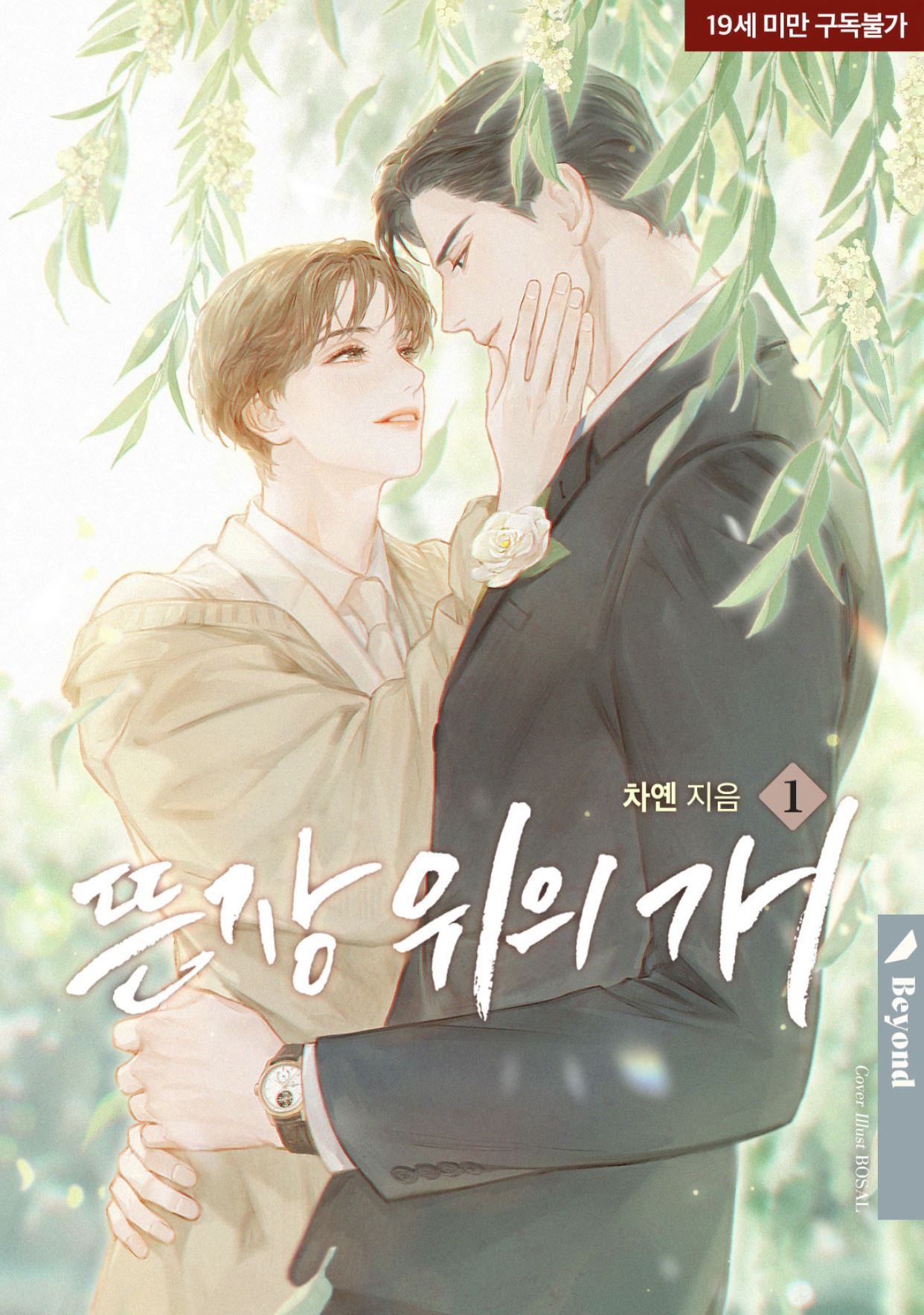
... Read More
"Are you excited to meet another Omega?" "Yes." Jung Heeyeon answered without hesitation, and that single exchange wrecked me a little. Not because it's dramatic in an explosive way, but because it's so painfully honest. This relationship between Heeyeon and Director Yeon is built on these tiny, almost invisible threads of mutual attention, and the chapter lays them bare. Yeon watching Heeyeon eat—"his fair cheeks puffed up rhythmically as he held the coffee cup tightly in his hands"—that's not just description, that's devotion disguised as observation. Heeyeon, meanwhile, has this entire internal monologue about sexual harassment where the person he's analyzing it with is sitting three feet away, and he can't separate the two. The core tension isn't whether they'll end up together; it's whether Yeon will ever let himself be seen wanting what Heeyeon clearly wants. And that moment when Heeyeon says he doesn't want to miss seeing him—it's not coquettish, it's not manipulation. He's genuinely telling the truth, and Yeon's reaction (teasing him about it) shows he knows that too. Meanwhile, Soocheon is this perfect third wheel character who reads the room like a hawk, eating pie he definitely didn't deserve, already planning to brag to his team. The triangle here isn't romantic; it's about loyalty and protection. Yeon protects Heeyeon. Soocheon protects Yeon by managing the outside world. And Heeyeon... Heeyeon just exists in the center, trying to become someone who won't be a burden. That's the saddest and sweetest thing I've read all year.
... Read More
I need to be honest with you—I read the Heeyeonhada exchange and I physically could not stop crying. Like, full-on ugly cry into my pillow situation. The way Jung Heeyeon explains the meaning of his own name as 'when the first white rays of sunlight make the sky glow at dawn,' and then looks at Director Yeon and says 'After meeting you, Director... I think now must be that time for me'—I am absolutely not equipped to process this level of emotional perfection. But here's what made it hit even harder: the context. This boy had been abused. Not just physically, though the fingerprints on his neck and split lips are enough to make your blood boil. But emotionally manipulated, gaslit, made to believe he deserved what he was getting. And in his most vulnerable state—broken, hospital-bound, barely conscious—he chooses to use his last bit of strength to tell the man holding him that he is the reason his heart stopped hurting. That is devotion of the most devastating kind. And Yeon's response... he doesn't say anything back. He just 'drew the body in his arms a little closer.' No grand declaration, no poetic speech. Just pull closer. Hold tighter. Because words aren't enough for what he's feeling. The narrative says it all: 'At that moment, the man felt a sensation he couldn't begin to put into words.' The line that wrecked me though—the absolute final blow—was this: 'Every single moment that this small, delicate omega had brought into his life had always been, without exception, Heeyeon's time.' Yeon is realizing that the devotion isn't one-directional. Heeyeon's name means dawn, and Yeon is the dawn in Heeyeon's life, yes, but Heeyeon is also Yeon's dawn. The omega who showed a broken man that he was worthy of love. That dual realization happening simultaneously as the actual sunrise paints the sky white—that's peak romantic writing and I will die on this hill.
... Read More
Okay can we just talk about the tears for a second? 'By tomorrow, it would be fine. It would always be.' That opening thought—so resigned, so hopeful in the worst way. Then later: 'A single tear slipped from his eye and landed on the back of his hand.' Just one drop. Not sobbing, not wailing. Just… one tear. And Jung Heeyeon's internal monologue about how 'hardly counted as crying' broke my heart. The scene where Director Yeon asks 'Did you cry?' and he shakes his head, then 'I did wake up with tears, but… I don't think I was crying'—that's the emotional core of this entire relationship, isn't it? He doesn't even understand his own grief. His body is reacting before his mind catches up. And the pheromone detail! 'His pheromones were subtly unstable as well.' The author uses this physical description to show emotional vulnerability without stating it outright. Jung Heeyeon can't control his body's response even when he's trying to stay composed. The most devastating part? Director Yeon noticing the redness beneath his eyes and choosing to mask his own concern with 'a gentle expression.' Two people so bad at communicating how they feel, wrapping their care in casual remarks and teasing. 'I was just planning to close my eyes for a bit…' But he fell asleep in someone's arms instead of his own bed. That's intimacy without naming it. That's love without saying the word. And honestly? It's more powerful than any grand confession could be.
... Read More
I keep coming back to the whiskey glass in this scene and I think it might be one of the most densely symbolic objects in the entire novel. On the surface it's just alcohol — a prop for an interrogation. But look at everything it does. It's poured into a crystal glass, no ice, dark liquid flowing smoothly. Director Yeon handles it with complete ease, drinking from it himself to demonstrate safety, then commanding Lee Yootae to drink from the SAME glass. In a world where alphas and betas have rigid hierarchies, sharing a drinking vessel is massive. It's intimacy forced through domination. The beta's mouth touching where the alpha's lips just were — it's a ritual of submission disguised as hospitality. The whiskey itself matters too. It's undiluted, burning, painful for a beta to consume. Director Yeon remarks almost casually 'You shouldn't struggle over only a single drink.' As if the real test hasn't even begun. The whiskey becomes a metaphor for everything Lee Yootae must endure — something that burns, that he can't refuse, that he must swallow even when his body revolts. And the spillage. The way Lee Yootae's trembling hands send whiskey dripping everywhere — onto the table, onto the floor, onto his own clothes. It's such a powerful image of losing control, of dignity dissolving in real time. Each drop is a piece of his pride hitting the ground and being absorbed into nothing. Then there's the chandelier light 'dancing briefly on his polished shoes before retreating.' Light and shadow, authority and invisibility. Director Yeon controls where the light falls. He sits in spacious emptiness, in a vast space where he is the only one who belongs. The scar near his hand — neither dramatic nor large, but carrying weight. Scars are memories made visible, and this one sits right beside the hand that controls the glass, the hand that decides who lives and who suffers. It's a quiet reminder that this elegance is earned through violence, not inherited through privilege.
... Read More
THE SCENE WHERE HE EYEON ASKS IF HE NEEDS TO REDO THE TEST AFTER FIDGETING AND YEON JUST WRAPS AN ARM AROUND HIS WAIST AND LIFTS HIM DOWN LIKE THAT'S NORMAL?? 'I can get down on my own too… I'll be careful next time during the test.' And Yeon responds with 'I said it because your fidgeting is adorable.' I literally screamed. Who does this? Who just calls their omega adorable mid-examination?? But then Heeyeon's internal monologue about it—'Asking Why am I adorable to Director Yeon felt odd—the meaning behind it was probably akin to him calling the man beautiful.' That's such a sweet misunderstanding. He doesn't quite get the flirting yet, which makes it even more endearing. And the pheromone thing?? Heeyeon is anxious about being a good omega for Yeon. He's worried he's not controlling them well enough, that some flaw in him is to blame. 'He wanted to be an omega worthy of Director Yeon.' That's the kind of thing that makes your chest hurt because we know his trauma, we know what he's been through, and here he is trying so hard to be enough for someone who already thinks he's perfect. The kiss on the cheek afterward—'It was as if he didn't even acknowledge Kim Jiwon's presence next to them, treating him like an inanimate object.' Director Yeon out here publicly claiming his omega like a mark on territory and the doctor is just sitting there pretending not to see it. Kim Jiwon's internal screaming about everyone thinking they've given Heeyeon a 'pheromone shower' is comedy gold but also proves how obsessed Yeon is. This relationship gives me hope and anxiety in equal measure.
... Read More
Every conflict in this excerpt hits differently because the stakes are so intimately personal. On the surface, Heeyeon is being moved from one location to another. Seemingly minor. But the author makes it clear this is NOT minor by showing us his internal calculations: If the Chairman doesn't know he's going out, he might get in trouble AGAIN. He's used to being called a mutt. But the hutch — that's the one thing he wants to avoid. This tells us so much about his hierarchy of fear. Physical abuse is normal. Verbal degradation is normal. But confinement, being trapped, losing even the tiny scraps of autonomy he has — THAT is the line he won't cross. And yet here he is, being dragged out of the estate in a car he's never been in, driven by a stranger he recognizes from the house but has never spoken to, headed toward a dominant Alpha he's been conditioned to fear his entire life. The external stakes are huge — he's being transferred to a new owner essentially, with no say in the matter. But the INTERNAL stakes are what make this terrifying. Heeyeon has spent fifteen years building a psychological framework where compliance equals survival. Every lesson, every bruise, every injection has reinforced one simple equation: obey and you live. Disobey and you suffer. So when Director Yeon asks him about the nightmare and touches his hair, what conflict does that create? For the first time, someone is being gentle. But gentleness is unfamiliar. It's dangerous. Can he trust it? Should he trust it? His body wants to relax — "perhaps he was finally relaxing" — but his mind doesn't know how to allow that. The tension here isn't just about what happens next. It's about whether Heeyeon can even process a scenario where someone chooses him instead of buying him. Yeon says he STOLE him. That's not a transaction. That's an act of defiance. And I genuinely don't know if Heeyeon has the emotional vocabulary to understand what that means yet.
... Read More
The dialogue in this thing is *minimal* and I am HERE for it. "What is this?" "...not a mutt like this." That's it. Two lines from Yeon and they tell us everything. The calmness without sarcasm—like the author specifically notes—makes it infinitely worse than if he'd been angry. It's administrative cruelty. He's not even mad, he's just... disappointed in the logistics. And Heeyeon's response? Absolutely nothing verbal. Just a soft "...Ah." That's all. A single syllable of recognition when he realizes Yeon smells like the sea. In a situation where he should be bargaining or pleading, silence becomes his only weapon. The narrative voice is also doing a lot of heavy lifting here. It's close third person, mostly anchored to Heeyeon's perspective in the early chapters, but it occasionally drifts into Yeon's world too. The prose is lean—no purple language, no over-writing. Just clean observations that hit hard: "His face, now fully out of the shadows, appeared as cold as intricately sculpted marble, a stark contrast to his soft voice." That contrast between cold appearance and soft voice? That's the author's signature move with Yeon. The narration keeps reminding us that this man is unreadable, layered, dangerous in ways that have nothing to do with volume or aggression. And then there's the promotional stuff mid-text—"I will upload this series starting January 2025!"—which honestly broke my immersion a bit but I guess that's web novel life. Still, the actual story writing? Impressive restraint.
... Read More
The pacing in these chapters is absolutely lethal. It opens with a muttered 'Tsk' and a sigh, almost domestic, then spirals into a full-blown confrontation in what feels like minutes. The author doesn't linger on exposition; we're dropped into the middle of the fallout—stock freefall, kidnapping plots, released prisoners—and we catch up through Heeyeon's internal deductions. That's smart. The tension builds not with action beats but with every line of dialogue. The chairman's patience snapping, the shift from cold calculation to vulgar threats, the physical approach, the hand in his hair—it's a classic escalation ladder, but it's executed with such economy. There's no filler. Every paragraph pushes the conflict closer to violence. And that ending? 'As his body w'—you just stop. You leave him mid-tug, mid-struggle. I've already turned to check the next chapter. It's the narrative equivalent of a breath held too long. Brilliant.
... Read More
There's something profoundly symbolic about the gardenia scent in winter. Gardenias bloom in warmth—they don't belong in cold. And yet Director Yeon breathes it in like it's survival. This isn't just romantic detail; it's the central metaphor of their relationship. Jung Heeyeon is something precious that shouldn't exist in this harsh, violent world, and Director Yeon protects him fiercely because he knows how fragile that beauty is. The entire chapter plays with the theme of CONTROL versus VULNERABILITY. Director Yeon commands rooms, buys off reporters, manipulates police procedures—but the moment Heeyeon is upset, even slightly, the alpha drops everything. His hands are steady for the world but they tremble when touching his omega. The arrest itself is the ultimate stripping of control, and the writer knows this. That's why Heeyeon's fear of separation hits so hard—it's not about the crime, it's about losing the one person who anchors him to something beautiful in a rotten world. Even the reporters symbolize this theme. They're vultures circling, trying to tear power away from Director Yeon, reducing a dominant alpha to a scandal headline. But inside that office, behind closed doors, there exists this quiet universe where none of that matters. Where the only currency is gardenia scent and cold hands and the promise to not cheat. The contrast between the cold外面 world and the warm private space they've built is the story's beating heart.
... Read More
"Your lover's card is your card." The chapter opens with this line about using a rich older lover exactly as supposed to. On the surface it sounds cynical — transactional, even exploitative. But the whole chapter undercuts that reading. Because what we actually see is Jung Heeyeon choosing to stay. He knows Yeon's methods are neither legal nor ethical. "Jung Heeyeon's standards were not aligned with society's laws and norms, they were set solely by Director Yeon himself." That's not manipulation — that's devotion. He's not a card being played. He's the one holding the hand. The scar on the man's eye in that opening scene — "traced the line of the man's eye, curved into a smooth arc." Scars as decoration. Damage made beautiful. That's what this story keeps doing: taking something painful and reframing it as power. Then there's the container itself — a vessel that held nothing but was used to frame someone. Kang Seohyo as the designated fall guy. The sacrificial lamb trope in a modern corporate warfare setting. How many pawns does it take before the board becomes meaningless? And the pheromones — that oppressive scent wrapping Jung Heeyeon, indistinguishable between protection and possession. Is love control? Is control love? The text refuses to answer, and I think that's the point. It's asking the reader to sit with the discomfort.

Leave a comment

You must be logged in to leave comments. or
