Dog on the Hutch - Reviews

Dog on the Hutch
+Add to Custom List
Sort
Add review
... Read More
Everyone wants to talk about the snow duck moment and I get it, it's beautiful, but can we talk about how the author SLIPS PLOT INFO INTO THIS ROMANTIC SCENE like it's nothing? They're having this tender park moment and YEON'S PHONE RINGS. It's Chief Nam Soohyun tracking down missing items—a container apparently. And Yeon's response is chillingly casual: 'No. Find the items first, then make the report.' Like he's not even processing that his omega is standing two feet away. But here's what gets me—after the call ends, he WATCHES Heeyeon walk away. 'The distance between them was gradually growing, little by little.' That's not just description, folks. That's foreshadowing with a side of anxiety. The narrative structure here is doing double duty. On the surface it's a fluffy winter date scene, but underneath there's this whole mystery thread (missing items, someone named Nam Soohyun working on it, Kim Chulwoo reporting to Yeon) that's been simmering. The author is playing 4D chess while we're over here swooning over snow animals. And Yeon letting Heeyeon wander off while he takes that call? Yeah, I trust that decision about as much as I trust a house of cards in a hurricane. Something's coming and I have a bad feeling about it.
... Read More
The external conflict here is brutal and I need to process it. Chairman Jung deliberately conditioned Jung Heeyeon's pheromones so that any Alpha who bought him would be drawn to him irresistibly. This isn't negligence — it's calculated breeding for the purpose of sale. The people who were supposed to protect him treated him like merchandise. "Those bastards are to blame" isn't just Yeon being dramatic, it's the entire premise of Heeyeon's suffering crystallized in three words. But what makes this chapter work so well is how the stakes operate on two levels simultaneously. On the surface, it's a medical emergency — pheromones went out of control, medication is needed, temporary masking solution required. But underneath, the real stakes are about agency. Every decision Yeon makes in this chapter gives power back to Heeyeon: the clothes suggestion is practical but also deeply intimate, the apology scene is where Heeyeon finally finds someone who absolves him of shame instead of punishing him for it. The most intense conflict moment is arguably the quietest. When Heeyeon feeds the macaron and their lips nearly touch, that's where everything converges — the vulnerability, the trust, the physical danger of uncontrolled pheromones, and the emotional risk of wanting something good. Yeon has to suppress himself. Heeyeon doesn't understand why. The gap between them IS the tension, and it's delicious.
... Read More
What struck me most about these chapters isn't any dramatic confrontation—it's the slow burn of what Heeyeon stands to lose if he goes back to the way things were before. The entire emotional arc of 70-74 is built on the tension between his past conditioning and his present safety, and the author doesn't announce it with fire and explosions. It's in the way Heeyeon wiggles his toes to check for cold. It's in the way he stares at wrapped gifts like they might disappear. The stakes here aren't life-or-death in the conventional sense—they're identity-or-death. Every time Director Yeon says "you can do whatever you want," the reader knows the weight of that phrase coming from someone whose entire life has been defined by what he cannot do. The locked hutch wasn't just physical confinement; it was the systematic removal of autonomy, and Heeyeon is only now beginning to unlearn that. But there's also the external stakes simmering underneath. Director Yeon just offered Heeyeon alcohol knowing it's illegal. The alphas at Jiwoo have started a gift tradition centered around Heeyeon. Kim Jiwon is clearly someone with influence who can set trends in this organization. All of this suggests that Heeyeon has become a focal point—someone worth protecting, worth honoring, worth breaking rules for. And in any story where a vulnerable character becomes valuable to powerful people, the question is always: who wants to take him away? The chapter ends on a cliffhanger that's almost mundane—he's being told he can't drink yet because he's not old enough—and yet it lands with real force. Because for the first time in his life, someone is giving him a boundary that isn't designed to hurt him. That's the conflict: can Heeyeon learn to trust restraint as an act of love rather than punishment?
... Read More
This author writes SCENES like they're camera movements. The crystal glass tilting 'as if drifting underwater' - you can SEE this. The dark liquid disappearing between lips, fingers tracing the surface. It's hypnotic. You're not reading about a man drinking alone at night, you're watching a slow-motion sequence in a thriller. Then cut to the bedroom: light on, Heeyeon awake, breathing slow and peaceful in sleep. The spatial relationship between them is everything. Yeon checking from ankles upward like a medical examination, cupping that jaw, turning it to see the bruising. These are visual details that do DOUBLE duty - they show intimacy AND damage simultaneously. The faint bluish marks against pale skin paint this picture of what happened to Heeyeon without ever showing the violence directly. More haunting than any action scene. The late-night doctor consultation feels clinical but charged. Kim Jiwon's glasses adjustment, tapping fingers, that exasperated chest pat - these tiny gestures build a world where medicine and mating instincts collide. The hospital setting isn't just backdrop; it's where 'pheromone therapy' exists as legitimate treatment. That's worldbuilding through functional detail rather than exposition. And that final image of Heeyeon nestling into Yeon 'as if it were the most obvious thing to do' - domestic but loaded with meaning. The bed becomes both sanctuary and trap, the bruised cheek both evidence of violence and canvas for Yeon's careful touch. Every scene location serves the emotional arc while making this ABO world feel lived-in and dangerous.
... Read More
okay so can we just talk about this moment for a second because i literally stopped reading and stared at my screen Jung Heeyeon just looked up at Director Yeon and said — flatly, without a hint of performance or calculation — "I already like you, Director. You don't need to try harder..." THE WAY HE SAID IT. Not flirtatious. Not trying to be 'cute' the way Director Yeon accused him of being. Just... genuinely, quietly earnest. Like he was stating the weather. "It's pretty outside." "I like you." And Director Yeon's reaction? He chuckles. He squints. He calls him cute anyway. Because of COURSE he does. The man is absolutely doomed and he doesn't even realize it yet. But here's what actually wrecked me — the whole sequence around physical touch. First the sleeve grip when they're coming down from upstairs. Then declining his hand on the elevator but SOFTENING on the escalator. The text literally says Jung Heeyeon ended up reaching to hold hands instead of refusing. One paragraph earlier he was DETERMINED to say no, and by the escalator he's holding his hand. That's not hesitation. That's someone who doesn't know HOW to let people in but is trying anyway. "A glance in the other's direction confirmed his interest — he clearly wanted to try it himself." When Director Yeon offers to teach him to cook, this is the exact same energy as the escalator. The omega wants closeness but doesn't have the vocabulary for it, so it comes out as curiosity about vegetables and knives. And then the whispering from behind. "The low, gentle voice right near his ear made him barely manage to relax his stiff hands." This man has NEVER had someone whisper to him from behind before. NEVER. And Jung Heeyeon's entire body registers it as a shiver. A ticklish sensation that CREPT from his fingertips up to his ear. Director Yeon has no idea what he's doing to him. I'm not okay. I'm genuinely not okay.
... Read More
So let me just say this out loud—"I'm going to use you" was delivered with such warmth that it basically counted as a love confession. And that's the plot genius right here. Director Yeon saves Jung Heeyeon from being sold like merchandise, feeds him breakfast, makes him tea, and then casually drops his real intentions. The reader is immediately hooked because now we're wondering: how will this "use" play out? Is it truly exploitative, or is Yeon playing a long game to protect him? The plot thread involving Chairman Jung is already pulling strings. We know the chairman planned to sell Heeyeon to a dominant Alpha with connections to him, probably as a political move. Yeon figuring out who that Alpha might be sets up the next conflict beautifully. And then there's the revelation that Heeyeon might actually be Chairman Jung's deceased son's child—that's a ticking bomb waiting to explode. The structure works because every scene peels back another layer. First we get rescue, then breakfast, then the threat, then the ideological clash about what Omegas are meant for. It's compact but dense. I kept flipping pages because the story never stays on the surface. "There's no such thing… as an Omega being meant to be used by an Alpha." This line isn't just dialogue—it's the thematic core of the entire plot. Yeon is rewriting the rules of this world, and Heeyeon is the first person being taught new ones. That's a plot moving in the right direction.
... Read More
This is the chapter where the stakes stop being abstract and start bleeding. Up until now, Director Yeon's past has existed as a shadow — something mentioned in passing, alluded to in glances, a vague unease whenever Chairman Jung appears. But Chapter 240-244 drags that shadow into full, grotesque light. The hutch is not a metaphor. It is a physical place where alphas were treated as livestock, where an omega in heat was used as a tool of conditioning, where a conveyor belt served as both exercise equipment and instrument of torture. And the director survived it. The central conflict of this chapter is not external — there is no battle, no chase, no confrontation. The conflict is internal, and it is enormous. Director Yeon just spent ten minutes sitting across from the man who orchestrated his torture, composed himself, smiled at Heeyeon, and then cut his cigarette short because the omega was coming. Every act of composure in that office is also an act of survival. He is doing the exact same thing he did in the hutch: controlling his reaction, managing his environment, protecting what matters to him. But here is what makes the stakes genuinely terrifying: Heeyeon doesn't know. Not yet. The reader knows. Kim Chulwoo suspects something. But Heeyeon walks in with his coffee and his gentle brows and his proposal of affection, completely unaware that the man he is about to cuddle with spent time in a cage. That dramatic irony is a ticking time bomb, and the author is winding it tighter with every page. The secondary conflict — the one playing out in the hutch itself — is equally potent. The unnamed director-narrator, now reduced to "the man without a name," is surrounded by alphas losing their minds to pheromones while he maintains a cold, calculating detachment. He is watching Lee Haejin bite his own lips. He hears Nam Soohyun cursing. He observes the omega in heat not with lust but with pity mixed with fury. And he is thinking about Jung, the man standing outside the cage, pretending to be human while calling everyone else dogs. The stakes in the hutch are literal survival. The stakes in the office are psychological preservation. Both scenes are about the same thing: what happens to a person when they are treated as less than human, and what it costs them to remain human anyway. I am deeply unsettled in the best possible way. The author has placed two versions of the same man in the same chapter — one powerful, one powerless — and the gap between them is where the real drama lives. I cannot wait to see what happens when Heeyeon learns the truth, because the conflict is no longer about whether the director will protect him. It is about whether the director will let himself be protected.
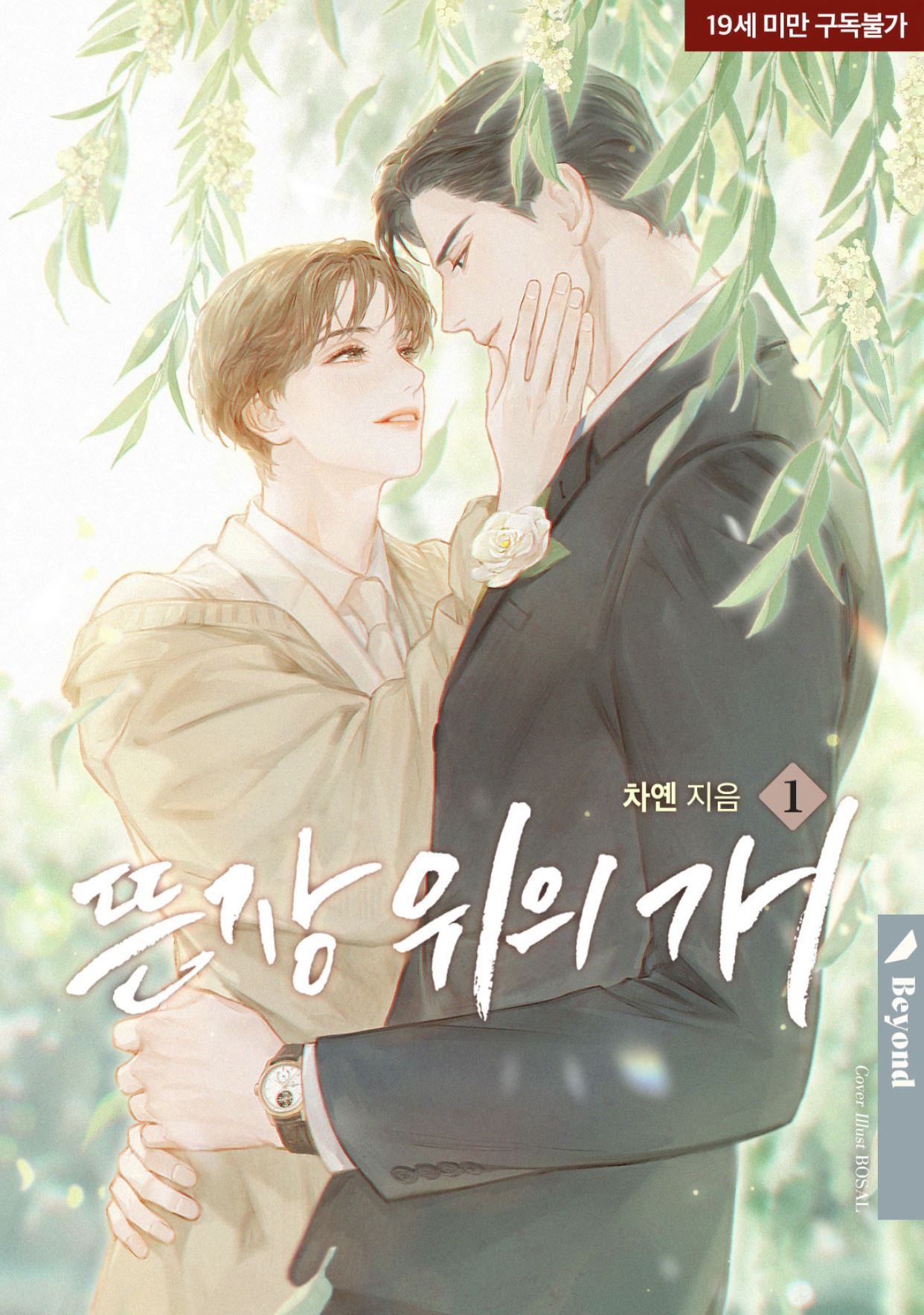
... Read More
This is the part of the book that made me put it down for a second and actually think. The 'mutt' label—whether it's from the people who belittle him or his own internalized fear—is doing so much heavy lifting here. Heeyeon literally cannot distinguish whether his desires are his own or something wrong with him because of what he's been told about his place in this world. The sultry dream becomes this act of bodily rebellion against a social order that wants him passive and controlled. And the window, the cold glass, the snow—all of these images of isolation and coldness mirror his emotional state. He's between worlds: not quite an adult, not quite obedient, not quite understanding his own body. The rice cake soup is symbolic too. It's traditional Korean birthday food, but made by the one person he feels guilty about dreaming of. Care and discomfort wrapped in the same bowl. The deeper theme here is about autonomy—whose desires are valid, who gets to decide what's normal, and what happens when your body refuses to follow the rules it was supposed to obey.
... Read More
What are they fighting for? External conflict: Nam Soohyun's investigation—“I'll get in touch once I find any of the items or the person.” What items? What person? That's a dangling thread, a threat lurking beneath the surface. Internal conflict: Jung Heeyeon's emotional awakening vs. his conditioned obedience. He's confused, restless, “leaping with inexplicable feelings”—and that terrifies him. “What's wrong with me?” The stakes aren't life-or-death yet, but they're intimate: identity, autonomy, trust. Director Yeon's bruises fading, a new scar appearing—what happened? Who hurt him? Why does he smoke like he's trying to numb something? The tension is in what's unsaid. Jung Heeyeon stays still when Nam Soohyun touches him, but Director Yeon swats her hand away. Who owns whom? The power dynamic is razor-sharp. And that terrace scene—Director Yeon pulling Jung Heeyeon into his shadow, exchanging smoke—could be tenderness or domination. The ambiguity *is* the suspense. Will Jung Heeyeon discover the truth about his past? Will Director Yeon reveal his hollow core? Will Nam Soohyun's investigation unravel everything? The stakes are emotional survival. And I'm gripped.
... Read More
Okay so this whole passage is basically one long slow burn of tension building, and then BAM at the very end you get hit with a headline that changes everything. Let me walk through why this works so well. The structure here is deceptively calm on the surface—Heeyeon eating, getting a phone call, finding a wallet—but it's actually doing triple duty. First, it deepens the emotional core between him and Director Yeon. Second, it drops this MASSIVE reveal about the shared Hanja character in their names (连 in both Jung Heeyeon and Yeon Woobeom??) which immediately makes me question everything about Heeyeon's identity and origins. And third, it sets up the external conflict with that Kang Seohyo scandal headline. What I love is how the plot threads are woven together without any of them feeling forced. The transferred assets aren't just world-building filler—they make Heeyeon want to buy a gift, which makes him think about the Director, which leads to the late-night call. Every beat triggers the next one organically. And that ending! "Exclusive report: Sunha's President Kang Seohyo embroiled in prostitution scandal—video may exist." This isn't just random drama. Kang Seohyo is clearly tied to the larger power structure that Director Yeon is navigating, and the timing—right after we learn about the shared character—feels deliberately orchestrated by the author. Is this scandal connected to the Director's situation abroad? Is it a trap? A distraction? I need to know what happens next. The narrative also does something really smart with pacing: it starts almost mundane (ordering food, checking documents) and escalates to an emotional climax (the phone call, the confession of missing him) before pivoting HARD into external threat. It's a complete emotional arc compressed into a few chapters, and it leaves you gasping.
... Read More
Okay so I need to talk about this one scene where Director Yeon is just holding Jung Heeyeon after everything that went down and honestly it wrecked me in the best way. After all the chaos—the kidnapping attempt, the concussion, the whole mess with Kang Seohyo—there's this moment where Heeyeon wakes up groggy and just asks "Will you keep holding me?" And Yeon literally can't even touch his bruised face because he's so gentle. That's when I literally gasped out loud. The author really knows how to balance the high-stakes plot stuff with these quiet, intimate moments. Like, you've got all this drama happening—the media scandal, the business war with Sunha Group, Kang Seohyo getting exposed—but then you cut to this quiet bedroom scene where the most important thing is just pheromones and physical closeness for healing. And Yeon's like "I'll keep letting it out, so go ahead and sleep" while burying his nose in the omega's hair. BRO. I'm not okay. What really gets me is how Heeyeon's just... trusting. Completely. After everything, he's exhausted and concussed and his body is probably screaming at him, but he chooses to fall asleep in Yeon's arms. And Yeon? He's been furiously plotting revenge on the tablet while simultaneously making sure he doesn't wake the guy up. That contrast between the cold businessman calculating moves and the soft alpha just gently patting someone's back is everything. The gardenia scent line too—every time Heeyeon exhales, Yeon catches it. It's such a small detail but it makes their bond feel so physical and real. This isn't just emotional attachment, it's literally in their biology. Which makes it feel even more fated, you know? Also can we talk about how Yeon growls at Kang Seoui when he calls? Like the shift from soft whispers to absolute lethal tones in one second? "Kang Seoui." The moment he says the name, the temperature drops. And all because he's trying not to wake Heeyeon. That man is absolutely unhinged about protecting what's his and I am HERE for it.
... Read More
This section is absolutely electric. You have this slow-burn tension building from the moment the reporters swarm the vehicle—like a storm that can't break—and then BOOM, detectives walk in and everything flips. What I loved is how Director Yeon handles himself. He doesn't panic. He doesn't beg. He just calmly tells them to have a seat like he's hosting tea rather than being arrested for firearm trafficking. The way the narrative moves from external chaos (reporters, swatting at flies) to internal vulnerability (Heeyeon's quiet fear of being apart) and then back to cold power (the arrest scene) is masterful. That line—"We're making an emergency arrest due to flight risk"—hit me so hard. It's official. It's final. And yet Director Yeon is already calculating his escape timeline in his head, thinking about Kang Seoui's move, thinking about coming back in two days. This man is a chess player even while being handcuffed, essentially. The plot twist here isn't a surprise reveal—it's the emotional gut-punch of watching someone who controls everything in the outside world suddenly become vulnerable because of one person: Jung Heeyeon. The writer doesn't spell it out, but you FEEL it when Heeyeon swallows his words instead of saying "come back quickly." That's the real drama, not the arrest itself. The arrest is just the plot device to separate them and test their bond.

Leave a comment

You must be logged in to leave comments. or
